

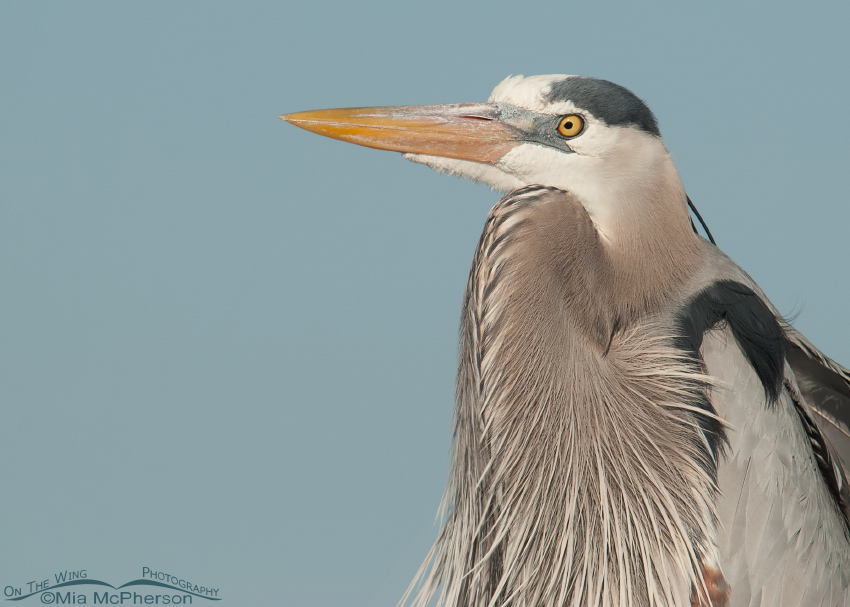
 Great Blue Heron close up with sky background – D200, handheld, f8, 1/1000, ISO 200, 80-400mm VR at 400mm, natural light, not baited
Great Blue Herons are North America’s largest heron and one of the three largest herons in the world. The Great Blue Heron is found in almost all habitats except deserts with occurrences from southern Canada down to Mexico, it is also thought to migrate and winter in the Caribbean. During non-breeding season Great Blue Herons are primarily solitary and during breeding season they often nest in colonies.
The image above was taken at Fort De Soto’s north beach in Florida. I created many photos with this very cooperative bird that morning and was delighted when it rested on the top of a sand dune so I could position myself well below the bird and have the sky in the background.
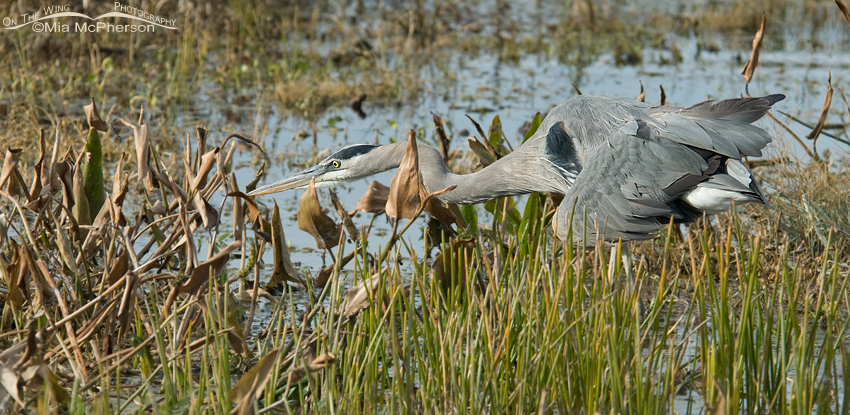 Great Blue Heron stalking prey in a wetlands – D200, handheld, f6.3, 1/350, ISO 200, 80-400mm VR at 240mm, natural light
Great Blues often forage in marshy wetlands, rivers, swamps, tidal grass flats, lakes, ponds and in marine environments on the Gulf, Atlantic and Pacific coasts. I’ve had many opportunities in my life to drive from coast to coast and through all of the 50 in the US and I have seen this heron in each of them.
While I appreciate avian images that have few distractions in the background there are times I much prefer to show birds in their natural habitat. Some people may find the setting in the image above messy or busy but to me it is wonderful habitat shot and it clearly shows the heron was comfortable in my presence and continued on with stalking the prey. Although the legs are partially obscured by the vegetation of the foreground I left enough room at the bottom of the frame to allow space for the parts of the legs not shown.
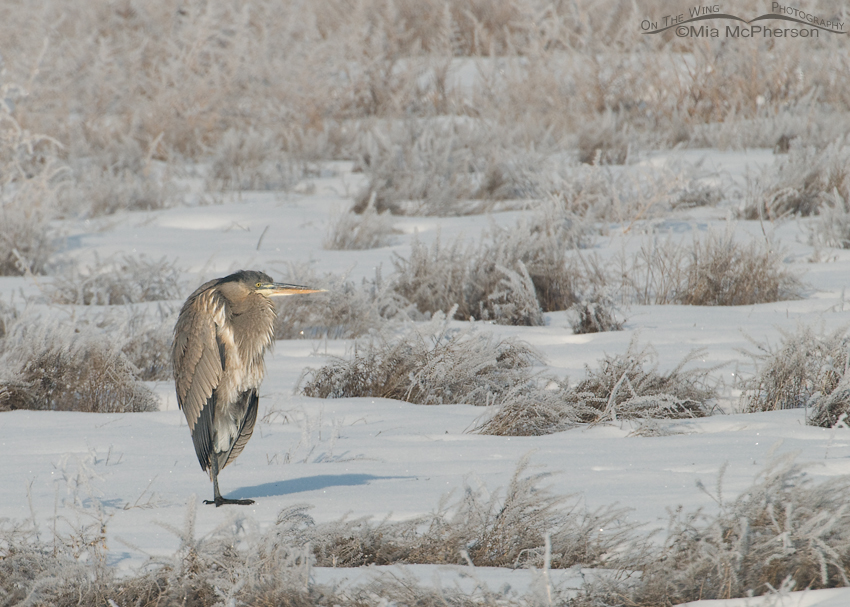 Great Blue Heron taking a break from hunting voles in the snow – D200, f10, 1/750, ISO 400, EV +0.3, 200-400mm VR with 1.4x TC at 400mm, natural light, not baited
Great Blue Herons primarily eat fish though they are also known to eat snakes, frogs, lizards, small birds, the eggs of birds, crustaceans and rodents. They are also opportunistic and will eat food from trash bins, or steal bait fish from a fisherman’s bucket.
I don’t bait birds and because of my own personal ethics do not approve of the practice but I have seen and heard of them being baited by other photographers to bring the herons closer. I have plenty of Great Blue Heron images in my portfolio that were not baited, so I know that with patience, by knowing the habits of this species or by hiding your presence with blinds or other natural features that photos can be taken without baiting.
I was pleased and surprised to find the heron above in a large, snow covered field adjacent to a body of water. The heron had been hunting voles in the snow and was taking a break. I love the snowy habitat in this image, the pose of the heron seems to indicate how cold the bird was and find the hoarfrost covered weeds very appealing.
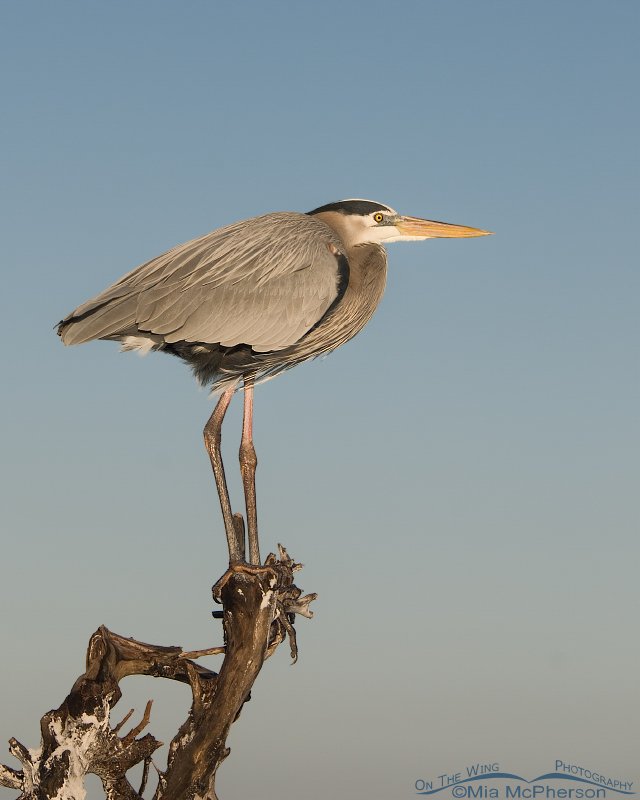 Great Blue Heron perched on a old snag on the beach – D200, handheld, f6.3, 1/800, ISO 200, 80-400mm VR at 180mm, natural light, not baited
Where I lived in Florida Great Blue Herons were acclimated to human presence and because of that I have had many opportunities to create close up images of them. In Utah the herons are not as acclimated to humans and my images here are usually from a distance or when the herons fly overhead.
On a December morning I found this Great Blue Heron perched on an old snag that the waves had washed up on to the beach in Florida. I am not a huge fan of setup shots where the birds are lured in with food or recorded calls, where the background is planned to be silky smooth and the setting is carefully planned as in the typical “bird on a stick” presentation, but I can and do appreciate uncluttered backgrounds when I come across them naturally. I was tickled to have such a clean background in this photo with just the early morning sky behind the bird. There was a breeze blowing off of the Gulf of Mexico that day and I suspect that was why this heron appeared to be hunkered down. I loved the light and the interesting shape and texture of the snag.
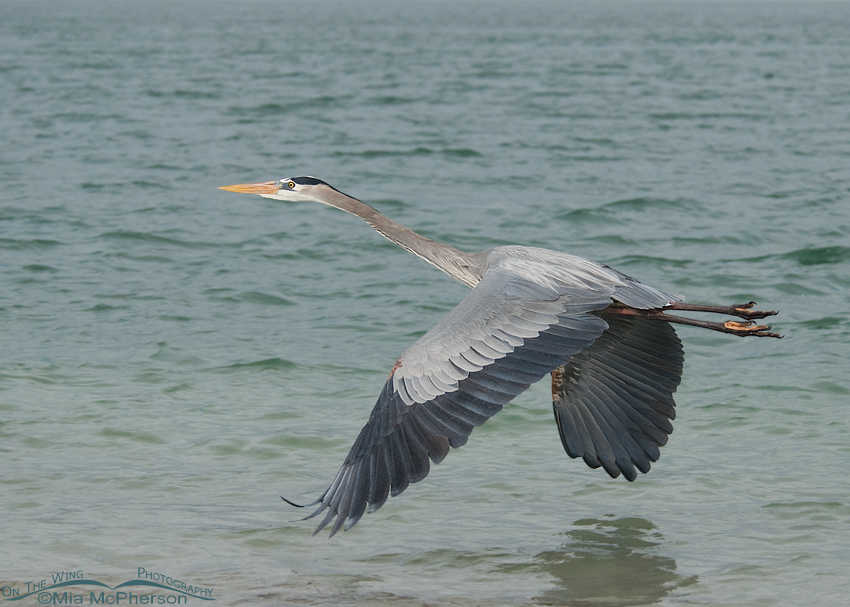 Adult Great Blue Heron in flight – D200, handheld, f6.3, 1/1500, ISO 400, 80-400mm at 98mm, natural light, not baited
The day I created this Great Blue Heron image I noticed two herons hunting along the edge of a pass between the Gulf and a tidal lagoon. Knowing that this species often gets defensive about the area where they are hunting I sat down between two small sand dunes to partially obscure my presence and waited for the fireworks to start. It did not take long and one of the herons became aggressive towards this heron and it took flight. By knowing the behavior of this species I was able to get this close up flight shot. This image is 70% of the original frame after rotation adjustment.
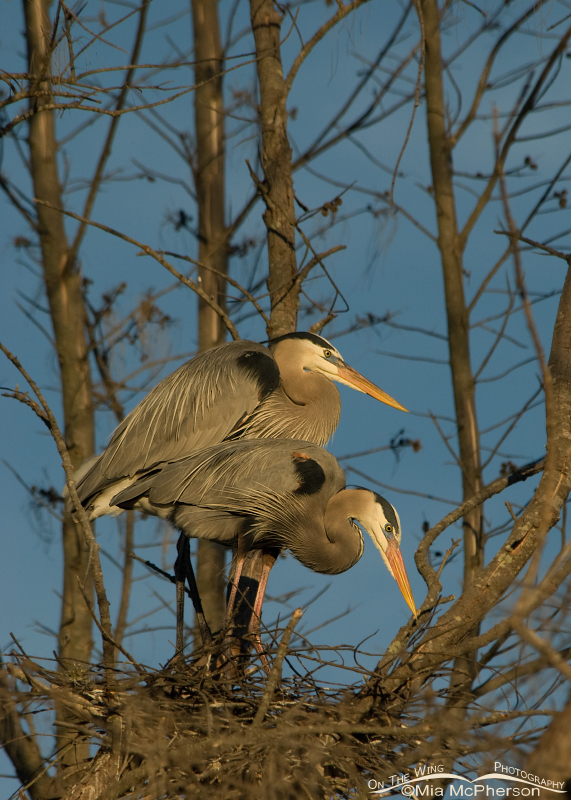 Great Blue Heron pair at the nest in late evening light – D200, handheld, f8, 1/1000, ISO 320, 80-400mm VR at 400mm, natural light
In Florida the breeding season can start as early as December, in other parts of the US the season runs from February through August. The lores of the species are usually a dull grayish black but during breeding season the lores turn blue. Great Blues usually build their nests in small colonies in trees which consist of twigs and branches. The male gathers the sticks and twigs and the female carefully places them in the nest. They are not tidy nests, they often look like they would not hold together in a strong wind. There many locations where human encroachment has diminished suitable nesting sites, there are organizations across the US that build rookeries out of poles and boards that have helped the Great Blue Heron and other long-legged waders by providing alternative nesting sites.
Great Blues lay 2-4 eggs and can have two broods a year in some places. Unfortunately the pair above was unsuccessful on this nest, there was a long cold snap in Florida after they laid their eggs and I suspect that had something to do with the failure.
Both the male and the female incubate the eggs for about 27 to 30 days. Brooding and feeding the chicks is also done by both parents.
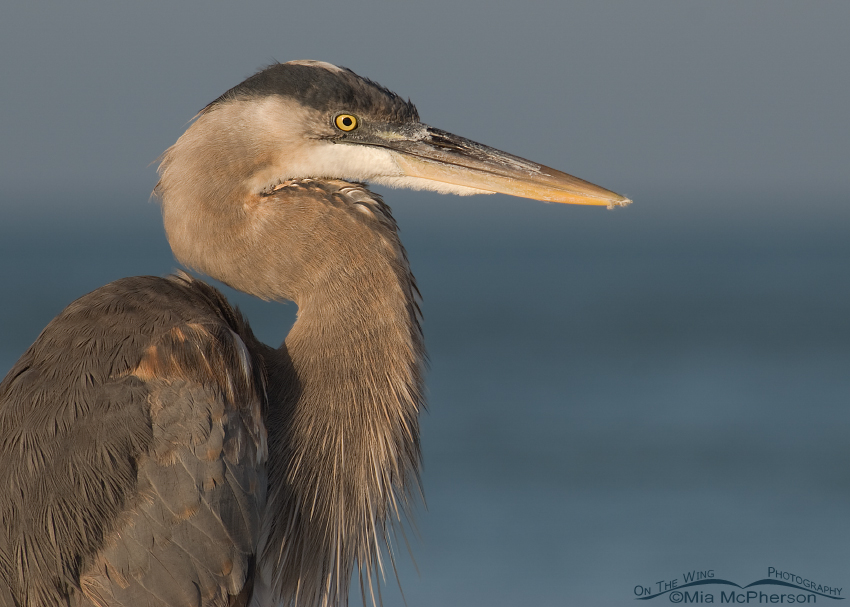 Immature Great Blue Heron close up – D200, handheld, f8, 1/350, ISO 160, 80-400mm VR at 400mm, natural light, not baited
Immature Great Blue Herons look very similar to the adults but have not developed the occipital plumes of the adult, their plumage is more brown than the blue-gray of the adult birds as seen in the image above. Chicks grow rapidly and most are flying by day 60.
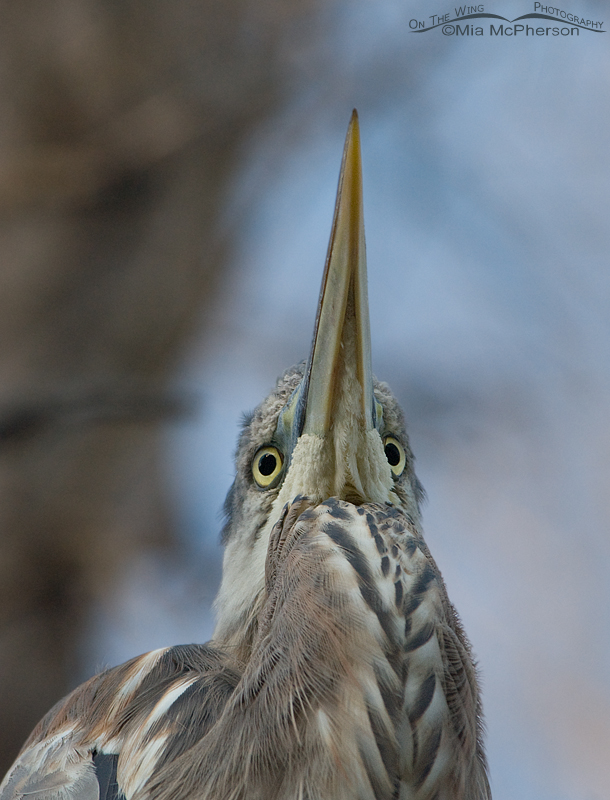 Great Blue Heron headshot from below – D200, handheld, f9, 1/180, ISO 400, 80-400mm VR at 400mm, natural light
As an bird photographer I feel that having a varied portfolio is a huge benefit thus I am always looking for opportunities to take images of birds in all kinds of light, different settings, striking poses and quite often look for unusual perspectives.
One evening this heron flew into the tree over my head where from down below it appeared that this heron was doing its best to imitate a bittern. I could not resist taking the shot despite how the ants I had disturbed crawled on my feet and bit me. Worth the price of a few ants bites I’d say.
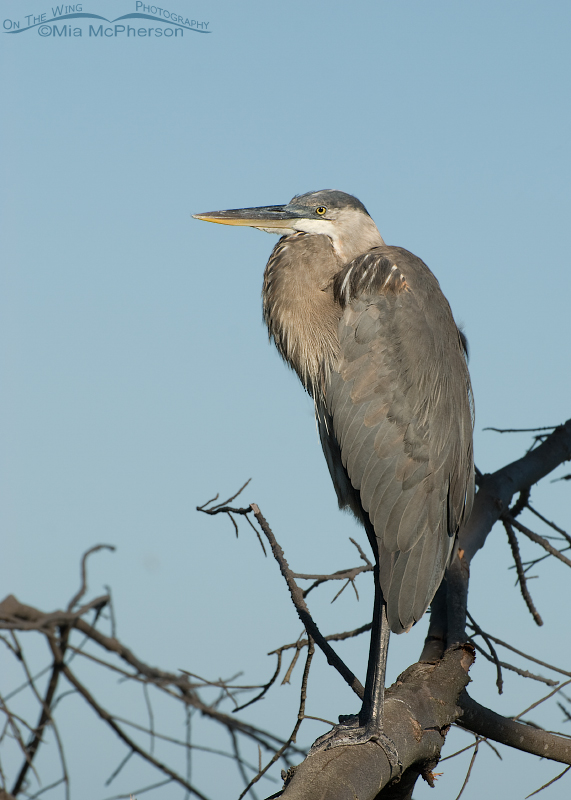 Great Blue Heron resting on a dead tree – D200, handheld, f9, 1/500, ISO 200, 70-300mm VR at 220mm, natural light
Great Blue Herons may be common throughout North America but their almost prehistoric look will always entice me to take more images of them. Like other birds, if they have feathers… I will photograph them.
Life is good.
Mia
Click here to see more of my Great Blue Heron photos plus facts and information about this species.
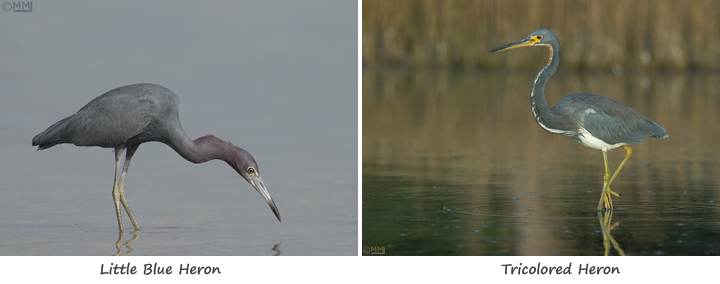
Two similar herons