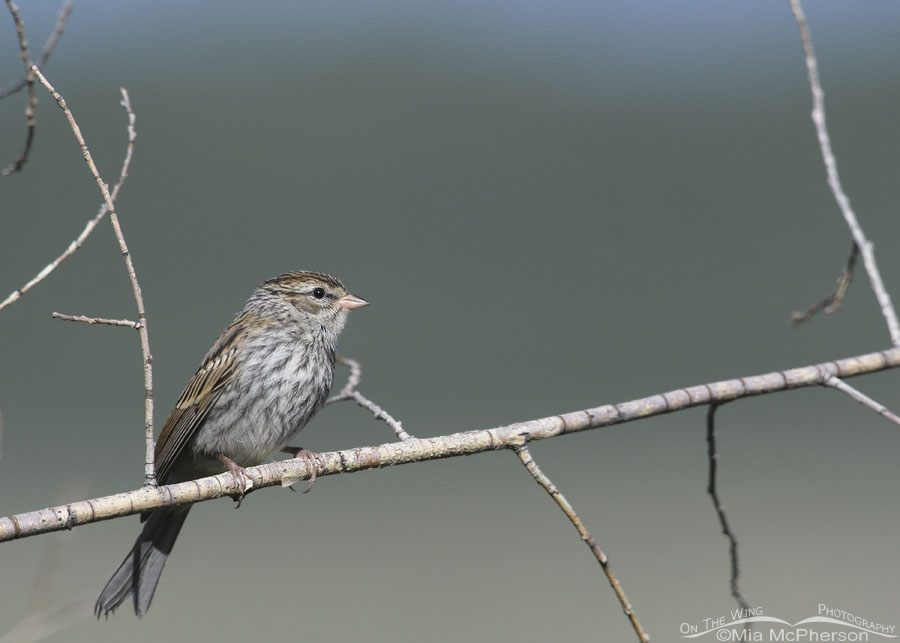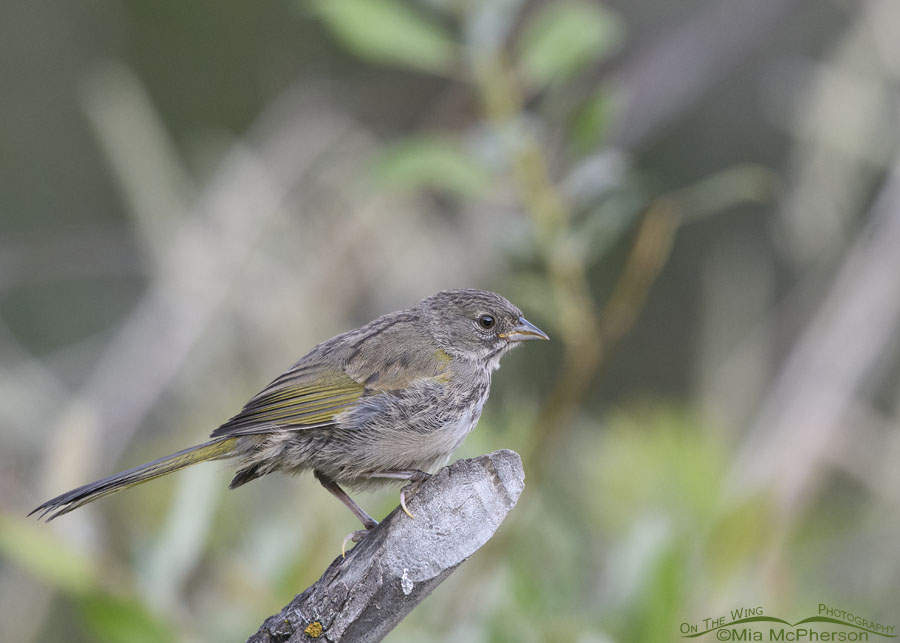

Lark Sparrow

For a day that the weather forecasters said would be “Sunny” this morning sure didn’t start off that way. In fact, for the first hour or more the light was very wishy-washy. The clouds were thick to the east and blocking the sun. But… when the sun finally did start to shine one bird made the bad light earlier worth it.

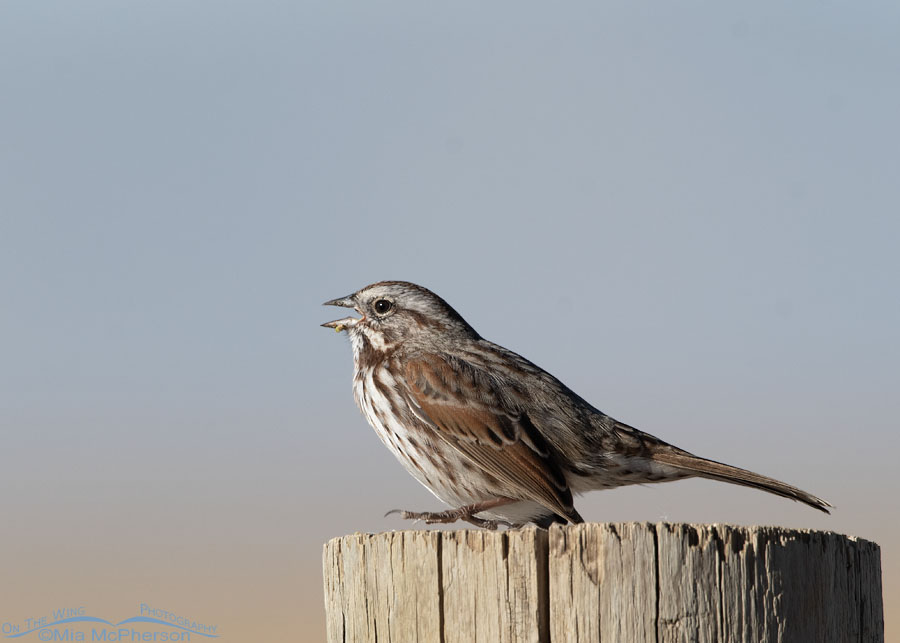
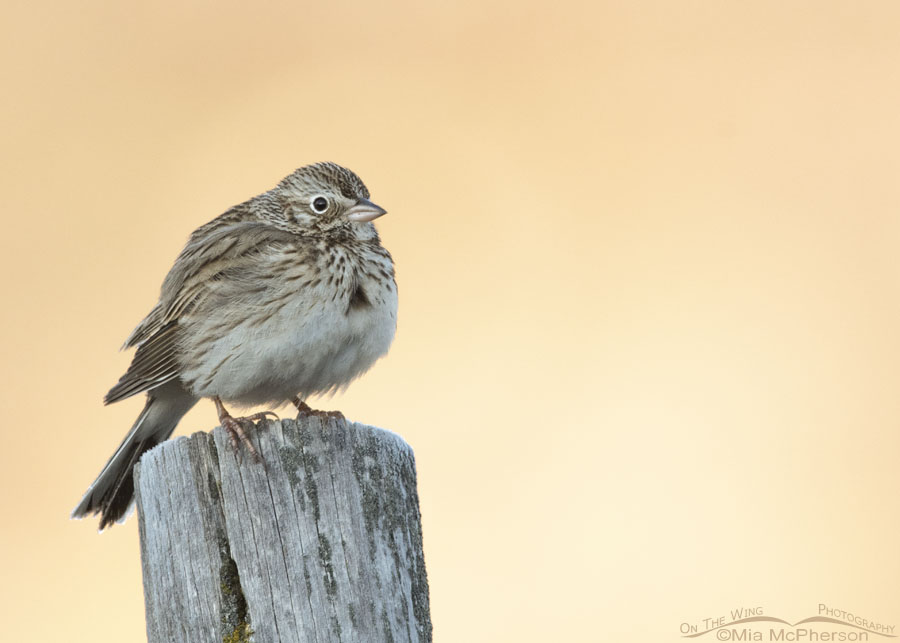
Perched Lark Sparrow

Perched Lark Sparrow - Nikon D300, f6.3, 1/1600, ISO 640, +0.3 EV, Nikkor 200-400mm VR with 1.4x TC at 400mm, natural light

This is the closest I have been to a Lark Sparrow (Chondestes grammacus) to date and this was a very cooperative bird too! I had seen my FOY (first of year) Lark Sparrow last week and hoped that this year I’d be able to get closer and better images of the species.  Got it!

Lark Sparrows have bold harlequin facial patterns, a single dark breast spot (not visible here) and a long dark tail with white corners making them amongst the easiest sparrows to identify. Lark Sparrows breed here in Utah in sage flats and grasslands, they spend their winters in the southern U. S. to southwest Mexico.

I think they are handsome sparrows. Perhaps my luck in photographing them is changing.

Mia


Facebook Twitter Stumbleupon Digg Delicious Reddit Posterous Pinterest Email

Share

Birds and Bison

Certain species of birds ride on the backs of Bison and feed on the insects they find in the Bison’s fur; European Starlings are among those birds.

European Starling landing on a Bison's back

European Starling landing on a Bison's back - Nikon D200, handheld, f8, 1/1000, ISO 400, -1.0 EV, Nikkor 18-200mm VR at 130mm, natural light

This image not only shows a European Starling about to land on the back of the feeding Bison, it also shows another bird flying past the Bison’s leg. The Bison was too close for me to use my Nikkor 200-400mm VR lens so I quickly grabbed my backup D200 with my 18-200mm VR attached.

Flock of European Starlings with a Bison

Flock of European Starlings with a Bison - Nikon D200, handheld, f8, 1/1250, ISO 400, -1.0 EV, Nikkor 18-200mm VR at 120mm, natural light

It isn’t unusual to see European Starlings or Brown-headed Cowbirds riding on the backs of Bison while on Antelope Island State Park, at times there might be 20+ birds on a single Bison’s back. Usually I see that from a distance so yesterday I was glad that the Bison and birds were closer to me than normal.

European Starlings with a Bison and its tongue stuck out

European Starlings with a Bison and its tongue stuck out - Nikon D200, handheld, f8, 1/1250, ISO 400, -1.0 EV, Nikkor 18-200mm VR at 120mm, natural light

The Bison do not seem to mind the hitch hikers on their backs,  I am not sure they even notice the birds. The winter coat of this Bison is beginning to matt up on its back and shoulders, soon that fur will be shed and used by many of the birds on the island to line their nests. Loggerhead Shrikes seem to use the fur often as nesting material. 

The top of a Bison’s tongue is a grayish color as shown in the photo above.

Bison licking its nose with European Starlings on its back

Bison licking its nose with European Starlings on its back - Nikon D200, handheld, f8, 1/1000, ISO 400, -1.0 EV, Nikkor 18-200mm VR at 130mm, natural light

The underside of a Bison’s tongue is dark brown on the edges and a light bubble gum pink in the center as shown here.

This Bison and the others nearby were easily approachable while staying within the confines of a vehicle and I prefer it that way. I can stay safe.

The other day I saw a photographer out walking through a grassy area of the park to get closer to some grazing Bison. He was strolling through an area where he should not have been, that side of the park has signs that state clearly to ”Stay on the Trails“ and he was putting himself at risk trying to get closer to these wild, unpredictable animals. Before I left the area though I saw one of the Park Rangers slow down next to his vehicle as the guy slowly made his way back to it. I bet he was educated very quickly about the dangers of what he had been doing and got told to stay on the trails.

Mia

More Bison images

Facebook Twitter Stumbleupon Digg Delicious Reddit Posterous Pinterest Email

Share

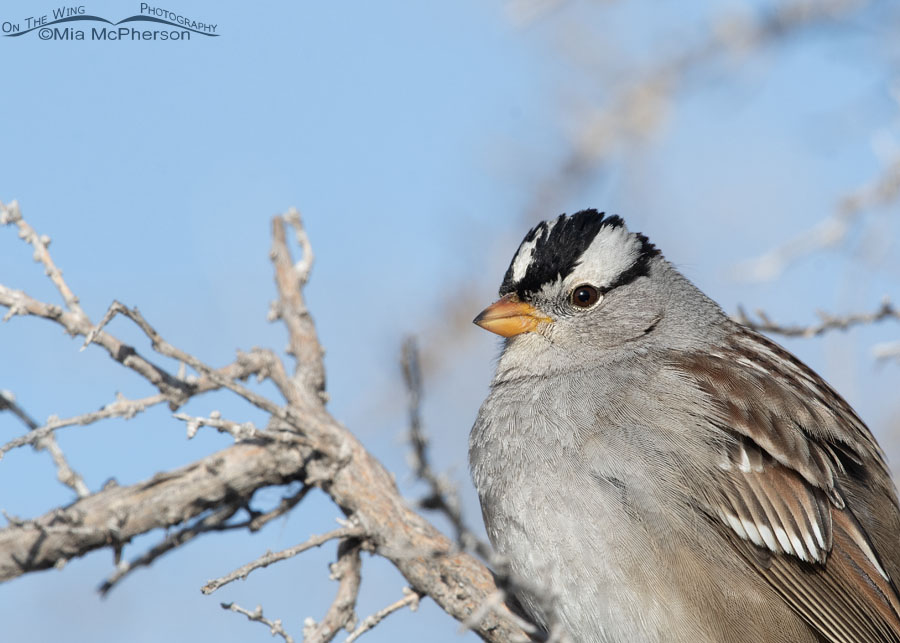
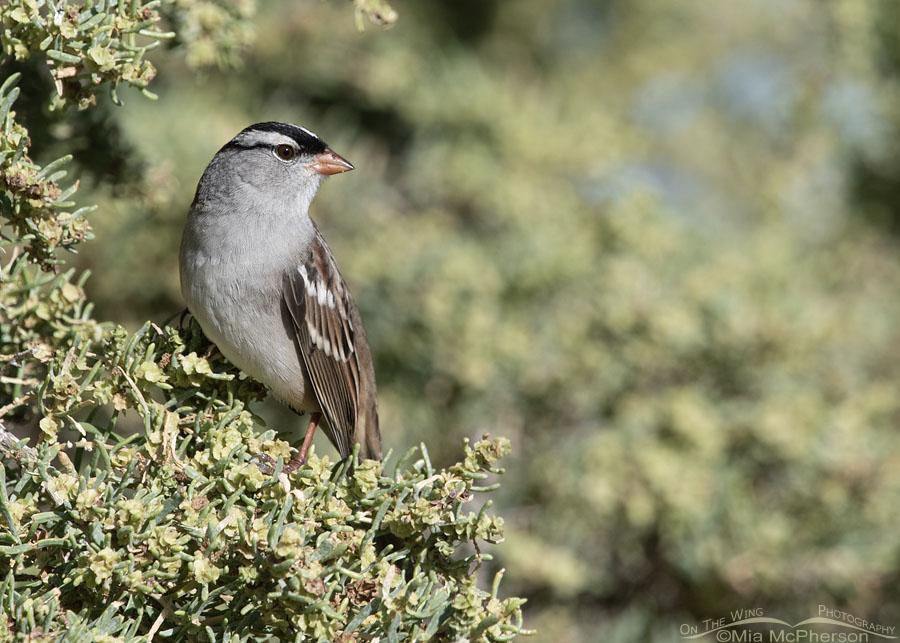
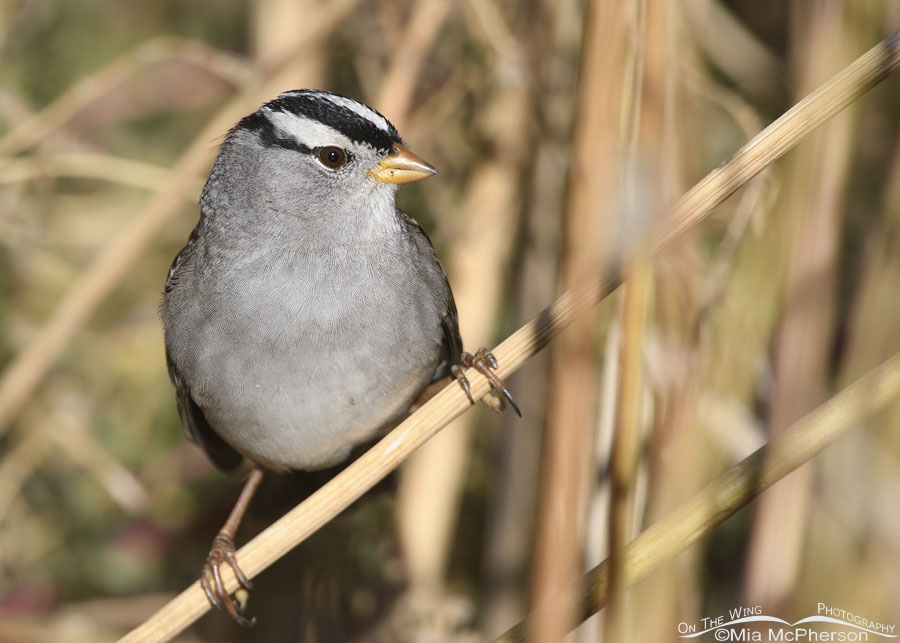
Juvenile White-crowned Sparrow

Yesterday while I was out photographing on Antelope Island State Park I came across a small flock of White-crowned Sparrows right next to the road.

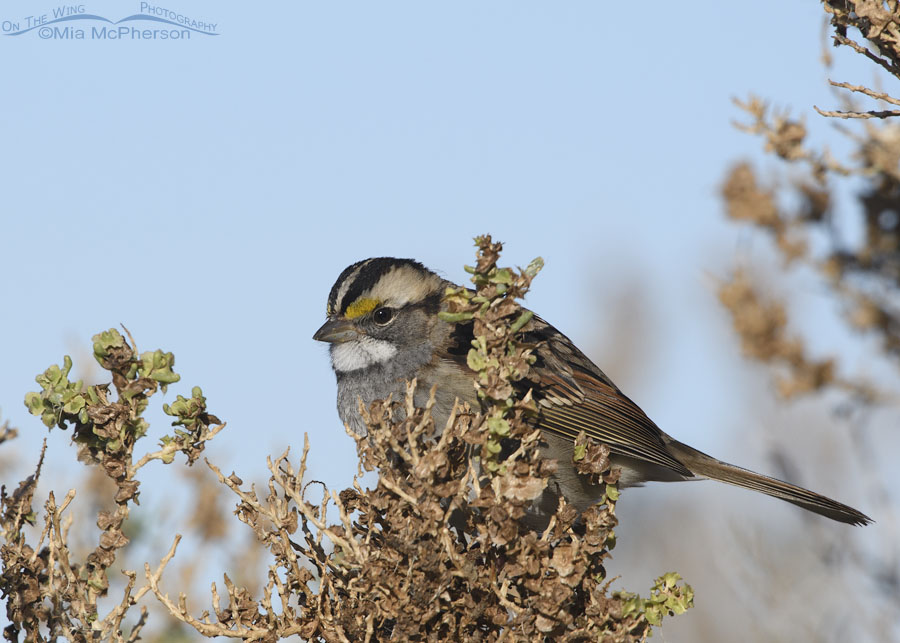
Juvenile White-crowned Sparrow (Zonotrichia  leucophrys)

Juvenile White-crowned Sparrow (Zonotrichia leucophrys) - Nikon D300, f6.3, 1/1600, ISO 640, +0.7 EV, Nikkor 200-400mm VR with 1.4x TC at 400mm, natural light

Until I viewed this image on my monitor I hadn’t noticed that the Sagebrush has started to green up, another sign of spring.

My EV; or exposure compensation, shouldn’t have been at +0.7, it should have been lower. I had been photographing a Rough-legged Hawk in flight against a blue sky before I took this image and had forgotten to reset my EV to 0.0 but I was able to bring the global exposure level down a smidge in post processing to correct that.

White-crowned Sparrows have a clear whistling call followed by a series of trills or buzzes that I can easily pick up on but normally I see this species before I hear them.

Mia

More White-crowned Sparrow images


Facebook Twitter Stumbleupon Digg Delicious Reddit Posterous Pinterest Email

Share

Juvenile White-crowned Sparrow ~ Friday Photos

Juvenile White-crowned Sparrow
Juvenile White-crowned Sparrow (Zonotrichia leucophrys) ~ Antelope Island State Park, Utah
Nikon D300, f6.3, 1/1600, ISO 800, +0.7 EV, Nikkor 200-400mm VR with 1.4x TC at 335mm, natural light

This was a “grab shot” I took a few days ago while on the causeway when leaving Antelope Island State Park. Quite often sparrows can be seen foraging in the grasses, rabbitbrush and sagebrush that grow along the edge of the road. I really liked how the frost had encased the tips of the dried flower heads and made them look like white blossoms.

I spent most of that morning photographing a hunting Coyote along the causeway so I was pleased to find a few cooperative birds on the way home.

Mia

Facebook Twitter Stumbleupon Digg Delicious Reddit Posterous Pinterest Email

Share

Taking a look back on a few previous Autumn Birds

Male Ring-necked Pheasant in autumn grasses and Pickleweed
Male Ring-necked Pheasants in autumn grasses and Pickleweed (from 2010)
Farmington Bay Wildlife Management Area, Davis County, Utah
Nikon D200, f6.3, 1/1250, ISO 400, Nikkor 200-400mm VR with 1.4x TC at 400mm, natural light

Some days when I don’t go out to photograph I look back through my files to find out what birds I had seen around the same time last year so I’ll know what birds I might find in certain locations. I also like looking back through the files because I find images I haven’t edited yet.

There are quite a few Ring-necked Pheasants to be found at the Farmington Bay Wildlife Management Area but they can be a challenge to find out in the open. I photographed these two males (one is mostly hidden) last year. We’d already had frost so the Pickleweed had turned crimson red in some spots, combined with the straw colored grasses this turned out to be a rather colorful image. Ah, autumn is very beautiful.

Juvenile White-crowned Sparrow

Juvenile White-crowned Sparrow (from 2010)
Farmington Bay Wildlife Management Area, Davis County, Utah
Nikon D200, f6.3, 1/1600, ISO 400, Nikkor 200-400mm VR with 1.4x TC at 400mm, natural light

I like the subdued colors in the image above of this juvenile White-crowned Sparrow. The leaves on this shrub had already fallen and pale golden grasses made for a nice background setting. Despite the bird and the setting having similar coloration the birds stands out very well.

Pied-billed Grebe
Pied-billed Grebe (from 2008)
Farmington Bay Wildlife Management Area, Davis County, Utah
Nikon D200, f6.3, 1/1000, ISO 320, +0.7 EV, Nikkor 200-400mm VR with 1.4x TC at 400mm, natural light

The Pied-billed Grebes that I have seen very little of during the summer are now making their appearance. They might be “plain” birds but what they lack in color they make up for with their attitudes, they are fiesty little grebes. I’ve seen them chasing after Red-breasted and Common Mergansers with fish to try and grab the food, Red-breasted Mergansers outweigh the Pied-billed Grebe by approximately 1.3 lbs and  Common Mergansers out weigh them by 2.4 lbs. Pretty gutsy birds.

Red-winged Blackbird male

Red-winged Blackbird male
Farmington Bay Wildlife Management Area, Davis County, Utah
Nikon D200, f6.3, 1/500, ISO 400, -0.3 EV, Nikkor 200-400mm VR with 1.4x TC at 400mm, natural light

In October and November large flocks of Red-winged Blackbirds can be found in the Salt Lake Valley along with similar flocks of Starlings and Yellow-headed Blackbirds. I love the sound of the flocks lifting off in unison when I can hear the “whoosh” of their wings.

The Red-winged Blackbird above posed for over 10 minutes on this cattail giving me plenty of time to get my exposure right, photographing black birds is a challenge. When the temps get really chilly Red-winged Blackbirds (and other species) get “sticky”, meaning they are less apt to fly off right away.

Male Northern Harrier hovering in flight
Male Northern Harrier hovering in flight (from 2010)
Farmington Bay Wildlife Management Area, Davis County, Utah
 Nikon D200, f5.6, 1/500, ISO 640, +1.0 EV, Nikkor 200-400mm VR with 1.4x TC at 400mm, natural light, not baited

Autumn means more Northern Harriers in the local places where I photograph birds, although harriers are year-round residents in the Salt Lake Valley, I see them most often and in greater numbers during the fall and winter. Male and female harriers look very different from each other. The male is often called the “Gray Ghost” though I’ve had many hits on my blog for the key words “light morph northern harrier”. The females are darker, brownish and have paler yellow eyes than the male.

Juvenile Red-tailed Hawk

Juvenile Red-tailed Hawk (from 2010)
Tooele County, near the Stansbury Mountains, Utah
Nikon D200, f6.3, 1/1250, ISO 400, Nikkor 200-400mm VR with 1.4x TC at 400mm, natural light, not baited

Raptors like this juvenile Red-tailed Hawk move down fom the high country during the autumn to the valleys to stay during the winter, the past few weeks I have seen their numbers increasing.

This Red-tailed Hawk was basking in the morning light near the top of an earthen dam with the Stansbury Mountains in the background. I couldn’t have asked for better light.

Photographing birds during Autumn is a wonderful time for me in Utah, the beautiful fall colors delight and enthrall me, the air gets nippy and I find myself feeling a surge of energy whenever I am outdoors. I’m thinking  about adding new base layers to my clothing, warmer, insulated boots and buying a box of hand warmers so I don’t freeze my finger tips off.

Yes, I am looking forward to the birds I’ll see and photograph this autumn and winter but just being out there with them is great too.

Mia

Facebook Twitter Stumbleupon Digg Delicious Reddit Posterous Pinterest Email

Share