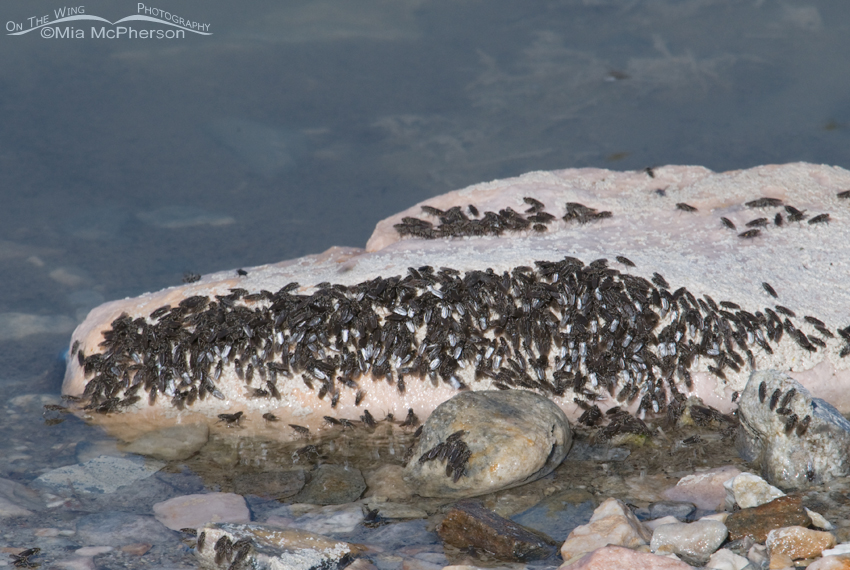

The Brine Fly Buffet begins on the Great Salt Lake

First of the year Brine FliesFirst of the year Brine Flies

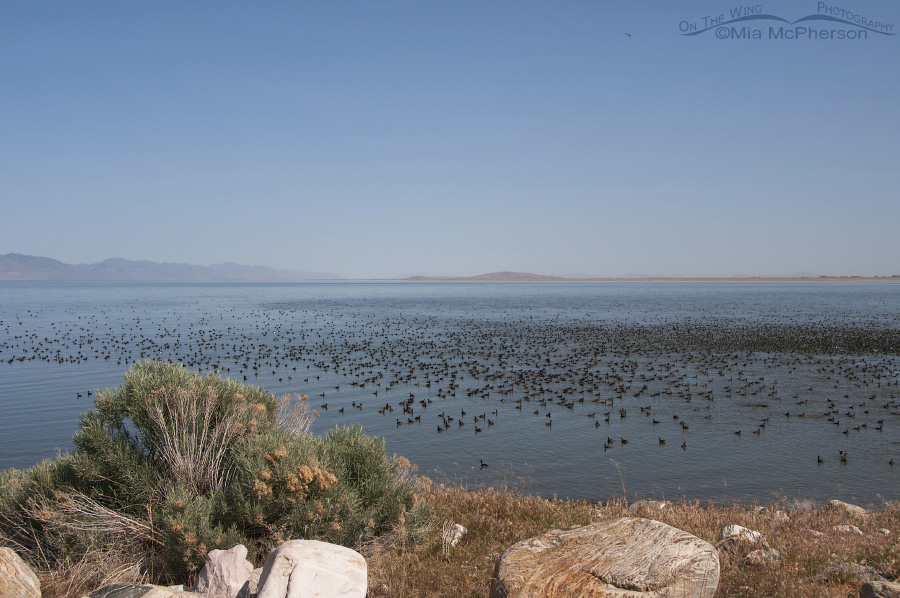
Yesterday while near the marina on Antelope Island State Park I spotted my first of the year Brine Flies warming up on some of the rocks in the water. You might wonder “why” am I so excited about flies?

It is because I know how many birds feast on the little buggers! If the brine flies are out it won’t be long before the shorebirds that eat them arrive.  Last week there was ice on this water, how quickly things change. The image above was taken yesterday.

California Gull in a thick mass of Brine FliesCalifornia Gull in a thick mass of Brine Flies

This image was taken last year when the brine flies were thick, all of those little dark dots in the air, on the rocks and in front of the California Gull are Brine Flies. With billions of them in just a small area it is easy to see why the birds that devour them like the area of the Great Salt Lake. The California Gulls are already here and they appear to be eating the flies along the causeway.

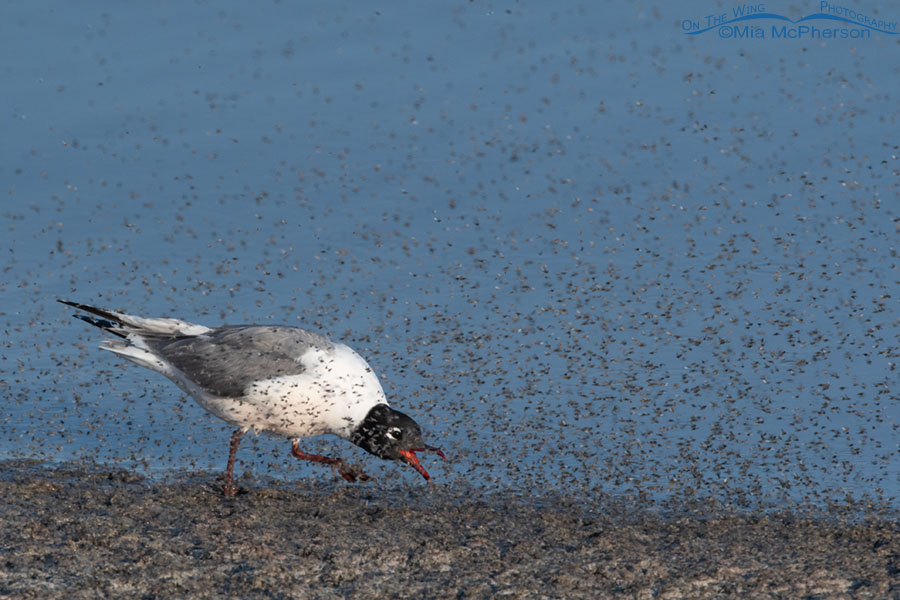
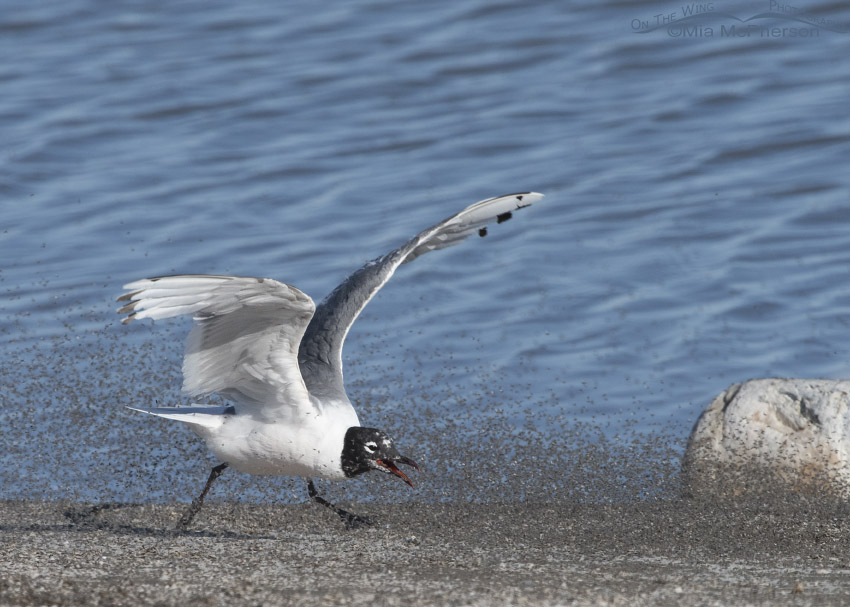
Franklin's Gull with Brine FliesFranklin’s Gull with Brine Flies

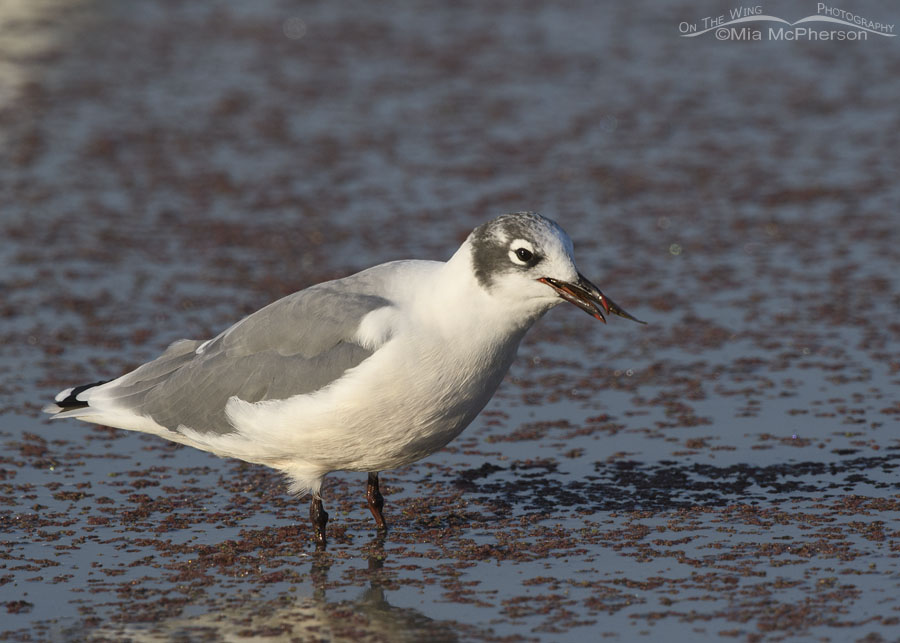
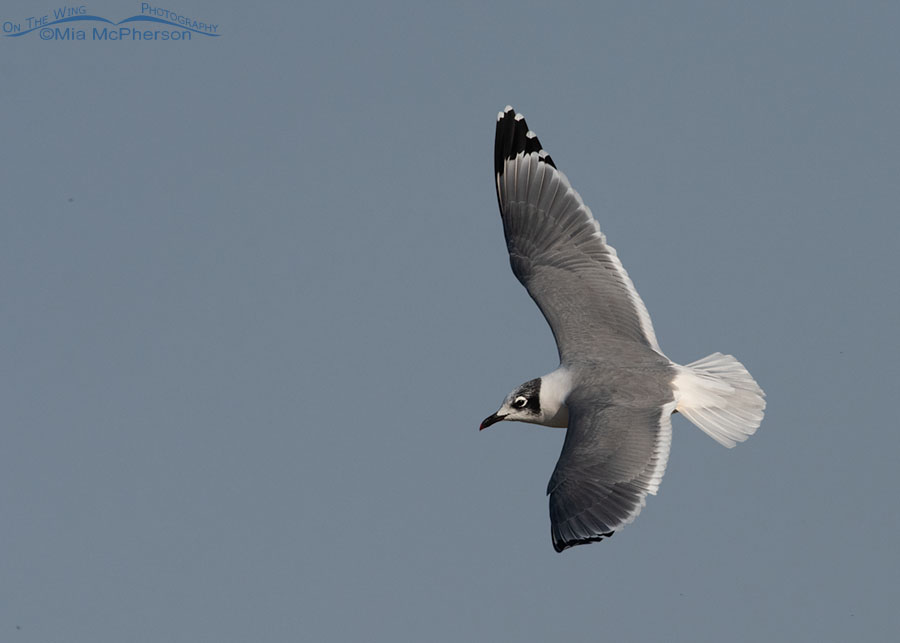
It won’t be long before the first of the Franklin’s Gulls arrive too and for a short time the Bonaparte’s Gulls will feast on the flies too before heading further north. All those dark flecks on the water? Brine Flies.

California Gull with Brine Flies in flightCalifornia Gull with Brine Flies in flight

I do get excited about seeing the first Brine Flies because I know that their presence brings on the birds and the feeding frenzies that follow!

Mia

Facebook Twitter

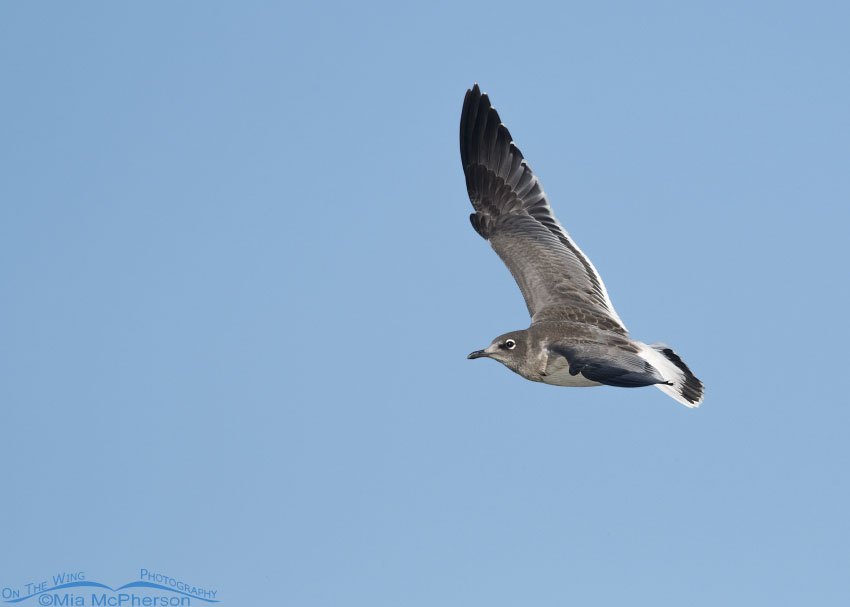
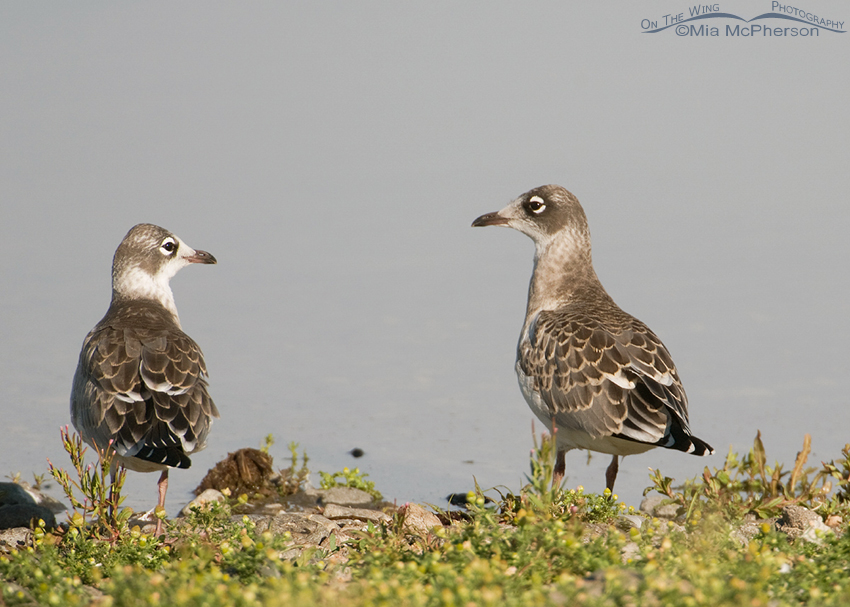
Immature Franklin’s Gulls

I like gulls, I know that gulls are not always a popular subject for many bird photographers and that they will often pass them by but to me they are as delightful, beautiful and fascinating as any other bird. I’m an unbiased bird photographer, if it has feathers and flies… I will photograph it. Sure certain species of gulls can be very common in some areas but they aren’t in other parts of the world. Why pass them up?

Juvenile Franklin's Gulls

Juvenile Franklin’s Gulls – Nikon D300, f6.3, 1/1000, ISO 400, Nikkor 200-400mm VR with 1.4x TC at 400mm, natural light, not baited

I photographed these two juvenile Franklin’s Gulls (Larus pipixcan) while in the Centennial Valley of southwestern Montana last week. There were large flocks of Franklin’s Gulls in the area and I felt lucky that these two young birds were close enough to photograph. There was a third immature Franklin’s that was in a beautiful setting with small yellow flowers surrounding it but unfortunately a large California Gull that was behind it just didn’t listen to me when I politely asked it to remove its rump from behind my intended subject because it was distracting. Oh well, these two posed nicely for me.

Franklin’s Gulls are unique in that it is believed that they molt twice a year because they may need fresh flight feathers for their 5000 mile migration from their wintering and breeding grounds and back again. I enjoy the bright white, broad eye arcs of this species, it always gives them a wide-eyed look!

Mia
OnTheWingPhotography

Facebook Twitter

Franklin’s Gulls ~ Feeding Frenzy

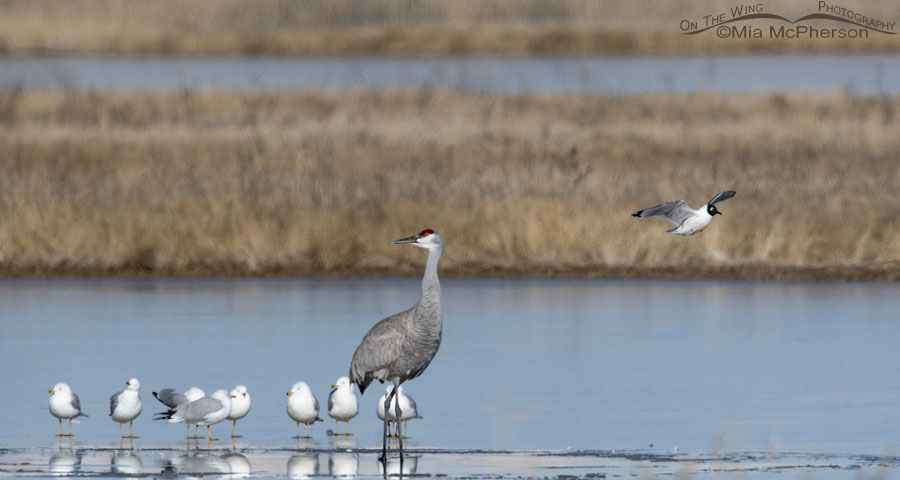
Last year while I was camping and photographing at Red Rock Lakes National Wildlife Refuge I saw a feeding frenzy that involved Franklin’s and California Gulls in the flooded grasses and Sagebrush flats near the Lower Lake.

Foraging Franklin's Gulls

Foraging Franklin’s Gulls – Nikon D200, f6.3, 1/2500, ISO 400, -0.3 EV, Nikkor 200-400mm VR with 1.4x TC at 400mm, natural light

There were hundreds of breeding plumage Franklin’s Gulls (Larus pipixcan) in the field hovering, wading in the standing water and foraging. I still don’t know what it was they were feasting on.

Hovering Franklin's Gull

Hovering Franklin’s Gull – Nikon D200, f6.3, 1/1500, ISO 400, Nikkor 200-400mm VR with 1.4x TC at 400mm, natural light

None of my images from that day show prey in the bill so my thoughts are that there could have been an insect hatch or perhaps there were tadpoles in the flooded flats. I should have gotten out of the pickup and scanned the water to see what the prey was.

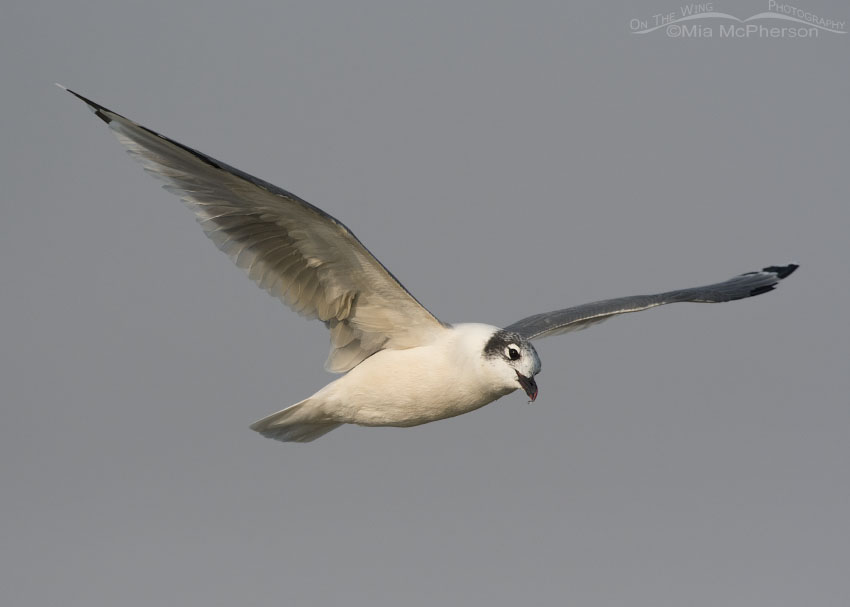
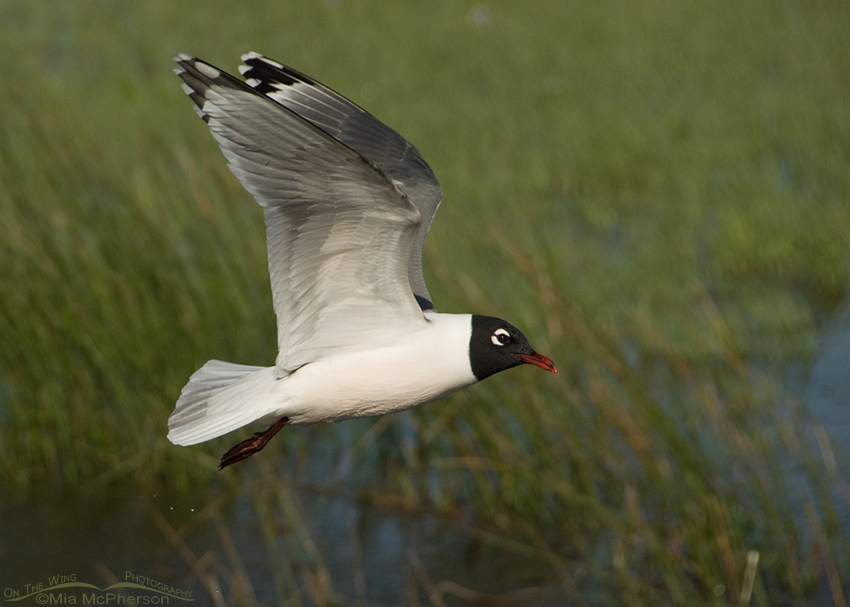
The photo above shows the rosy pink wash that Franklin’s Gull have on their chest and belly when they are in breeding plumage.  This is actually in the feather structure there, not “on” them.

Franklin's Gull in flight

Franklin’s Gull in flight – Nikon D200, f7.1, 1/200, ISO 250, Nikkor 200-400mm VR at 200mm, natural light

I hope to see and photograph another feeding frenzy with the Franklin’s Gulls, if I do I will do my best to find out what prey item causes it.

Mia

For more information on why I love Red Rock Lakes  National Wildlife Refuge click here.

Facebook Twitter