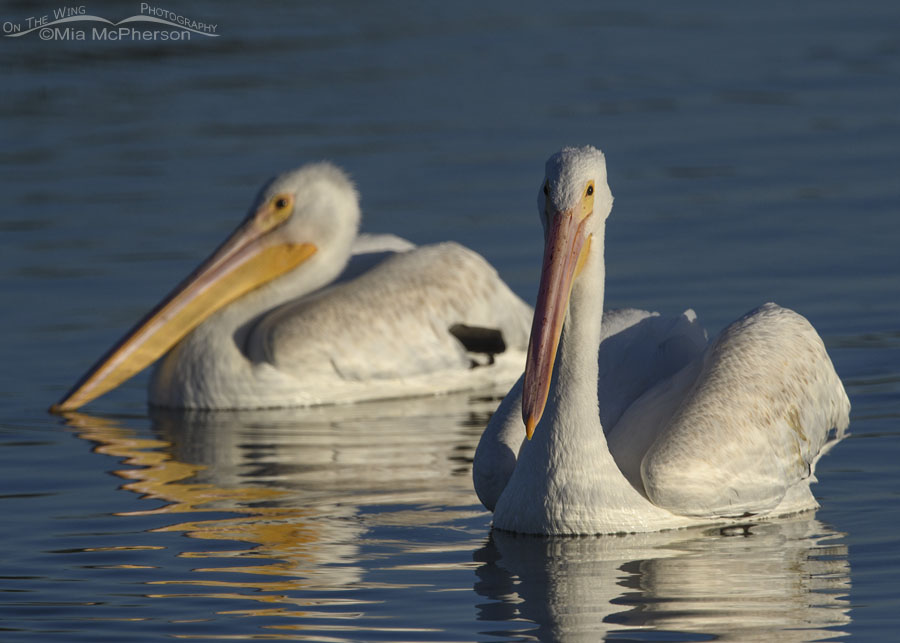
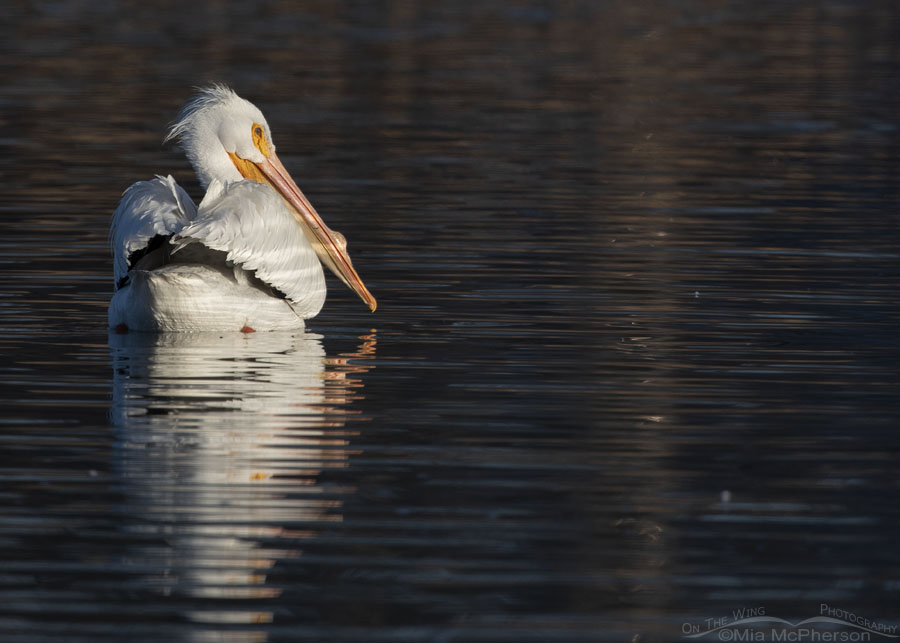
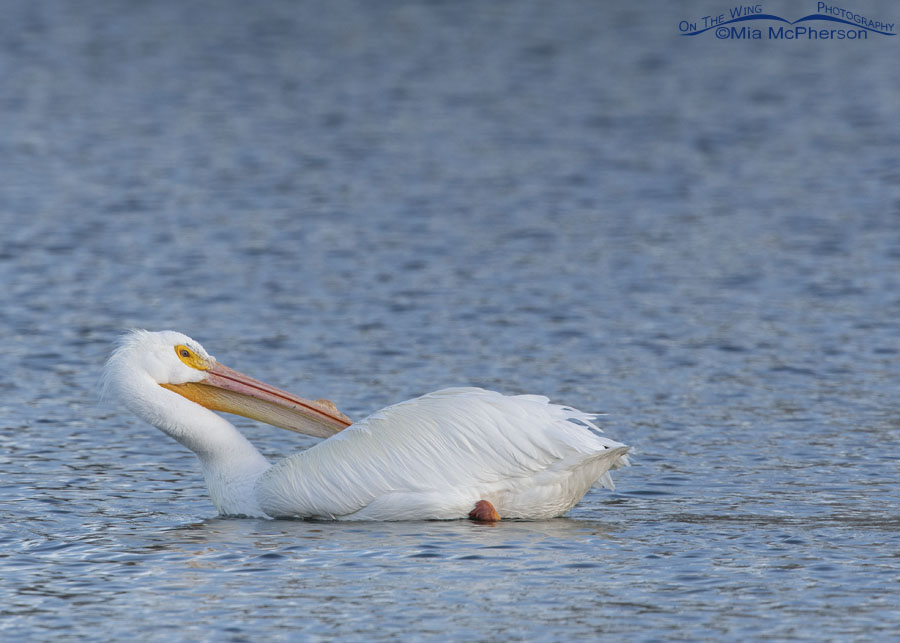
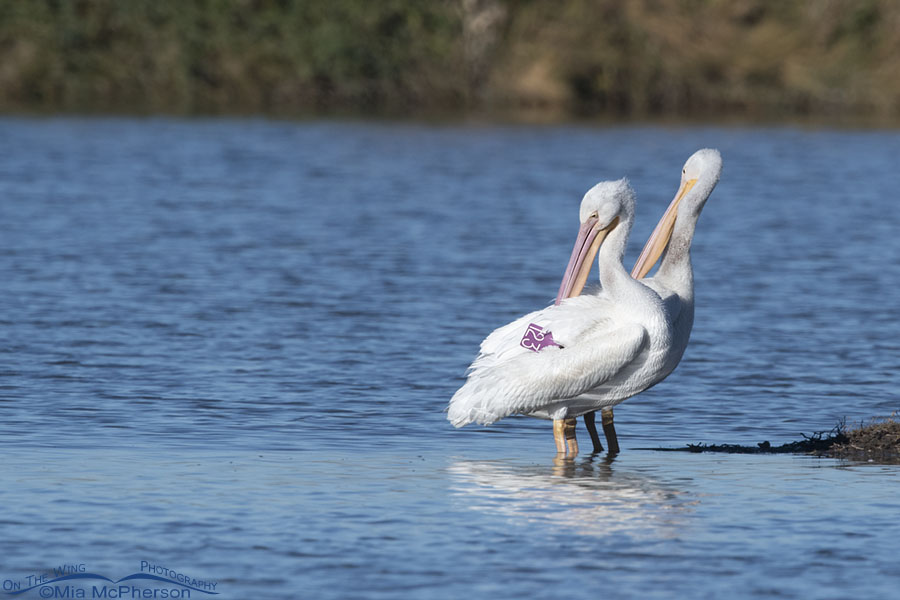
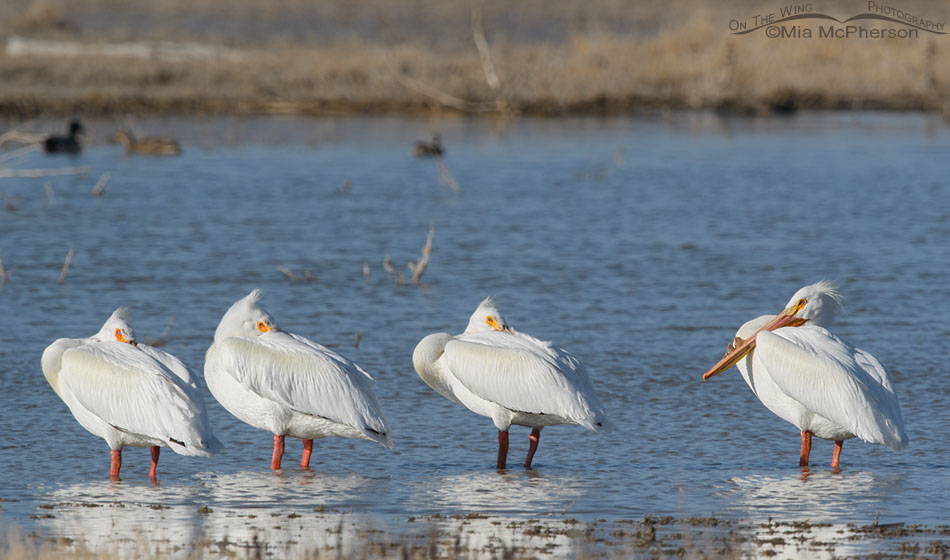
American White Pelicans of the Great Basin

During the winter months I miss seeing large flocks of American White Pelicans (Pelecanus erythrorhynchos) soaring in the thermals, in the past few weeks I have been delighted to see them again.

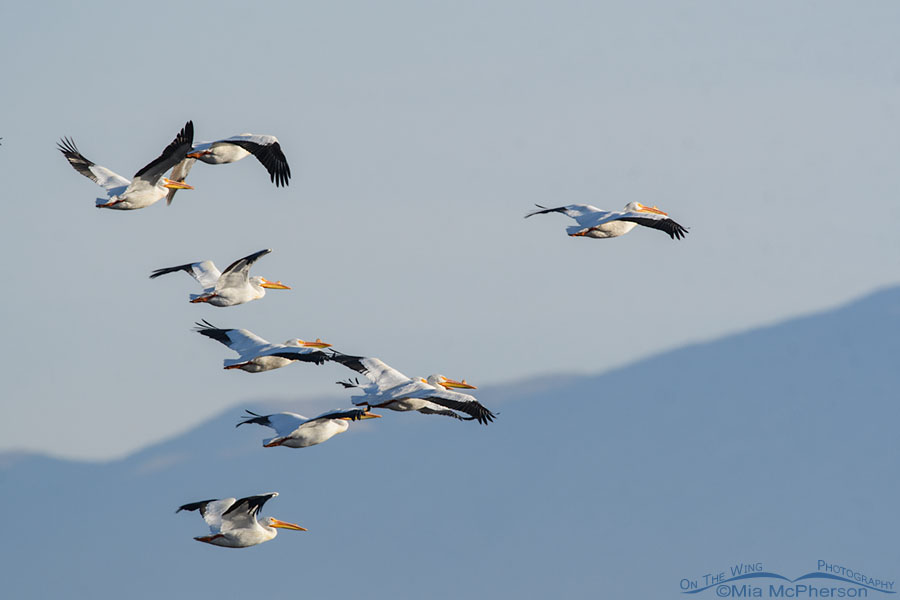
American White Pelicans soaring on a thermal over the Great Salt Lake

American White Pelicans soaring on a thermal over the Great Salt Lake - Nikon D300, f7.1, 1/1250, ISO 640, +1.3 EV, Nikkor 200-400mm VR with 1.4x TC at 200mm, natural light

It is hard to explain to a person who has never seen American White Pelicans circling on the thermals how amazing it is to see a large flock seemingly disappear from the sky and then a split second later see them reappear. It is just a matter of their body angle at certain times that makes them nearly invisible as they turn but it sure feels magical to me.

I photographed the pelicans above soaring on a thermal over the Great Salt Lake from Antelope Island State Park last week. There were three separate flocks soaring at first but all of them joined together as I watched and photographed them. American White Pelicans are known to soar to high elevations when soaring in the thermals, they can become invisible to the naked eye and to a person using 10x binoculars.

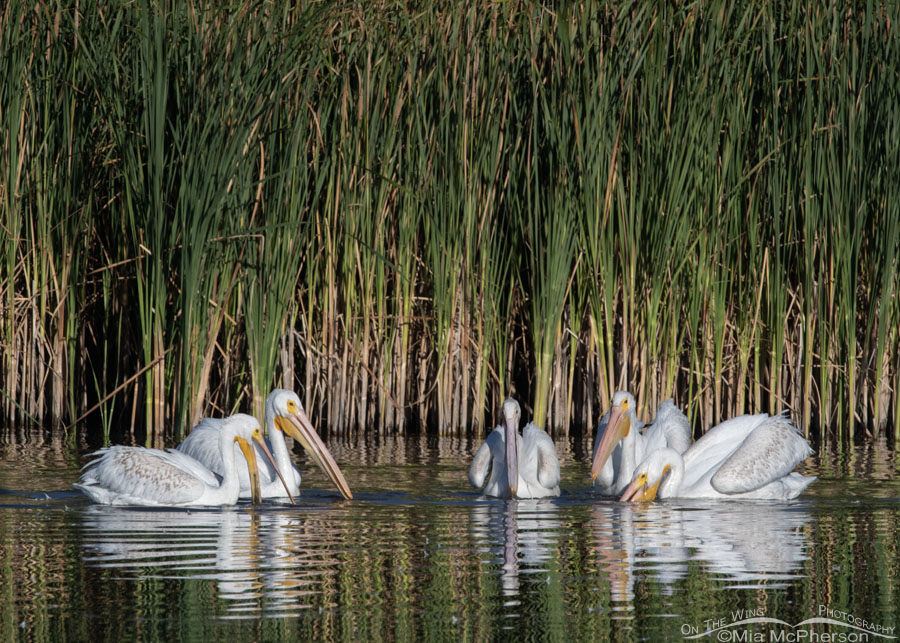
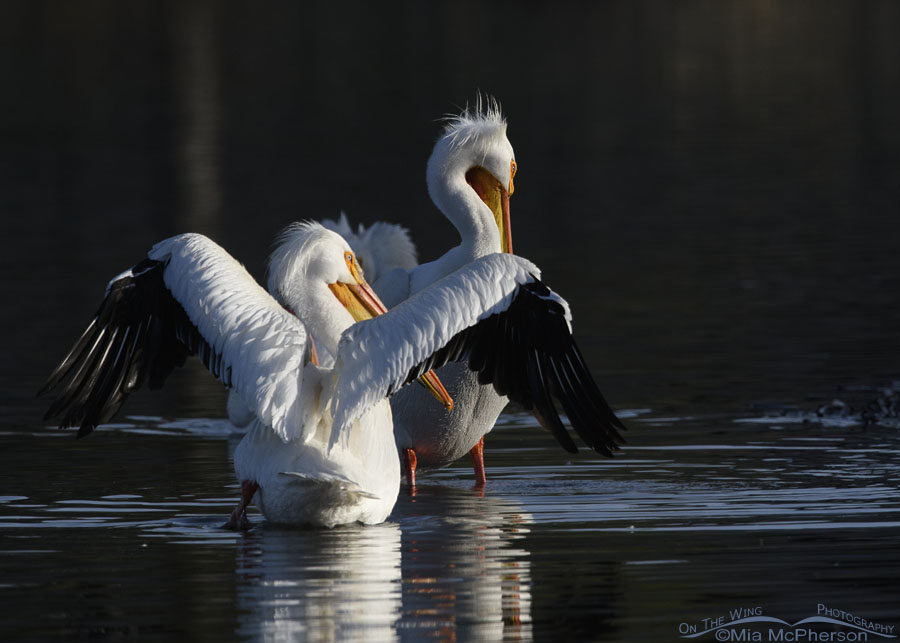
American White Pelicans lifting off

American White Pelicans lifting off - Nikon D300, f6.3, 1/2000, ISO 500, +0.7 EV, Nikkor 200-400mm VR with 1.4x TC at 400mm, natural light

Early this week I spent some time camping at Locomotive Springs, a very desolate, arid and uninhabited area north of the Great Salt Lake and many miles west of I-15. The area is managed by the BLM (Bureau of Land Management) that is only accessible by gravel roads. I photographed these pelicans as they lifted off from one of the springs near the campsite. While the springs are natural they have been altered (improved?) by the BLM and fish are stocked in some of them.

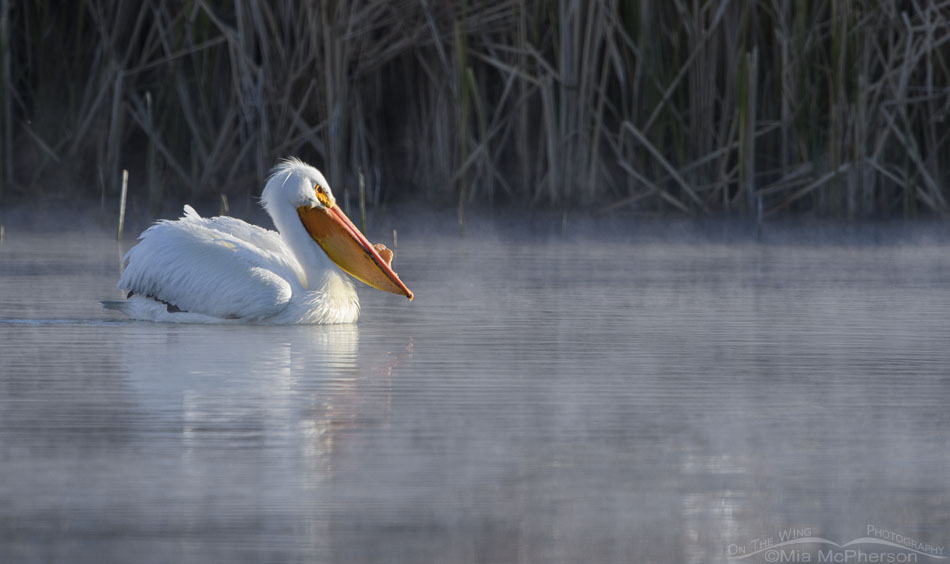
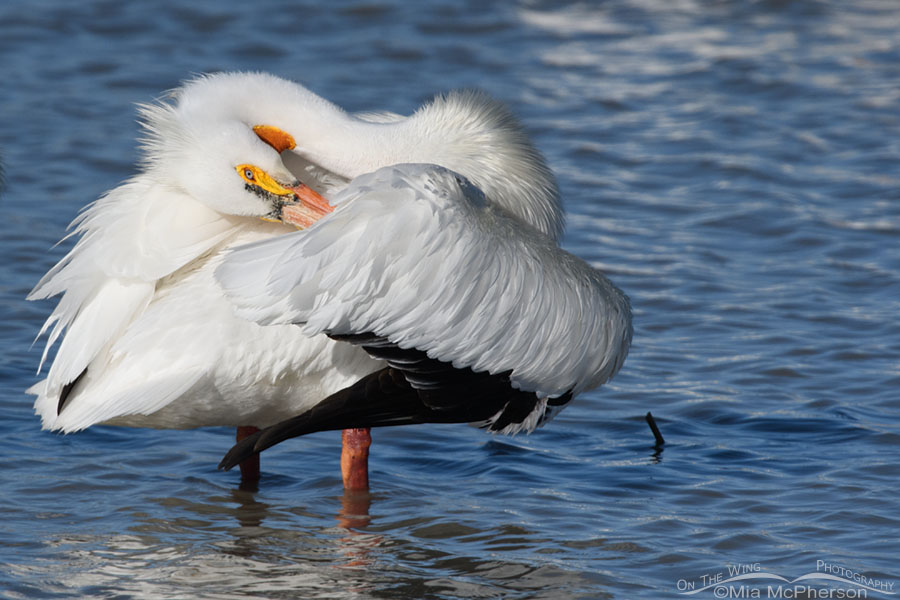
Fluffed up American White Pelican

Fluffed up American White Pelican - Nikon D300, f6.3, 1/2500, ISO 640, Nikkor 200-400mm VR with 1.4x TC at 400mm, natural light

There is a large breeding colony of American White Pelicans on Gunnison Island in the Great Salt Lake, approximately 10 to 20% of the entire population of American White Pelicans breed in that area.

Because the Great Salt Lake is too saline for fish to live in the pelicans fly from Gunnison Island to locations such as Bear River Migratory Bird Refuge (aka Bear River National Wildlife Refuge) about 30 miles to the east to find food. The freshwater areas there do contain fish and large numbers of American White Pelicans can be found there.

*Access to Gunnison Island is restricted to protect the nesting birds.

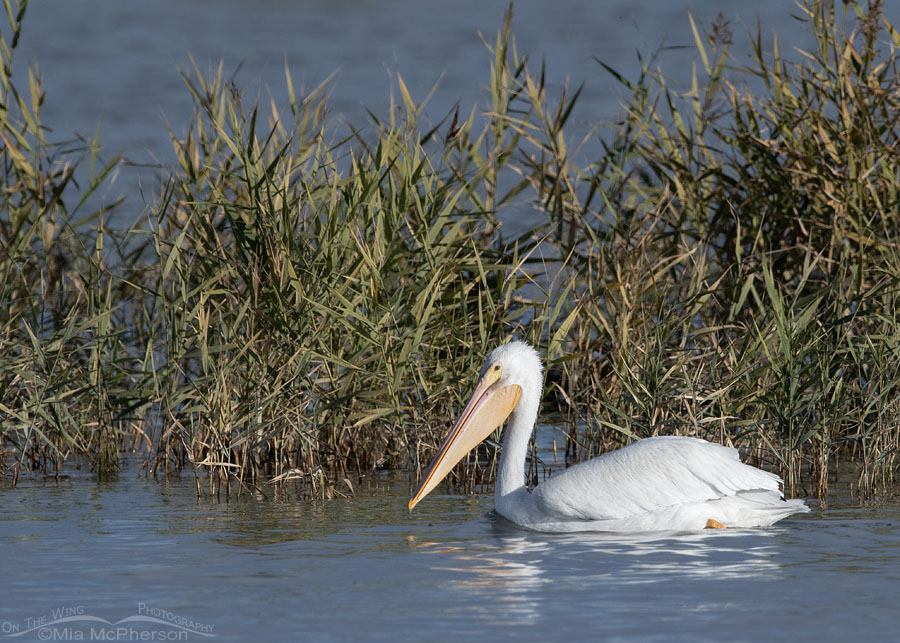
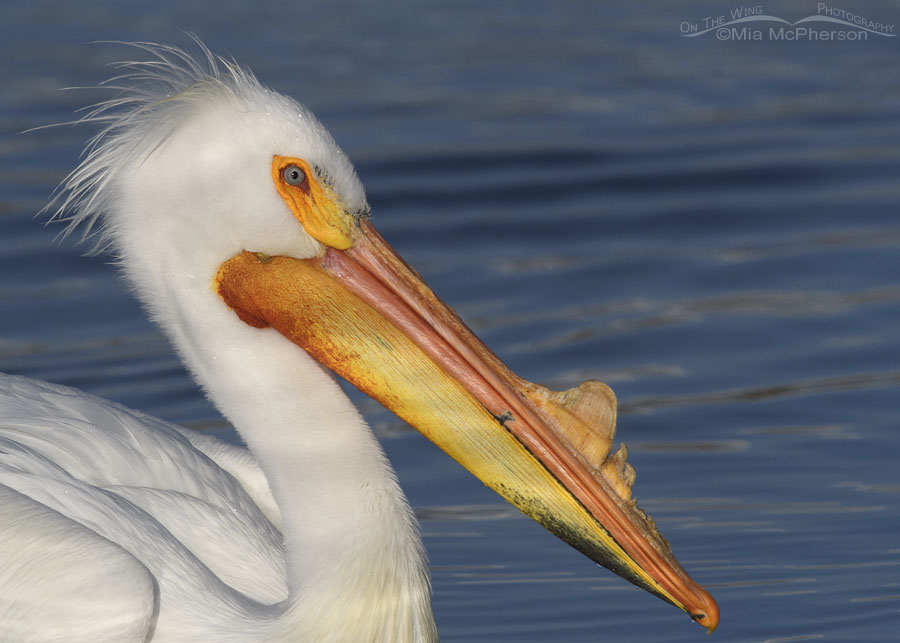
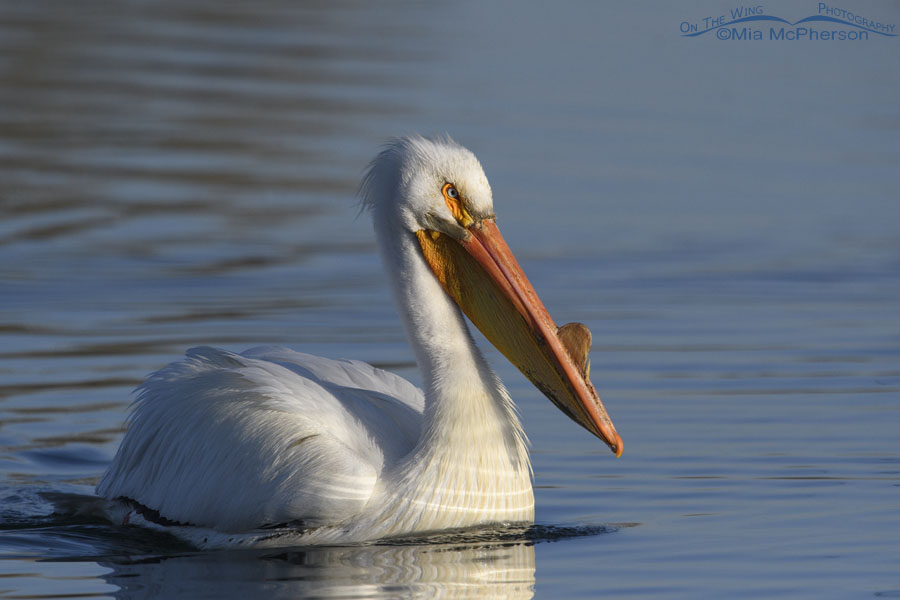
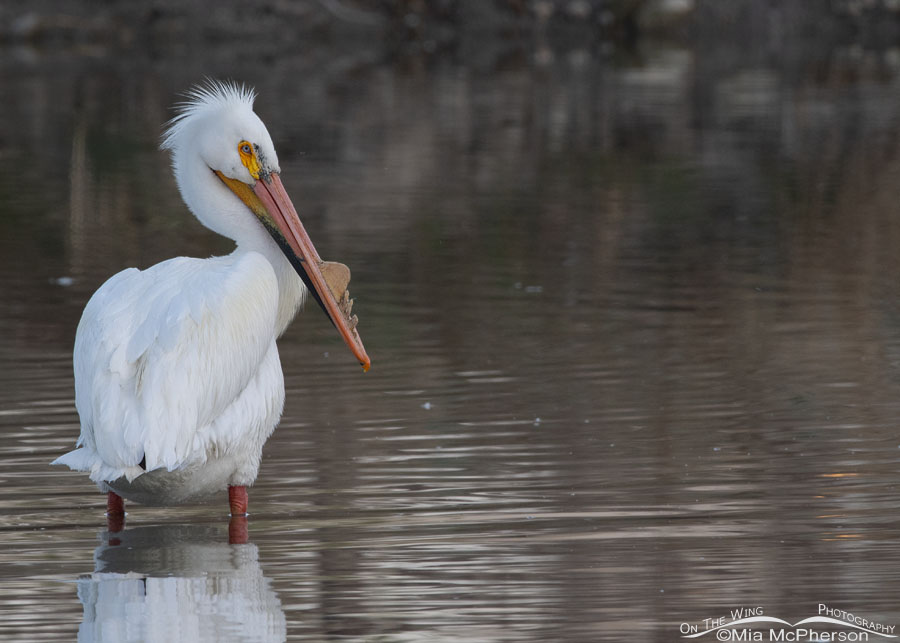
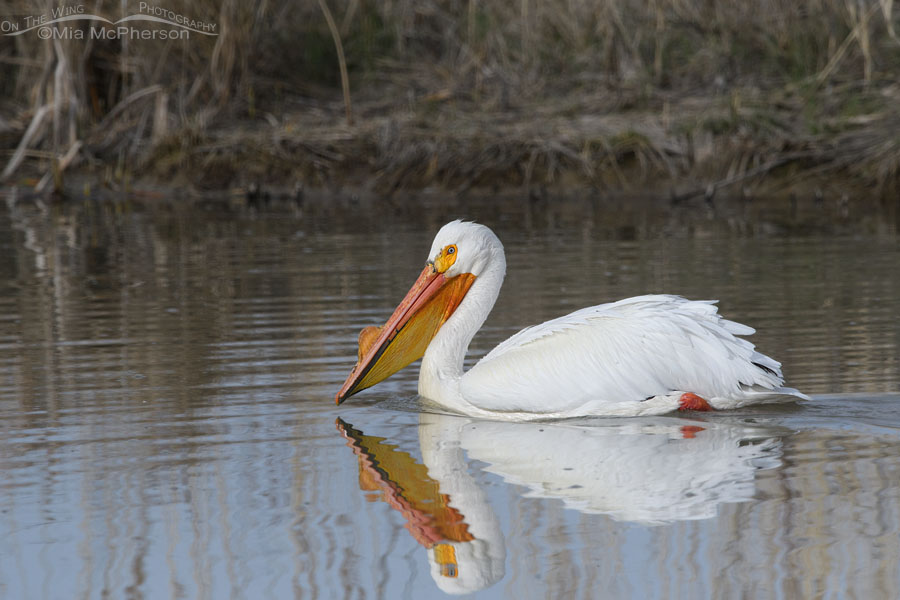
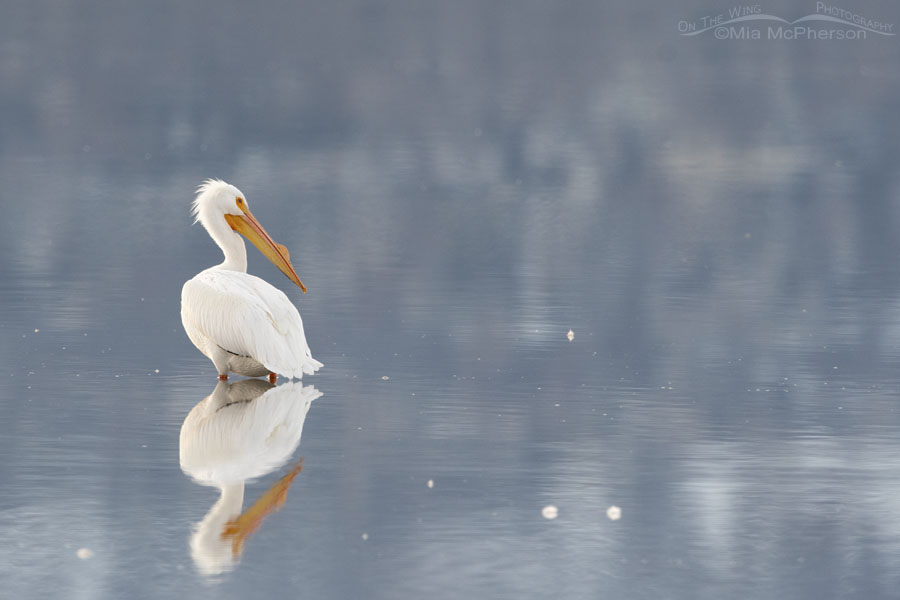
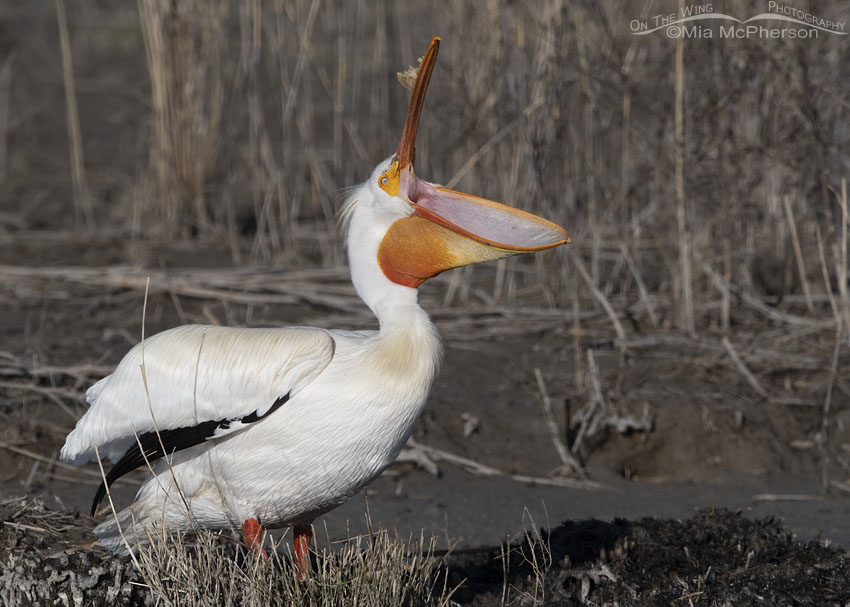
The pelican in the image above has not yet gone into breeding plumage, it does not have the “horn” or “carbuncle” on the bill typically seen in breeding American White Pelicans. I photographed this pelican from the auto tour route this past Monday at Bear River Migratory Bird Refuge.

Adult American White Pelican

Adult American White Pelican - Nikon D300, f6.3, 1/3200, ISO 640, Nikkor 200-400mm VR with 1.4x TC at 400mm, natural light

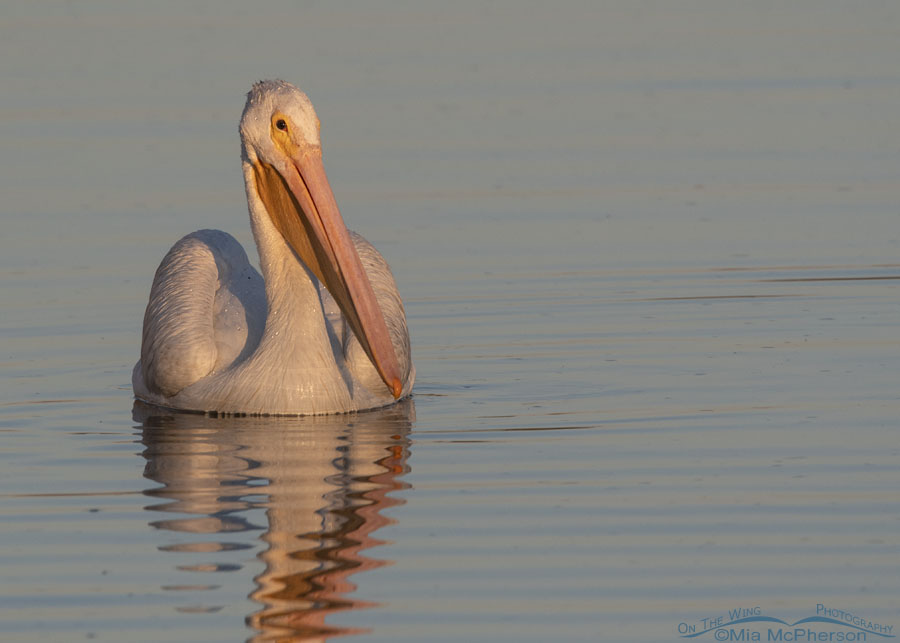
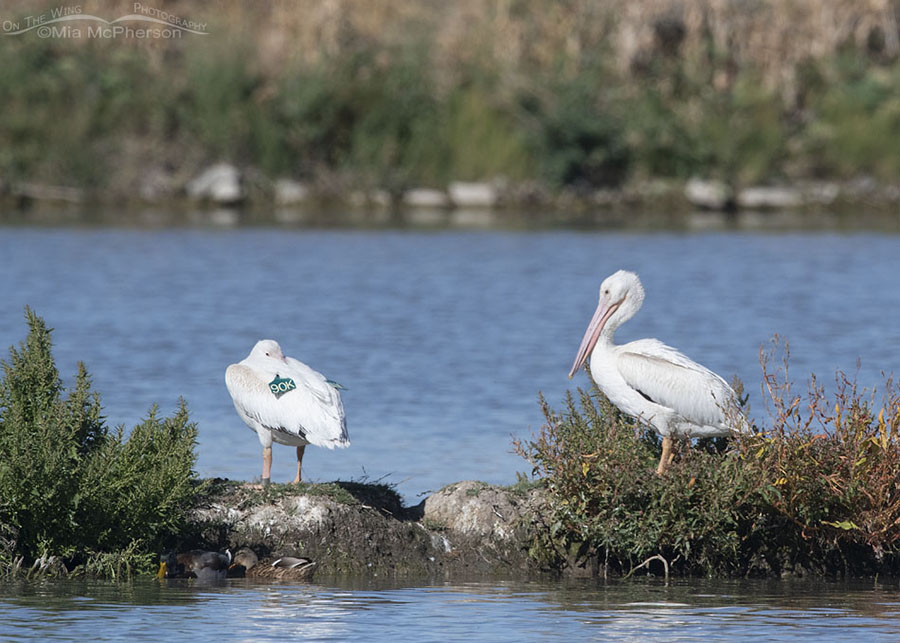
This adult American White Pelican; also photographed this past Monday at the refuge, is in breeding plumage as indicated by the “horn” or “carbuncle” on the bill and the solid white head.

During the summer American White Pelicans are commonly found at Bear River Migratory Bird Refuge, often they can be seen in large numbers feeding in the impoundments, along the marshes and while along the road to the refuge on the Bear River.

I’m glad that the American White Pelicans are back in Utah. Seeing them always delights me.

Mia

More American White Pelican images

Facebook Twitter Stumbleupon Digg Delicious Reddit Posterous Pinterest Email

Share

Adult Brown Pelican in flight

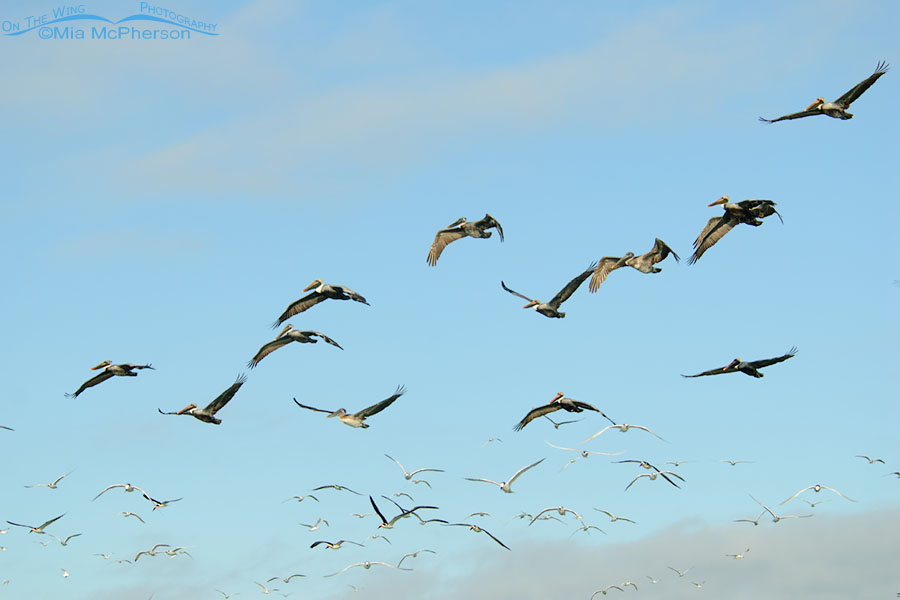
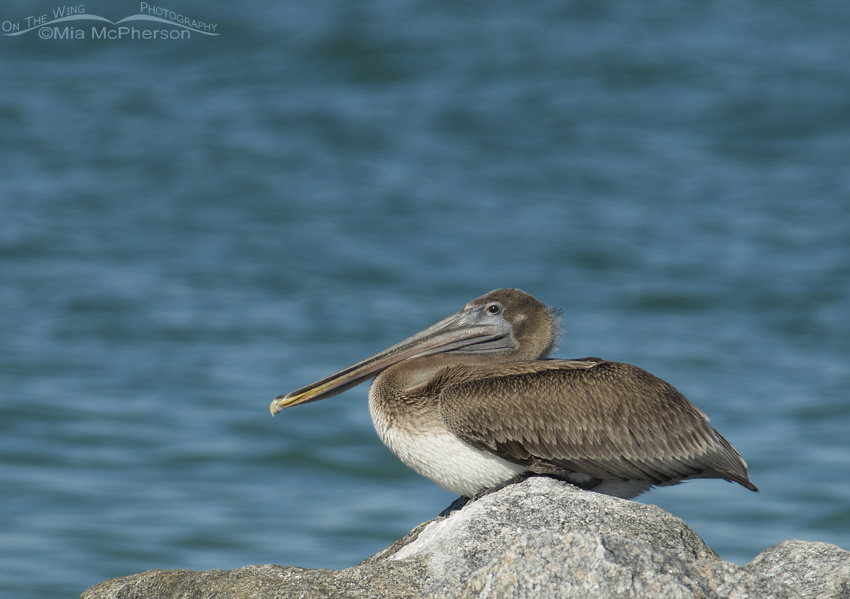
Brown Pelicans (Pelecanus occidentalis) were common year round along the Gulf coast when I lived in Florida. I would see them floating in the water, resting on sandbars and beaches, diving for prey and in flight.

Adult Brown Pelican in flight

Adult Brown Pelican in flight - Nikon D200, handheld, f6.3, 1/1250, ISO 250, Nikkor 80-400mm VR at 400mm, natural light

This adult Brown Pelican is in breeding plumage as indicated by the orange tipped bill, what you can not see because of the wing and neck position is the dark plumage along the backside of the neck.  I photographed this bird on the west coast of Florida as it flew past me over the Gulf of Mexico.

Mia

More Brown Pelican images

Facebook Twitter Stumbleupon Digg Delicious Reddit Posterous Pinterest Email

Share

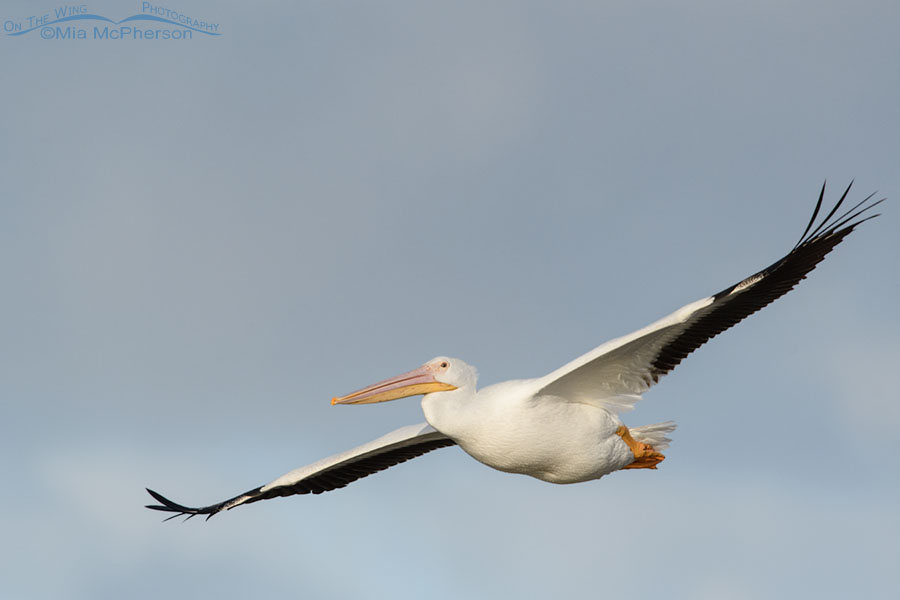
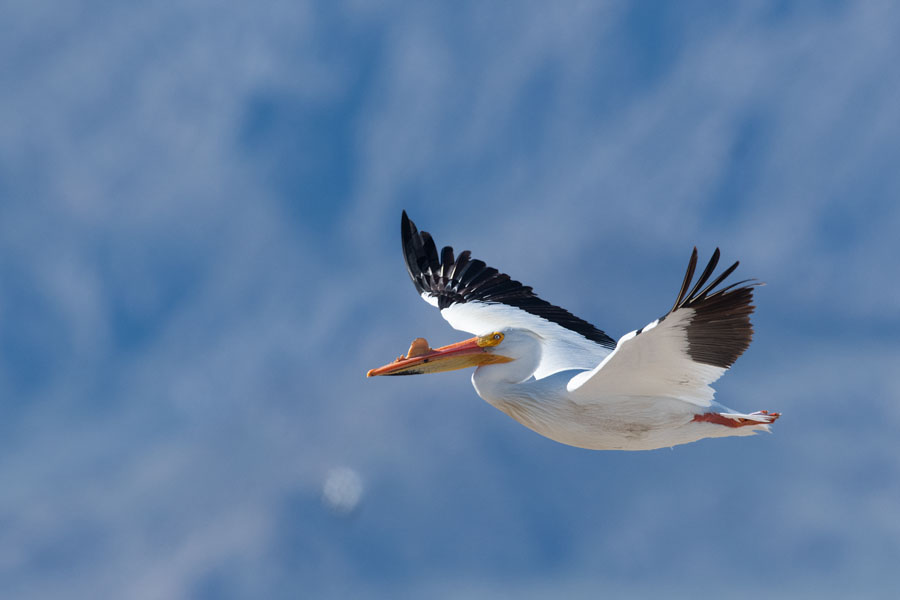
American White Pelican in flight

Not far from where I live there is a small pond where I photographed this American White Pelican (Pelecanus erythrorhynchos) just after it had lifted off from the water two springs ago.

I woke this morning to find the ground blanketed in fresh snow. Later this week the forecasters say it will be in the 70′s, crazy spring weather.

American White Pelican in flight

American White Pelican in flight - Nikon D200, tripod mounted, f6.3, 1/1000, ISO 320, +1.0 EV, Nikkor 200-400mm VR with 1.4x TC at 215mm, natural light

I don’t have to go far from home to photograph birds because of that pond being nearby but it can be a challenge trying to frame a shot where the hand of man isn’t obvious when the birds are in flight. There are power lines, power poles, tall lights from a baseball field and quite often airplanes in the sky.

What can not be seen in this image is a huge power pole just outside the left side of the frame. I cropped this image to remove it.

Mia

* Check out my monthly post over at BirdingIsFun.com

Facebook Twitter Stumbleupon Digg Delicious Reddit Posterous Pinterest Email

Share

Signs of Spring ~ American Avocets and Double-crested Cormorants

It has been a very weird winter here in Utah, there hasn’t been much snow at all in the Salt Lake Valley and temperatures have been warmer than normal. For a few weeks it has felt like spring. This week I saw a report of butterflies already flitting around and the trees I see have buds that look like they are ready to burst open.

Birds that I normally expect to photograph in the winter have been scarce, for instance the Bald Eagles at Farmington Bay WMA where last year I could count hundreds on any given day in February and this year I’ve been lucky to see more than 4 at a time.

So I’ve found myself wishing for the arrival of “spring birds” on more than one occasion because bird photography has been rather slow the last few weeks.

Swimming Double-crested Cormorant (Phalacrocorax auritus)

Swimming Double-crested Cormorant (Phalacrocorax auritus) ~ Salt Lake County, Utah
Nikon D200, f6.3, 1/640, ISO 400, +0.7 EV, Nikkor 200-400mm with 1.4x TC at 400mm, natural light

Today I went out to Antelope Island State Park not expecting much because it has been very slow out there for bird photography lately and for the most part I was correct. But at the marina I saw some dark shapes in the sky flying very rapidly. I realized they were Cormorants as soon as my lens could focus on them! My FOY (first of the year) Double-crested Cormorants! There were four of them and they were too far away to get decent images but I felt like dancing because in my mind they are “spring birds“. Hooray!

American Avocet (Recurvirostra americana) in flight

American Avocet (Recurvirostra americana) in flight ~ Farmington Bay Wildlife Management Area, Utah
Nikon D200, f8, 1/2000, ISO 400, +0.3 EV, Nikkor 200-400mm VR with 1.4x TC at 400mm, natural light

Just about a mile away from the park entrance I caught sight of a bird in flight and wondered what it was. My first instinct was “American Avocet” but it seems a little early for them. But I was right on the ID and saw not just one but two of them in flying along the causeway. Wow, more “spring birds“!

Oh yeah, I’m ready for the birds of spring.

Mia

(These images were taken previously, not today)

More American Avocet images
More Double-crested Cormorant images

Facebook Twitter Stumbleupon Digg Delicious Reddit Posterous Pinterest Email

Share

The Dangers of Fishing Line and Hooks for Birds and other Wildlife

I see and photograph the most incredible birds and wildlife often and it brings me much joy but there is a flip side to my photography that is saddening, maddening and very disheartening. I don’t always see beauty, sometimes I see pain, suffering and death.

Laughing Gull with fish hook in bill and legs too tangled to walk

I recall vividly the morning I spotted this Laughing Gull that it wasn’t acting like the other gulls on the beach nearby so I focused on the bird and felt my stomach twist into a knot as it became clear to me that the gull had a fish hook imbedded in its throat and bill. It couldn’t close its bill. Then I noticed that its feet were entangled with monofilament fishing line so badly that it could barely walk. About all it could do was shuffle its feet.  I wanted to get help for the Laughing Gull but at the time I didn’t have a smart phone, I had no access to the internet and I didn’t have the number to the park’s headquarters.  Plus I couldn’t capture the bird to take to a rescue group because it could still fly. And when it did fly off the knot in my gut worsened because I knew that without help the gull would soon die. That is such a helpless feeling. 

Fishing Lures left on a snag in a tidal lagoon

Fishing Lures left on a snag in a tidal lagoon

Monofilament fishing line, lures, hooks, metal leads and weights present huge dangers to birds and wildlife  when they are not properly disposed of.  Monofilament lines can tangle around the bills, feet, wings, legs and necks of birds which can result in death, amputations of  feet, legs and wings and when the line is around the neck the possibility of  a  slow, painful  strangulation.

After photographing these lures I removed them from the snag and disposed of them properly. The snag wasn’t in deep water, it only came to my knees and I don’t understand why the fishermen didn’t wade out and remove it. I can’t understand.

White Ibis with foot tangled in fishing line

I can not count the times I have encountered a bird with missing feet or partial amputations of their legs. I have just seen that many.

The fishing line is tangled around the foot so tight of this White Ibis that the foot is extremely swollen and it appeared obviously painful to the bird because it did not place that foot on the ground while I observed it, instead it hopped on the other leg to move on the ground.  The Ibis flew off before I could call the Suncoast Seabird Sanctuary in St. Petersburg to ask for help. Once again I wondered about the face of this beautiful bird.

After my experience with the Laughing Gull tangled in fishing line I had placed the phone numbers for the Suncoast Seabird Sanctuary and the park headquarters in my contacts list in my cell phone.

Fishing lure
Fishing lure

Quite often fishing lures resemble fish, shrimp or other food items for the fishermen’s intended targets, the problem is that these lures often look enticing to birds, mammals and sea creatures. I found this lure while walking along a sandy beach and not only could it have become an item to kill birds or wildlife it could have gotten stuck in the soles of a child’s foot who then may not have only been in pain but might have been subjected to Tetanus injections or have developed an infection.

I picked the lure up, placed it in this tree to photograph it and then carried it to a trash receptacle to dispose of it.  A pretty simple way of protecting wildlife and people from the dangers of this lure, I wish it were done more often.

Laughing Gull with fishing line & lure in bill

This Laughing Gull had obviously swallowed a hook or a lure and had a long strand of the fishing line hanging from its bill the evening that I photographed it. I was heart broken that before I could call for help a person walked close enough to make the gull fly away. If I could have reached the park rangers or the rescue group they may have been able to throw a net over the bird to capture it, remove the hook and release it.  

Used fishing line container

Many parks and recreation areas have now installed used fishing line containers within easy walking distance to fishing areas where fishing line, weights, leads, hooks and lures can be properly and safely disposed of.  I find it sad that even in locations with these containers that I still find fishing line and hooks on the ground presenting dangers to birds, wildlife and people. Is there an excuse for not walking a few feet to get rid of these items in a safe manner? I don’t think so.

Double-crested Cormorant in danger

I have been able to aid in the rescue of several birds including the Double-crested Cormorant shown above. I was photographing birds near the Gulf Pier at Fort De Soto when I noticed this bird sitting on the beach. I could see the hook in the bill without using my lens so I knelt down, focused on the bird and could see a metal leader and a lead weight. I could also see that the dull color of this bird’s eyes indicated that it was growing weaker. I was able to call Jim Wilson at park headquarters who said he’d be there quickly. I stood guard over the bird so that if people approached it I could ask them to stay far enough away that the bird would not take flight or enter the water. Jim and a few other rangers showed up, captured the Cormorant and got it to the Suncoast Seabird Sanctuary where the hook was removed and when the bird was healthy again it was released into the wild. 

If you are a fishermen, please dispose of used line, hooks, lures and lead weights properly if at all possible. You could be saving the lives of birds and wildlife and looking after the environment.

They belong on this planet as much as we humans do.

Mia


Facebook Twitter Stumbleupon Digg Delicious Reddit Posterous Pinterest Email

Share