A Golden Eagle that was TOO close

Golden Eagle - TOO Close!
Golden Eagle – TOO Close

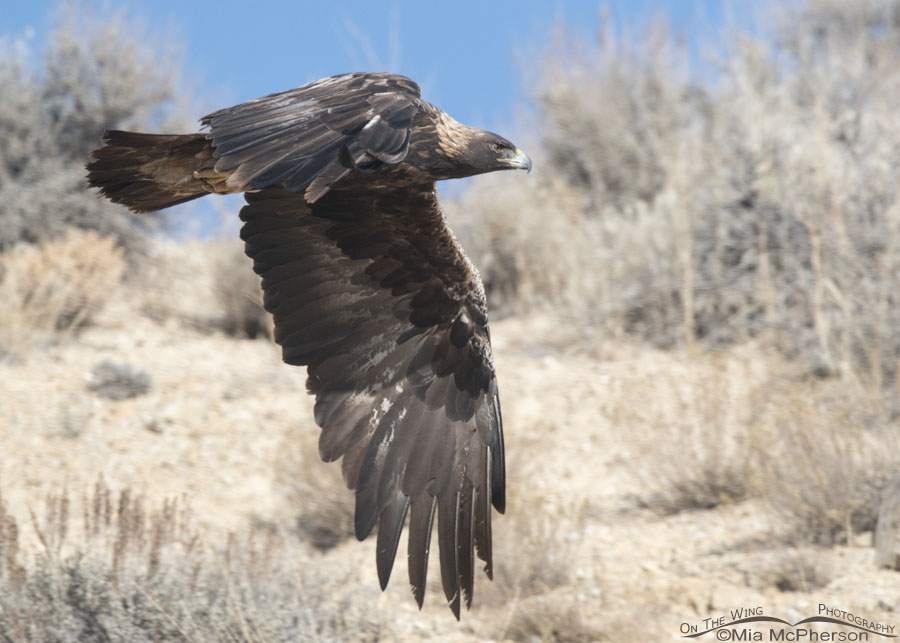
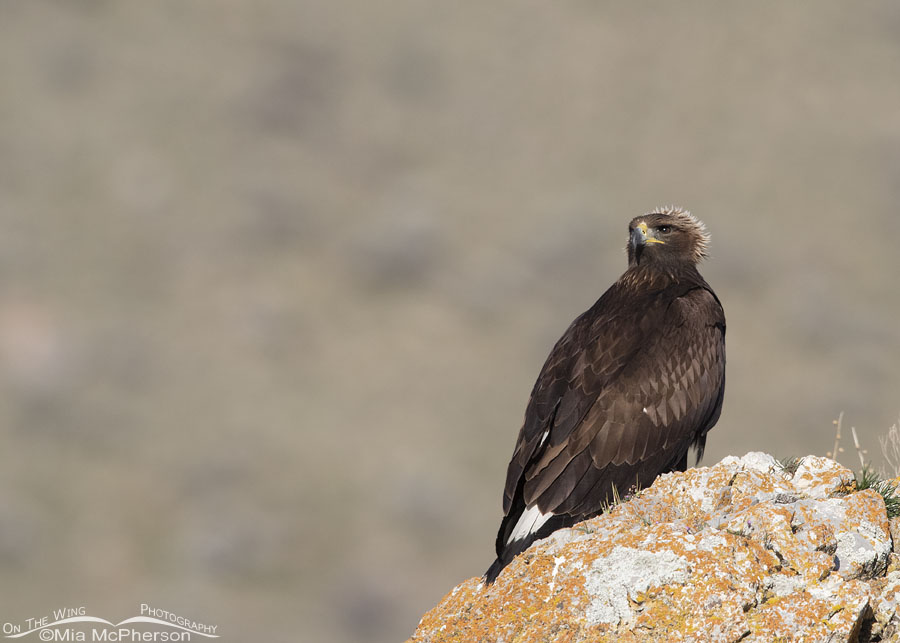
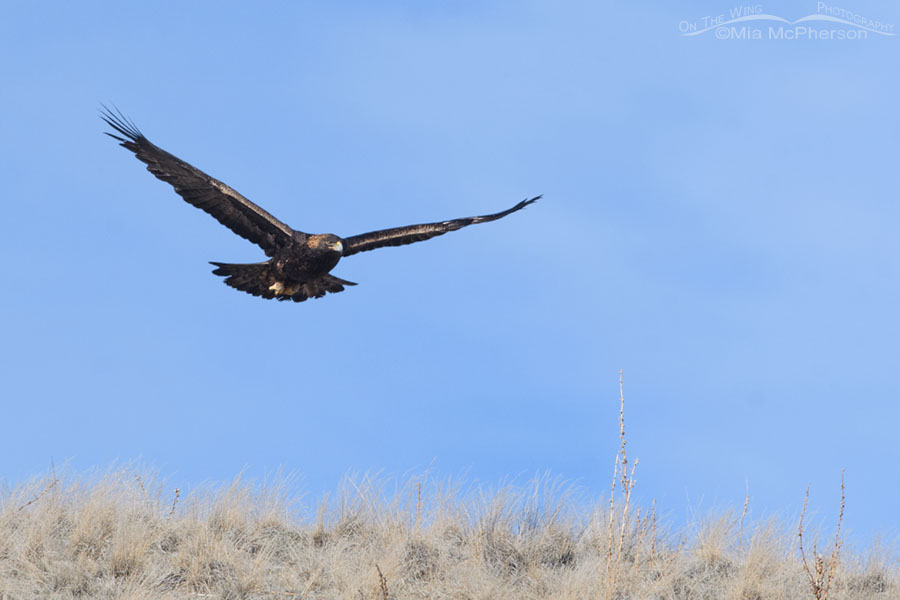
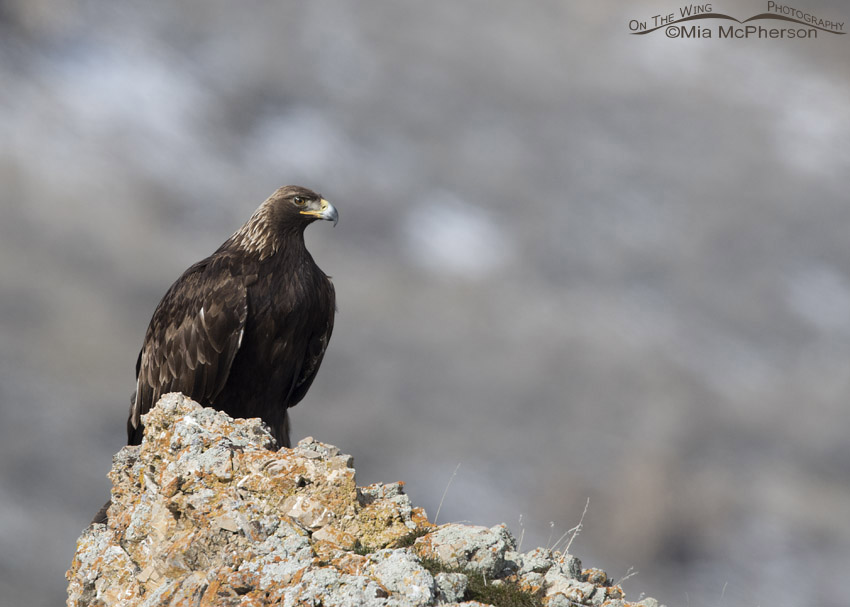
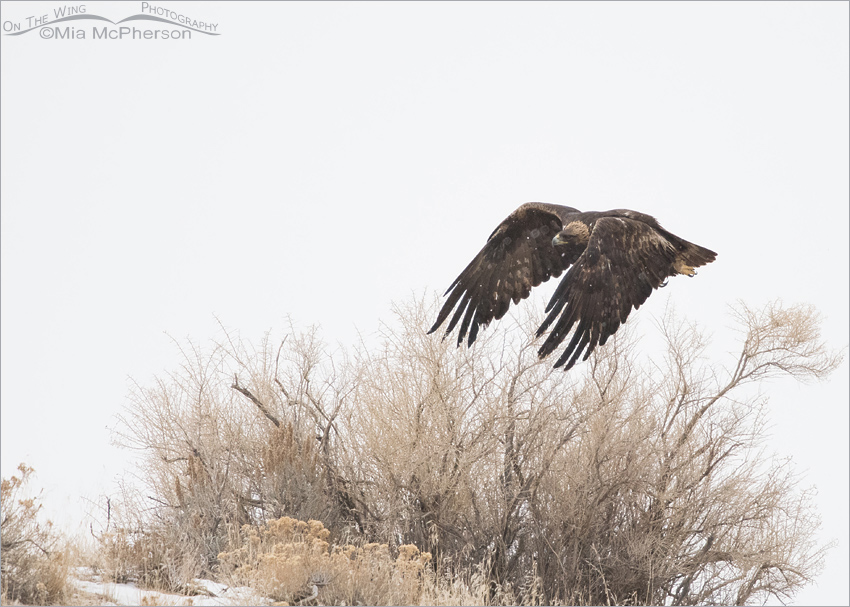
Early yesterday morning Antelope Island State Park did not have the best conditions for bird photography, there were clouds, a bit of lake fog and low light so when I spotted this Golden Eagle perched on a Sagebrush in those conditions I was dismayed.

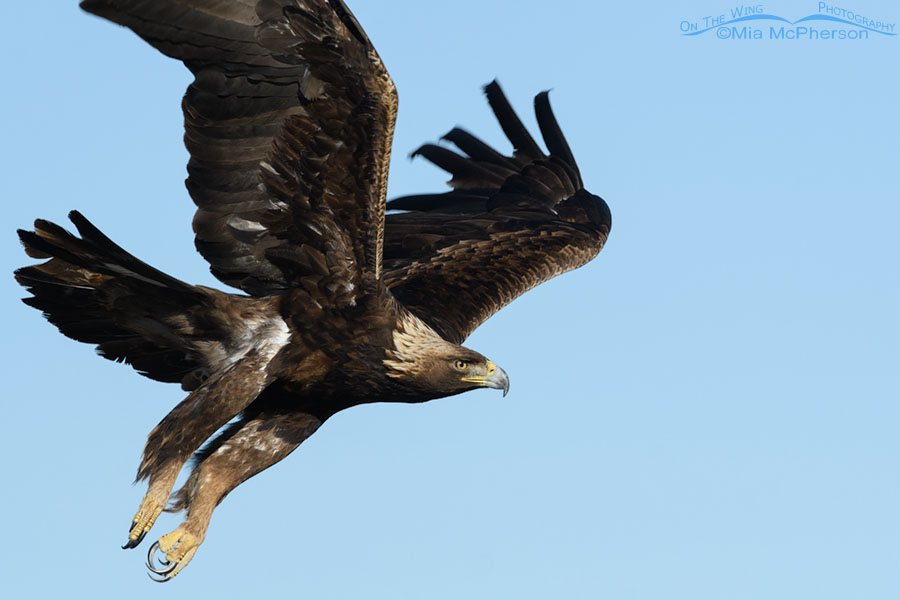
Several Black-billed Magpies drew my attention to the eagle, I wouldn’t say they were mobbing it but I could tell they were very aware of the Golden eagle’s presence. I was able to get a few images of the Golden on top of the Sagebrush before it took flight, oh; how I wish the light had been much better than it actually was. The eagle pooped and I knew it was going to take flight so I started taking images as soon as it lifted off and to my surprise it flew towards us and then right over the pickup.

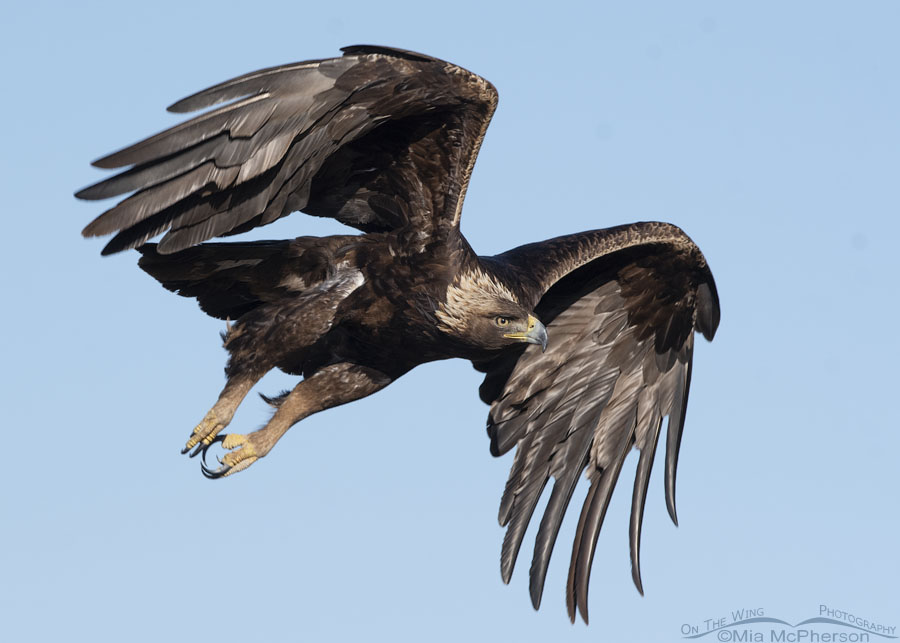
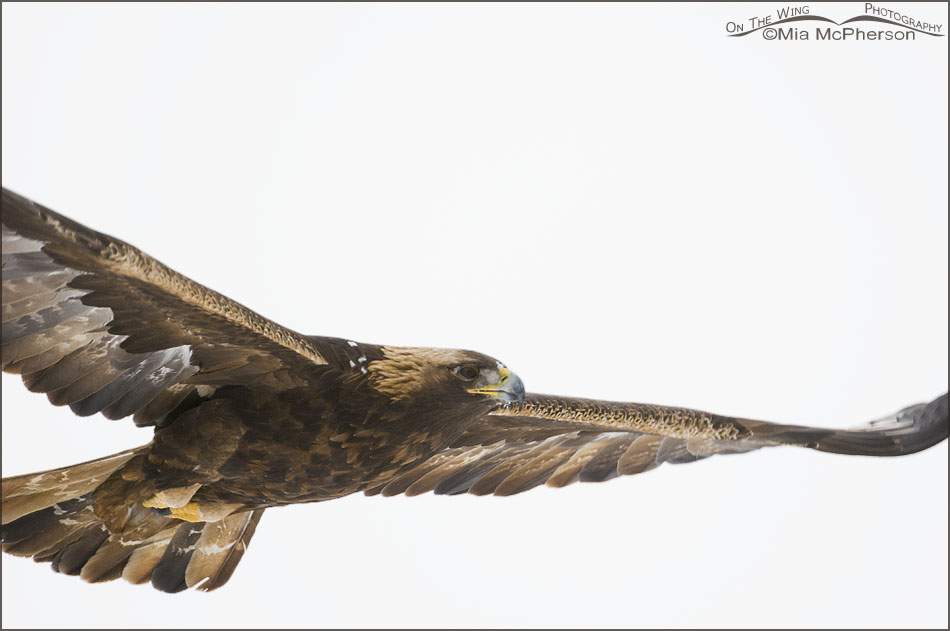
I didn’t have time to pull back my zoom but I was able to lock on focus right after the bird came too close for me to fit its whole body in the frame. And the image ended up high key because of the clouds in the background.

Most of the time I “wish” that Golden Eagles were closer so I could take some high quality images of them but yesterday I was wishing this one had stayed just a bit further away. The life of a bird photographer… full of joy, wonder and sometimes disappointment but I wouldn’t trade it for anything!

The light got better of course later in the morning when the Golden Eagle was nowhere to be found. The rest of the morning was spent at Farmington Bay WMA where I took the Great Blue Heron images I published earlier today and some Barn Owls in flight.

Mia

*This image is full frame by the way!

Facebook Twitter

Almost – Golden Eagle in flight


Golden Eagle in flight

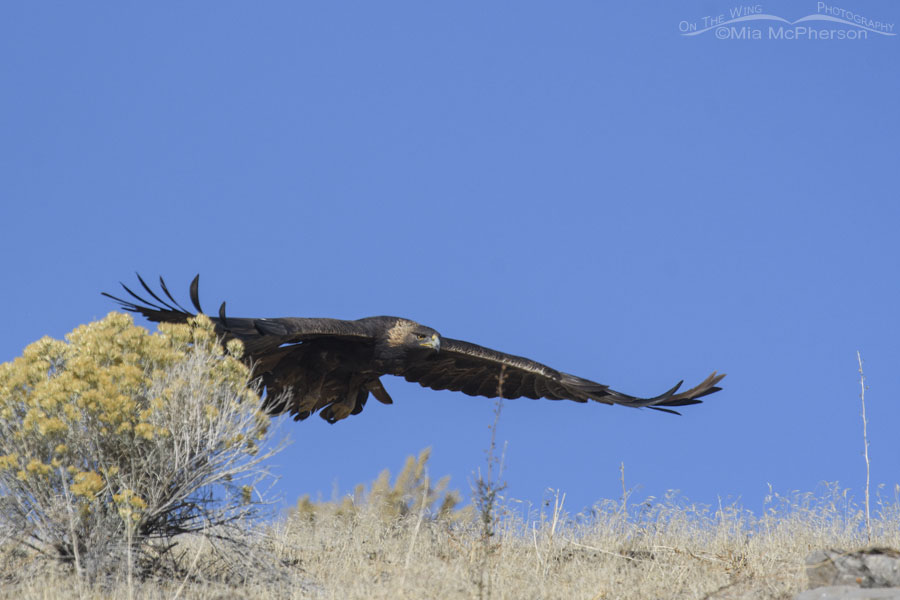
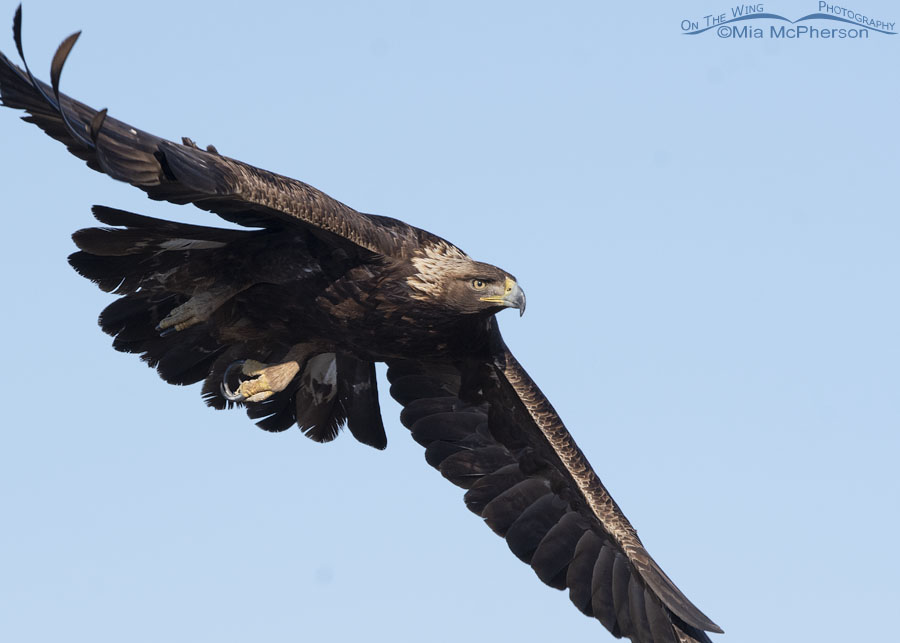
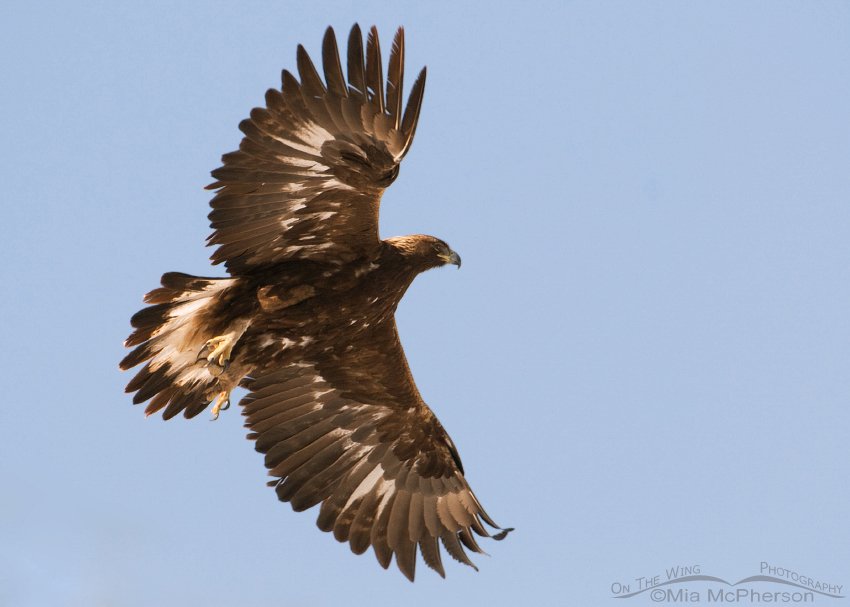
Golden Eagle in flight – Nikon D300, f6.3, 1/400, ISO 640, Nikkor 200-400mm with 1.4x TC at 285mm, natural light, not baited

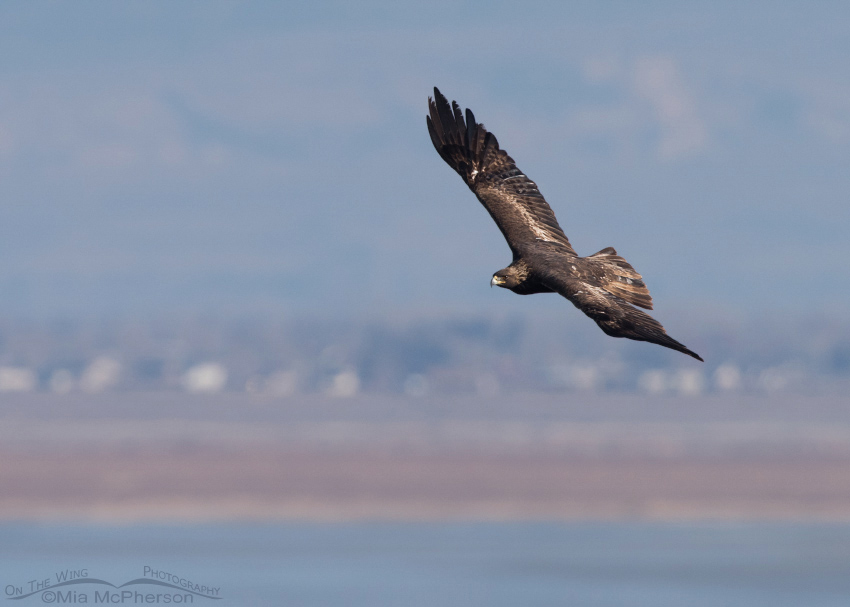
Golden Eagles (Aquila chrysaetos) have thus far been a nemesis bird for me and when I spotted one yesterday I thought I might finally get the shots I have long wanted.  When the huge raptor flew closer I thought there was a strong possibility.

If the eagle had flown the other way the light would have been better on the face and the underside of the bird would have been brighter too.

I love the pose, the spread wings, the eye contact and the simple, unobtrusive background.

It is still just “Almost”.

I’ll keep trying though.

Mia

Facebook Twitter

Flaming Gorge National Recreation Area

Last September I visited Flaming Gorge National Recreation area for the first time. Wow, nature never ceases to delight and amaze me.

My eyes had trouble keeping up with all of the fantastic sights that I saw from the brilliant red walls of the Flaming Gorge Canyon, the stunning blues of the Flaming Gorge Reservoir, the gentle slope of Antelope Flat and the rugged mountains of the Ashley Forest. I had heard about Flaming Gorge National Recreation Area but nothing that I had heard prepared me for the grandness of this area.

Flaming Gorge from above Sheep Creek Bay

Flaming Gorge from above Sheep Creek Bay
Nikon D200, handheld, f/16, 1/160, ISO 400, +0.3 EV, Nikkor 18-200mm VR at 18mm

John Wesley Powell; whose mapping party was the first known to make passage down the Colorado River through the Grand Canyon, discovered this area during his expedition in May of 1869. This canyon was named because of its “flaming, brilliant red” color and I can truly understand why. The image above was taken after the sun had risen, at different times of the day the red is much more vivid.

Flaming Gorge Dam

Flaming Gorge Dam
Nikon D200, handheld, f7.1, 1/160, ISO 400, +1.0 EV, Nikkor 18-200mm at 18mm

 In 1964 a 500 foot dam was placed in the Flaming Gorge Canyon to harness hydroelectric power from the Green River. Flaming Gorge Reservoir is 91 miles in length and this National Recreation Area; established by Congress in October of 1968, is shared by the states of Utah and Wyoming. To get from one side of the canyon to the other there is a road that goes across the top of the dam.

View from above the Flaming Gorge Reservoir
Nikon D200, handheld, f16, 1/125, ISO 400, -1.0 EV, Nikkor 18-200mm VR at 31mm

Recreation in the area includes boating, fishing, hiking, camping, looking for petroglyphs, backpacking, horseback riding, cross country skiing and snow-mobiling. I haven’t found a site yet that lists birding or bird photography for recreation within the area but I’d say that the area is rich in birds and wildlife.

The dam is just out of view on the left side of this frame. In this location while I was there I saw huge flocks of Turkey Vultures soaring near the white bridge in the photo and several unoccupied Osprey nests. There were also Bald Eagles in the area.

Bighorn Sheep (Ovis canadensis) ewe
Nikon D200, handheld, f9, 1/80, ISO 320, Nikkor 70-300mm VR at 300mm

We spent the first night camped near the Red Canyon Visitor Center in the cliffs about 1300 feet above the surface of the reservoir. Birds seen there included Turkey Vultures riding the thermals along the cliffs, Northern Flickers, Ospreys, Clark’s Nutcrackers and more.

I was super excited that there were herds of Bighorn Sheep in the area near the campsite, sometimes coming within 40 feet of the campsite and even closer to the truck. I didn’t see any rams unfortunately but I was able to photograph the ewes and their young. More images of the Bighorn Sheep can be seen here.

View of Flaming Gorge from the Dowd Mountain Overlook
Nikon D200, handheld, f16, 1/250, ISO 400, Nikkor 18-200mm VR at 29mm

Another location where I spotted flocks of Bighorn Sheep was driving up to the Dowd Mountain Overlook which has expansive views of Flaming Gorge Canyon and Reservoir from an elevation of 8087 feet.  Clark’s Nutcrackers also seem to love the abundant Pinion Pines in that location as I spotted many of them flying overhead. Of course I had my D200 with the wide angle lens in hand when they flew over, not when I had my 200-400mm VR within reach! It figures, right?

I’m not much on heights but walking along the edge of the overlook and looking down into the canyon was dizzying in a good way. My knees still wobbled some though.

Looking down on the Swett Ranch Historic Site

Looking down on the Swett Ranch Historic Site
Nikon D200, handheld, f18, 1/250, ISO 400, -0.3 EV, Nikkor 18-200mm VR at 80mm

Not far from the Red Canyon Visitor Center is an overlook that has great views of the Flaming Gorge Canyon and the Swett Ranch Historic Site. The ranch was occupied by Oscar and Emma Swett plus their nine children through most of the 1900′s. The U.S. Forest Service now operates the ranch as a working historic site. The ranch closes on Labor Day so I didn’t go down to get a closer view, I’m sure it is very interesting though and I adore photographing old buildings.

 Mule Deer (Odocoileus hemionus) doeMule Deer (Odocoileus hemionus) doe
Nikon D300, f7.1, 1/640, ISO 400, +0.3 EV, Nikkor 200-400mm VR with 1.4x TC at 400mm

Mule Deer thrive in the Flaming Gorge National Recreation Area and Ashley National Forest, it is not uncommon to wake up and see Mulies grazing not far from a campsite or see herds of them feeding on the grasses in open areas. Their eyes and long lashes enchant me.

Other large animals that might be seen are elk, moose, wild horses, mountain lions, and bears. I must admit that on the second night spent camped inside the tall pine forest I was cautious about walking around late in the evening or early morning because I didn’t want to meet up with a bull Moose, bear or lion. It was probably a bit too close to the road for them to visit, but you just never know.
Green River

 Green River
Nikon D200, handheld, f11, 1/350, ISO 400, -0.3 EV, Nikkor 18-200mm at 18mm

Below the Flaming Gorge dam the Green River provides great fishing opportunities in areas such as Little Hole, Red Canyon Stretch, Brown’s Park and Devil’s Hole. A 30 pound Brown Trout was caught in this area in 1996.  The scenery alone is spectacular!

In case my mother reads this, no, I didn’t have my fly rod but I know you would love to fish on that river!

View from the camp site towards the Flaming Gorge Canyon

View from the camp site towards the Flaming Gorge Canyon
Nikon D200, handheld, 1/200, f16, ISO 400, +0.3 EV, Nikkor 18-200mm at 18mm

After being primarily up in the higher country of the forest for two days it was quite a change to move camp down to Antelope Flats and the wide open, grassy plain along the reservoir. The quiet was amazing, the view tantalizing and a wonderful peaceful feeling enveloped me. There were small flocks of ducks that would fly by, gulls dipping their bills into the water and Common Loons floated on the gorgeous blue water. There is a loon in this frame in the water just above the Russian Olive but it is too small to see at the size posted.

View from the Antelope Flat camp site

View from the Antelope Flat camp site
Nikon D200, handheld, f22, 1/80, ISO 400, +0.3 EV, Nikkor 18-200mm VR at 44mm

I won’t soon forget how wonderful it was to cook and eat garlic sautéed Shrimp and Cheese Ravioli smothered in Alfredo sauce while looking out at this view. I am certain that a Five Star Restaurant could not have topped this, not even close! Ah…

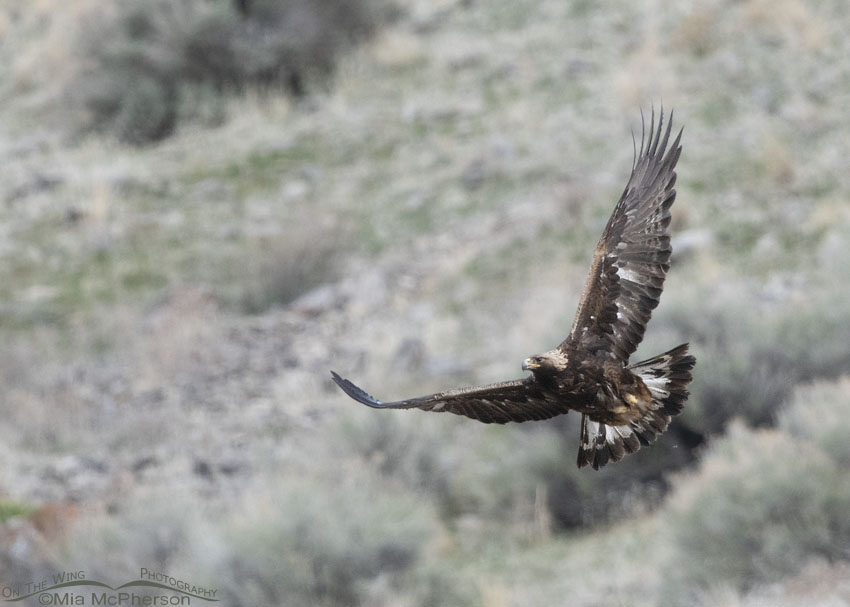
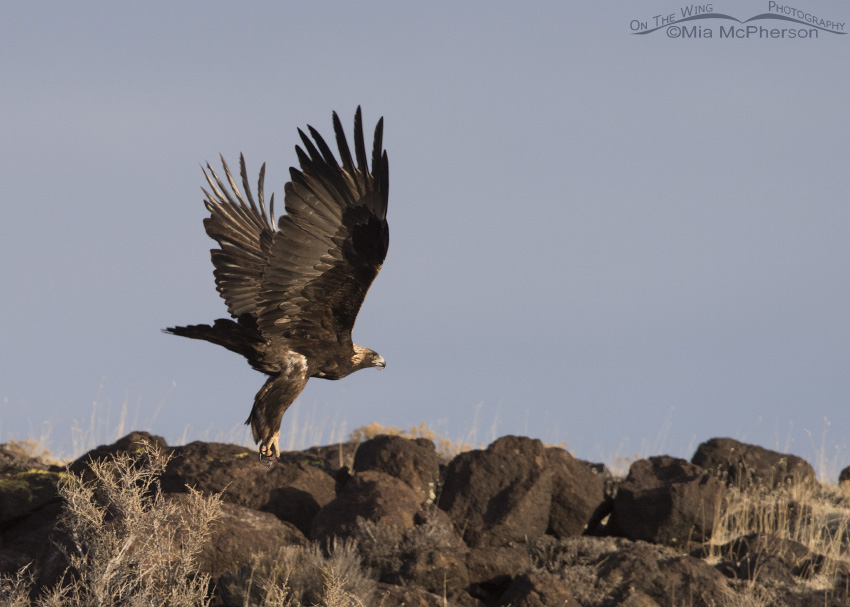
Golden Eagle (Aquila chrysaetos) lift off

Golden Eagle (Aquila chrysaetos) lift off
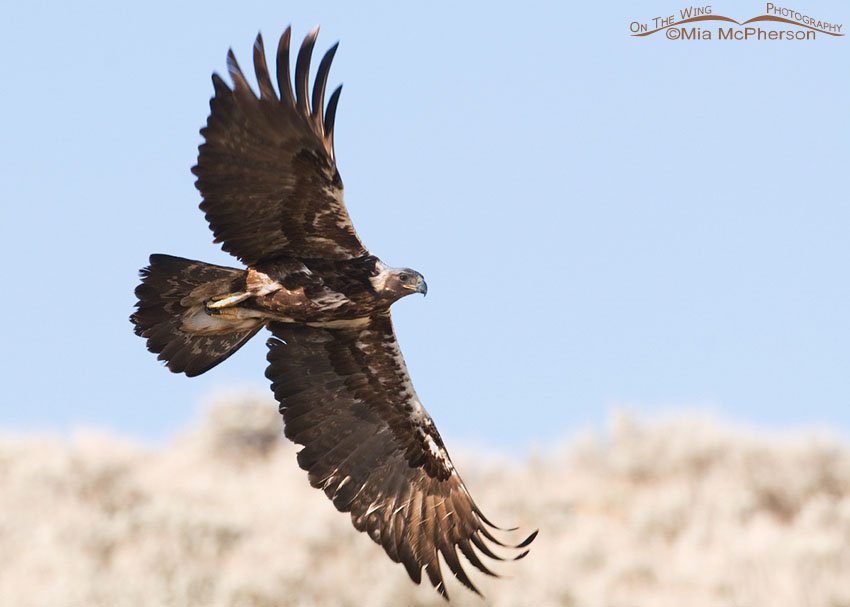
Nikon D300, f5.6, 1/400, ISO 800, +0.3 EV, Nikkor 200-400mm VR with 1.4x TC at 235mm, not baited

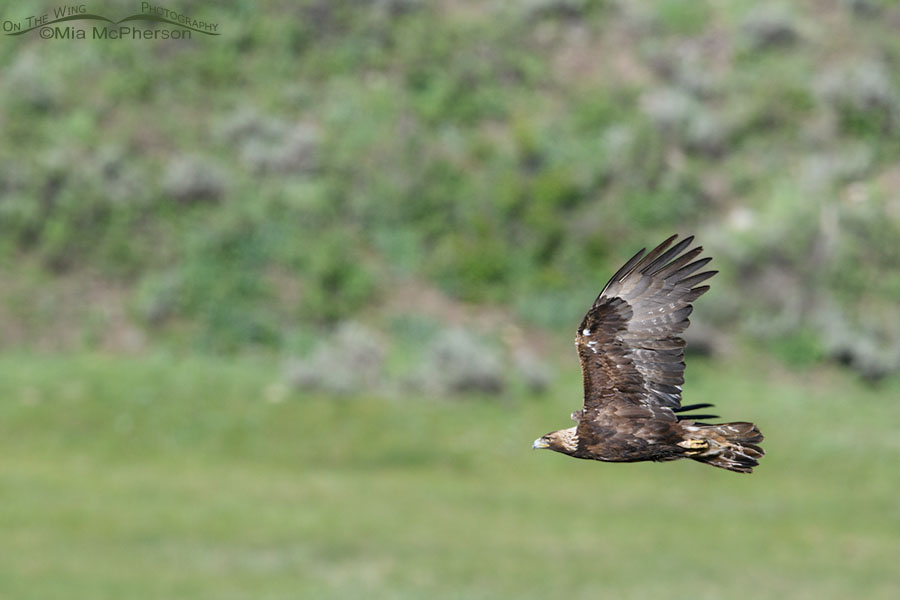
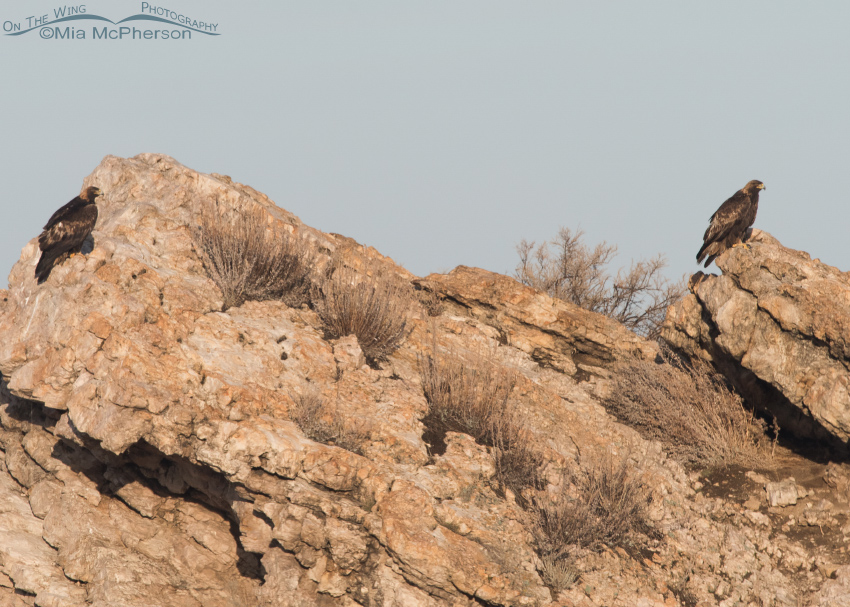
While camping at Antelope Flat birds were not terribly abundant, I spotted Turkey Vultures, Horned Larks and several Golden Eagles along with the other birds I mentioned earlier. The Goldens weren’t very cooperative, they always seemed to be perched in areas where I couldn’t get good light on the birds or they would fly right towards the sun. I kept this image to inspire myself to get better images of them.

Even though birds are my primary focus and passion in photography being in places like Flaming Gorge National Recreation Area does smooth out the disappointment I feel when missing a great shot of a bird, it is just such a fantastic location. I think visiting earlier in the year might have increased the chances of seeing more birds and getting better shots of them.

Pronghorn (Antilocapra americana) buck keeping an eye on his does

 Pronghorn (Antilocapra americana) buck keeping an eye on his does
Nikon D300, f8, 1/1000, ISO 400, Nikkor 200-400mm VR with 1.4x TC at 400mm

There seems to be a good reason that this section of Flaming Gorge National Recreation Area is called “Antelope Flat”, it is much flatter than other areas closer to the canyon and dam plus there are plenty of Pronghorn there. Pronghorns are not technically “Antelope” but that is what they were called long ago and the name Pronghorn Antelope is still used today by some people.

Even though my visit may have been a little late to see larger numbers of birds it was very well timed for the Pronghorn because it was rutting season and this buck was trying to keep control of his does while chasing off interloping males. They must burn tons & tons of calories during rut because they are on the run all the time.

Pronghorn does on a hill in evening light
Nikon D300, f6.3, 1/800, ISO 400, +0.3 EV, Nikkor 200-400mm VR with 1.4x TC at 400mm

Every morning and evening the Pronghorn were close to the campsite in beautiful light watched over by the buck. He had over 25 does and young in his harem and they kept him on his toes; or more correctly his hooves, constantly plus there always seemed to be another male lurking just outside of his territory in the hopes of whisking away a few females of the dominant buck’s harem.

A herd of Pronghorn on a ridge at Antelope FlatA herd of Pronghorn on a ridge at Antelope Flat
Nikon D300, f6.3, 1/1250, ISO 400, Nikkor 200-400mm VR with 1.4x TC at 200mm

It was fascinating to watch the interactions of the Pronghorns as the buck would herd his harem up the ridges and how they always seemd to keep one eye on him while grazing, resting or looking towards me. Besides, they are beautiful, sleek and interesting creatures.

Evening Pronghorns
Evening Pronghorns
Nikon D300, f6.3, 1/4000, ISO 1000, -0.3 EV, Nikkor 200-400mm VR with 1.4x TC at 400mm

Flaming Gorge National Recreation Area, Ashley National Forest and Antelope Flat are all spectacular locations for photography plus it is simply a marvelous place to relax and enjoy the astounding beauty of nature.

Mia

Facebook Twitter