
Summer Lunacy – Nikon’s Image Overlay Function

Osprey in trees before sunrise

Osprey in trees before sunrise
Fort De Soto County Park, Pinellas County, Florida
Nikon D200, F5.6, 1/125, ISO 400, Nikkor 80-400mm VR at 400mm, natural light

There were many mornings that I would arrive at Fort De Soto’s north beach before the sunrise, quite often I would look for a place to sit and watch the world awaken before there was enough light for bird photography, other times I would wander the beach waiting for the sun to peek over the eastern horizon.

On August 17, 2008 there was a full moon about to set in the west before the sunrise. To the east were thin clouds that were just beginning to get some early morning color. I heard an Osprey and looked to find it perched in the trees almost due east. The light was pretty low but I took a couple of photos of the bird any way at 6:59 am.

Full Moon August 17, 2008

Full Moon August 17, 2008
Fort De Soto County Park, Pinellas County, Florida
Nikon D200, f5.6, 1/250, ISO 400, Nikkor 80-400mm VR at 400mm, natural light

At 7:09, almost exactly 10 minutes after taking the Osprey image I looked west to see the moon making its descent towards the horizon and took a few images of it. It was postively glowing in the sky with a few wispy clouds crossing over it.

I remembered that morning that my Nikon D200 has an “Image Overlay” function and having never tried it before I thought I would give it a shot. I had to read the manual (not something I do all the time) to figure out where in the menu that feature was located and then experimented with several frames. You can select two frames and then decide which level of transparency to use for each one. I don’t recall at this time what transparency levels I used to create the merged image below.

Summar Lunacy - Two images joined in camera using Nikon's Image Overlay feature

Summer Lunacy – Two images joined in camera using Nikon’s Image Overlay feature
Fort De Soto County Park, Pinellas County, Florida

I enjoyed the results of merging these two images together using Nikon’s Image Overlay feature. I did crop the resulting file to make the moon slightly off center then sharpened just the dark areas of the tree and bird, then selected the moon and slightly sharpened it too. I look at this photo and remember that part of it was looking due east while the other part was looking west.

I don’t normally play with the Image Overlay feature but there are times that the results can be very appealing.

 Yes, I was expermenting with a little bit of Summer Lunacy. This is a bit whimsical and it makes me smile.

Mia

PS: Images like this can be created in Photoshop by using the two frames as two seperate layers and then using the blending feature you can reduce the transparency of either layer. Personally I like doing it in the camera, you never know what might happen and I like nice surprises.

Facebook Twitter Stumbleupon Digg Delicious Reddit Posterous Pinterest Email

Share

Ospreys

 Osprey on its nest

Osprey on its nest
Honeymoon Island State Park, Pinellas County, Florida
Nikon D200, handheld, f6.3, 1/1000, ISO 200, Nikkor 80-400mm VR at 400mm, natural light, not baited

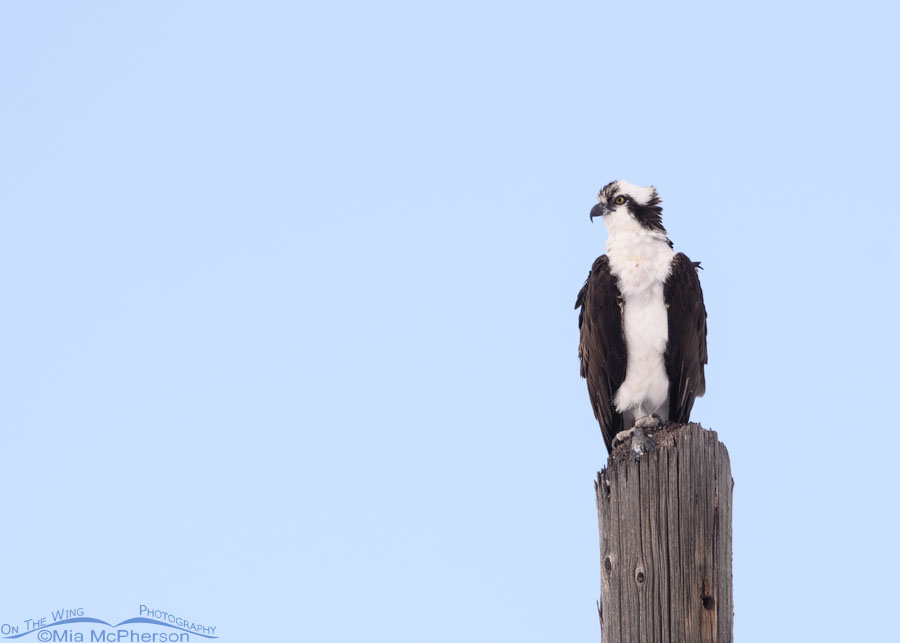
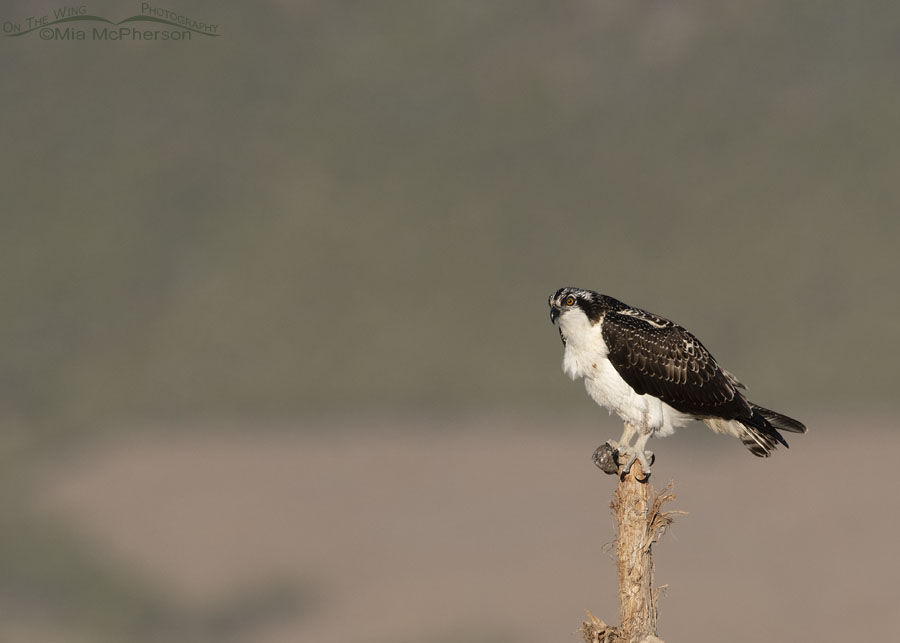
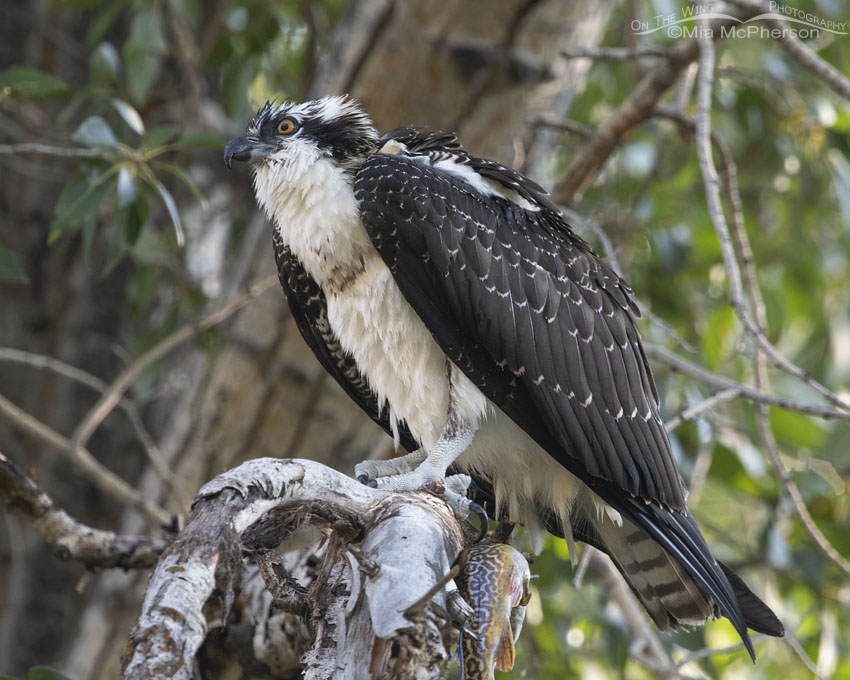
The month of March reminds me that the Ospreys (Pandion haliaetus) in Florida have already started or will soon begin thier breeding season. I see Ospreys in Utah but not with the frequency or ease that I experienced in Florida. Here in Utah the Ospreys seem to prefer high mountains lakes or rivers to nest nearby, not down here in the valley.

Honeymoon Island State Park in Pinellas County, Florida is a great place to see and photograph nesting Ospreys, not just one or two nests either, there are often quite a few. Just take a hike down “Osprey Trail” and you will see and hear the Ospreys.

Male Osprey flying by a female

Male Osprey flying by a female
Honeymoon Island State Park, Pinellas County, Florida
Nikon D200, hamdheld, f6.3, 1/1250, ISO 200, Nikkor 80-400mm VR at 122mm, natural light, not baited

I have to admit that I usually do not feel comfortable saying “This is a male” or “This is a female” when it comes to Ospreys, the sexes look  just too much alike.

Recently I saw some photographers label some osprey images they posted as “male” or “female” and when they were questioned on how they identified the sexes of the birds they stated that the females have a brownish necklace that the males don’t. So being the curious creature that I am about birds I logged onto BNA (Birds of North America, a paid membership site) and started to read about the appearance of the ospreys.

Female Osprey eating a fish

Female Osprey eating a fish
Honeymoon Island State Park, Pinellas County, Florida
Nikon D200, handheld, f6.3, 1/1000, ISO 200, Nikkor 80-400mm VR at 400mm, natural light, not baited

BNA states in Distinguishing Characteristics:

“Females generally have fuller, darker breast-bands (speckling) than do males, but here again some overlap

Females usually do the incubation of the eggs but the male does take his turn at it too while the female goes off to hunt down her food. Sometimes the male will bring her food after the chicks have hatched.

I am only comfortable identifying the sex of the birds in the two images above because of observations I made while watching and photographing the birds. In the first image I had watched as the male fly by the female with a branch in its bill then once the branch was laid in the nest the bird flew back to the perched female and copulated with her.

What you can not see outside the frame of the perched female eating the fish photo is a male flying in to mate with her, even as she ate the fish.

Without those observations I would be hesitant to label one bird a male and one a female.

Osprey watching a Bald Eagle fly by

Osprey watching a Bald Eagle fly by
Honeymoon Island State Park, Pinellas County, Florida
Nikon D200, handheld, f6.3, 1/500, ISO 200, Nikkor 80-400mm at 400mm, natural light, not baited

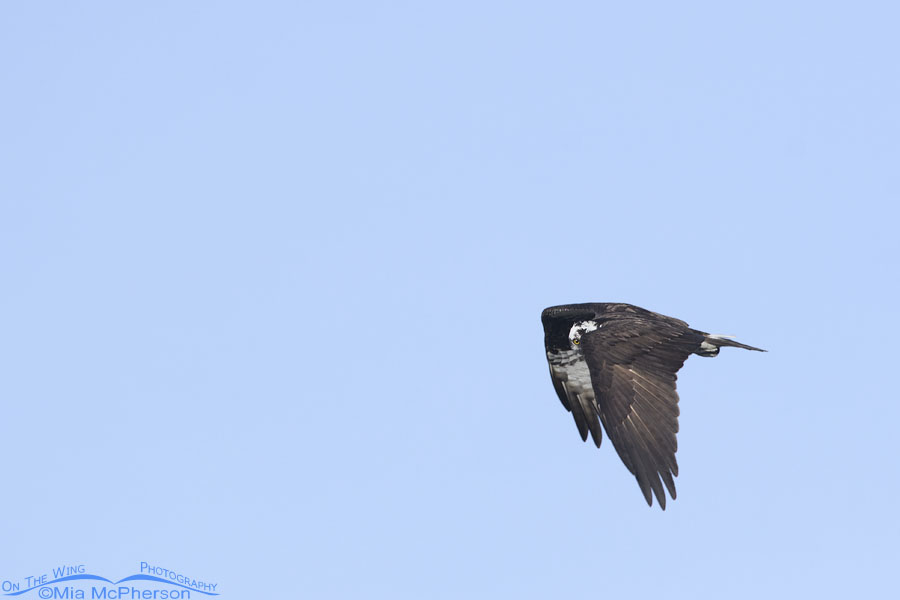
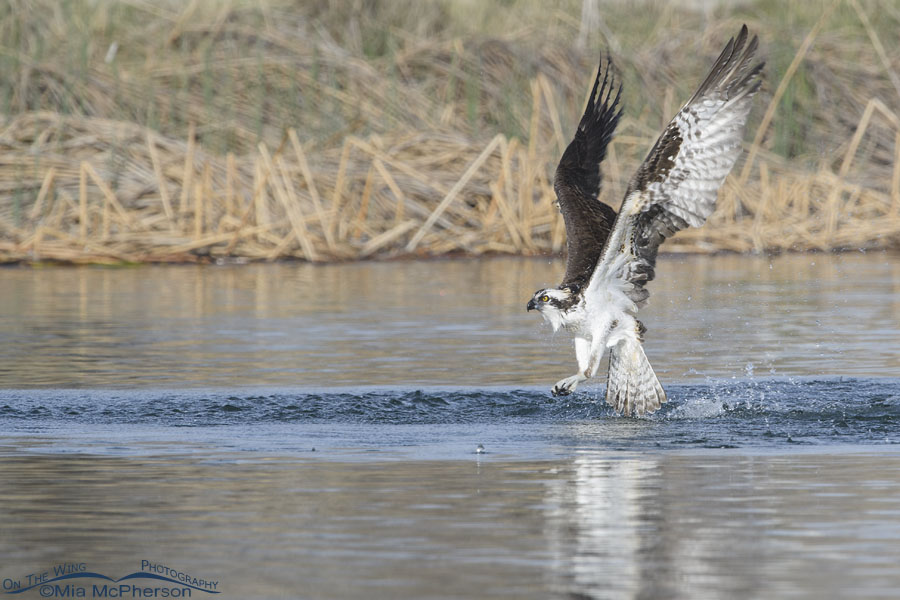
There are many locations where Ospreys and Bald Eagles nest in the same general area, both do feed on fish though the Ospreys diet is nearly all fish while the Eagles do include mammals in their diet too. Great action can be observed when an Eagle tries to steal a fish from an Osprey or vice versa. Have your shutter speed as high as it can go if you are photographing that behavior and interaction, you’ll need it!

I’ll be listening for the sounds of the Ospreys moving north of here to breed, some of them stop at a pond down the hill from me and when my windows are open I can hear thier distinctive call.

Mia

More Osprey images

Facebook Twitter Stumbleupon Digg Delicious Reddit Posterous Pinterest Email

Share