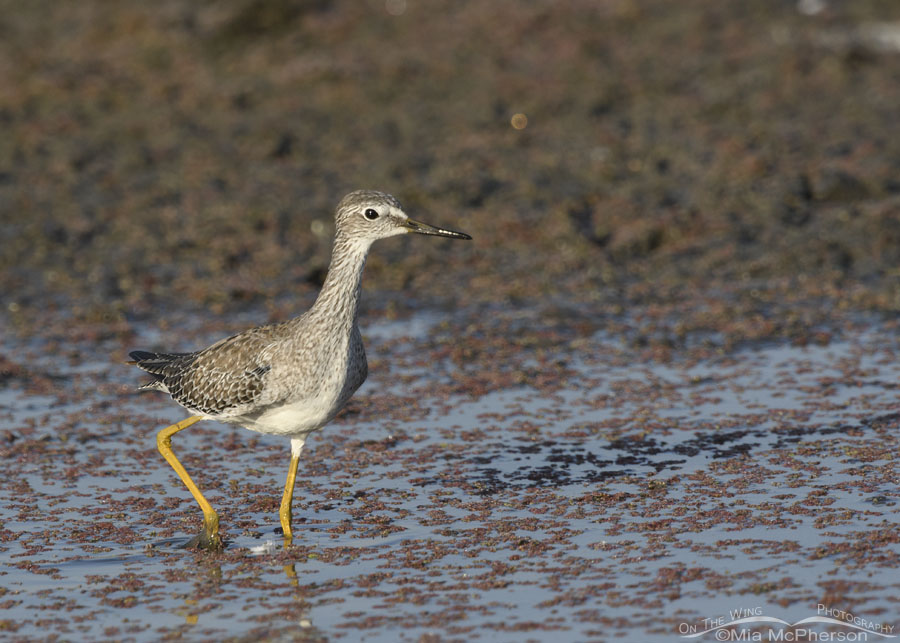
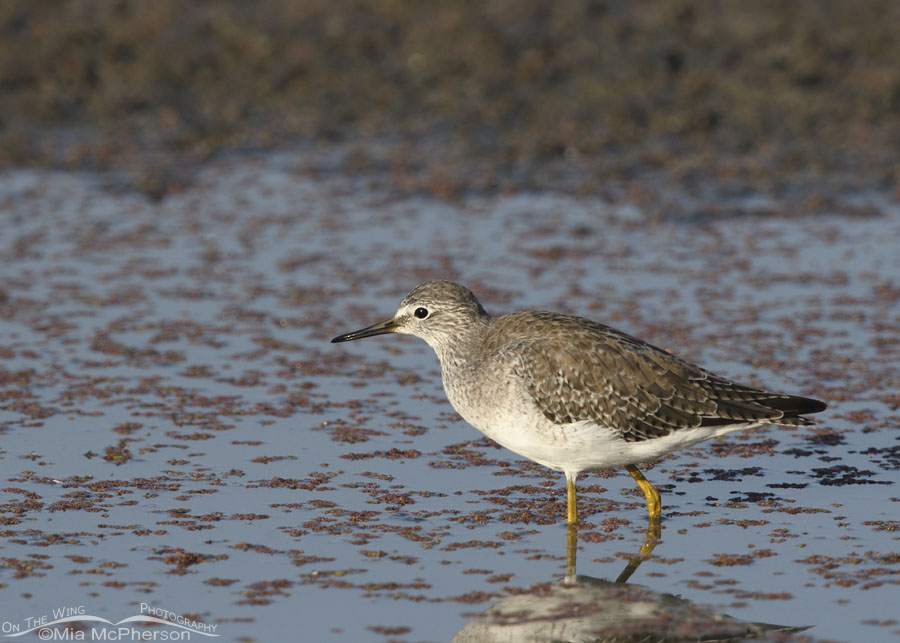
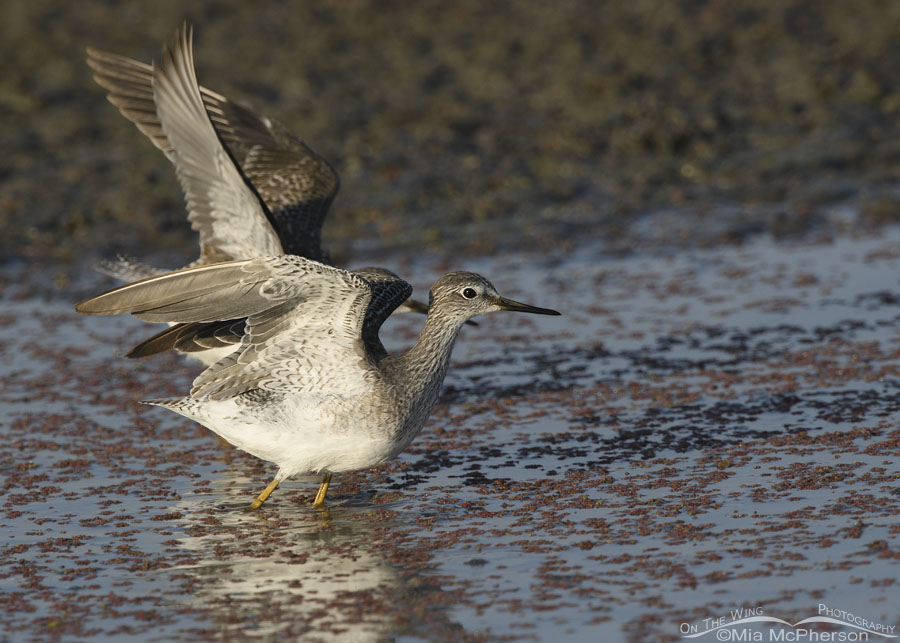
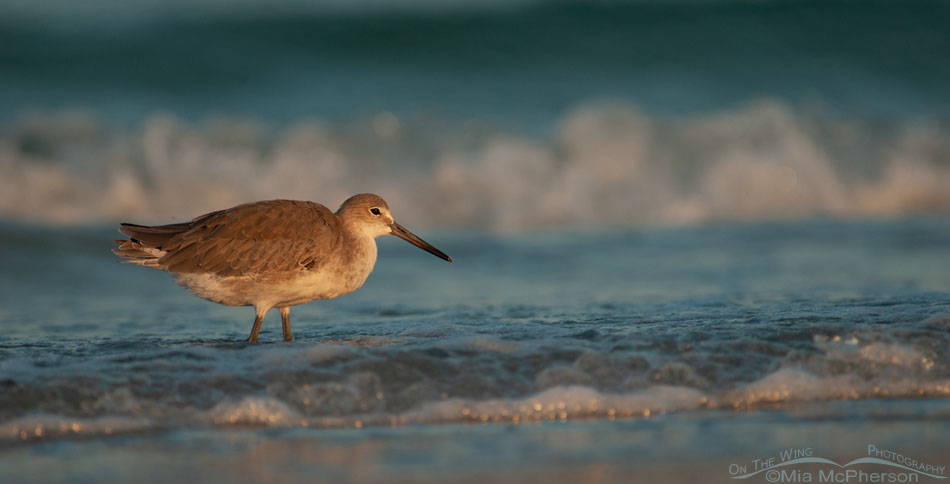
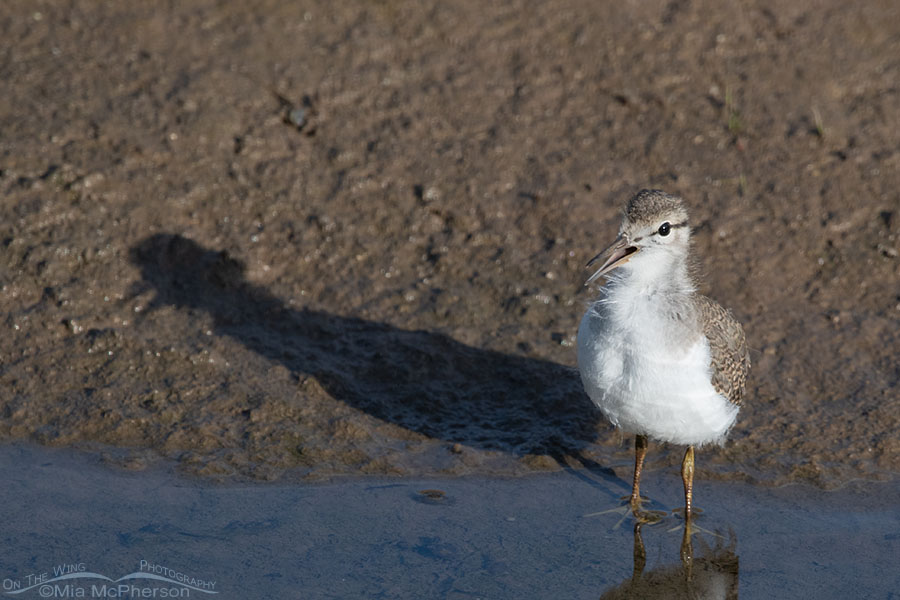
Juvenile Willet looking for prey

Juvenile Willet on the shore of a lakeJuvenile Willet on the shore of a lake

It won’t be long before I start seeing juvenile Willets that are about the size of the one pictured here. This one still has a bit of down left on the back of its upper neck and its bill is slightly shorter than an adult’s. As I watched this juvenile I saw it catch 2 dragonfly nymphs and eat them.

Mia

More Willet images

* I am away right now, please feel free to share this post with your family and friends. Thank you for visiting my blog!

Facebook Twitter

The Candlestick Birds – Long-billed Curlews

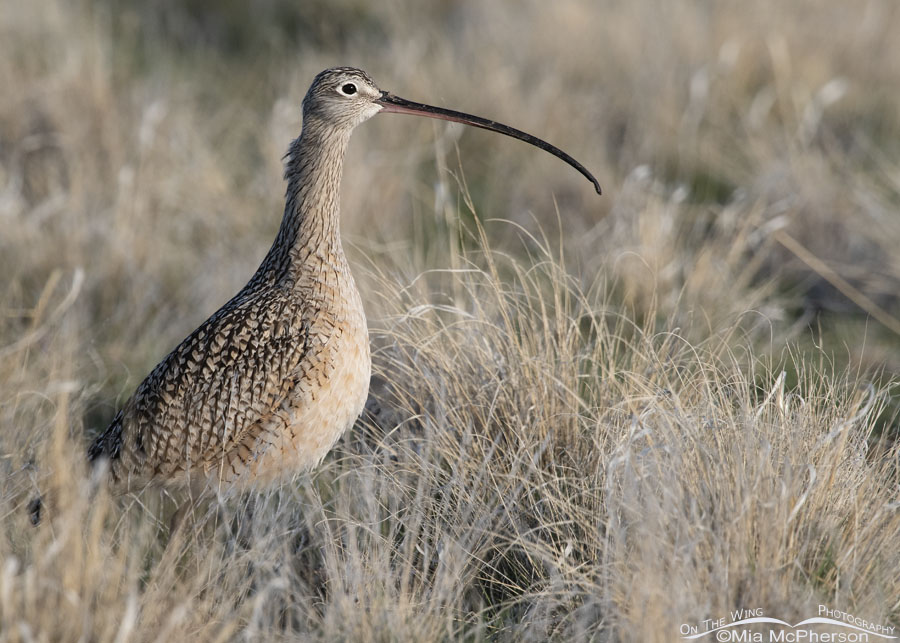
Long-billed Curlew in a field of CheatgrassLong-billed Curlew in a field of Cheatgrass

I’ve been enjoying seeing Long-billed Curlews for several weeks now in northern Utah. These large shorebirds birds are also called “Candlestick birds” and “Sickle Birds” because of their long bills. When I lived in Florida I saw these birds in a very different type of habit than I do here, in Florida I saw them feeding along the shores of the Gulf of Mexico, here in Utah I see them in the grasslands and along the shore of the Great Salt Lake.

Long-billed CurlewLong-billed Curlew

The Cheatgrass that this bird is walking in is an invasive grass and I don’t like it because of that but I do love the colors of the grass at this time of the year, those purple reddish tones can compliment my subjects very nicely.

It shouldn’t be too long before I see tiny balls of fluff following the adults through high grass. It makes it very difficult to photograph the chicks but I’m glad they can hide that easily from predators too.

Mia

More Long-billed Curlew images

Facebook Twitter

A Coyote Doing What Coyotes Do

Coyote sniffing the ground

Coyote sniffing the ground

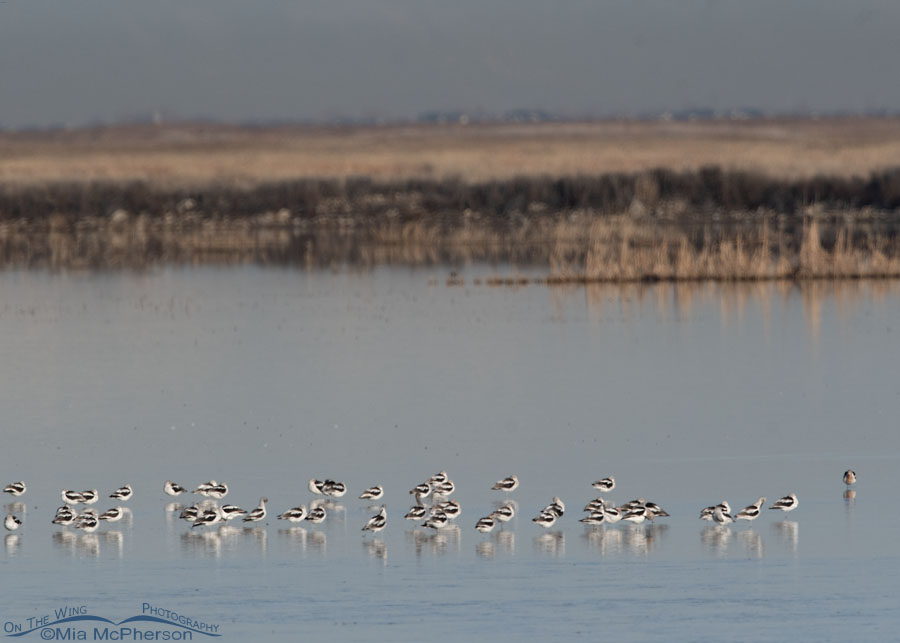
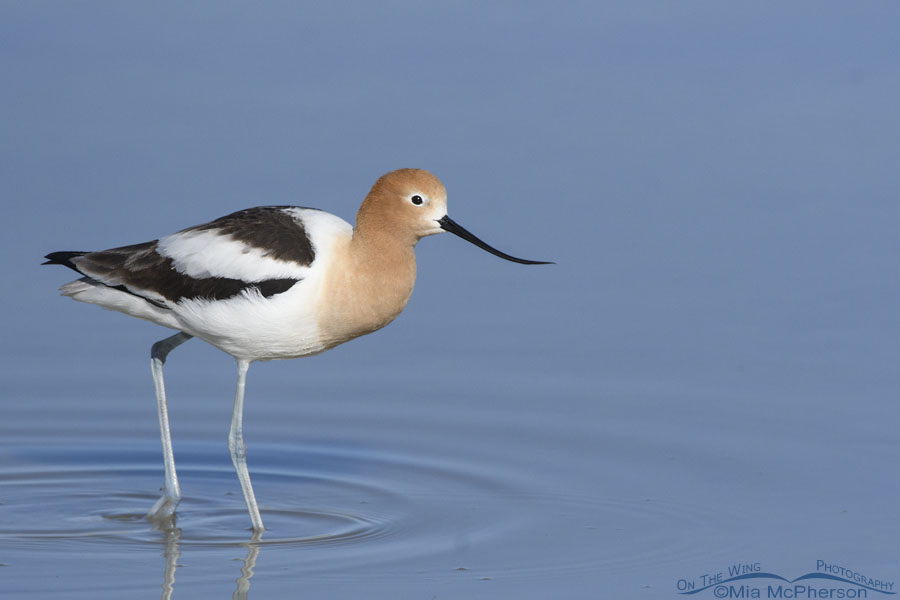
I have often said “you won’t know unless you go” and yesterday was another time that theory proved to be true. To get to Antelope Island there is a seven mile long causeway which often has birds on both sides of it, this time of the year there are quite a few shorebirds and gulls that are feeding on brine flies. The American Avocets behind the Coyote in the frame were sounding their distress calls, they didn’t like it being so close to them. (That isn’t snow or ice on the edge of the water, it is sea foam)

Coyote hunting on the causeway

Coyote hunting on the causeway

I’m used to seeing Coyotes along the causeway during the winter when they are scavenging falcon left overs but I am always pleasantly surprised when I see one during the spring or summer, yesterday I spotted one on the north side of the causeway and after we turned around it moved over to the south side.  There were clouds overhead and to the east so the light wasn’t “golden” but there was enough light to take these images.

By now I am wondering what the Coyote is looking for

By now I am wondering what the Coyote is looking for

 The Coyote kept sniffing the ground as it wandered along and I wondered what it was looking for. I haven’t seen the falcons recently on the causeway so I doubted of there were any left overs. The Coyote wasn’t trying to move to or from the island, if it had been it would have been moving fast and making tracks.

Sunrise in a Coyote's eyes

Sunrise in a Coyote’s eyes

Despite wondering about what the Coyote was looking for I kept taking images of the Coyotes while listening to the calls of the disturbed American Avocets nearby. I was surprised that the Avocets didn’t just fly off.

What is the Coyote looking for?

What is the Coyote looking for?

 I admit I was puzzled. I didn’t see the Coyote picking anything up, it wasn’t acting like it was on the trail of voles, it just meandered sniffing the ground.

Coyote with American Avocets in the background

Coyote with American Avocets in the background

Some times the Coyote would stop and stare off into the distance giving me great views of its amber colored eyes.  I noticed that the Coyote has its sleek summer coat on its face and legs but still hasn’t lost the winter coat on most of its body.

Can you see what the Coyote was after?

Can you see what the Coyote was after?

Then the Coyote stopped and through my lens I could see what the coyote was after. I started taking more images while telling Ron what the Coyote was after. Can you see it yet? The next image will show what it was a bit more clearly.

Look at the red arrow next to the Coyote

Look at the red arrow next to the Coyote

There were four eggs in a scrape on the ground, with their coloration and speckles they were barely noticeable. About that time I looked east and saw an American Avocet in the distance with an egg in its bill, it had to have been an egg shell from a chick that had already hatched because an unhatched egg probably would have been too heavy.

Coyote picking up an egg, probably an American Avocet egg

Coyote picking up an egg, probably an American Avocet egg

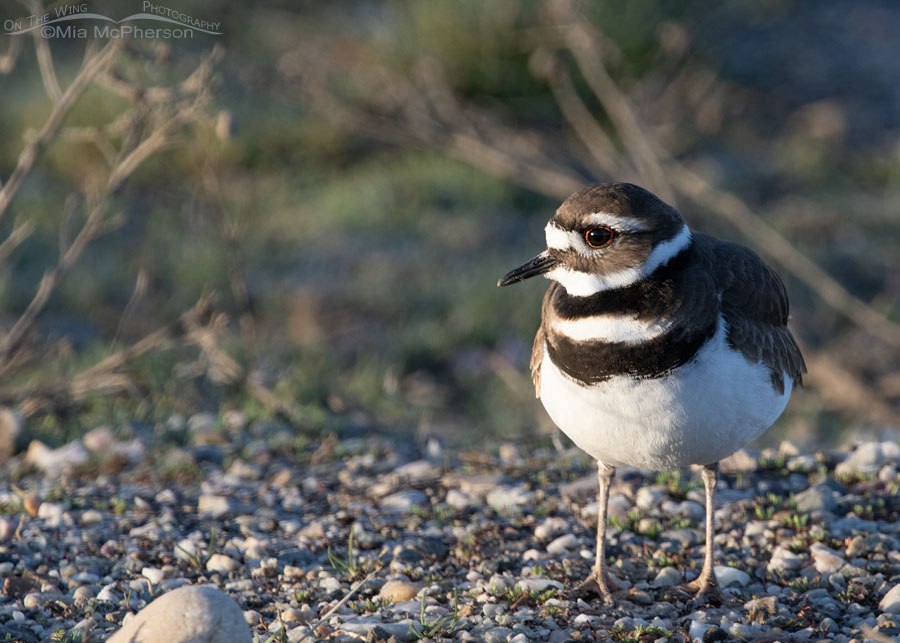
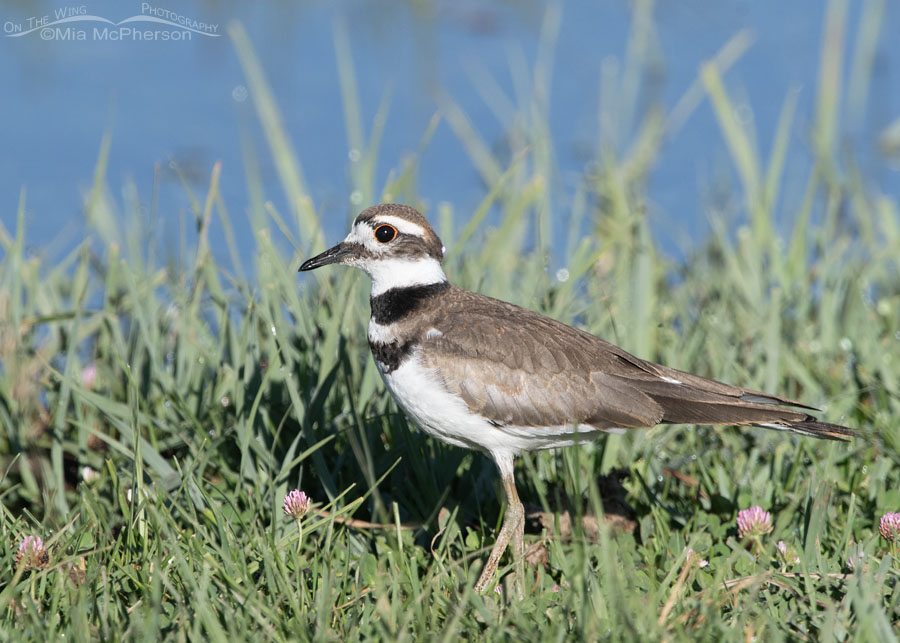
 I am fairly certain that these eggs are American Avocet eggs although I saw some Killdeer in the area they weren’t sounding alarmed, in fact they weren’t making any noise at all. Until yesterday I had no idea at all that the Avocets were nesting along the causeway.

In this frame the Coyote was picking up one of the eggs.

Coyote staring

Coyote staring

And in this frame it was looking up at us with its mouth on the egg. I think those amber colored eyes are beautiful and mesmerizing.

Nom nom nom

Nom nom nom

In this frame the partially eaten is visible near the Coyote left foot and another is near the right foot. The partially eaten egg shows blood so it wasn’t just freshly laid, it may have been closer to time for it to hatch.

One egg finished

One egg finished

 The Coyote finished the first egg and I thought it would eat any of the others in the nest but it didn’t, it licked its mouth and started moving again. I’m curious about how why the Coyote didn’t eat all of the eggs in the nest. I’m also curious about if the Coyote used sight or smell to locate the first egg.

Coyote at a second nest

Coyote at a second nest

 The Coyote wandered west for a bit, keeping its head low to the ground and then it stopped to look around. There is an egg in front of the Coyote’s left foot in this frame.

Coyote with the egg in its mouth

Coyote with the egg in its mouth

 Instead of eating this egg though the Coyote took it into its mouth…

Moving down the causeway with the egg still in the Coyote's mouth

Moving down the causeway with the egg still in the Coyote’s mouth

And headed west towards the island. It traveled a distance, perhaps more than 75 to 100 feet with the egg in its mouth and at that point I thought it might be carrying the egg back to its young.

Coyote after hiding the egg

Coyote after hiding the egg

Then it stopped, gently placed the egg on the ground and with its muzzle pushed dried vegetation  and sand over the egg. After it covered the egg it gave us a brief look and headed west again. I’ve heard of Coyotes caching food but I don’t think I have ever heard of one caching an egg.

It was a fascinating experience to see and photograph this Coyote locating and eating the egg and I’m tickled to have witnessed the Coyote’s egg carrying behavior plus once again I am very glad to have been in the right place at the right time.

Mia

More Coyote images

Facebook Twitter

Please… give nests and chicks respect

American Oystercatcher chickAmerican Oystercatcher chick

Fluffy little chicks are adorable, they make people “ohh” and “aww” and those that hit the ground running not long after hatching are especially appealing to some folks. But they need respect and they need space so we don’t endanger them.

During this time of the year I see tons of nest and chick images posted on the internet on photo sharing sites and I feel my self cringe when I can see that someone has walked up to a nest and taken images of nestlings or even the unhatched eggs with short lens because I know they got too close. Those actions can put the young birds at risk.

The American Oystercatcher image above was taken from a long distance and this is a large crop (43% of original frame) which I normally do not like to make but in my mind the image is never as important as the well being and safety of my subject.

Chukar chickChukar chick

When we approach a nest we leave a scent trail that could possibly attract predators to the nest which might cause the eggs or the chicks to be eaten by a predator. This Chukar chick image is another case where I took a large crop (%39 of the original frame) rather than approach the bird closely which would have stressed it or the adult nearby.

Ethics on photographing nesting birds:

  • Do not approach too closely
  • If the birds show any sign of distress, back away
  • Don’t trim leaves, twigs or branches to get a clearer shot, you may inadvertently attract predators or cause the eggs/chicks to over heat
  • Follow local, state and federal guidelines concerning nesting birds
  • Don’t harass the birds to get an action shot
  • Don’t stay a long time with nesting birds or chicks, that disrupts their normal behavior
  • Always remember that your scent may draw predators to the area of nesting birds or birds with chicks.

For more information on the ethics of photographing nesting birds or chicks: the Principles of Birding Ethics published by the American Birding Association. Also NANPA’s Ethical Practices (pdf)

Western Meadowlark chickWestern Meadowlark chick (sorry for the poor quality)

Sometimes we might need to help chicks get to a safe place, like the example below.

Two days ago we spotted a ball of fluff in the middle of a road on Antelope Island State Park and after scoping it with my lens I could see that it was a Western Meadowlark fledgling, because the road wasn’t a safe place I took a few images, got out of the pick up and walked up behind the chick. I put my hands near the back of the fledgling and just that movement alone was enough to cause the chick to move towards the shoulder of the road and the adult. Once I knew the chick was safely off of the road I got back into the pickup and left.

At this time of the year we should be careful where we step, where we drive and how closely we approach nests and chicks, it is very important not to stress the chicks or adults.

Mia

Facebook Twitter

Eastern Willet in flight at Fort De Soto

Eastern Willet in flightEastern Willet in flight – Nikon D200, handheld, f8, 1/750, ISO 250, Nikkor 80-400mm VR at 330mm, natural light

There are two subspecies of Willets which Western and Eastern, here in Utah I only see the Western subspecies but in Florida I could see both during the course of a year. This Willet is the Eastern subspecies that I photographed at Fort De Soto’s north beach in 2009.

The Willet flew in so close to me that I had to back up my zoom so I wouldn’t clip any of the bird. I had been photographing a static shorebird when I noticed the Willet flying in and I didn’t have time to change my settings, I would have increased my ISO some and changed my aperture to f6.3 to get a faster shutter speed if there had been time but since the Willet was gliding in I had just enough shutter speed to freeze the action. The reflection from the white sand below the bird helped to light up the underside of the shorebird’s wings.

Mia

More Willet images

Facebook Twitter