
Mountain Plovers – Comparing two similar looking species

KilldeerKilldeer

I must admit that when I first saw the Mountain Plovers I reported on Antelope Island State Park I knew exactly what I was looking at because I had dreamed of seeing Mountain Plovers and had studied their appearance in every guidebook and app that I own. Even though I was looking at a tiny bird that was about a football field and a half away in distance and the light on the bird was bad, I knew I was seeing a bird I had longed to see.

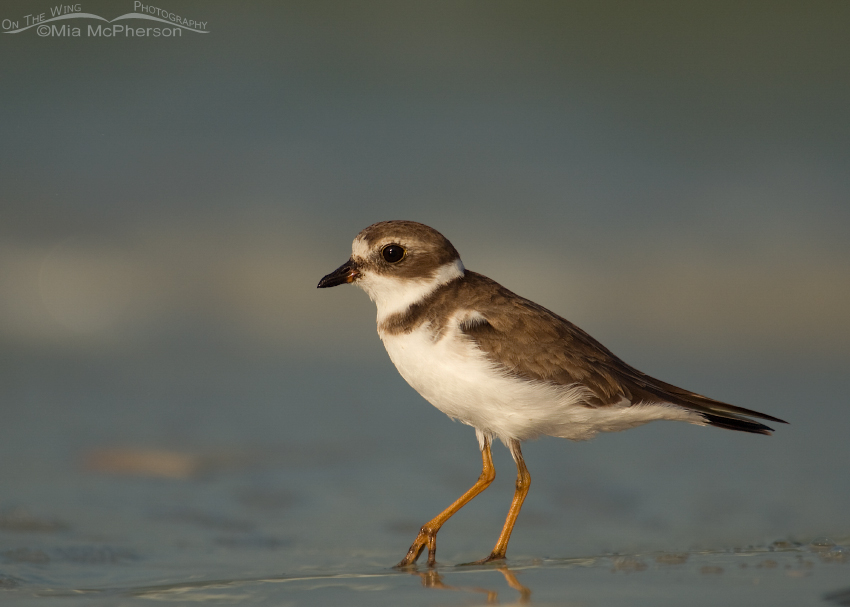
But there are a few similar species that occur in Utah and surrounding states that could be confused with Mountain Plovers. Killdeer look similar but there are some key ID features that help with identification. Killdeer have very dark breast bands, a red orbital ring around very dark eyes, a black collar that encircles the neck, a dark cheek patch (auriculars), brownish upper parts, white belly and a brownish crown.

Mountain Plover right side profileMountain Plover right side profile

Mountain Plovers lack the double breast bands, the red orbital ring around the eyes, light colored auriculars, sandy brown upper parts,  a black line that runs from the bill to the eyes in breeding plumage, black crown with a white forehead and a pale belly. Mountain Plovers also lack the double breast band that is unique to Killdeer.

Both birds do have thin, black bills.

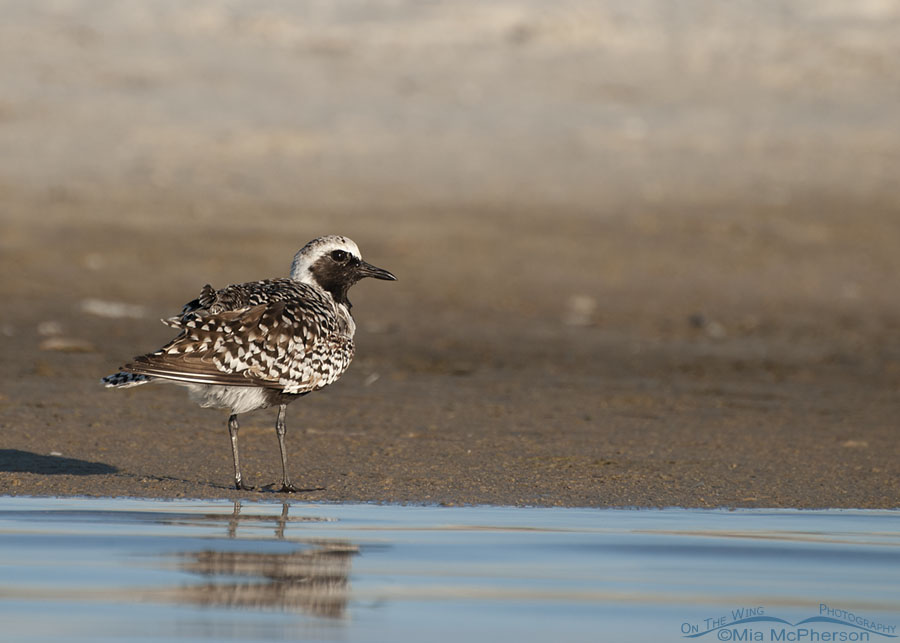
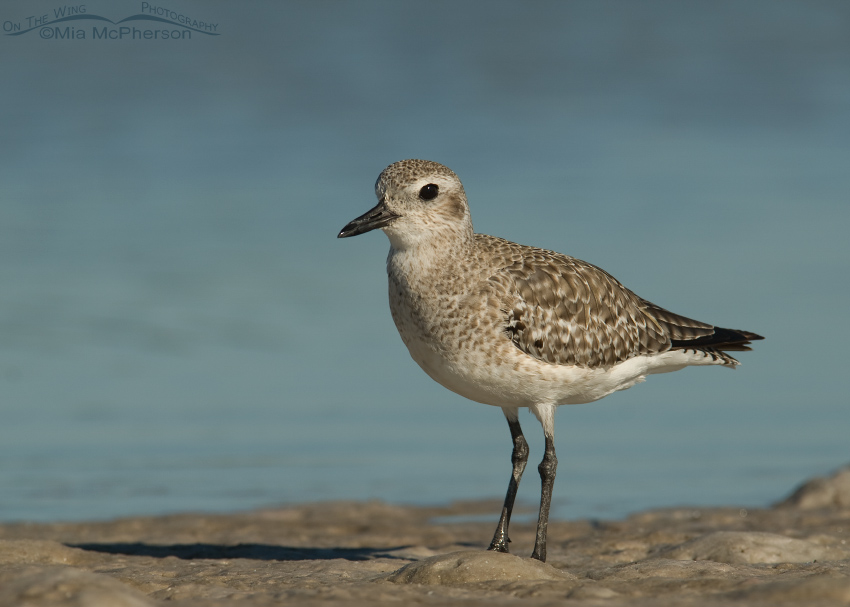
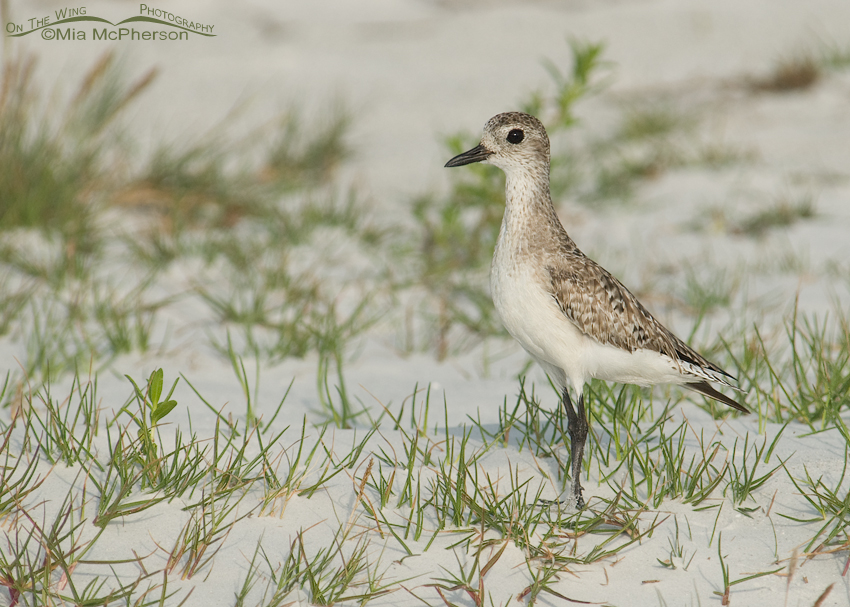
Black-bellied Plover in nonbreeding plumageBlack-bellied Plover in nonbreeding plumage

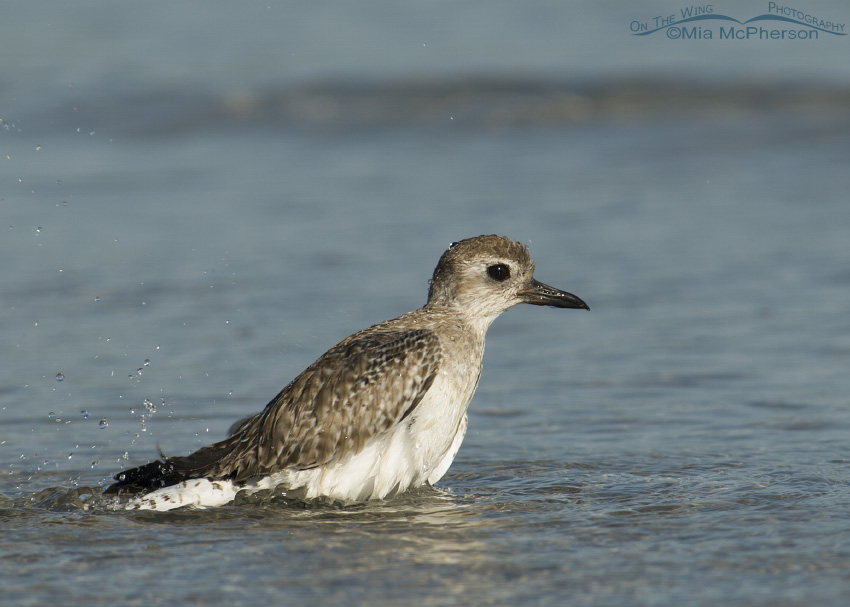
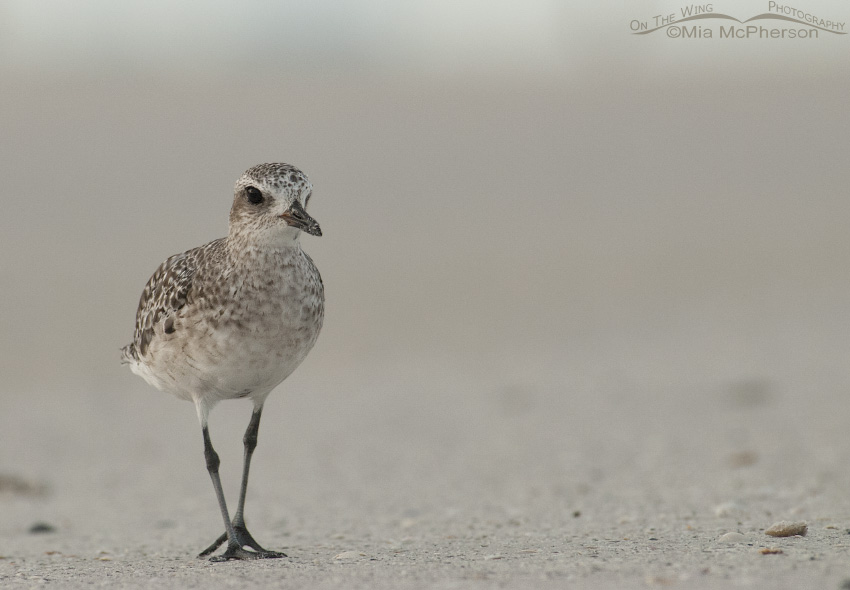
 It would be easy to see the differences between a Mountain Plover and a Black-bellied Plover in breeding plumage but at long distances Black-bellied Plovers in nonbreeding plumage could possibly be mistaken for Mountain Plovers. Black-bellied Plovers are larger but at a distance that would be hard to see.

Black-bellied Plovers have a thicker, longer bill than Mountain Plovers do. They have checkered upper parts, darker legs and their chest can have streaks on it. Their bodies also appear more rounded than Mountain Plovers.

Adult Mountain Plover left side profileAdult Mountain Plover left side profile

It always helps to have high quality images to use in making ID’s but there are times that is not possible and at that point any photo is better than none. It would also help to make notes on the size, shape, color, behavior and other ID keys such as size of the bill, plumage patterns, leg length and color and more.

Recently on the ABA Rare Bird Alert Facebook page there was a possible Mountain Plover reported in Jasper County, South Carolina that had an interesting discussion on the reported sighting where the ID has been decided that is was an American Golden Plover.  The sighting was posted on April 16th but photographed the same day as I photographed the pair I found on Antelope Island, Utah. I found the discussion interesting.

Bird identification can be fun and very challenging, sometime more challenging than not.

Mia

Facebook Twitter

Black-bellied Plovers in Breeding and Nonbreeding Plumage

Shorebirds are migrating south from their breeding grounds and sometimes the plumage differences can be remarkable, today I am sharing images of Black-bellied Plovers.

Black-bellied Plover in nonbreeding plumage

Black-bellied Plover in nonbreeding plumage – Nikon D200, handheld, f6.3, 1/1000, ISO 160, Nikkor 80-400mm VR at 370mm, natural light

This is a photo of a Black-bellied Plover (Pluvialis squatarola) in nonbreeding plumage taken in Florida during the month of December of 2008, they are beautiful shorebirds and the largest plover of North America.

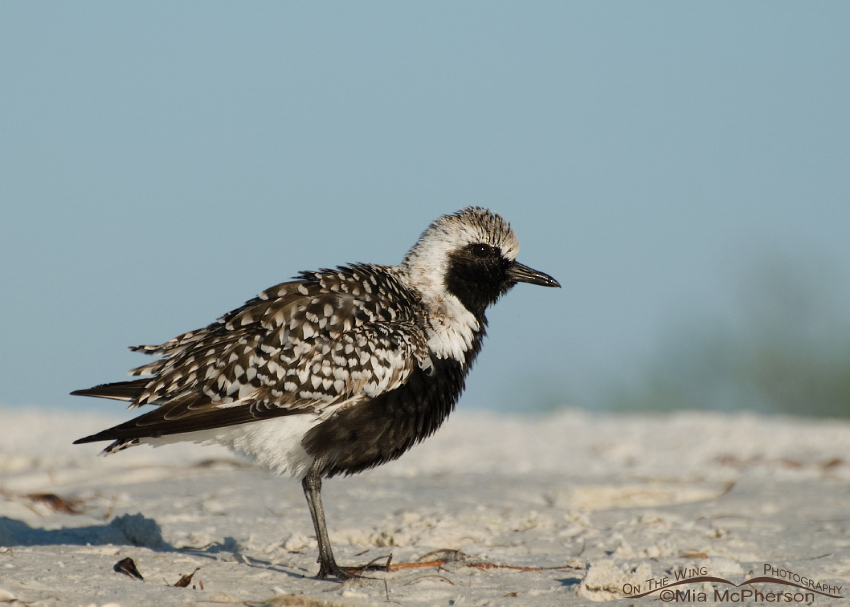
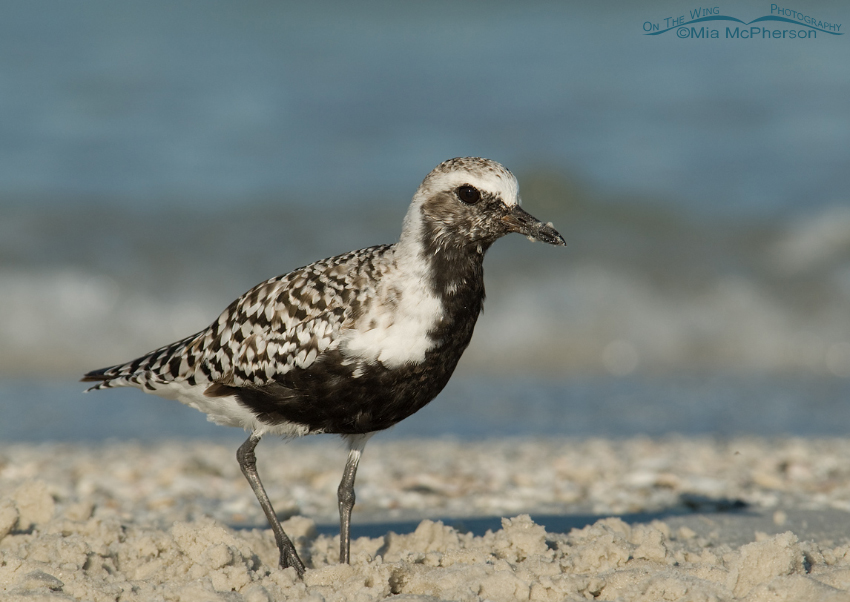
Black-bellied Plover in (near) breeding plumage

Black-bellied Plover in (near) breeding plumage – Nikon D200, handheld, f6.3, 1/1000, ISO 200, Nikkor 70-300mm VR at 300mm, natural light

This Black-bellied Plover was photographed during the month of May in 2009 at Fort De Soto’s north beach, it is pretty close to being in full breeding plumage and probably soon after this image was created the plover would have made its way to the Arctic to nest.

I find the plumage differences amazing in these shorebirds.

Mia

P.S.: My mother is visiting me on her first trip to Utah, she is going to love it! I’ll be slow to view and comment on your blogs, thanks for understanding. Please feel free to share this post with your friends and family.

More Black-bellied Plover images

Facebook Twitter

Black-bellied Plover – Up Close

One of the shorebird species I am able to see in Utah during migration that I photographed often while I lived in Florida are the lovely Black-bellied Plovers (Pluvialis squatarola).

Black-bellied Plover

Black-bellied Plover – Nikon D200, handheld, f7.1, 1/800, ISO 200, Nikkor 80-400mm VR at 310mm, natural light

Black-bellied Plovers at the largest of the North American plovers and according to my iBird Pro app they are also the only American plover that as a hind toe on its foot, that hind toe is often too small to be seen on the field. I looked through my images and found one that shows the hind toe on both feet here. Thanks to the iBird Pro app I learned something new today!

I was able to get much closer to Black-bellied Plovers in Florida than I have been able to yet in Utah but hopefully I will get more opportunities to get “down & dirty” with them here.

The Black-bellied Plover (almost in breeding plumage) in the image above approached me rather closely while I laid on the shoreline of the Gulf of Mexico, I’ve often wondered if it saw its reflection in the glass of my lens and wanted to check it out. A mystery I will never solve.

Mia

More Black-bellied Plover images

Facebook Twitter

Black-bellied Plover – Composition is a Matter of Personal Taste

One photo of a Black-bellied Plover (Pluvialis squatarola), two different compositions:

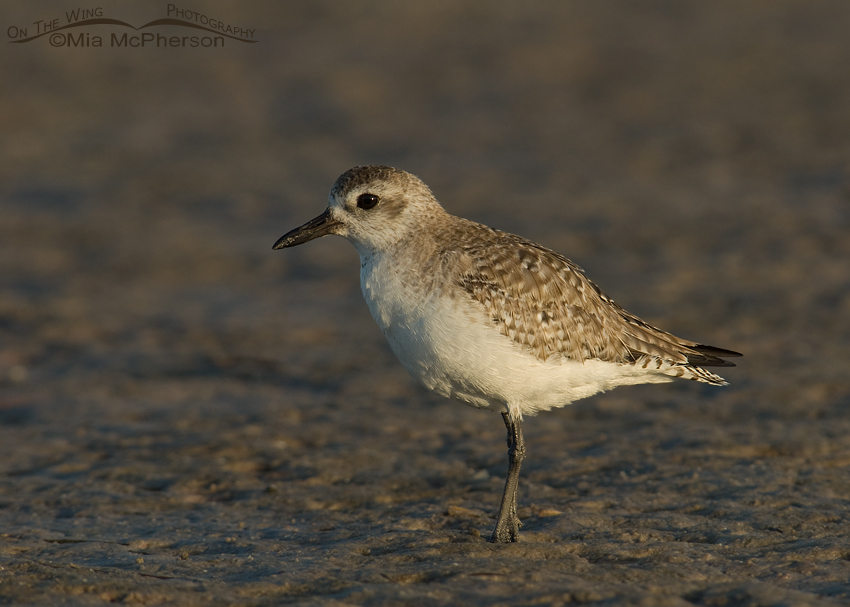
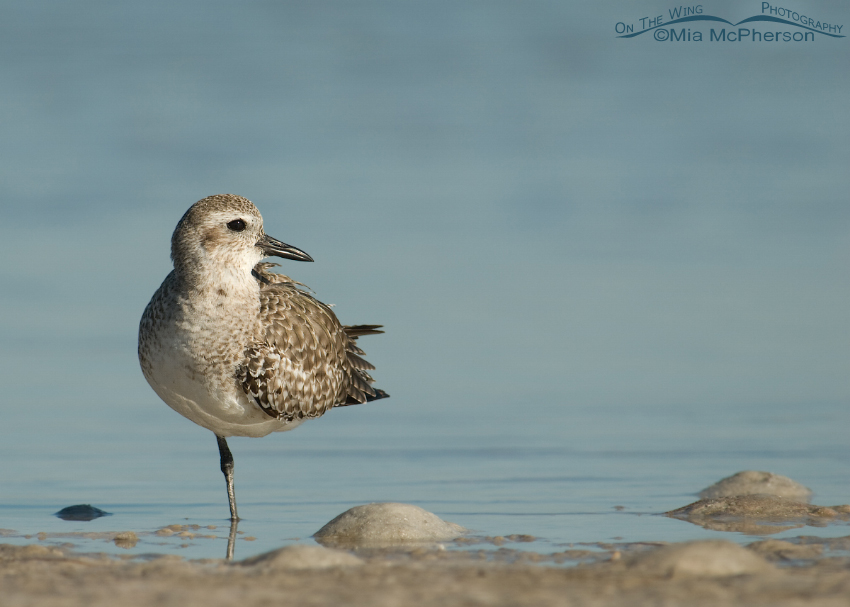
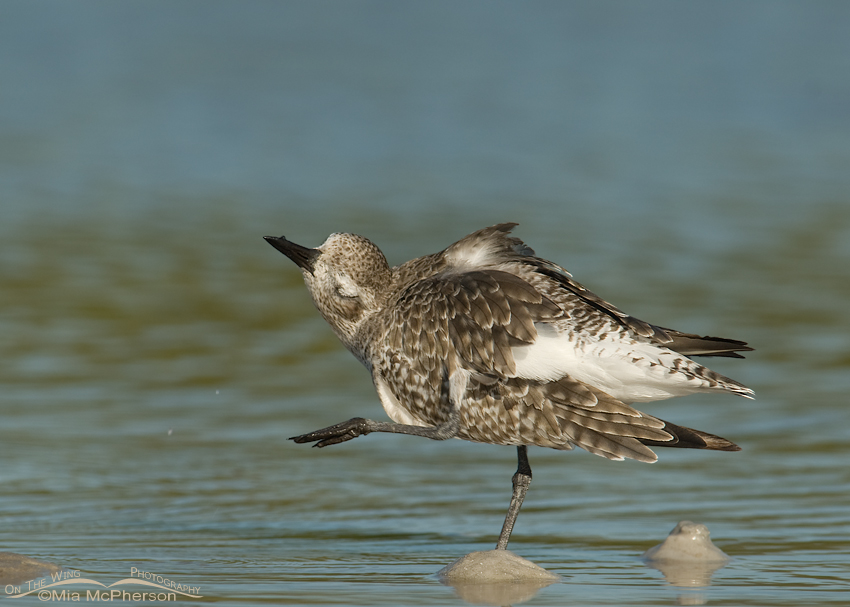
Nonbreeding Black-bellied Plover on one leg

Nonbreeding Black-bellied Plover on one leg (horizontal) – Nikon D200, f6.3, 1/750, ISO 160, Nikkor 80-400mm VR at 400mm, natural light

As much as I like to compose images that are full frame I find that I often allow myself a touch of extra space around my subject so I can recompose in post processing by making different crops.

When I photographed the resting Black-bellied Plover in the frame above it was on the edge of a tidal lagoon at Fort De Soto’s north beach with evening light falling softly on the shorebird. For this version I cropped a little off of the left side of the frame to make the bird closest to that edge because the plover was looking towards the right side of the frame and used a horizontal format. I wanted to leave as much of the water as possible in this composition because I love the contrast of the cool blues of the water and the light, warm tones of the sand and the bird’s plumage.

Nonbreeding Black-bellied Plover on one leg (vertical)

Nonbreeding Black-bellied Plover on one leg (vertical) – Nikon D200, f6.3, 1/750, ISO 160, Nikkor 80-400mm VR at 400mm, natural light

This is the same image but I cropped it vertically and tighter around the subject. I like both compositions and find them equally appealing but other people they may prefer one over the other because of their own personal tastes.

Mia

More Black-bellied Plover images

Facebook Twitter

Black-bellied Plover

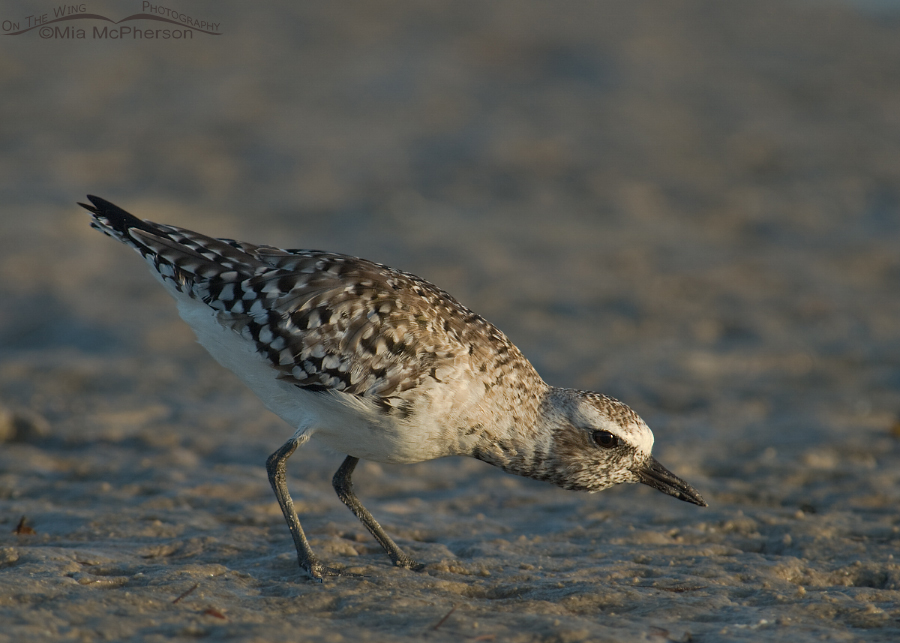
Black-bellied Plover on the huntBlack-bellied Plover on the hunt
Mudflats on a Fort De Soto lagoon
D200, handheld, f6.3, 1/250, ISO 200, 80-400mm VR at 400mm, natural light

I love watching Black-bellied Plovers (Pluvialis squatarola) hunting. They take a few steps, stop, look and listen, then do it all over again. They look very different in breeding and nonbreeding plumage, this plover is in nonbreeding plumage.

Black-bellied Plovers tend to associate with other shorebirds on their winter grounds, you will often see them with willets, godwits, the small plovers, sandpipers, turnstones and sanderlings. Those species benefit from having black-bellied plovers in their midst because this species is a sentinel bird. They watch the skies and land for predators or intruders and when they feel threatened they sound a loud alarm with their call. The other shorebirds pay heed to the alarm call and scatter to confuse the predators.

This image was taken in very early morning light as the plover hunted the mudflats, I really like the pose of the bird, the light and the setting.

Mia

Facebook Twitter