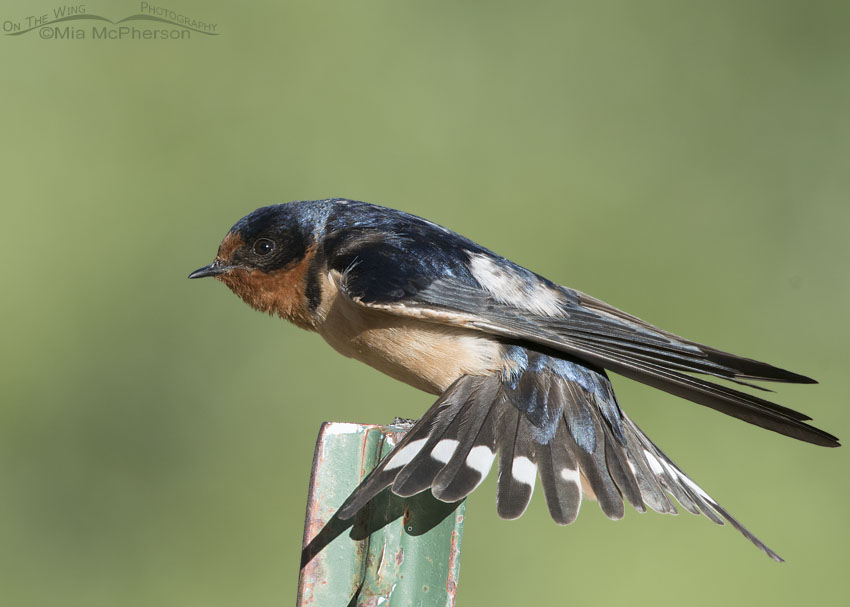
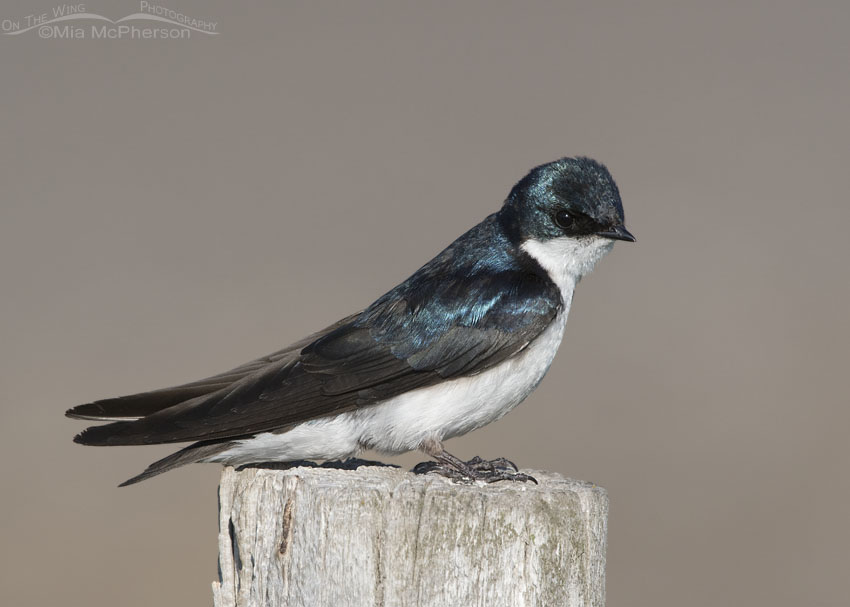
By Mia McPherson, on June 27th, 2011% 
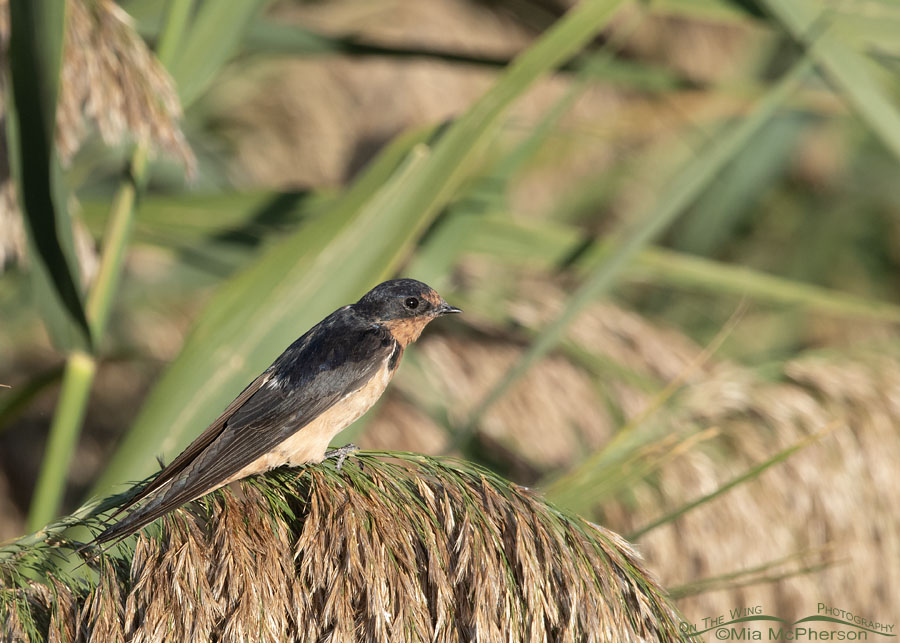
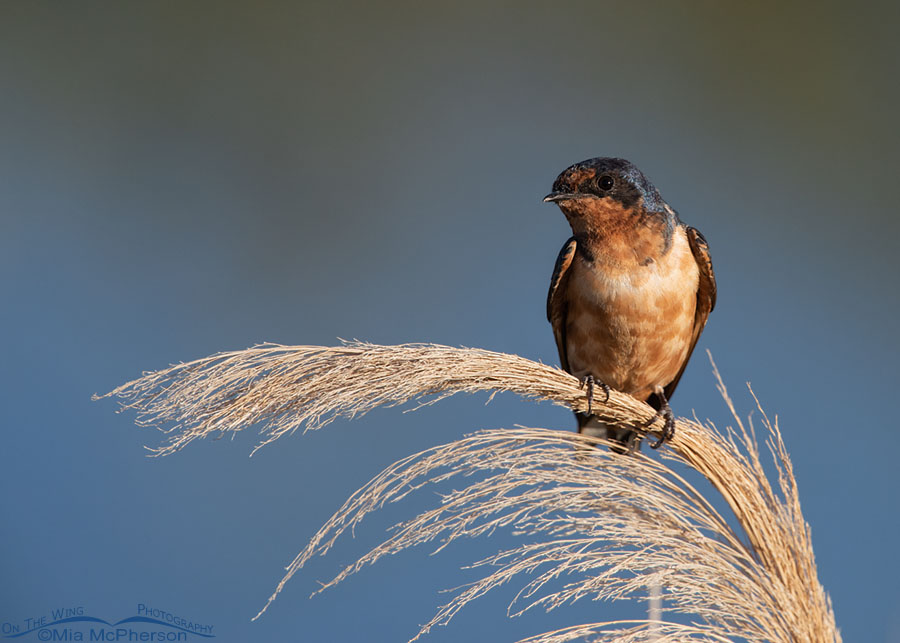
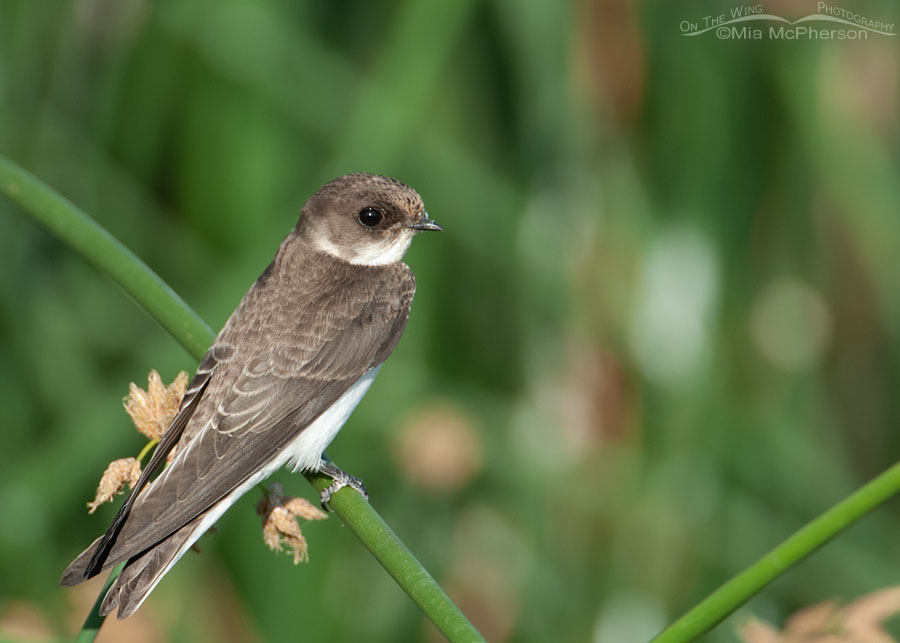
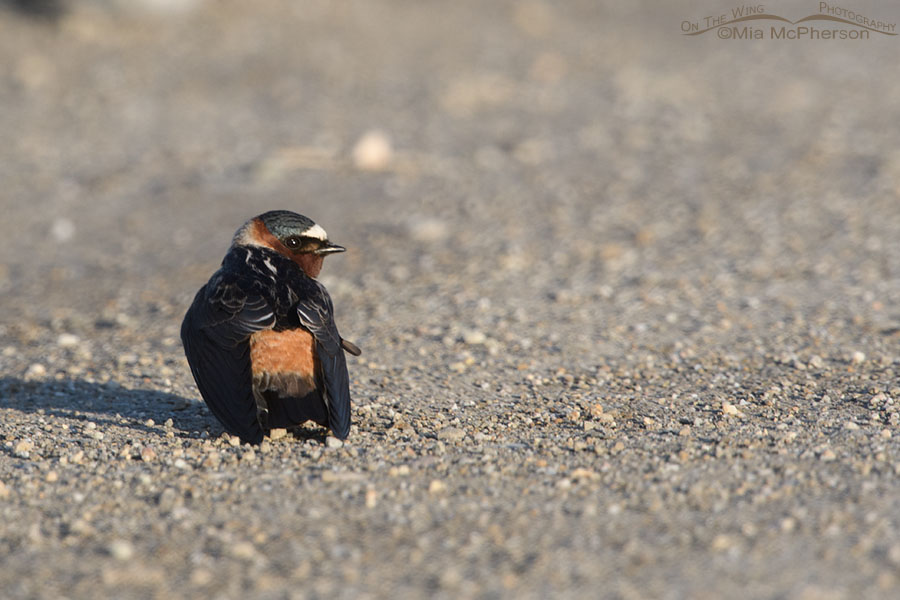
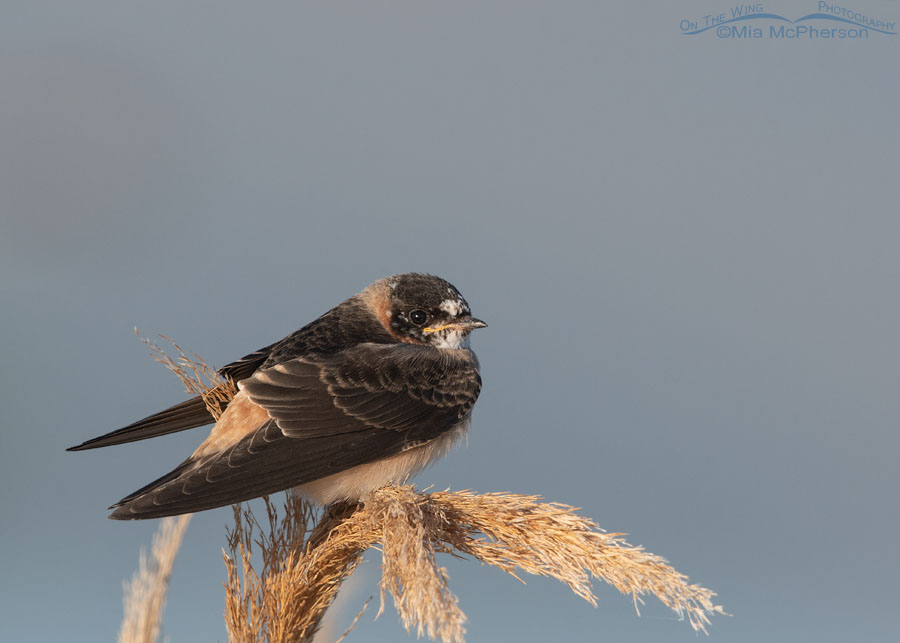
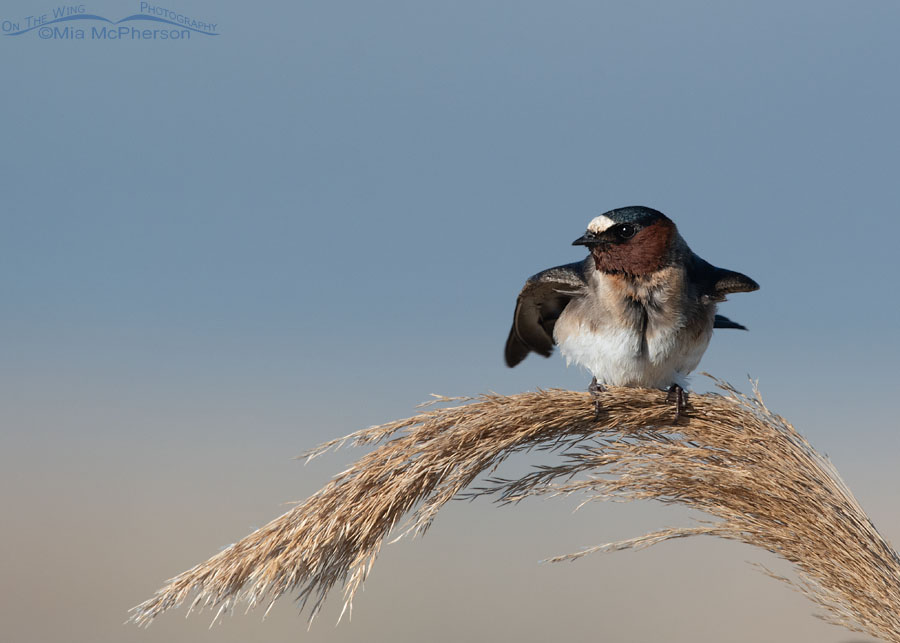
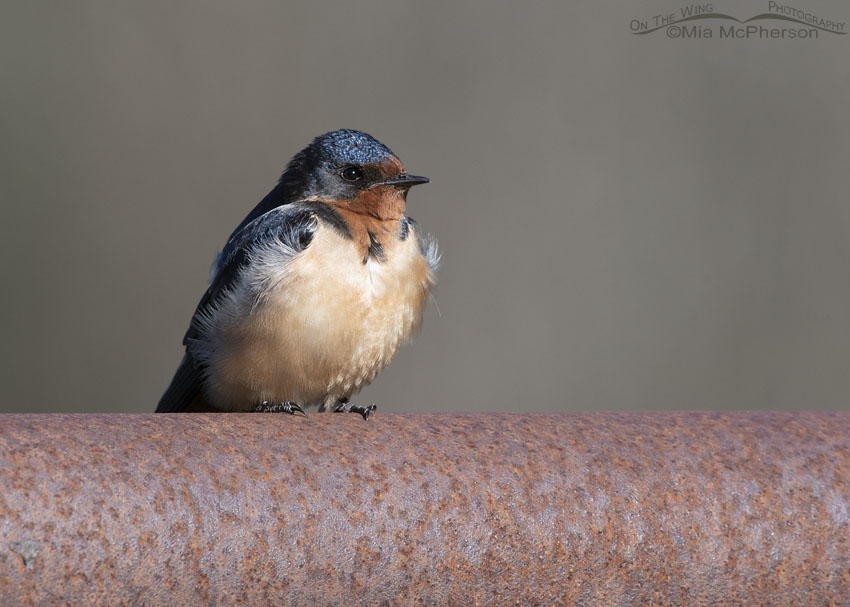
Cliff Swallow Juvenile (Petrochelidonpyrrhonota)
Bear River National Wildlife Refuge, Box Elder County, Utah
Nikon D200, f6.3, 1/125, ISO 400, -0.3 EV, Nikkor 200-400mm VR with 1.4x TC at 400mm, natural light
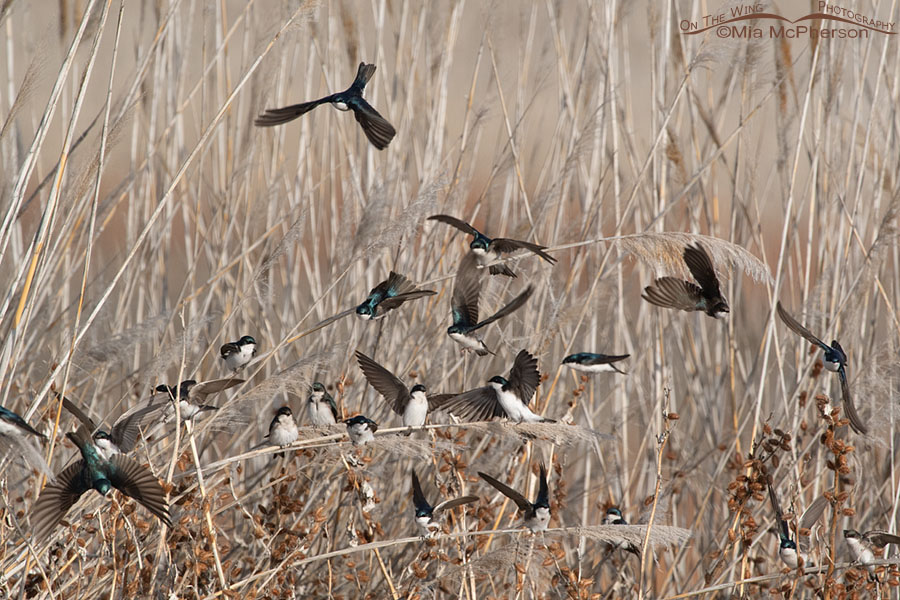
Yesterday there were literally thousands of adult and immature swallows visible at Bear River NWR. A great number of them were Cliff Swallows like the immature bird above.
I had a difficult time obtaining an image of this bird that showed detail, sharpness and had enough depth of field. The light was low, there was a breeze blowing the Hard-stemmed Bulrush around and with it; the bird. I took more images than normal trying for a crisp, detailed photo. I shot this in Aperture Priority which means that I select the aperture and the ISO while the camera selects the shutter speed, I don’t like to go over ISO 400 with my D200 because noise can creep in and become a major issue so I sacrificed some shutter speed for this image. If I had gone to f7.1 or f8 my shutter speed would have dropped even more. A bit of a compromise but I think this turned out well.

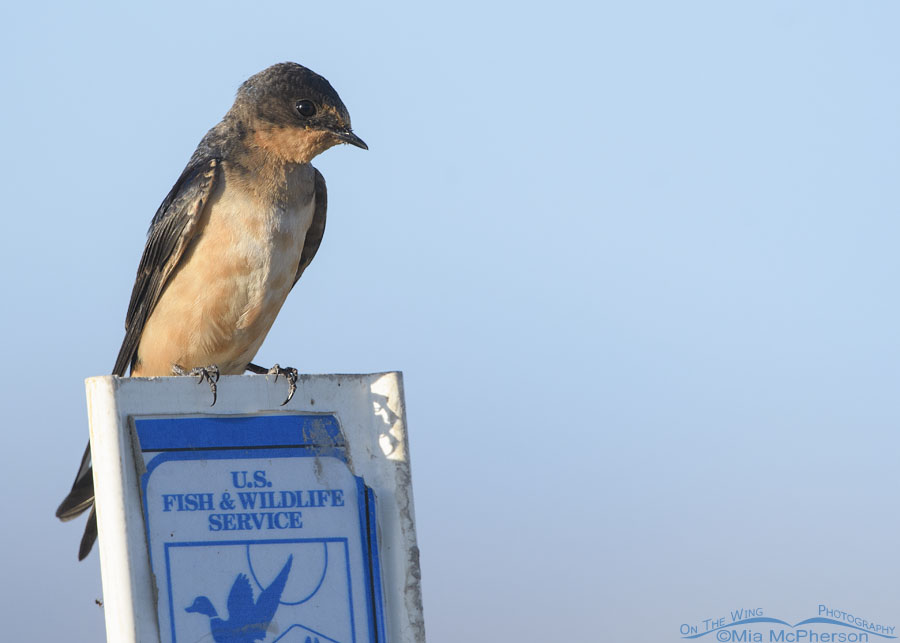
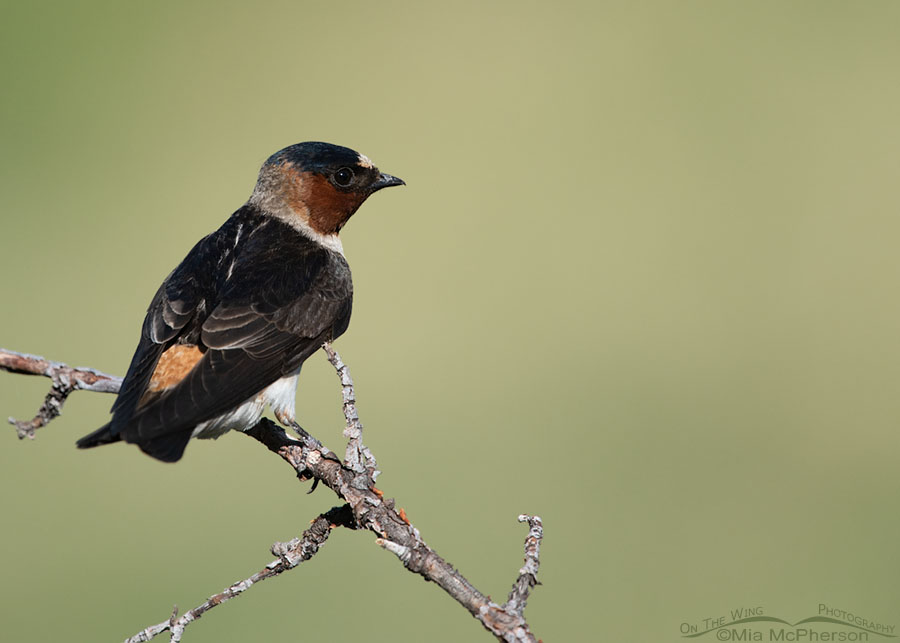
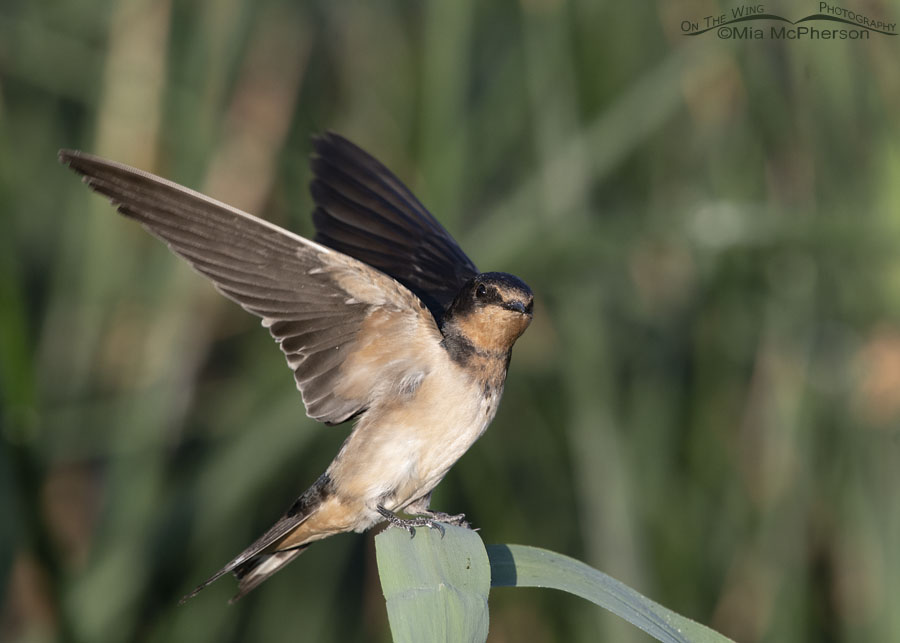
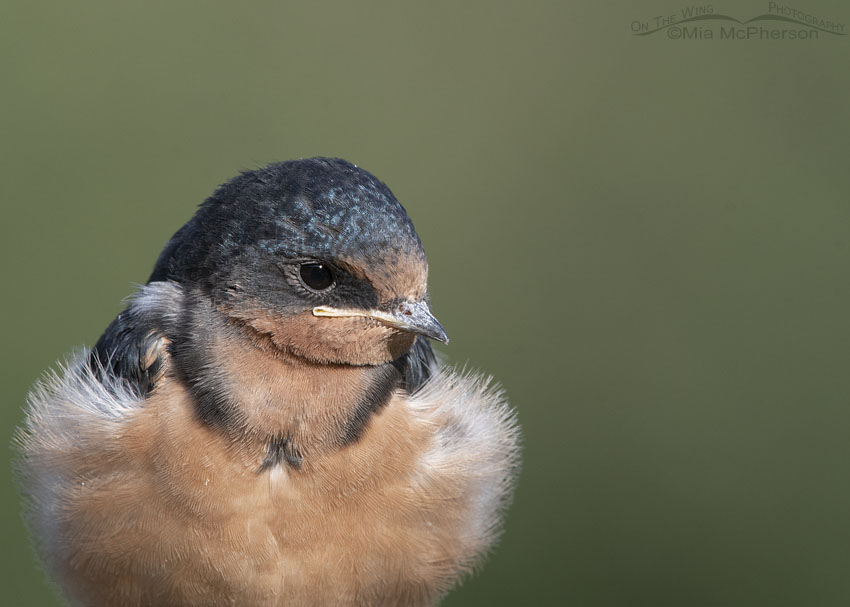
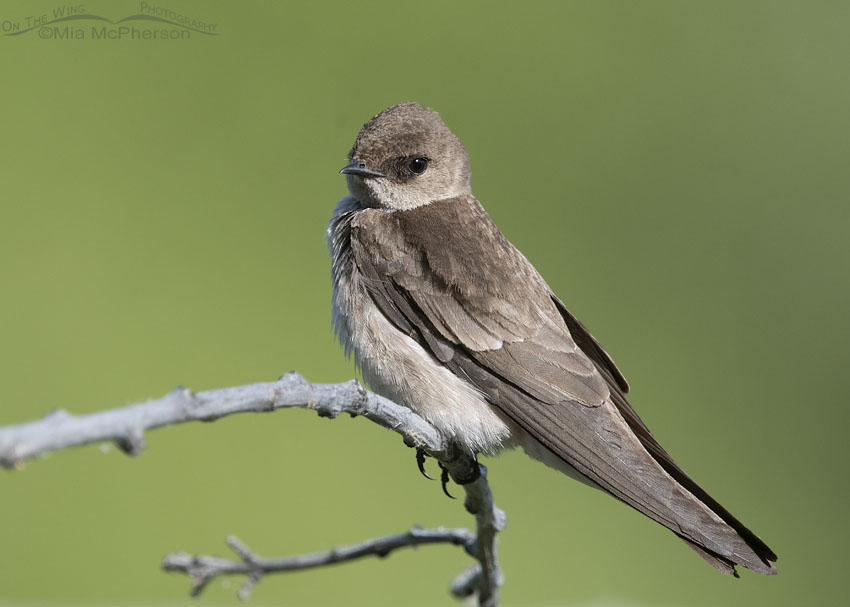
Juvenile Cliff Swallow (Petrochelidon pyrrhonota) -pale-throated variant
Bear River National Wildlife Refuge, Box Elder County, Utah
Nikon D200, f7.1, 1/1250, ISO 400, -0.3 EV, Nikkor 200-400mm VR with 1.4x TC at 400mm, natural light
Later in the day this juvenile Cliff Swallow cooperated and stayed perched for quite a few frames. I’m not sure if the plant is a Water Parsnip or a Water Hemlock but I enjoy the lacy flowers that remind me of Queen Anne’s Lace. I also like how the out of focus vegetation gives this image a depth it might not have without the out of focus stems and flowers in the background. I had more light for this photo that gave me a more acceptable shutter speed. I dialed back the exposure compensation so the whites of the flowers didn’t blow out.
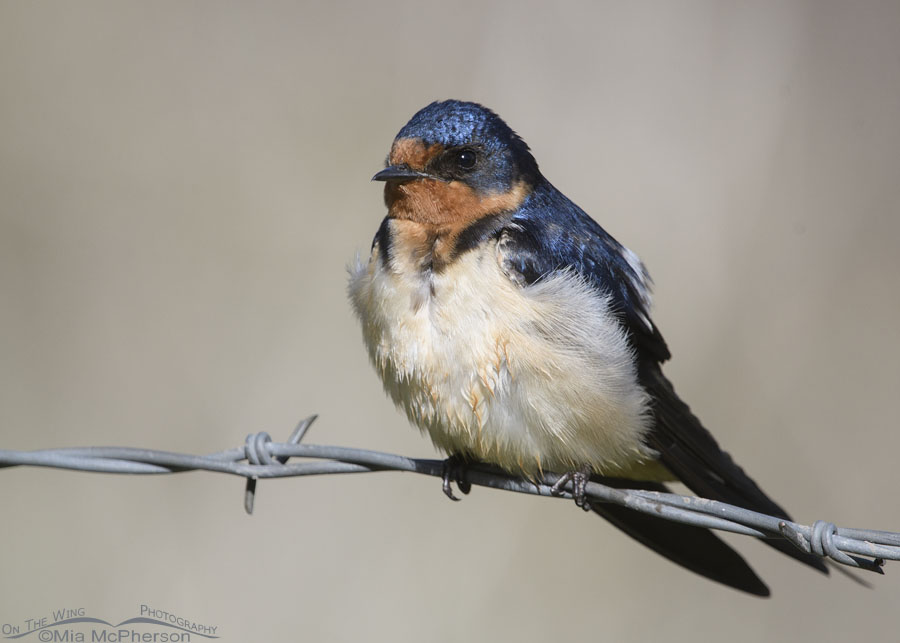
There is a large variance in the appearance of juvenile Cliff swallows though they all have dark auriculars. This young bird appears to be a pale-throated variant.
Cliff Swallows catch and eat flying insects of many species the wing so I adore them because they eat mosquitoes, an insect that I personally despise! Go Cliff Swallows!
Mia
More Cliff Swallow images
By Mia McPherson, on May 19th, 2011% 
Clark’s Grebe (Aechmorphus clarkii) adult
Salt Lake County, Utah
Nikon D200, f6.3, 1/2000, ISO 400, -0.7 EV, Nikkor 200-400mm VR with 1.4x TC at 400, natural light
I’ve written before about my addiction to bird photography and today I am beginning to have serious withdrawls. For days it has been raining (sometimes hailing), cloudy and a miserable gray here in the Salt Lake Valley though it seems like two weeks to this bird photographer. It has only been four days since I was out to photograph birds.
Oh sure, there have been sucker holes where the blue sky and fluffy white clouds can be seen. For about 10 minutes. When the sucker holes happen I’m tempted to hop into my Jeep and head anywhere there are birds even if it means I only get to shoot 5 minutes before the rain starts again. That probably sounds very odd to a non-bird photographer. But it is what it is.

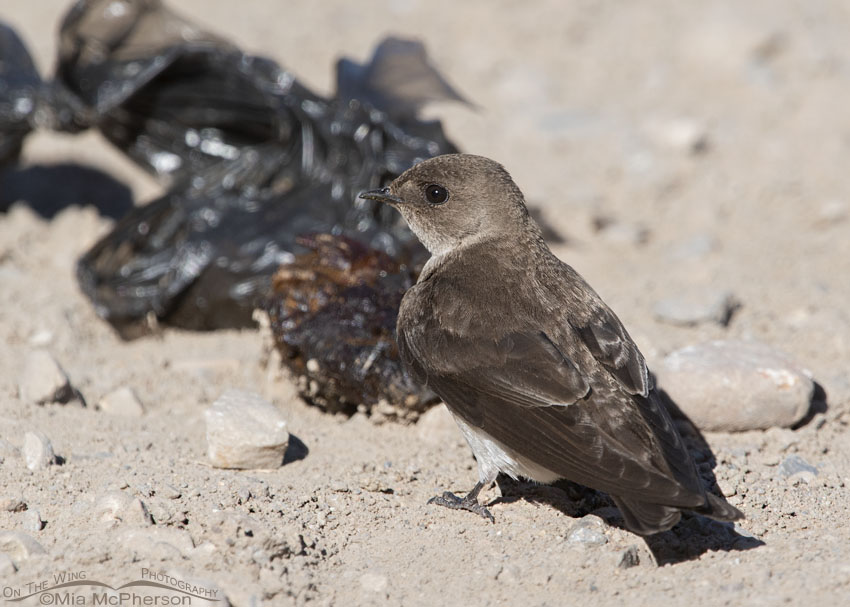
Northern Rough-winged Swallow (Stelgidopteryx serripennis) adult in defensive posture
Jordan River Trail, Salt Lake County, Utah
Nikon D200, f6.3, 1/640, ISO 400, Nikkor 200-400mm VR with 1.4x TC at 400mm, natural light
The withdrawl symptoms are setting in, my shutter button finger is twitching, when I see a bird outside the window my pulse races, I keep looking longingly at my camera mounted on the tripod in the corner of the living room wondering how long it will be before a fine coating of dust settles on it for lack of use.
I’ve been working my tail feathers off trying to keep my mind occupied. It isn’t helping. I’ve also been reading a book but the author keeps mentioning birds in the story and I can’t seem to focus (sorry for the pun). Sure, the rotten weather is giving me time at my desk to edit and cull the images I have already taken though that just seems make this withdrawl affect me more.

Adult Double-crested Cormorant (Phalacrocorax auritus) in flight
Salt Lake County, Utah
Nikon D200, f6.3, 1/1000, ISO 400, +0.3 EV, 200-400mm VR with 1.4x TC at 400mm, natural light
I looked at the 10 day weather forecast earlier and saw that this gloomy weather may last until Thursday of next week. That is awful!
Yes, I am addicted to bird photography.
Mia
By Mia McPherson, on May 14th, 2011%

- Midge “tornado” from a distance
This is the time of the year that “midges” are as thick as flies on you-know-what at the Bear River Migratory Bird Refuge. They are so thick that they can look like tornadoes along side of the Auto Tour route as seen in the image to the left.
A lot of people mistake midges for mosquitoes; they do look similar, and think that they will be bitten by the swarms of bugs in the air. There are biting and non-biting midges, biting midges are often called “no-see-ums” and truly they are miserable to get into because even though you can barely see them the bites let their presence be known. The midges at Bear River Migratory Bird Refuge along the auto tour route are non-biting midges and they play an important role in the areas eco-system.
Midges have three stages in their lifetime, larval, pupal, and adult. In the larval stage midges are aquatic, they feed on algae, plankton and small aquatic plants. They are a food source in the larval stage for fish an their appearance is similar that that of mosquito larvae.
 Midge "tornado" zoomed closer
The female midge lays her eggs either on the water surface or on vegetation near the water. The eggs hatch in approximately 72 hours followed by a two day pupation before rising to the surface as adults.
An important thing to remember is that the flying adult midges do not eat and have a short life span of about 10 days. You can hear a humming sound with that many midges in the air though they do not have the typical “buzz” a mosquito has. Midges over winter in the larval stage in the water.
The midges at Bear River Wildlife Refuge seem to be concentrated along the sides of the dirt road of the auto tour route hovering above the grasses, or on the vegetation along the road or nearby shoreline plants.
They can be a bother when you are driving along with your windows open for birding, bird photography or sightseeing. The outside and inside of the vehicle will literally have hundreds, if not thousands of midges attached to the interior and exterior.
Not to worry though; if you leave the windows open a bit when you reach the paved road and higher speeds most will leave the vehicle.

- Midges in flight
They do tickle if they land on your skin and the sheer numbers of them can feel a bit overwhelming but they don’t bite.
They are; however, an important food source for many of the birds found on the refuge.
The midges at Bear River MBR first appear around April and are often still being seen through June. Many of the shorebirds found at the refuge begin to return about the time the midges are “hatching” in the spring. They are a favorite of Eared Grebes and a few other perching birds.
I have many images where the midges are either present on the water surface or are in flight around the birds I photograph. They can be troublesome to “clean” off the water surface and they can appear to be dust bunnies (aka sensor spots) in an image frame.
Yesterday I could see one walking on my lens through the viewfinder, if that happens to you just blow it out, don’t try to smoosh it or your lens will get dirty!

Adult American Avocet (Recurvirostra americana)
Bear River Migratory Bird Refuge, Box Elder County, Utah
Nikon D200, f6.3, 1/640, ISO 400, Nikkor 200-400mm VR with 1.4x TC at 400mm, natural light
American Avocets are elegant, graceful and unique shorebirds found in great numbers in the Bear River MBR. According the BNA (Birds of North America – a pay site) their freshwater diet includes:
In freshwater wetlands water boatmen (Hemiptera, Corixidae); adult and larval beetles (Coleoptera); fly larvae (Diptera), especially midges (Chironomidae).
I haven’t researched yet to see how many other shorebird species found in the refuge that eat the midges but I’m fairly sure that more of the shorebirds do benefit from the midges being in the refuge.

Male Yellow-headed Blackbird (Xanthocephalus xanthocephalus) with midges around it
Bear River Migratory Bird Refuge, Box Elder County, Utah
Nikon D200, f6.3, 1/750, ISO 400, +0.3 EV, Nikkor 200-400mm VR with 1.4x TC at 400mm, natural light
Another bird that seems to benefit from midges is the Yellow-headed Blackbird. In the image above you can see a few flying midges in the frame and I have watched these blackbirds snatch the midges right out of the air while they are perched. I’ve also seen the yellow-headed blackbirds feeding on the ground by grabbing the midges off of the vegetation. They probably have to eat a lot of the midges for the calories they need but the blackbirds don’t seem to make a dent in the millions of midges on the refuge.

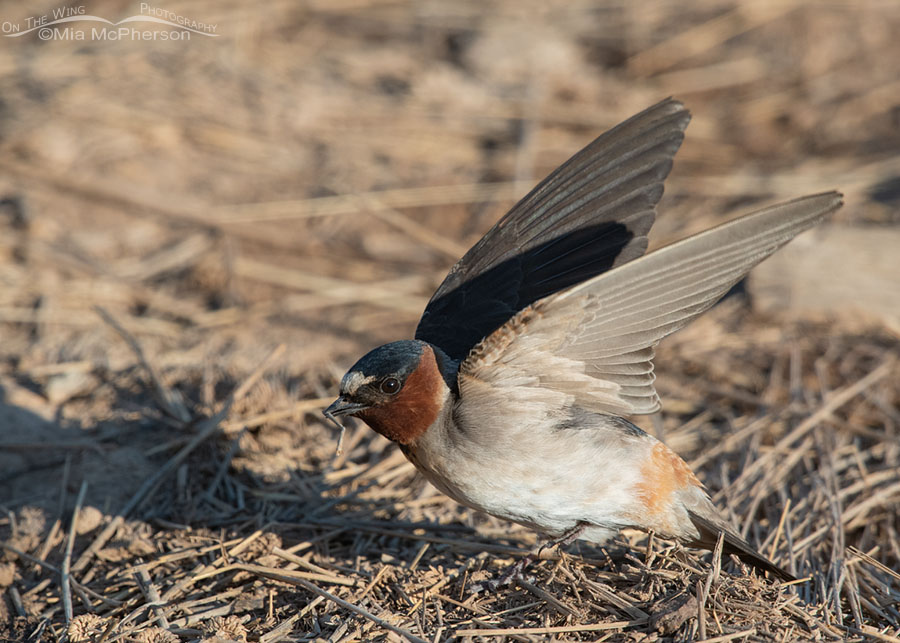
Cliff Swallow (Petrochelidon pyrrhonota) gathering nesting material
Bear River Migratory Bird Refuge, Box Elder County, Utah
Nikon D200, f6.3, 1/1250, ISO 400, Nikkor 200-400mm VR with 1.4x TC at 400mm, natural light
Swallows start to show up at the refuge about the time the midges first start flying, I don’t think that is a coincidence since swallows prefer flying insects for their diet. Although I would prefer that swallows ate just the biting insects I won’t begrudge them eating the non-biting midges either.

Marsh Wren (Cistothorus palustris) calling from cattails
Bear River Migratory Bird Refuge, Box Elder County, Utah
Nikon D200, f6.3, 1/1250, ISO 400, +0.3 EV, Nikkor 200-400mm VR with 1.4x TC at 400mm, natural light
Yesterday I was fortunate enough along the auto route tour to be able to get close to several Marsh Wrens that were calling in the cattails and I could see quite a few of the nests. I love Wrens in general, they are tiny little birds with big attitudes that are amazingly fast and challenging to photograph. I was quite surprised to see one of them yesterday snatch a midge right out of the air.
Humans may think that midges are a nuisance yet the birds I have mentioned benefit tremendously from the presence of these insects. I have only touched on a few of the bird species that ingest these bugs.
Food for thought on a windy, cloudy and rainy day in Utah.
Mia
By Mia McPherson, on March 27th, 2011% 
Audubon’s Yellow-rumped Warbler (Dendroica coronata)
Farmington Bay WMA, Davis County, Utah
Nikon D200, f7.1, 1/500, ISO 320, +1.3 EV, Nikkor 200-400mm VR with 1.4x TC at 400mm, not a set up, natural light
I have the fever. Aspirin won’t help nor will bed rest because spring fever can only be cured by getting out and soaking up spring! For a little while today the sun was shining and teasing me. A storm is rolling in tonight and tomorrow is going to be cruddy … but a high pressure front is coming in after this storm and the weather is looking better, spring time is knocking at the door.
It is about time for a cure for this spring fever.

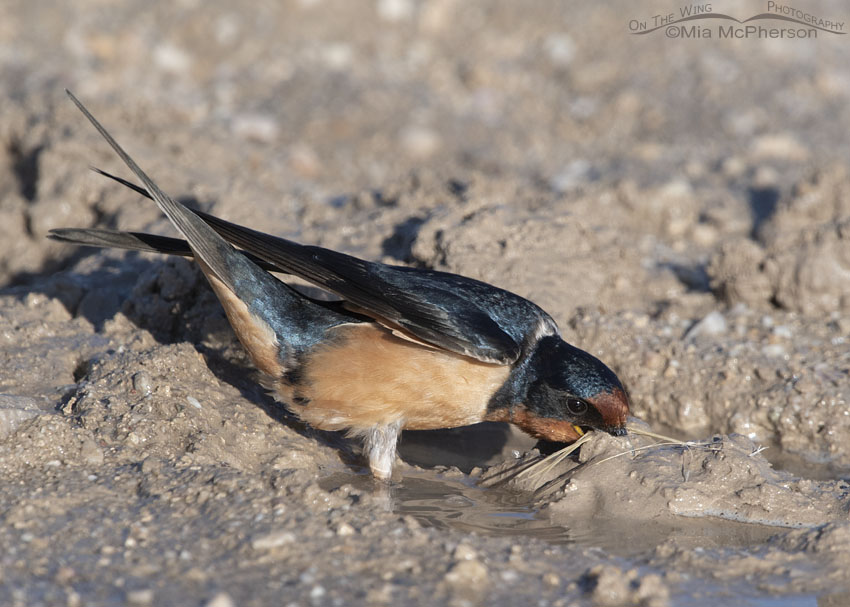
Cliff Swallow (Petrochelidon pyrrhonota) collecting mud for its nest
Bear River Migratory Bird Refuge, Box Elder County, Utah
Nikon, f6.3, 1/400, ISO 400, +0.7 EV, Nikkor 200-400mm VR with 1.4x TC at 400mm, natural light
I’ve seen signs of Ravens, Black-billed Magpies, Canada Geese, Horned Larks and other birds preparing their nests. It won’t be long and there will be many more pairs of birds mating and incubating eggs. They have spring fever too.
Quite a few species of trees have started to open their buds, I’m seeing green on the willows, a flush of new blooms on some cherry trees and I have been hearing the songs of the chorus frogs. There are crocus, snowdrops and grape hyacinths in bloom and the daffodils and tulips will soon follow along with the sweet perfume of the lilacs.
Yes, spring is warm, inviting and exciting.

Western Grebes (Aechmorphus occidentalis) courting in early spring
Bear River Migratory Bird Refuge, Box Elder County, Utah
Nikon D200, f6.3, 1/640, ISO 400, +1.3 EV, Nikkor 200-400mm VR with 1.4x TC at 400mm, natural light
Don’t get me wrong, I love winter and the birds I see then. I love to see the mountains heavily covered in snow, frosted vegetation and breathing in the brisk air.
Spring seduces me. Refreshes me. It whispers to me softly to come outside to savor nature and wildlife and feel the warm breeze caress my skin. It beckons to me to go camping to spend the daylight hours exploring and promises star-filled nights out where all I might hear are the sounds of howling coyotes and the hoot of an owl or two. Away from the city, out where you can hear for miles.

Male Red-winged Blackbird (Agelius phoeniceus) singing on old cattails
Farmington Bay WMA, Davis County, Utah
Nikon D200, f6.3, 1/500, ISO 250, +0.7 EV, Nikkor 200-400mm VR with 1.4x TC at 400mm, not a set up, natural light
Spring has a musical rhapsody which is entirely its own. Birds such as this Red-winged Blackbird seem unable to resist singing outloud and why should they? It is a great time of the year.
The snow melt will fill the mountain streams and as they tumble downward towards the valleys the tinkling and gurgling sounds that creates will fill the air. Yum, sitting on a sun warmed rock streamside and listening to that in the spring?
Priceless.
Mia
|
Photographing a Tricolored Heron from a tidal lagoon

Focusing on Wildlife Contributor

|