Songs of Spring – Red-winged Blackbirds

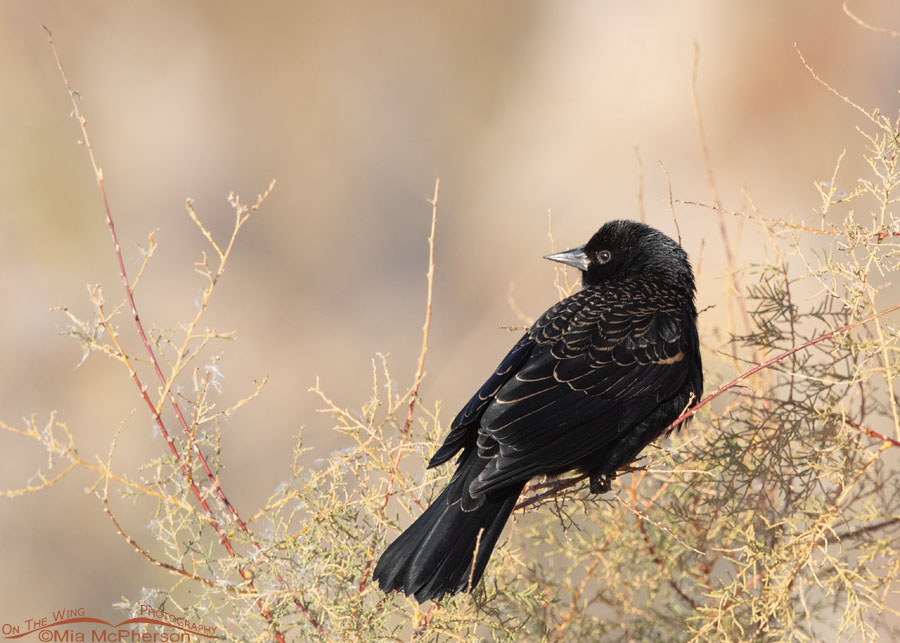
Red-winged Blackbird maleRed-winged Blackbird male – Nikon D200, f7.1, 1/1250, ISO 400, Nikkor 200-400mm VR with 1.4x TC at 400mm, natural light

Yesterday while taking the auto tour route at Bear River National Wildlife Refuge I heard a Red-winged Blackbird loudly singing the songs of spring. The light was terrible yesterday so I looked around in my files for a male Red-winged Blackbird to share this morning and came across this one taken at Bear River NWR a few years ago.

I’ve mentioned before that black birds are difficult to expose properly and that often times I need to use exposure compensation to make sure the blacks aren’t too dark or they won’t show fine detail but when I took this image the light was just right and I didn’t need to adjust my exposure to get it right. I love it when that happens!

Fairly soon I’ll be seeing many more of the male Red-winged Blackbirds perching at the top of rushes and cattails singing springtime serenades for the females and flashing their brilliantly colored epaulets! For black birds they are kind of flashy.

Mia

More Red-winged Blackbird images

Facebook Twitter

Some of the Birds I love at Bear River National Wildlife Refuge

One of my favorite locations to photograph birds in northern Utah is Bear River National Wildlife Refuge. I’ve selected some of the birds there that delight and entertain me while I observe and photograph them.

Eastern KingbirdEastern Kingbird

There are several different species of Flycatcher that visit the Bear River Migratory Bird Refuge, among them the ones I see most often during the warmer months are the Eastern Kingbirds…

Western KingbirdWestern Kingbird

and Western Kingbirds. Both of them look rather dapper in my opinion.

Male Black-necked StiltMale Black-necked Stilt

There are also many shorebirds the pass through or nest on the refuge, Black-necked Stilts nest on the refuge…

American AvocetAmerican Avocet

as do American Avocets. Both of these shorebirds appear rather elegant in looks and movements.

Black-crowned Night HeronBlack-crowned Night Heron

Black-crowned Night Herons are common wading birds at the refuge and despite their name, they aren’t strictly nocturnal. Black-crowned Night Herons are year round residents…

Snowy Egret in flightSnowy Egret in flight

but Snowy Egrets are not, they migrate to the refuge. This Snowy Egret is showing the peachy-colored lores seen during the breeding season.

Barn Owl flying in the snowBarn Owl flying in the snow

Barn Owls are year-round residents of the refuge and although they are primarily nocturnal they do fly during the day when the weather is bitter cold and there is heavy snow cover on the ground and they will fly later at dawn and earlier at dusk when they have chicks to feed. This one was flying during the day as the snow fell.

Swainson's HawkSwainson’s Hawk

Swainson’s Hawks are also migratory birds and they are seen on the refuge during the warmer months. Their diet consists primarily of insects like grasshoppers and there aren’t many of those around during the cold months in Utah.

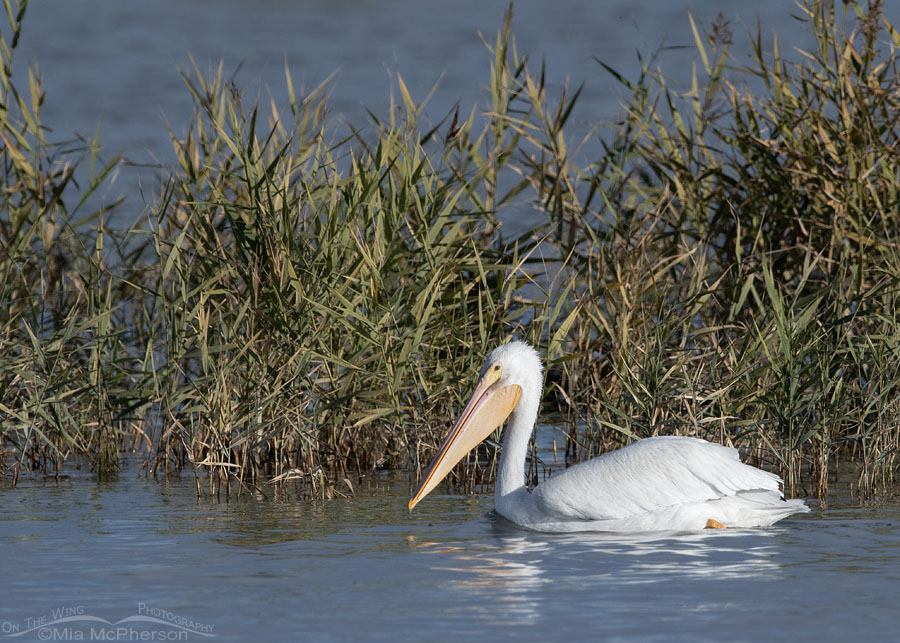
American White PelicanAmerican White Pelican

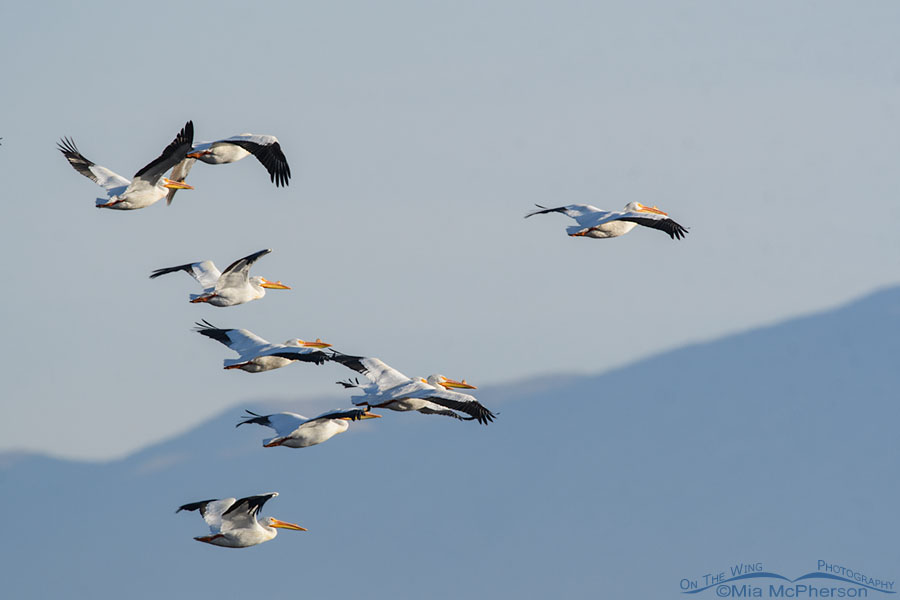
American White Pelicans also nest on the refuge and come into to feed on fish in the fresh water impoundments.

Male Yellow-headed BlackbirdMale Yellow-headed Blackbird

Yellow-headed Blackbirds, with their mechanical sounding call, can be found perching in cattails, reeds, phragmites and other vegetation as they forage for food. I was tickled to get this male in this pose.

Western GrebeWestern Grebe

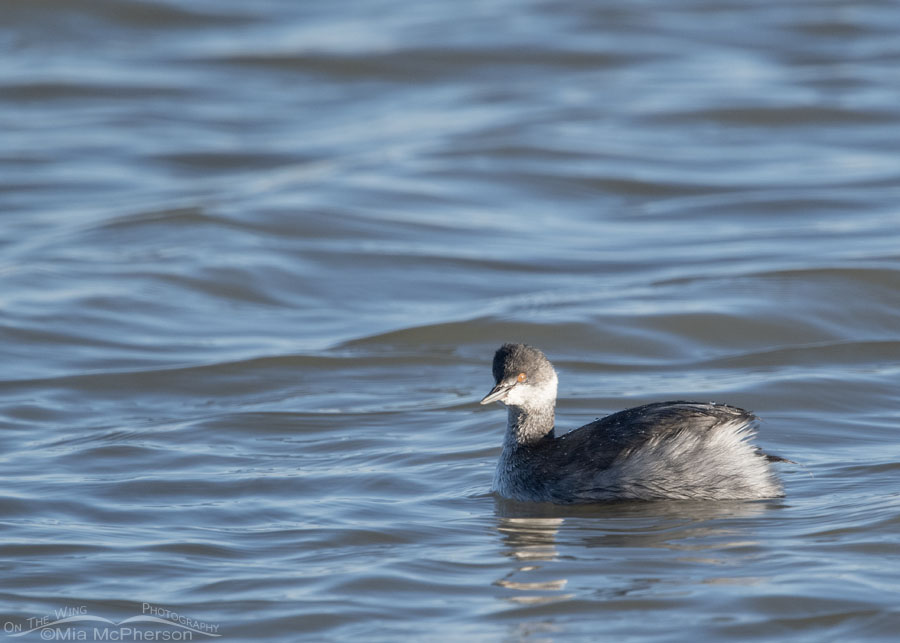
The most common found grebes on the refuge are Pied-billed, Clark’s and Western although Eared and Horned Grebes are also spotted there at different times of the year.

Tundra SwanTundra Swan

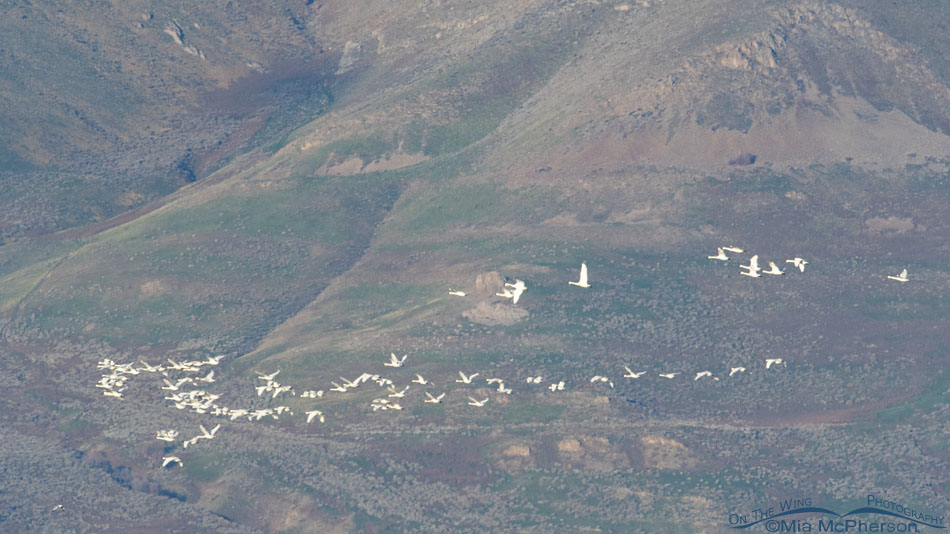
Tundra Swans by the thousands call the refuge home during the winter and can be seen flying overhead, swimming in open water or standing on ice. This adult shows a stained head and neck.

Marsh WrenMarsh Wren

The sound of Marsh Wrens can be heard all over the refuge, they may be tiny but their voices aren’t.

Cinnamon x Green-winged Teal hybridCinnamon x Green-winged Teal hybrid

All types of ducks can be found on the refuge during different seasons of the year. It pays to keep a look out for unusual ducks, you never know when a hybrid might be seen like this Cinnamon x Green-winged Teal.

Forester's TernForester’s Tern

Terns and gulls can also been seeing hunting over the water and nesting there as well. This Forester’s Tern in breeding plumage was hunting for small fish.

This is just a small selection of the birds that can be found at Bear River National Wildlife Refuge, a location that I treasure.

Mia

Facebook Twitter

Bear River National Wildlife Refuge Barn Swallow

Barn SwallowBarn Swallow – Nikon D200, f7.1, 1/640, ISO 250, +0.3 EV, Nikkor 200-400mm VR with 1.4x TC at 400mm, natural light

My birding friends Kathie and Chris down in Arizona have reported that they are already seeing swallows so chances are it won’t be long before I see them just one state away in Utah!

Bear River National Wildlife Refuge has five species of swallows during the warmer months, they are Tree, Northern Rough-winged, Violet-green, Cliff and Bank Swallows. The swallows are drawn to Bear River NWR because of the abundance of insects at the refuge, primarily Midges. I’ve written before about them in a post titled  Midges and Birds – Food for Thought that explains how Midges benefit the eco-system at Bear River NWR in northern Utah. That post also shows Midge Tornados that I find fascinating and images of a few birds that consume them too.

Okay, back to swallows, it wasn’t until last night that I realized I have not posted a single image of a Barn Swallow on my blog yet and I figured it was about time! I photographed this beautiful adult Barn Swallow on the auto tour loop back in May of 2010, that was a super day for me as far as photography went because I was also able to photograph some gorgeous Red Fox kits that morning too.

I expect to see the first Barn Swallows sometime around the end of March to the beginning of April, I can’t wait!

Don’t get me wrong, I love winter and the birds the cold weather brings but I am also looking forward to the birds I see in spring and summer and Swallows are amongst them.

Mia

*Because of Google’s changes it Image Search and how they have begun to hotlink to my larger images I will no longer post large versions of my files on my blog.

Facebook Twitter

Bear River National Wildlife Refuge – Christmas Day 2012

North section of the Bear River NWR auto tour route

North section of the Bear River NWR auto tour route – Nikon D200, handheld, f7.1, 1/1500, ISO 400, +1.0 EV, Nikkor 18-200mm VR at 18 mm, natural light

Christmas Day of 2012 turned out to be as beautiful as I hoped at Bear River National Wildlife Refuge (also known as Bear River Migratory Bird Refuge) because of bright skies, snow on the ground and virtually having the place to ourselves. The Promontory Mountains to the west were gorgeous covered in a blanket of fresh snow. Bear River had some open water but there was also ice along the shore and some of the smaller ponds were frozen over. The lowest temp I saw was 6 degrees Fahrenheit but it didn’t feel that cold because of the warmth of the sun.


Bald Eagle Landing

Bald Eagle Landing on the Bear River – Nikon D300, f5.6, 1/3200, ISO 640, +0.3 EV, Nikkor 200-400mm VR with 1.4x TC at 400mm, natural light, not baited

Just before the maintenance buildings at the start of the auto tour route I spotted this Bald Eagle standing on the frozen surface of the Bear River, it looked beautiful in the soft morning light. The eagle was looking at the ice covering the river when it lifted off and flew a few feet towards something that I couldn’t see.  This photo was taken as the eagle started to land on the ice once again. Two American White Pelicans lifted off from the river right after the bridge by the maintenance building, they have hung around rather late in the season. Maybe they just didn’t want to be called “snow birds” by the people down south. ;-)

Before seeing the Bald Eagle I spotted a Barn Owl flying but the owl would not let us get close enough for images. During the morning at Bear River NWR and north in the Golden Spike Area we saw Bald and Golden Eagles, Rough-legged Hawks, Red-tailed Hawks, Northern Harriers, a Prairie Falcon and quite a few American Kestrels. In addition I spotted two Short-eared Owls flying over a marshy area. Most of these great raptor were just too far away for photos.

 Marshes and the distant Promontory Mountains

 Marshes and the distant Promontory Mountains – Nikon D200, handheld, f14, 1/640, ISO 400, +1.0 EV, Nikkor 18-200mm VR at 75mm, natural light

The air was crisp, and the only sounds I could hear when the truck wasn’t moving were the sounds of nature. Rustling Phragmites and Cattails, small birds flitting around and some times further away, the cries of gulls. It was peaceful, relaxing and invigorating all at the same time.  What a wonderful Christmas gift.


Young Great Blue Heron on Christmas Day

Young Great Blue Heron on Christmas Day – Nikon D300, f6.3, 1/2000, ISO 640, Nikkor 200-400mm VR with 1.4x TC at 400mm, natural light

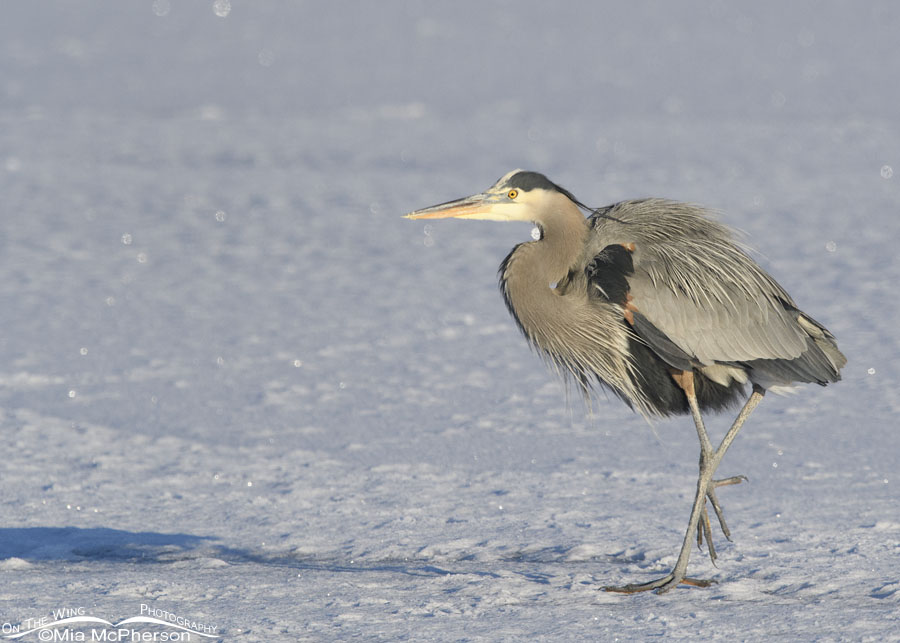
On the north section of the very muddy auto route we saw a scattering of around 100 Great Blue Herons, I have never seen so many in an area that size at the refuge. It was pretty amazing to see. right after we headed south I spotted this immature Great Blue Heron standing in a section of open water surrounded by ice, it wasn’t long before the bird flew onto a pile of snow topped vegetation which is where it was when I captured this image.

You might wonder how I know that this is a young bird, the crown is dark and there isn’t any white on top of the head or behind the eye as would be seen on an adult. The rusty colored shoulder patches that adults have aren’t evident and the mottled stripes on the chest of this bird wouldn’t be seen on an adult.

 Looking towards Promontory Point

 Looking towards Promontory Point – Nikon D200, handheld, f14, 1/320, ISO 400, +1.0 EV, Nikkor 18-200mm VR at 22mm, natural light

After leaving the auto tour route was finally saw another car parked on the shoulder of the hard-topped road and that is where I spotted the first Short-eared owl flying over the marshy area. The driver of the car was out taking photographs so we pulled in a distance behind him to see if the owl would fly in close. The young man came up and introduced himself after a bit. David is from Washington State and it was his first visit to Bear River NWR so we told him what we had seen on the auto tour route and I hope he saw some of the birds we mentioned. It was very nice to have met him.

Bear River NWR and the Golden Spike area are always wonderful but yesterday both seemed even more fantastic.

Mia

Facebook Twitter

Rushing Western Grebes at Bear River Migratory Bird Refuge

Rushing Western Grebes 1

Rushing Western Grebes 1 – Nikon D300, f6.3, 1/2500, ISO 500, Nikkor 200-400mm VR with 1.4x TC at 321mm, natural light

I photographed these Western Grebes rushing in early June of this year at Bear River National Wildlife Refuge in Box Elder County. I had been keeping an eye on this pair while photographing other grebes that were closer and noticed that both of these birds were holding their heads low to the water with their necks out stretched which is called ratchet-pointing. I realized they were getting ready to rush and aimed my lens at them. (That is a female Yellow-headed Blackbird flying on the right side of the frame)

Rushing Western Grebes 2

Rushing Western Grebes 2 – Nikon D300, f6.3, 1/2500, ISO 500, Nikkor 200-400mm VR with 1.4x TC at 321mm, natural light

Rushing is a courtship dance for Western (and Clark’s) Grebes that occurs during the mating season, it is amazing to watch these grebes become upright with their bodies completely out of the water and rush across the surface with the aid of their large feet. The sound of the splashing water seems to intensify the action.

Rushing Western Grebes 3

Rushing Western Grebes 3 – Nikon D300, f6.3, 1/2500, ISO 500, Nikkor 200-400mm VR with 1.4x TC at 321mm, natural light

The male is on the left, female on the right, his chest is larger than hers. Normally I see Western Grebes courting earlier than these two birds, June seemed rather late but I’m super happy that I noticed the ratchet-pointing behavior these two exhibited or I might have missed photographing this interesting behavior. As a bird photographer I have learned that knowing my subject and its behavior helps me to anticipate their actions and that can lead to some wonderful action photos.

Rushing Western Grebes 4

Rushing Western Grebes 4 – Nikon D300, f6.3, 1/2500, ISO 500, Nikkor 200-400mm VR with 1.4x TC at 321mm, natural light

Bear River Migratory Bird Refuge contains great habitat for Western and Clark’s Grebes and they are very abundant during the warmer months, right now their numbers are dropping because many of them have already migrated south. They’ll be back in the spring to dance across the water again.

Mia

More Western Grebe images

Facebook Twitter