White-tailed doe portrait – Nikon D300, f6.3, 1/1000, ISO 800, +0.3 EV, Nikkor 200-400mm VR with 1.4x TC at 400mm, natural light, not baited
In Utah I don’t often have the opportunity to see and photograph White-tailed Deer (Odocoileus virginianus) because they have a very limited range here so I was thrilled to have the chance to photograph this doe close up as she fed between the gravel road and a barley field in Glacier County, Montana.
White-tailed Deer doe eating – Nikon D300, f6.3, 1/800, ISO 800,+0.7 EV, Nikkor 200-400mm VR with 1.4x TC at 400mm, natural light, not baited
I saw several other White-tailed Deer on my recent journey to Montana, this doe allowed the closest approach and I took quite a few portraits of her.
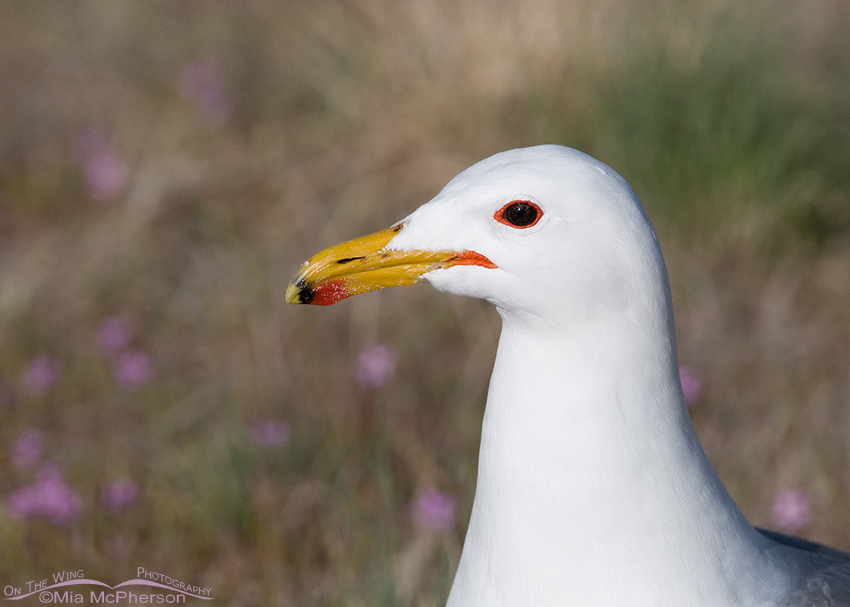
Springtime California Gull Portrait – Nikon D300, f6.3, 1/4000, ISO 640, Nikkor 200-400mm VR with 1.4x TC at 258mm, natural light, not baited
Yesterday while I was out photographing Long-billed Curlews this California Gull (Larus californicus) flew in so close that all I could do was take portraits of the bird. After a long holiday weekend and the abundance of campers on Antelope Island State Park, I’m fairly certain the bird was looking for a hand out. I could see other gulls scouring the campsites for any scraps of food left behind.
I like the out of focus, tiny pink wildflowers that are currently blanketing the grasslands of the island showing in the background, the snowy white plumage of the gull, the bits of oolitic sand on the bird’s bill and the brilliant colors of the gape, orbital ring and bill. I also rather enjoy being able to see the reflection of the fluffy clouds in the sky in the upper quadrant of the gull’s dark eye.
You’d think that Utah would have selected a different species for the State Bird given that the name of this species is the California Gull. I’ve written about why the California Gull was picked for the Utah State Bird here, it is an interesting story.
Mia
Oh, the Biting Gnats (no-see-ums) are back and bit me up yesterday. Grumble, grumble.
Juvenile Burrowing Owl (Athene cunicularia) Portrait ~ Davis County, Utah Nikon D200, f8, 1/250, Nikkor 200-400mm VR with 1.4x TC at 400mm, natural light, not baited
Just a simple portrait of a juvenile Burrowing Owl taken in the soft light of dawn. Burrowing Owls are beautiful birds with lemony yellow eyes, downy soft feathers and subtle coloration. It’s hard to believe that they aren’t that much different in size from an American Robin.
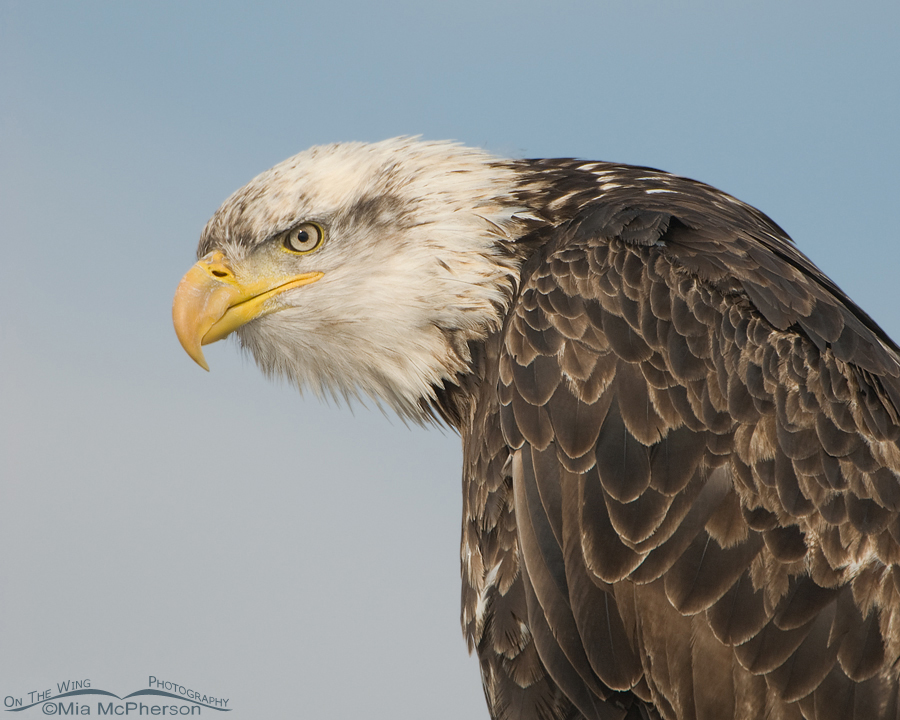
During the summer months I don’t often see Bald Eagles unless I go up into the high country or travel north of Utah to Idaho, Wyoming or Montana but in the Salt Lake Valley many Bald Eagles come in to spend the winter.
Four year old Bald Eagle Portrait ~ Davis County, Utah Nikon D200, f6.3, 1/640, ISO 200, Nikkor 200-400mm VR with 1.4x TC at 400mm, natural light, not baited
By the time autumn arrives I find myself anxiously looking forward to seeing my first Eagle of the season and usually the first one I spot is flying high overhead or perched on a craggy rock.
Many of the Bald Eagles that over winter in the Salt Lake Valley have migrated down from the mountains or from much father north of Utah, including Bald Eagles from Alaska.
Adult Bald Eagle in flight ~ Davis County, Utah Nikon D200, f6.3, 1/2500, ISO 400, +0.7 EV, Nikkor 200-400mm VR with 1.4x TC at 400mm, natural light, not baited
I have been seeing a spattering of Bald Eagles either in flight or perched in leafless trees lately and before long there will be hundreds more.
I haven’t heard any calling yet but I suspect that I will be hearing that soon. I am looking forward to seeing and photographing the Bald Eagles that call this valley home during the coldest months. Utah ROCKS for bird photography!
I am not sure why but it seems that many bird photographers avoid taking images of gulls, most of the time when I’ve asked them why they don’t take more photos of gulls I hear “I just don’t like gulls”.
Ring-billed Gull in front of crashing waves ~ Pinellas County, Florida Nikon D200, f5.6, 1/3000, ISO 320, Nikkor 80-400mm VR at 300mm, natural light, not baited
Gulls can be very noisy, act like scavengers, snatch food right out of your hands and are often associated with waste management facilities and because of that they might be called garbage birds. I’m not disputing any of that.
But I do believe that photographs of gulls can be stunning, very appealing and done right they can be considered artistic and visually stimulating. There are bird photographers who will drive right by the opportunity to photograph them though. I am not one of those photographers.
Ring-billed Gull Portrait ~ Pinellas County, Florida
Nikon D200, f6.3, 1/2000, ISO 200, Nikkor 80-400mm VR at 280mm, natural light, not baited
I’m the type of bird photographer who will photograph any bird. Large, small, common, uncommon, beautiful or homely; all birds have a place in my portfolio. I guess you could say I am unbiased when it comes to the birds I photograph.
In the case of gulls “we” have encroached on their habitat, we flock to the beaches that they once only shared with other birds and animals and open hot dogs stands and drop our food where the gulls can easily find it. It’s not really their fault that they have adapted to humans being sloppy.
We have open waste management areas where the gulls can readily find edible wastes, it isn’t really their fault for taking advantage of the easy pickins’ we create.
Personally I don’f find the calls of gull annoying but then I have lived in places where there weren’t any gulls and I really missed hearing them, sort of my own version of “Silent Spring”.
Ring-billed Gull floating on a breeze ~ Pinellas County, Florida Nikon D200, f6.3, 1/1000, ISO 200, Nikkor 80-400mm at 400mm, natural light, not baited
I do know that gulls are graceful in flight, have amazing variations of leg, eye, and bill colors and delightfully different plumage patterns in the different gull species and even within each species as they mature. Nearly all of them have striking white feathers combined with varying shades of grays, browns and blacks. What’s not to like about that?
They can be a challenge to expose properly but in the end I believe they are well worth the time I invest in photographing common birds that can be uncommonly beautiful.