Farmington Utah’s Voles – Just My Opinion

If you are squeamish, don’t like to see dead animals or can’t stand the sight of blood you may want to skip reading this post. Or you can push past seeing animals that have died of natural causes and why I felt it important to express my opinions about this matter. 

Recently KSL.com; a Utah news station, had an article about a Vole (a small rodent) infestation In Farmington, specifically in the neighborhood of Foxboro Community. While I sympathize with the residents about the damage being done to their yards I am disturbed by the advice many of the people commenting have left on the story. The article and the comments can be read here.
Two main suggestions came up repeatedly:

  1. Get an outdoor cat, they will kill them
  2. Use poison to kill the Voles

To explain that area one must think of wetlands that have turned into housing developments and human encroachment on natural areas. Think of nearby marshes and flat grasslands where voles and other animals have thrived since before the pioneers settled into the Salt Lake Valley. It is prime real estate for voles. It is prime real estate for all of the other creatures too.

Some of the folks want to blame UDOT because the Legacy Parkway was near the Foxboro Community. Those voles were on the land that the Parkway was built on long before they broke ground. The Legacy Parkway isn’t the problem.

Some of the folks want UDOT, the City or Davis County to clear the voles off of the public lands near the Foxboro Community and the Legacy Parkway because they believe that will solve the vole infestation. It won’t work.

What some of these people fail to realize that there are cycles in nature where populations of animals rise and fall and that those cycles can depend on many factors. We had a super mild 2011/2012 winter which possibly had an effect on the vole population. Voles breed all year long but harsh winters can reduce the number of off spring that survive the frigid temperatures. A mild winter… more surviving voles. We had an early spring in 2012 where the grasses and other vegetation, aka vole food, greened up early and provided the voles with enough nourishment to have more litters.

I’m a bird photographer, I am out in the wilds a lot and I have observed a dramatic increase in the vole population in the locations that I visit to photograph birds in the last year. I’m not upset or disturbed by it because I know that the population will decrease because of that natural cycle. The fall of the high population can be weather related, caused by predators consuming the voles or both. And more.

Outdoor Cats:

First, let’s look at outdoor cats and the problems they can cause to wildlife, people and how living outdoors can cause them to live much shorter lives.

  1. Outdoor cats that are not vaccinated can carry diseases that can be transmitted to wildlife and the people they come in contact with.  That is a fact. Think rabies, feline distemper and feline immunodeficiency.
  2. Outdoor cats can be hit by cars, poisoned, attacked by dogs, get lost or stolen.
  3. Outdoor cats that are not spayed or neutered cause an increase in feral cat problems.
  4. Outdoor cats are spreading diseases to our native cats, our Mountain Lions and Bobcats.

Estimations have shown that annually outdoor cats in the U.S.  have been the cause of death for hundreds of millions of birds, some of these birds are on the threatened and endangered lists and a few species are facing extinction if we don’t do something about the outdoor and feral cat problem now.

You might think I am anti-cat at this point. I’m not. I have had cats in the past, I love to cuddle & play with my friends cats now.

However; I did not and would not have an outdoor cat because of the danger to the cats and to wildlife. You can read more about outdoor cats at the American Bird Conservancy (ABC) here and about cats & predation here.

Poison Control:

Not a good idea at all. Poisons are bad for people, animals, the environment and upset the balance of nature.

  1. Poisons can kill children who don’t know that what they are touching or ingesting is harmful.
  2. Poisons can kill your pets.
  3. Some of those poisons stick around for years and have long term effects.
  4. Poisons might kill the natural predators of voles after the predator ingests them.
  5. Aren’t we all bombarded by enough chemicals whose long term health effects are unknown each and every day?

What is to say after a poison kills a rodent that your family pet will not pick it up and eat it and then die? What is to stop a predatory bird that is protected under the Migratory Bird Act from eating the poisoned rodent and dying? For people on well water how do you know for certain that those poisons won’t migrate into your drinking water?

Poisons are too risky. For you. For me. For our children’s children. For our planet.

This is a Vole. This is a Vole after a native predator kills it for nourishment. This is Nature.

This is a Vole. This is a Vole after a native predator kills it for nourishment. This is Nature.

When I saw this vole wedged into a tree on Antelope Island State park a while ago I asked Ron to back up so I could show it to him and so I could take photos of it. Maybe I knew it would come in handy one day for a blog post of importance. At the time I wasn’t sure whether a Loggerhead Shrike cached it or if it was an American Kestrel that did it. Shrikes are well known for impaling their prey to cache it.

BNA (Birds of North America) shows this under American Kestrels under food habits:

Prey often but not always decapitated; hidden in grass clumps, tree roots, bushes, fence posts, and tree limbs and cavities, etc.

Regardless of whether it was a Shrike or a Kestrel that stuck this dead vole in the tree, it died a natural death and the bird had sustenance. 100% nature.

Native predators of voles, also known as the Vole Control Patrol:

Hawks & Falcons

American Kestrel female eating a vole

American Kestrel female eating a vole

One of my most favorite raptors; the American Kestrel, excels at vole control. They are Bantamweight (bird lovers will catch the pun here) vole eating machines and they KO plenty of the little rodents everyday!

I support the American Kestrel Partnership which is a project of the Peregrine Fund. In some areas of North America the populations of these small falcons are on the decline. The American Kestrel Partnership hopes to unify the data-generating capacity of citizen scientists with the data-analysis expertise of professional scientists to advance research and conservation of American Kestrels.

You may wonder why I brought the American Kestrel Partnership up in this post. If people in the Foxboro Community put up kestrel nest boxes their vole population would decrease significantly and by monitoring the nest boxes they could help as citizen scientists. Nest boxes can be purchased here from the American Kestrel Partnership.

Hey Foxboro Community, what are you waiting for? You can get rid of your voles naturally and help our smallest and most colorful falcon in North America.

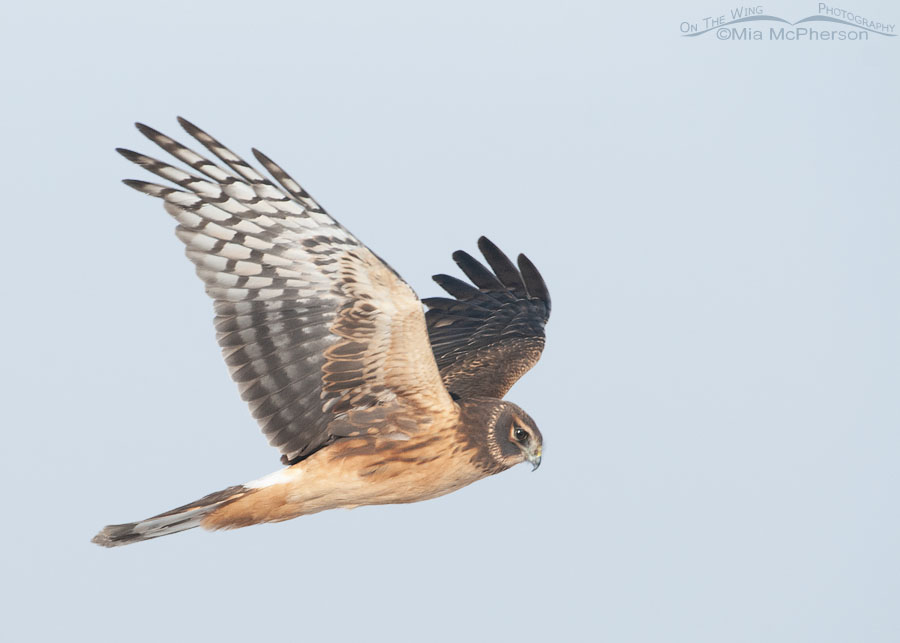
Male Northern Harrier in flight

Male Northern Harrier in flight

If American Kestrels are the Bantamweights of the Vole Control Patrol the Northern Harriers are the Long Distance Fliers. Harriers cruise all day long in search of voles with the aerial agility of stealth airplanes, the voles get no notice before they are captured and dispatched. Harriers nest in the marshes not in nest boxes so they can’t be enticed to book a room in a grassy neighborhood yard but they are great Vole exterminators.

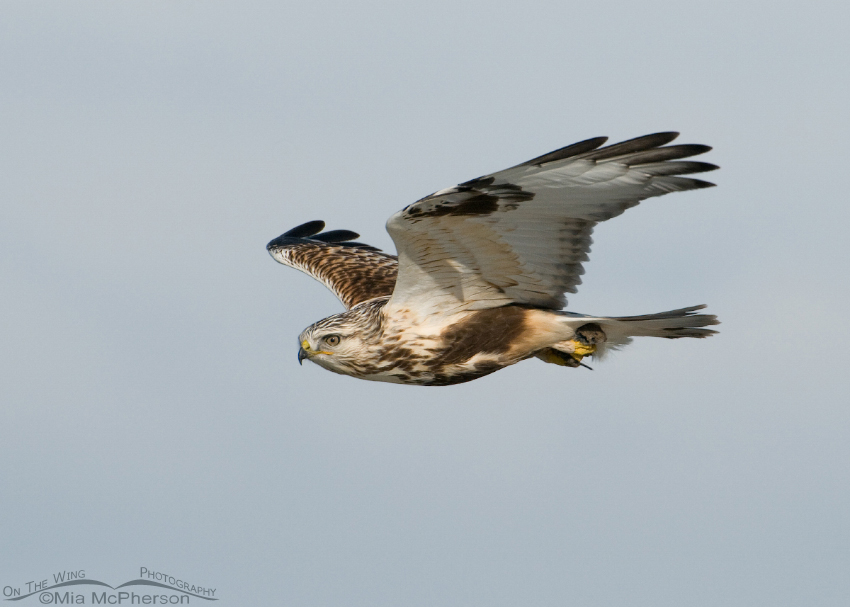
Rough-legged Hawk with Vole

Rough-legged Hawk with Vole

Rough-legged Hawks hover above their prey then swoop down to capture it, their method of capturing voles reminds me of a military Apache helicopter. They get their prey a large percentage of the time. They are only in the Salt Lake Valley during the winter because their breeding territory is much farther north. They can certainly make a dent in the vole population during their brief time in Utah though.

These are three raptors that capture and eat large volumes of voles.

Loggerhead Shrike – The Raptor Wannabe

Loggerhead Shrike

Loggerhead Shrike

Loggerhead Shrikes are songbirds but they sure remind me of raptors in their behavior, diet and the way they capture and kill their prey. Their diet consists of insects, spiders and small mammals like the voles that people in Farmington are annoyed with. I’ve seen Loggerhead Shrikes every month of the year though their numbers do seem to dwindle significantly during the winter. Because insects are not available during the coldest months of the year their winter diet consists of small rodents, mostly voles. Loggerhead Shrikes build their own nests in sagebrush and other shrubs. Having them near your property could reduce the number of voles. They might be lightweights but they have big appetites.

Owls

Great Horned Owl perch on an old Granary

Great Horned Owl perch on an old Granary

Several owls species native to Utah hunt and eat voles, like this Great Horned Owl, aka Tiger of the Sky, pictured above. Great Horned Owls do nest in boxes, trees and old buildings and if nest boxes are provided they will hunt down and eat those pesky voles.

Other owls in the Salt Lake Valley area that eat voles:

  • Barn Owls. Again, if nest boxes are provided they will stick around the area and get rid of small rodent pests.
  • Short-eared Owls. They nest on the ground and voles are a high portion of their diet.
  • Burrowing Owls. They nest in man-made and natural burrows and they eat voles too.

Wading Birds that eat Voles:

Great Blue Heron stalking voles in winter

Great Blue Heron stalking voles in winter

You might think I have gone off the rails by saying that some wading birds eat voles but they do. When the water is frozen over at Farmington Bay Waterfowl Management Area the Great Blue Herons still need to eat and they stalk and ingest voles. They are wetland and marsh birds and will walk right into yards to hunt if nearby areas include water and cover.

Other wading birds in the SLC Valley area that eat voles:

  • Black-crowned Night Herons (year round residents)
  • Great Egrets (mostly migrant, some do winter over when the winter is mild)

That pretty much covers the birds that will get rid of and eat voles without using poisons or outdoor cats .

Mammals

There are mammals that eat voles (besides cats). Long-tailed Weasels that are found in wetlands and marshy areas include voles in their diet. They are fast, strong and ferocious when it comes to dispatching their prey. And they are wonderful to see in both their brown summer coat and the snow white winter coat. You won’t think of them as cuddly once you see them attack their prey.

Coyote crunching down on a Vole

Coyote crunching down on a Vole

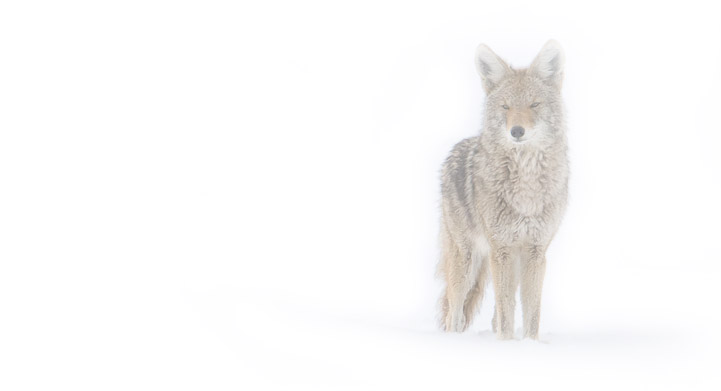
Coyotes, who are much maligned and often trapped or killed, seem very fond of voles. Once in just a five minute period I saw one Coyote kill and eat four voles.

Coyotes cause fear in some humans, others just want to gun them down and the state of  Utah puts a bounty on their heads, which recently (and stupidly) increased from $20 to $50 a pelt. After decades of being hunted down, poisoned and trapped in steel jaws there is no scientific evidence that these bounty programs work as the state, Wildlife Services, part of the U.S. Department of Agriculture, work at all. Scientific studies have shown that as the coyote population decreases there is more food available to them and their litter size increases. The Coyote population rebounds.

These bounties on Coyotes have also been a problem for private landowners where unscrupulous coyote hunters enter private land to kill coyotes to get the bounty on their skins.

For some of the coyote hunters it is a way for them to earn money but I also have my suspicions that some of them just like to hurt and kill other living beings.

I know that if I enter private property and start shooting the wildlife there that I deserve to be punished, jailed and or fined.

I also know that if I poisoned, inhumanely trapped or killed someone’s dog that I can be charged and jailed for being “inhumane”. Both dogs and coyotes are living beings, isn’t it inhumane to kill either one?

Yeah, I know, sheep are being killed by coyotes, they kill outdoor cats and their range is increasing in leaps & bounds in North America.

Yet, Coyotes get my vote for the top mammalian predator of those pesky little voles. We keep shooting the coyotes and the ones that survive kill off that nasty rodents everyone is concerned about.

We’ve upset the balance of nature, the wild animals haven’t. We’ve bought or built homes on land where wildlife has existed for eons and simply because we have put up stick, brick and concrete structures we expect the wildlife to just vacate their homes because we live there?

It isn’t going to happen. Mice, rats and other rodents adjust very well to city life and the voles, well they just love munching on crispy green lawns that people put in.

Get a Kestrel box. Put up nest boxes for Barn and Great Horned Owls. Stop poisoning or shooting raptors. Encourage them to take up housekeeping in your neighborhoods and they will do the work after their populations increase. Keep your cats indoors and let the natural predators control the vole problem.

And the next time you see a Coyote think of how many rodents a day they put away that won’t be in your yards and homes. Let’s see 4 voles in 5 minutes and how many hours a day do Coyotes hunt?

It isn’t rocket science.

Although I have written this because of a local Utah issue much of what I have written applies to every state in America.

Mia

Facebook Twitter

The Dangers of Fishing Line and Hooks for Birds and other Wildlife

I see and photograph the most incredible birds and wildlife often and it brings me much joy but there is a flip side to my photography that is saddening, maddening and very disheartening. I don’t always see beauty, sometimes I see pain, suffering and death.

Laughing Gull with fish hook in bill and legs too tangled to walk

I recall vividly the morning I spotted this Laughing Gull that it wasn’t acting like the other gulls on the beach nearby so I focused on the bird and felt my stomach twist into a knot as it became clear to me that the gull had a fish hook imbedded in its throat and bill. It couldn’t close its bill. Then I noticed that its feet were entangled with monofilament fishing line so badly that it could barely walk. About all it could do was shuffle its feet.  I wanted to get help for the Laughing Gull but at the time I didn’t have a smart phone, I had no access to the internet and I didn’t have the number to the park’s headquarters.  Plus I couldn’t capture the bird to take to a rescue group because it could still fly. And when it did fly off the knot in my gut worsened because I knew that without help the gull would soon die. That is such a helpless feeling.

Fishing Lures left on a snag in a tidal lagoon

Fishing Lures left on a snag in a tidal lagoon

Monofilament fishing line, lures, hooks, metal leads and weights present huge dangers to birds and wildlife  when they are not properly disposed of.  Monofilament lines can tangle around the bills, feet, wings, legs and necks of birds which can result in death, amputations of  feet, legs and wings and when the line is around the neck the possibility of  a  slow, painful  strangulation.

After photographing these lures I removed them from the snag and disposed of them properly. The snag wasn’t in deep water, it only came to my knees and I don’t understand why the fishermen didn’t wade out and remove it. I can’t understand.

White Ibis with foot tangled in fishing line

I can not count the times I have encountered a bird with missing feet or partial amputations of their legs. I have just seen that many.

The fishing line is tangled around the foot so tight of this White Ibis that the foot is extremely swollen and it appeared obviously painful to the bird because it did not place that foot on the ground while I observed it, instead it hopped on the other leg to move on the ground.  The Ibis flew off before I could call the Suncoast Seabird Sanctuary in St. Petersburg to ask for help. Once again I wondered about the fate of this beautiful bird.

After my experience with the Laughing Gull tangled in fishing line I had placed the phone numbers for the Suncoast Seabird Sanctuary and the park headquarters in my contacts list in my cell phone.

Fishing lure
Fishing lure

Quite often fishing lures resemble fish, shrimp or other food items for the fishermen’s intended targets, the problem is that these lures often look enticing to birds, mammals and sea creatures. I found this lure while walking along a sandy beach and not only could it have become an item to kill birds or wildlife it could have gotten stuck in the soles of a child’s foot who then may not have only been in pain but might have been subjected to Tetanus injections or have developed an infection.

I picked the lure up, placed it in this tree to photograph it and then carried it to a trash receptacle to dispose of it.  A pretty simple way of protecting wildlife and people from the dangers of this lure, I wish it were done more often.

Laughing Gull with fishing line & lure in bill

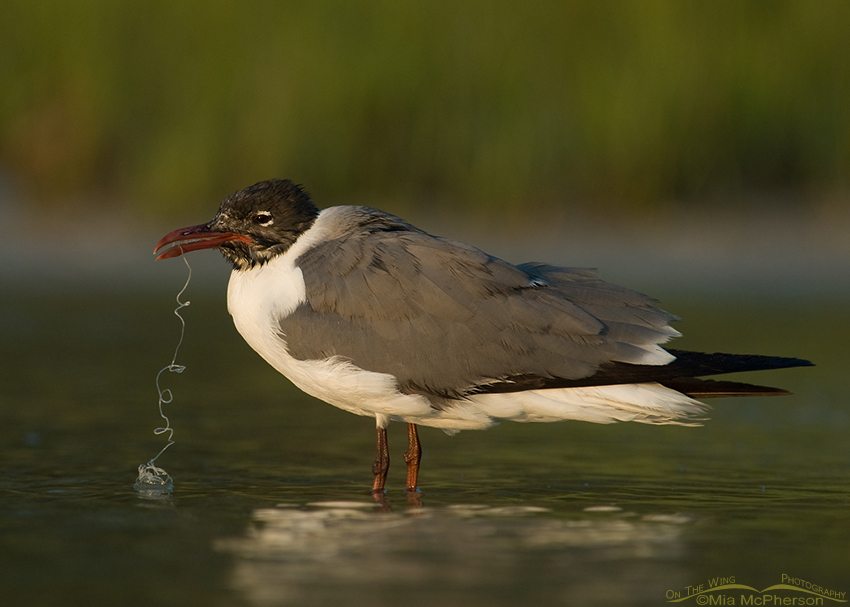
This Laughing Gull had obviously swallowed a hook or a lure and had a long strand of the fishing line hanging from its bill the evening that I photographed it. I was heart broken that before I could call for help a person walked close enough to make the gull fly away. If I could have reached the park rangers or the rescue group they may have been able to throw a net over the bird to capture it, remove the hook and release it.

Used fishing line container

Many parks and recreation areas have now installed used fishing line containers within easy walking distance to fishing areas where fishing line, weights, leads, hooks and lures can be properly and safely disposed of.  I find it sad that even in locations with these containers that I still find fishing line and hooks on the ground presenting dangers to birds, wildlife and people. Is there an excuse for not walking a few feet to get rid of these items in a safe manner? I don’t think so.

Double-crested Cormorant in danger

I have been able to aid in the rescue of several birds including the Double-crested Cormorant shown above. I was photographing birds near the Gulf Pier at Fort De Soto when I noticed this bird sitting on the beach. I could see the hook in the bill without using my lens so I knelt down, focused on the bird and could see a metal leader and a lead weight. I could also see that the dull color of this bird’s eyes indicated that it was growing weaker. I was able to call Jim Wilson at park headquarters who said he’d be there quickly. I stood guard over the bird so that if people approached it I could ask them to stay far enough away that the bird would not take flight or enter the water. Jim and a few other rangers showed up, captured the Cormorant and got it to the Suncoast Seabird Sanctuary where the hook was removed and when the bird was healthy again it was released into the wild.

If you are a fishermen, please dispose of used line, hooks, lures and lead weights properly if at all possible. You could be saving the lives of birds and wildlife and looking after the environment.

They belong on this planet as much as we humans do.

Mia


Facebook Twitter