White on White – Winter’s Delight – Nikon D300, f7.1, 1/1600, ISO 500, Nikkor 200-400mm VR with 1.4x TC at 400mm, natural light
This winter’s snow cover has given me many opportunities to photograph high key bird and wildlife images and while some people might not find high key photos to their tastes I find that I enjoy them because of their simplicity and how the high key background allows my eyes to focus clearly on my subject’s form and beauty.
I find this image of three Tundra Swans that I photographed along the Antelope Island causeway yesterday very appealing because it is white on white. The swan on the left must not have been feeding where the two on the right were because it doesn’t have the stained plumage that they do.
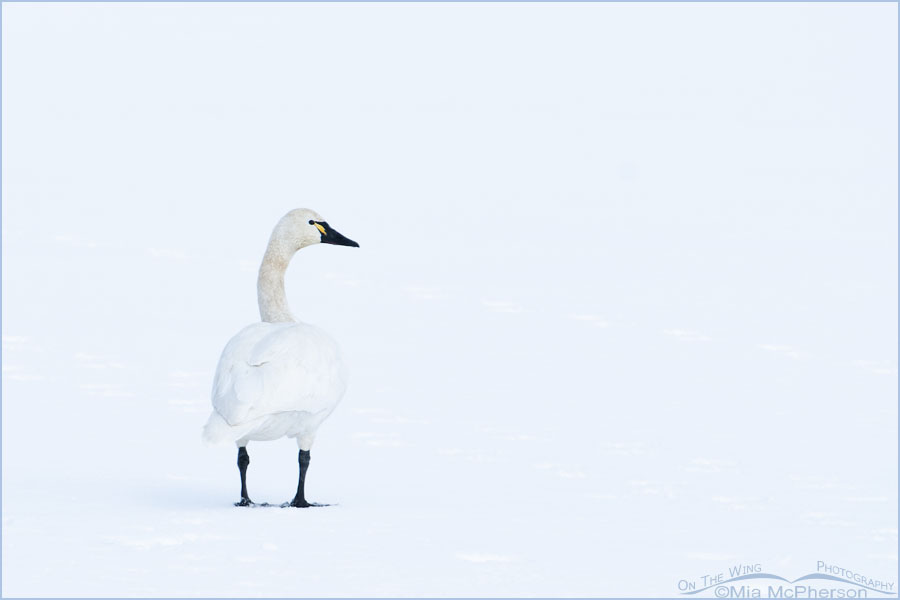
Tundra Swan - Nikon D300, f7.1, 1/1600, ISO 500, Nikkor 200-400mm VR with 1.4x TC at 400mm, natural light
This Tundra Swan stayed closer to the road than the three in the photo above so I was able to capture more detail in its plumage and in the snow that covered the frozen water of the Great Salt Lake.
Canada Geese landing - Nikon D300, f7.1, 1/1250, ISO 500, Nikkor 200-400mm VR with 1.4x TC at 400mm, natural light
While I was photographing the Tundra Swans I heard the familiar call of Canada Geese flying in and as they got closer I started photographing them as they landed near the swans. I wish I would have had a little more light in both bird’s eyes but I find the poses rather dynamic and I like how I can see their shadows on the snow below them.
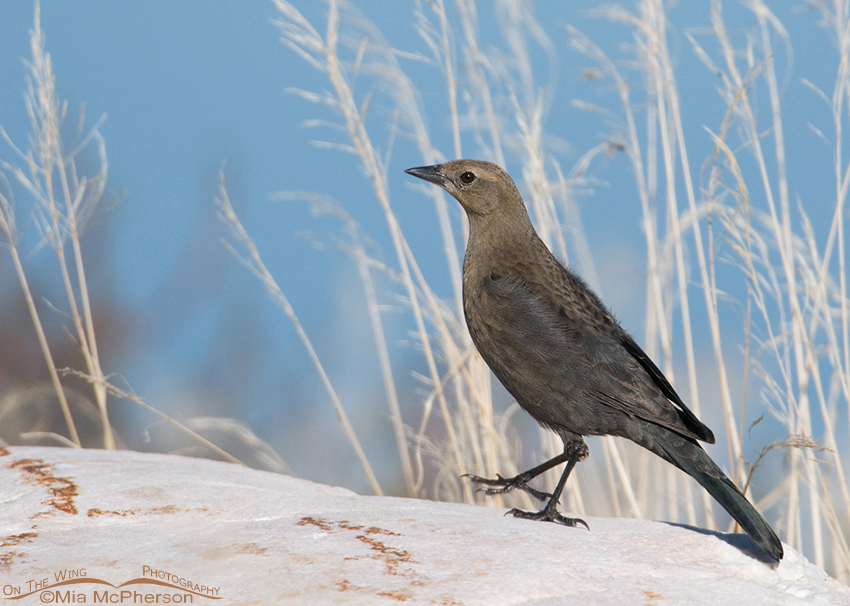
Black-billed Magpie on a snow-covered rock - Nikon D300, f6.3, 1/2500, ISO 500, Nikkor 200-400mm VR with 1.4x TC at 400mm, natural light
It is difficult to believe that Black-billed Magpies will start building or rebuilding their nest in just a few days. They take between 40 and 50 days creating or strengthening old nests and when I start to see them carrying twigs in their bills I know spring is just around the corner. Black-billed Magpies are very industrious when it comes to nests and they will build them even when snow is falling or when the bush they are building in is covered with it too.
Female Northern Harrier in flight – Nikon D300, f6.3, 1/4000, ISO 640, +0.7 EV, Nikkor 200-400mm VR with 1.4x TC at 400mm, natural light, not baited
Typically I see far more Northern Harriers in the winter here in Utah than I do during the breeding season which might be partly due to the harriers preferring to nest within marshy wetland areas which are in abundance around the Great Salt Lake. In fact; many people still call Northern Harriers by the name “Marsh Hawk”.
The female above was photographed as she coursed along the Antelope Island causeway as she searched for prey last February.
Female Northern Harrier with the Wasatch Range in the background – Nikon D300, f6.3, 1/3200, ISO 640, +0.7 EV, Nikkor 200-400mm VR with 1.4x TC at 400mm, natural light, not baited
This is the same female taken as she flew east with the snow-covered Wasatch Mountain Range in the background. The white rumps of Northern Harriers help to make the ID easier along with the owl-like facial disc. Females are much browner than the males who are also known as the “Gray Ghost“.
I am always delighted to have opportunities to photograph Northern Harriers, especially when they are in flight and I am able to get some eye contact.
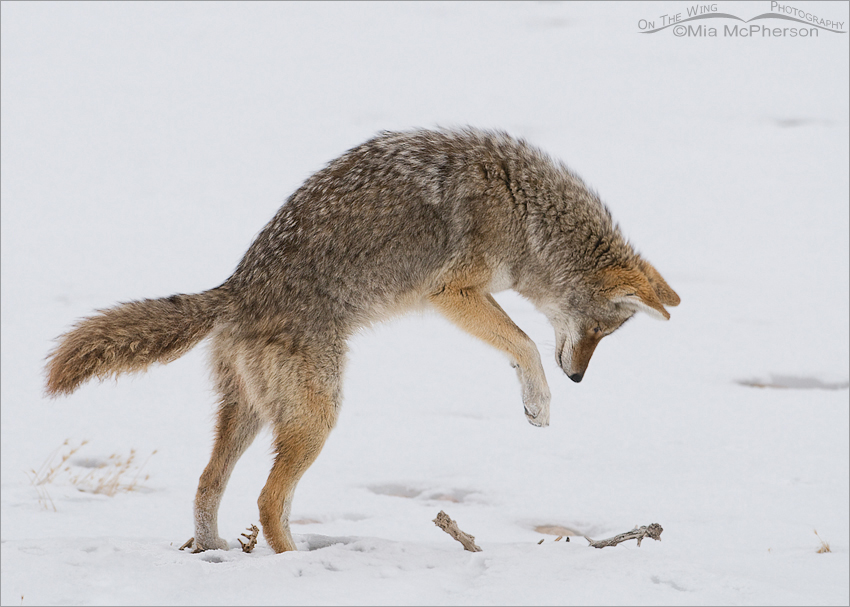
Not long after arriving at Antelope Island yesterday I heard the sound of Coyotes singing, it is a sound that always brings a smile to my lips and delights me.
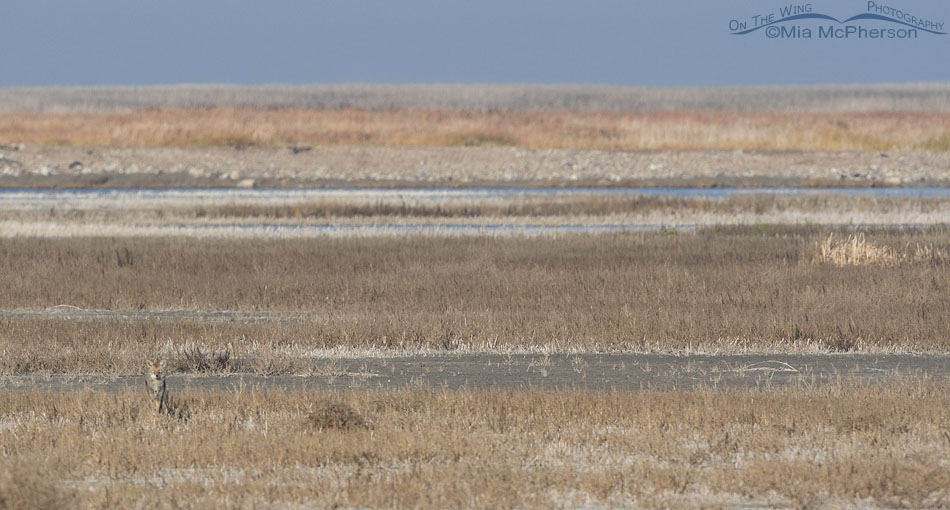
Coyote on the shore of the Great Salt Lake 1 – Nikon D300, f6.3, 1/2500, ISO 640, Nikkor 200-400mm VR with 1.4x TC at 242mm, natural light, not baited or called in
I couldn’t get any decent images of the pair of singing Coyotes on the island because there was too much dried vegetation in the way but it was fun to watch them even though they had stopped calling by then.
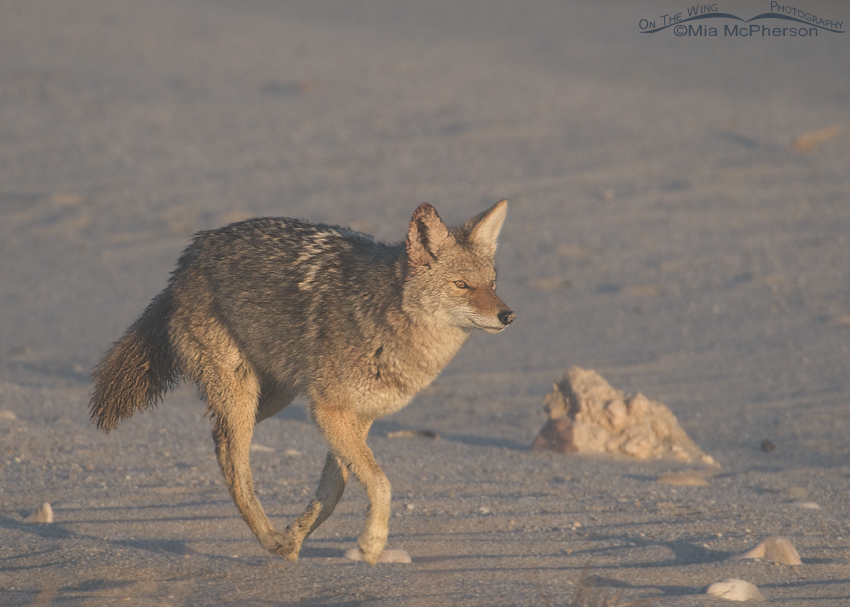
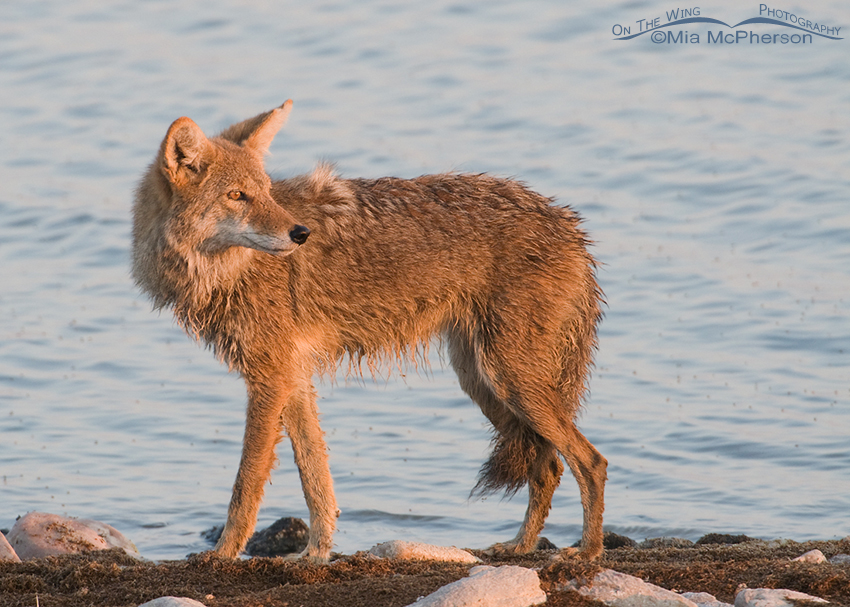
Later on; after leaving the island, I spotted another pair of Coyotes along the causeway and photographed them for a while. They were probably going to look for the leftover bits of ducks that the falcons leave on the shoreline of the Great Salt Lake.
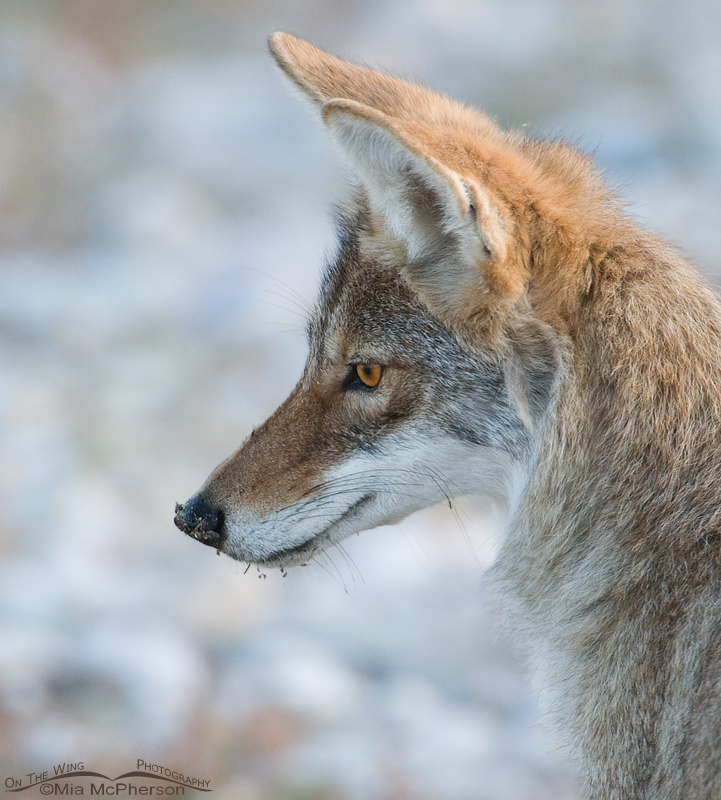
Coyote on the shore of the Great Salt Lake 2 – Nikon D300, f7.1, 1/2500, ISO 640, Nikkor 200-400mm VR with 1.4x TC at 257mm, natural light, not baited or called in
I enjoy photographing the Coyotes along the causeway because the setting there is so different from the prairie grasses and sagebrush habitat on the island itself.
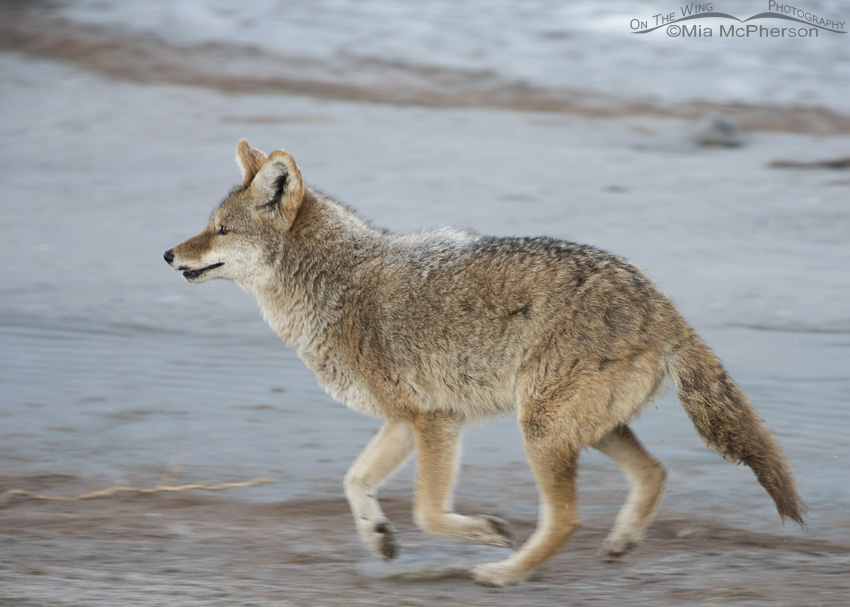
Coyote on the shore of the Great Salt Lake 3 – Nikon D300, f7.1, 1/2000, ISO 640, Nikkor 200-400mm VR with 1.4x TC at 257mm, natural light, not baited or called in
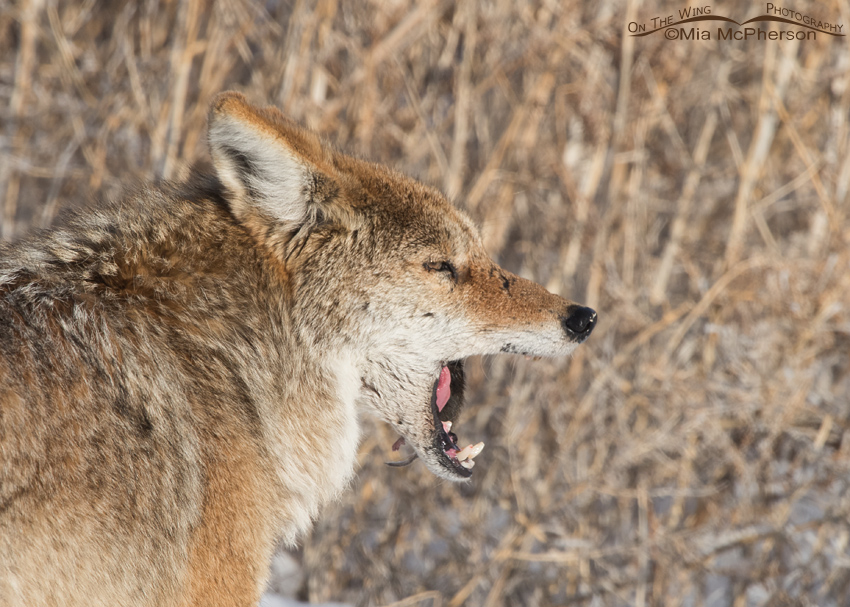
The Coyotes look beautiful in their fluffy winter coats and the warm morning sunlight. I can’t wait to hear the Song Dogs sing again, it is a sound that should never be silenced.
Adult and juvenile white morph Snow Geese – Nikon D300, f6.3, 1/200, ISO 640, +0.7 EV, Nikkor 200-400mm VR with 1.4x TC at 400mm, natural light
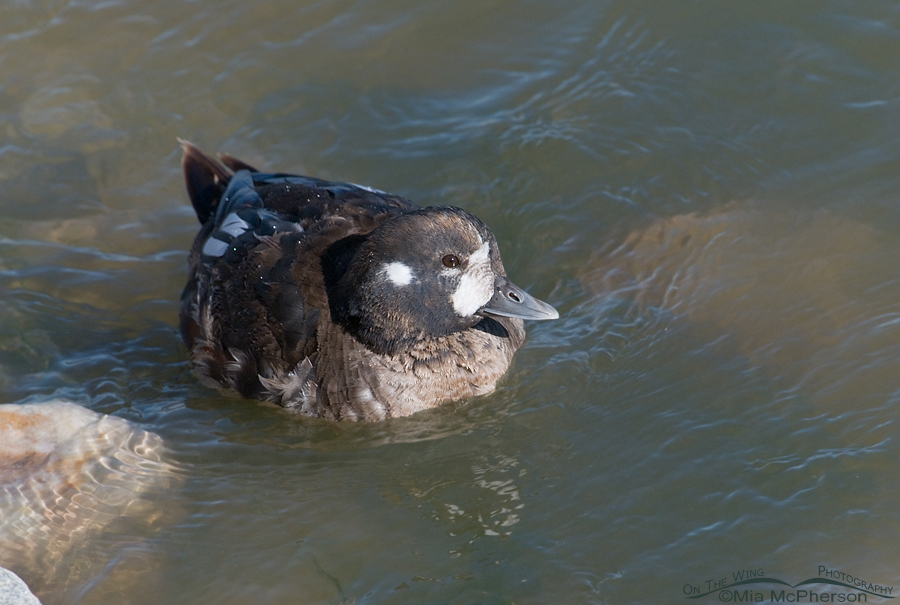
While looking for the female Harlequin Duck that has been hanging around the Antelope Island Causeway the days ago I spotted two Snow Geese (Chen caerulescens) near the shoreline but I didn’t see them soon enough to get images of them because they were in flight by the time I noticed them. The good news is that they stayed in the area and I spotted them again yesterday morning just as the sun was rising.
The sun hadn’t lit up the north side of the raised causeway when I took the image above but I loved the pastel blue water of the Great Salt Lake and that the geese were side by side.
Juvenile Snow Goose – Nikon D300, f6.3, 1/640, ISO 800, +0.3 EV, Nikkor 200-400mm VR with 1.4x TC at 400mm, natural light
It wasn’t long before the sunlight reached the shoreline and the geese, it is amazing to see how much difference the quality of light can make in images. This juvenile white morph Snow Goose stayed close to the adult. It doesn’t look so “snowy” now but it will. I like the pied appearance of the immature birds.
Adult Snow Goose – Nikon D300, f8, 1/800, ISO 800, Nikkor 200-400mm VR with 1.4x TC at 400mm, natural light
The adult Snow Goose has beautiful white plumage with black primaries, pink legs and feet with black toenails, black eyes and a pink bill with a black “grin patch”.
Juvenile and adult white morph Snow Geese – Nikon D300, f6.3, 1/1250, ISO 800, Nikkor 200-400mm VR with 1.4x TC at 242mm, natural light
I was tickled to get these images and the others I created of these two Snow Geese yesterday, especially since they were close. The only other times I have seen them near the causeway they were in flight and too far away to get decent photographs. Maybe they will stick around longer and I’ll be able to take more photos of them!
Prairie Falcon fly by after attacking the Northern Shoveler
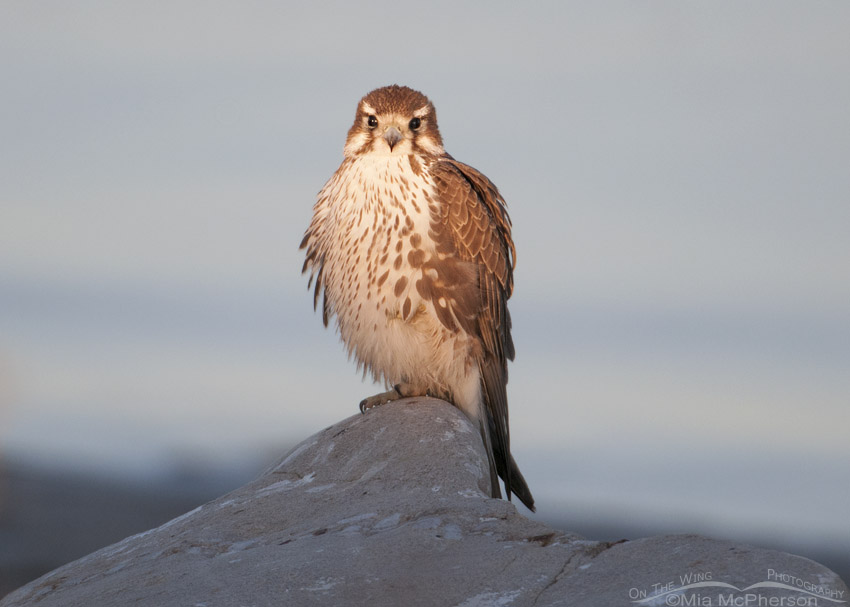
Earlier this morning I spotted a Prairie Falcon perched on a rock while on the Antelope Island Causeway, before we could get stopped and into position to photograph the falcon it took off over the water and attacked a Northern Shoveler. The duck was floundering in the water and the Prairie Falcon flew over and past it when I took this image.
Another flyby – Prairie Falcon
The Prairie Falcon made several passes up and down the shoreline, landing, then taking off again. The waves pushed the dying Northern Shoveler closer and closer to the shore.
Prairie Falcon with Northern Shoveler at the edge of the Great Salt Lake
When the duck reached the shoreline the falcon showed a bit of hesitation about going over to it and after a bit the bird flew over to the Shoveler which was still part way in the water.
Prairie Falcon tearing into the neck of the Northern Shoveler
The Prairie Falcon tore into the neck of the duck at this point even while the waves rocked the duck and the falcon gently back and forth.
Prairie Falcon moving the Northern Shoveler from the water 1
The the falcon gripped the duck with its talons, I wasn’t sure if it was going to fly away with its prey or just bring it on to the shore.
Prairie Falcon moving the Northern Shoveler from the water 2
The Prairie Falcon seemed to struggle a bit with the weight of the Shoveler which can weigh up to 1.3 pounds (375 grams).
Prairie Falcon moving the Northern Shoveler from the water 3
The falcon used its wings and its free foot to move the duck.
Prairie Falcon moving the Northern Shoveler from the water 4
It seemed determined to move it away from the water.
Prairie Falcon moving the Northern Shoveler from the water 5
I really liked this pose and the great eye contact the raptor was giving me.
Prairie Falcon moving the Northern Shoveler from the water 6
The falcon continued to drag the duck to drier ground.
Prairie Falcon with Northern Shoveler on the shore
It finally made it! The small waves were not reaching this section of the shoreline. I like how this shows the yellow feet, the dark tips of the talons and the yellow cere of this adult Prairie Falcon.
Prairie Falcon devouring the Northern Shoveler
The falcon wasted no time and tore into the breast of the Northern Shoveler and feathers were flying as it did. I wish that the bird had been closer but if it had been it might not have stuck around to eat its prey in front of us. The light began to fade as another cloud came in from the west, it was snowing (again) to the south and west.
Prairie Falcon with a pile of feathers from the Northern Shoveler
The falcon really chowed down on the Shoveler as we watched and photographed. When we left because the light was leaving us the handsome raptor was still there and still eating the duck.
I have to tell you it feels totally awesome to watch a falcon attack, bring in and eat the prey it caught naturally. These birds are simply amazing.
All of these images were taken with my Nikon D300 and Nikkor 200-400mm VR with 1.4x TC lens resting on my noodle. The Prairie Falcon wasn’t baited, it supplied its own food.
Mia
(I took a boat load of images of this falcon, these were just a few that I liked)