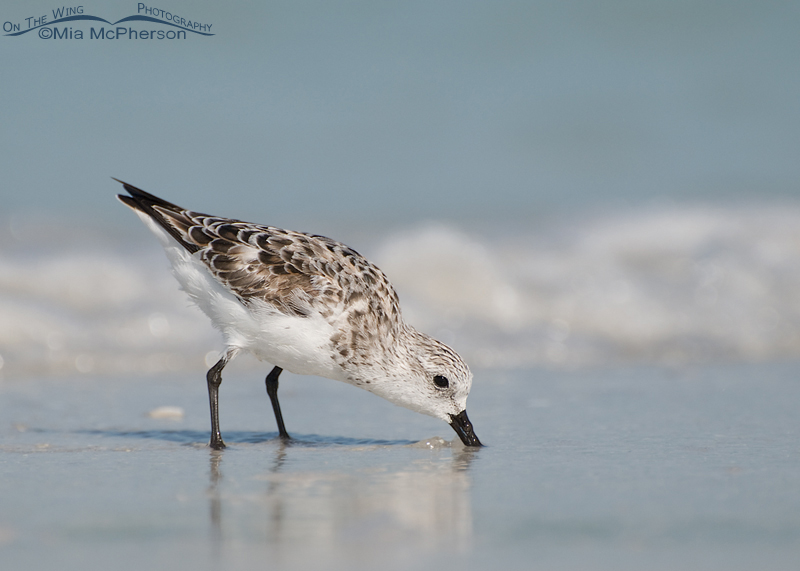
Sanderlings in breeding and nonbreeding plumage

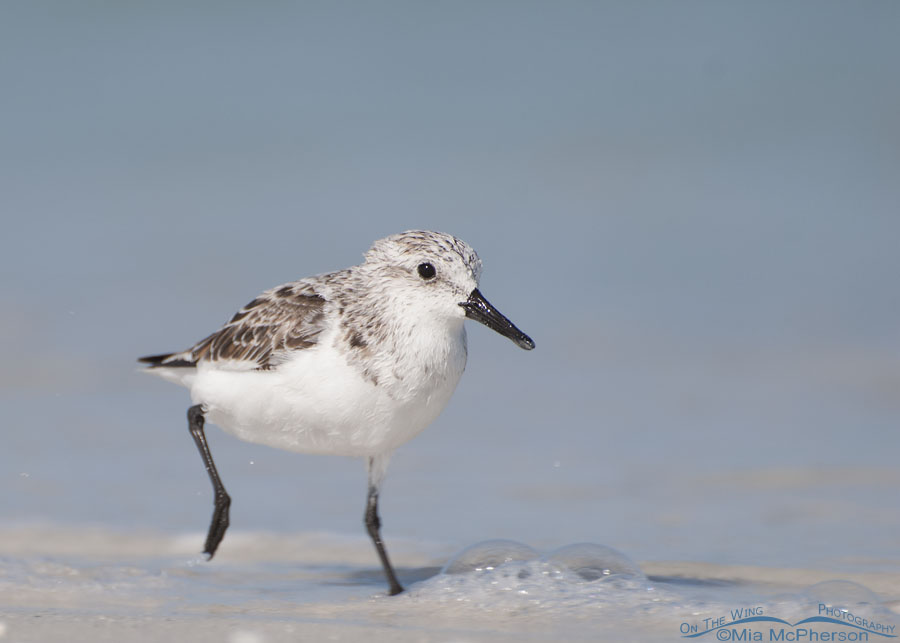
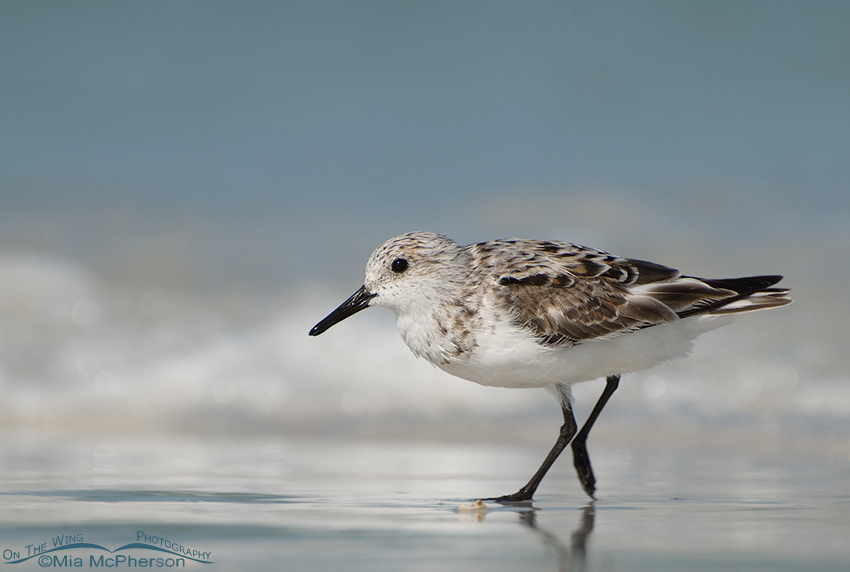
Sanderling in nonbreeding plumage

Sanderling in nonbreeding plumage – Nikon D200, handheld, f6.3, 1/1250, ISO 200, Nikkor 70-300mm VR at 300mm, natural light

Sanderlings look very different in appearance during breeding season and winter and novice birders might even think they are two different species. I’ve heard people call nonbreeding Sanderlings “drab” and “plain” and while they might not be as colorful in nonbreeding plumage I personally wouldn’t call them drab or plain. I would, however; call them a challenge to expose properly and to get them in the frame because they are very active shorebirds when feeding.
The Sanderling above is in nonbreeding plumage and it was racing down the beach hunting for prey when I photographed it. At first I wasn’t happy with the motion blur of the bird’s right foot but the more I looked at this image the more I liked the motion blur because it indicates movement.

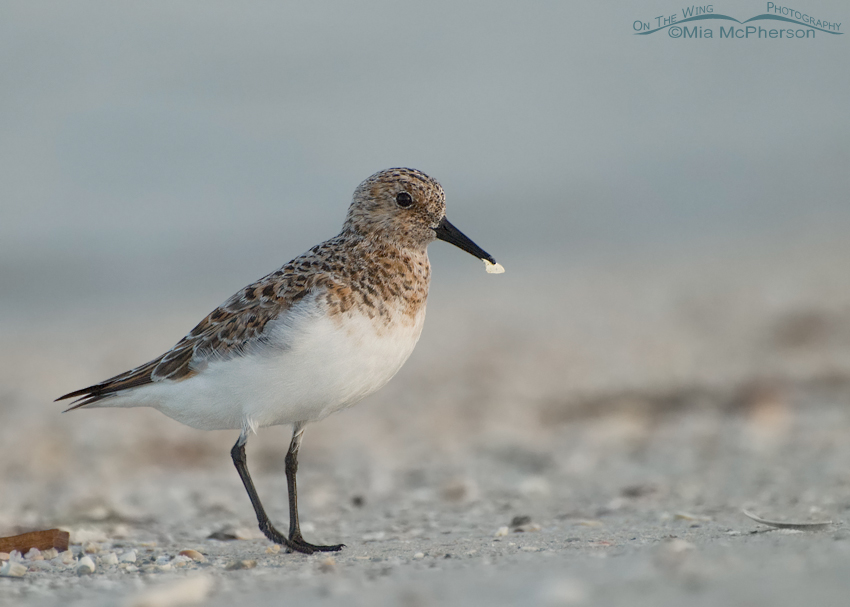
Sanderling in breeding plumage

Sanderling in breeding plumage – Nikon D200, handheld, f6.3, 1/500, ISO 400, Nikkor 70-300mm at 300mm, natural light

This image taken about a month later than the first image shows a Sanderling in breeding plumage, it was created during May which is about the time that the Sanderlings head north to their breeding grounds. Although the belly is still white and the legs and bill are still black the head, neck and back of the bird is quite different. Rufous is the color I think of when seeing a Sanderling in breeding plumage because that color is evident in the head, neck and back of the bird.

A side note; I often hear people say you must have a long (read expensive) lens to photograph birds and in some cases you do actually need a long lens to get frame filling images of birds however in some situations you can get those even with a shorter focal length. Both of the images above were taken with an inexpensive Nikkor 70-300mm VR lens and what made them possible is that these birds were habituated to human presence on the beach so they weren’t as nervous around me and I used very slow belly crawls to get close to them. By being low I appeared less threatening to them and at times the birds would come in so close I could not focus on them. Down & dirty can and does pay off.

Mia

More Sanderling images

Facebook Twitter

Low light images

Happy Thanksgiving!

Because I live far from my family and have no children at home my yearly Thanksgiving tradition includes spending a part of my day out photographing birds, mostly early morning outings. This morning I did get out to photograph but I came home “skunked”. There are low heavy clouds here today but even worse, there were no birds close enough to even do low light bird photography. Well my tradition was not broken, I did go regardless of being skunked.
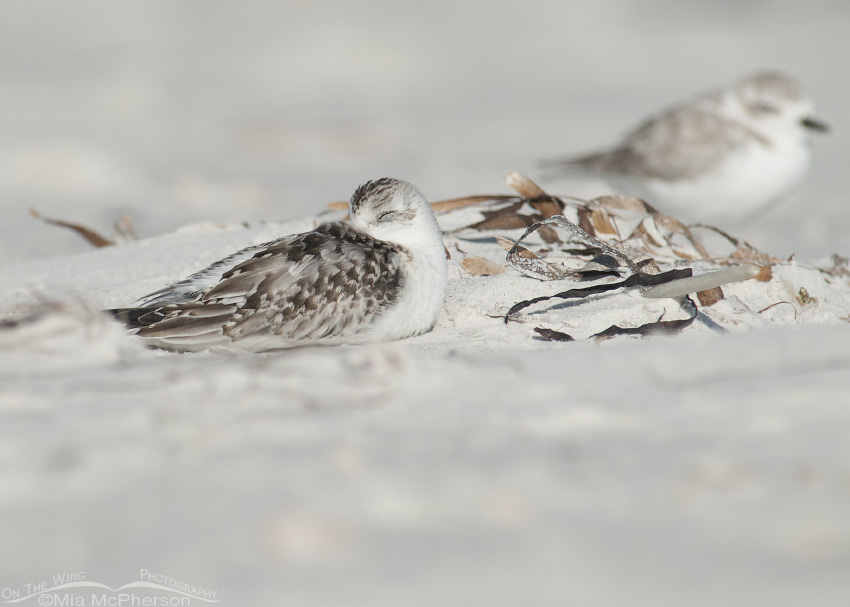
Low light Sanderling in breeding plumage

Low light Sanderling in breeding plumage ~ Fort De Soto County Park, Florida
D200, handheld, laying on the sand, f6.3, 1/500, ISO 400, Nikkor 70-300mm VR at 300mm, natural light

I firmly believe that fine quality, compelling images can be taken in low light. Yes, most of the time bird photographers desire that “sweet light” so often spoke of, but there are situations where no matter how closely you look at the weather on TV or online radar images that the light will not be what you thought (or hoped) it might be.

 The morning I took the Sanderling (Calidris alba) image above the forecast was for partly cloudy skies. The radar looked good so I gathered my gear and drove to Fort De Soto in the very early pre-dawn light. On the way there I could clearly see the sky beginning to turn colors and I was excited about spending the morning sand crawling or immersed in the water to get photograph of the birds I would see. Excited until I looked to my west while at the first bridge just after the toll booth.

Argh, those radar images didn’t pick up the sea fog that was swirling over the north beach.  “Too late” I told myself, “you’ve driven 45 minutes to get here, make the best of that fog!”.

There was enough ambient light coming through the fog to produce fine images of the birds that morning, for the image above I didn’t even feel the need to use exposure compensation which does need to be used on occasion in foggy conditions. When I am processing images taken in low light I try to retain that feeling by not overdoing contrast, saturation or sharpening. The image above “whispers”, it doesn’t “shout” and I like it that way.

Preening juvenile Roseate Spoonbill in low light
Preening juvenile Roseate Spoonbill in low light ~ Fort De Soto County Park, Florida
Nikon D200, handheld, laying on the edge of a lagoon, f7.1, 1/200, ISO 400, Nikkor 80-400mm VR at 250mm, natural light

I found this juvenile Roseate Spoonbill (Platalea ajaja); with some adults, preening in a sea fog one morning that I went to Fort De Soto. The weather forecast for the day was clear, the radar looked good on line but the fog came rolling in not long after I got to the beach. It happens.

When I post processed this image I did apply a minimal amount of Noise Reduction to the background to help with the noise I saw evident while hoping to retain the foggy feeling and only slightly increased the saturation globally.

Today; I could have created similar images like this Sanderling and Roseate Spoonbill… if ONLY there had been birds nearby.

The forecast for today? Partly cloudy. Man, the weather forecasters were wrong.

Again, Happy Thanksgiving!

Mia

Facebook Twitter

Sanderlings – Tiny Dynamos

Winter plumage Sanderling feeding on a Penn Shell

Winter plumage Sanderling (Calidris alba) on a Penn Shell
Fort De Soto County Park, Pinellas County, Florida
Nikon D200, handheld, f6.3, 1/800, ISO 320, Nikkor 80-400mm VR at 400mm, natural light

Sanderlings are little shorebirds that are found high in the Arctic tundra during breeding season and during the winter they can be found on both the Pacific and Atlantic coasts from Canada to Argentina, during migration they can also be found inland on the banks of rivers and the shorelines of lakes.

Sanderlings feed by following waves to capture any small creatures that may have been left by the receding water then as soon as a wave starts to come into the shoreline the sanderlings scramble to keep ahead of the incoming water. It is amusing to watch these frenetic shorebirds as they dash back and forth. They must burn up a lot of calories!

In the image above the Sanderling came across a Penn shell (I always called them Turkey Wings)  that had been washed up on the shore by a storm the day before and was pecking away at something I couldn’t see on the tissue that had extruded from the shell.

Sanderling feeding

Sanderling feeding
Fort De Soto County Park, Pinellas County, Florida
Nikon D200, handheld, f6.3, 1/1000, ISO 200, Nikkor 70-300mm at 300mm, natural light

When photographing shorebirds I like to get down to their level which usually means flopping down on my stomach and holding the lens close to the ground while being very careful to protect the camera and lens from the damage that sand or water could cause. I feel the by being at this low of an angle that I am in the bird’s “world”. In my opinion it is a rather neat feeling to be at eye level with such a small bird.

When I plan on getting “down & dirty”  while photographing I usually always carry along a change of clothes because I just never knew how I would smell after laying in the damp sand or ground.

Breeding plumage adult SanderlingBreeding plumage adult Sanderling
Honeymoon Island State Park, Pinellas County, Florida
Nikon D200, handheld,  f6.3, 1/1000, ISO 200, Nikkor 80-400mm VR at 400mm, natural light

Sanderlings in breeding plumage are colorful with rich browns and warm rufous colors that contrast very nicely against the clean white of their chest and stomach. The head and neck also become more vibrant. Personally I find all the plumage phases of Sanderlings appealing.

Sanderlings can be a challenge to photograph because they move erratically at a very fast pace but creating images of them at their level is well worth the trouble of getting dirty and being exhausted by trying to follow the movements of these tiny dynamos. Just keep the shutter speed up!

Mia

More Sanderling images

Facebook Twitter