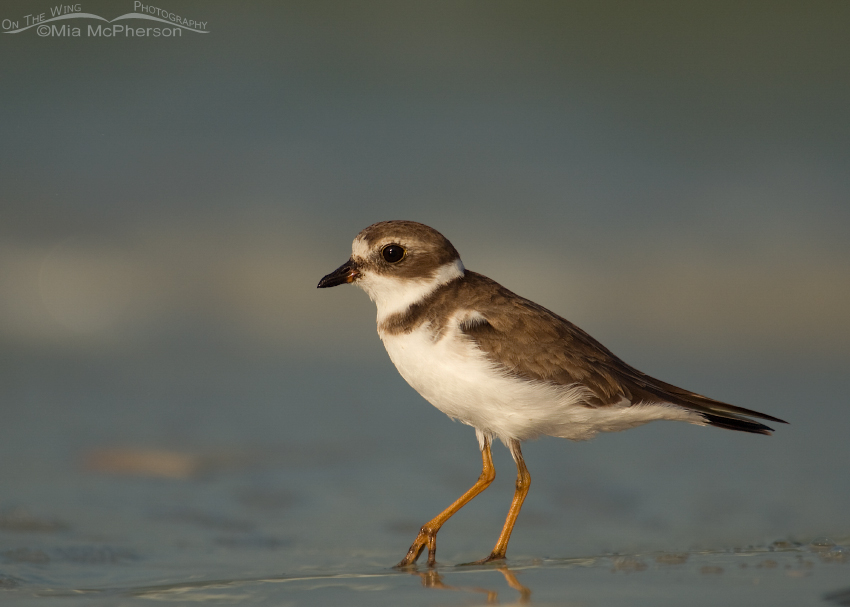
Wilson’s Plover and chicks

Before I start the rest of this post I feel that it is important to address the ethics on photographing nesting birds or birds with chicks in light of the fact that very soon birds will be nesting for the season. Sure, chicks are cute but that isn’t a reason to endanger, harass or distress chicks and their parents. EVER. In bird, wildlife and nature photography the subject is always more important than a photograph.

Ethics on photographing nesting birds:

  • Do not approach too closely
  • If the birds show any sign of distress, back away
  • Don’t trim leaves, twigs or branches to get a clearer shot, you may inadvertently attract predators or cause the eggs/chicks to over heat
  • Follow local, state and federal guidelines concerning nesting birds
  • Don’t harass the birds to get an action shot
  • Don’t stay a long time with nesting birds or chicks, that disrupts their normal behavior
  • Always remember that your scent may draw predators to the area of nesting birds or birds with chicks.

For more information on the ethics of photographing nesting birds or chicks: the Principles of Birding Ethics published by the American Birding Association. Also NANPA’s Ethical Practices (pdf)

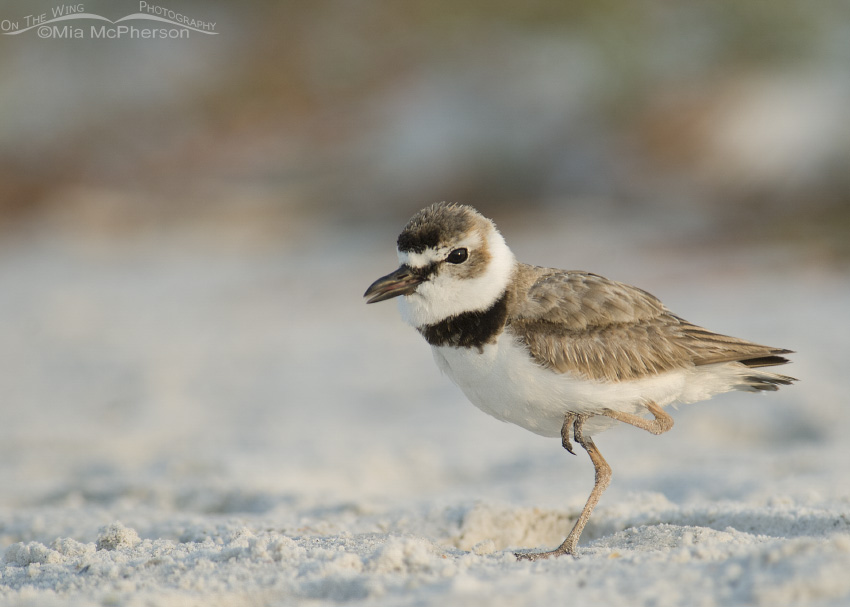
Wilson's Plover adult in my faceWilson’s Plover adult in my face – Nikon D200, handheld, f6.3, 1/1250, ISO 200, Nikkor 80-400mm VR at 400mm, natural light

In Florida I was used to seeing Wilson’s Plovers year round on the beaches of Fort De Soto County Park, it was always easy to identify them because of their large, thick bills.

One June morning in 2008 I was laying on the sand at the north beach when this plover appeared in front of me, my lens was very close to ground level and I believe this Wilson’s Plover thought its reflection was another plover because it kept inching closer and closer all the while keeping its eyes on the end of my lens. It came so close that a few times I was unable to focus on the plover. I held my breath for fear of frightening this curious shorebird and when I couldn’t hold it anymore I tried slow, shallow breaths.

Three Wilson's Plover chicks near some Sea PurslaneThree Wilson’s Plover chicks near some Sea Purslane – Nikon D200, handheld, f6.3, 1/1000, ISO 250, Nikkor 80-400mm VR at 400mm, natural light

Eleven months later I was photographing shorebirds while laying on the back slope of a sand dune and using the Sea Purslane on the dune as cover when I spotted three tiny birds dash from my left towards the Purslane and moved my lens to see what they were and as soon as the camera focused on them I could tell they were Wilson’s Plover chicks. I was photographing with a friend who was on my left so I nudged him with my elbow and motioned towards the three little puffballs.  Both of us laid very still, we did not want to disturb the chicks at all.

The image above is a large crop.

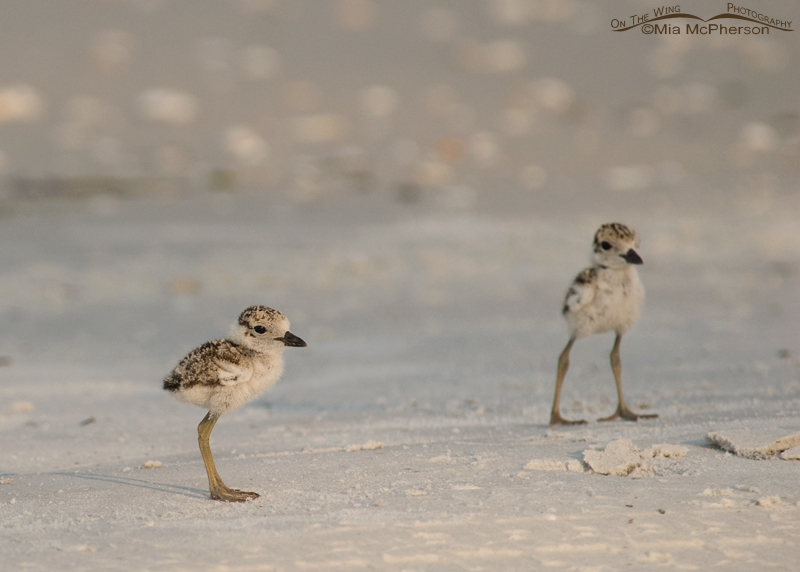
Wilson's Plover chicksWilson’s Plover chicks- Nikon D200, handheld, f6.3, 1/750, ISO 250, Nikkor 80-400mm VR at 400mm, natural light

It was a busy day on the north beach though and there were shell seekers and beach walkers close to the chicks who unwittingly forced the chicks to head north right in front of us. For a moment the chicks stopped in front of us and I was able to get a few images of them.

This image is also a large crop, and while I wish the chicks had been closer I wasn’t about to move closer to them or it would have distressed them more than the shell seekers and beach walkers already had.

Running Wilson's Plover chickRunning Wilson’s Plover chick- Nikon D200, handheld, f6.3, 1/1250, ISO 250, Nikkor 80-400mm VR at 400mm, natural light

The adult birds came racing up towards the exposed chicks and with that the chicks took of running to the north where there was cover from some Sea Oats and Sea Purslane that they could hide in and avoid the human traffic on the beach.

This image was also a rather large crop. When the chicks were safe in their cover my friend and I slowly got up and moved down the beach away from them.

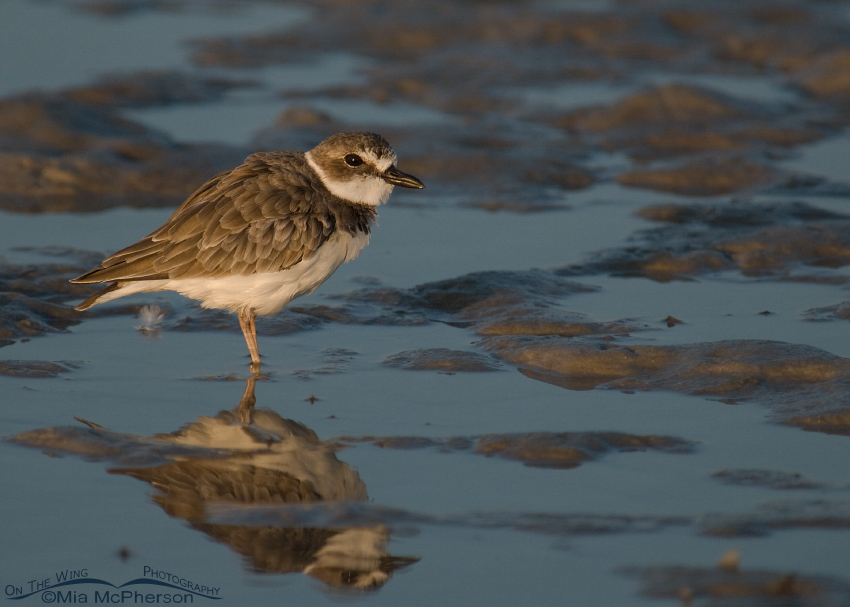
Wilson's Plover juvenile with a Fiddler CrabWilson’s Plover juvenile with a Fiddler Crab- Nikon D200, handheld, f7.1, 1/640, ISO 200, Nikkor 80-400mm VR at 400mm, natural light

About a month later I found this juvenile that had captured a Fiddler Crab on the shoreline of a lagoon and I photographed it from my position low in the water as it devoured the crab. A bird had just flown over the young plover when I took this frame. It seems they learn young to keep an eye on the sky for predators. This immature bird may have been one of the chicks I photographed a month earlier as it was in the same general location where I created those images.

It must be rough to be a tiny chick on a beach with lots of human traffic, fortunately Fort De Soto does have a roped off area where birds can rest, nest and avoid the ethical people who stay out of the protected area.

I enjoyed my brief, long distance opportunity to photograph and observe these Wilson’s Plovers and their tiny chicks, it was a small window into their life.
Mia

More Wilson’s Plover images

Facebook Twitter

Wilson’s Plover in habitat

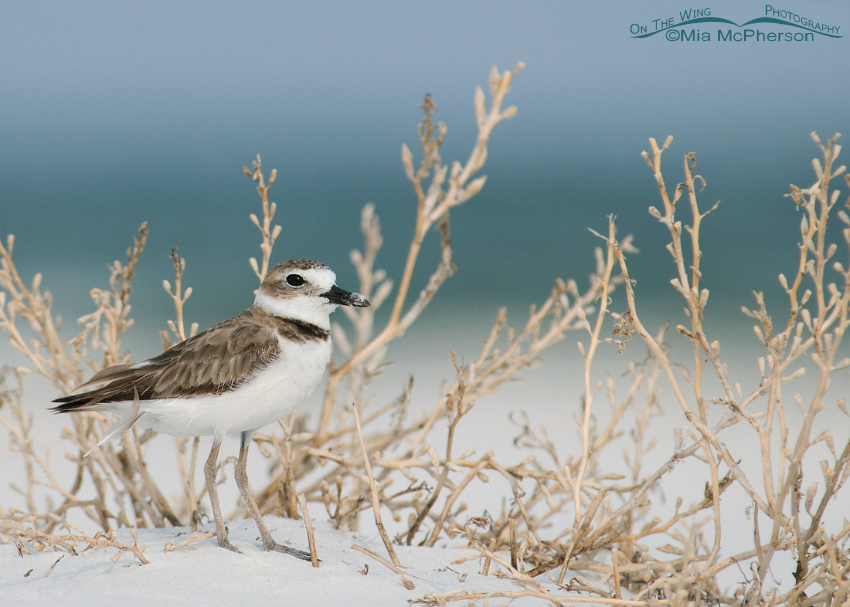
Wilson's Plover in dried Sea Purslane

Wilson’s Plover in dried Sea Purslane – Nikon D200, handheld, f6.3, 1/640, ISO 250, +0.3 EV, Nikkor 80-400mm VR at 400mm, natural light

One of the shorebirds that I saw often along the coast of Florida year round was the Wilson’s Plover. Wilson’s Plover are the largest of the belted plovers and are found primarily along the coastlines of the Gulf of Mexico and the Atlantic ocean up to about the Chesapeake Bay, they can also be found on the Pacific coast of the Baja Peninsula of Mexico. Their long, thick black bill is distinctive and a great key for identification.

Just watching the two chicks running around in the dunes like small windup toys made me realize what a hard job it is for the adult plover to protect their young. I very much enjoyed the setting I photographed this plover in and loved the loose feather near the bird’s rump.

Mia

More Wilson’s Plover images

Facebook Twitter

Friday Photos – Wilson’s Plover

Adult Wilson's Plover (Charadrius wilsonia) in dried Sea Purslane
Adult Wilson’s Plover (Charadrius wilsonia) in dried Sea Purslane
Fort De Soto County Park, Pinellas County, Florida
Nikon D200, handheld, f6.3, 1/640, ISO 250, +0.3 EV, Nikkor 80-400mm VR at 400mm, natural light

This Friday’s Photo is that of a Wilson’s Plover, a species I very much enjoyed photographing while I lived in Florida. Wilson’s Plovers are strictly coastal shorebirds so here in Utah I don’t get to see them. They are found from the mid-Atlantic states down to Florida, Cuba and all along the Gulf shorelines. A subspecies; Charadrius wilsonia beldingi, is found on the Mexican Pacific coast and the Gulf of California.
Wilson’s Plovers nest in simple scrapes that can be found on the sandy shorelines and in sand dunes. This adult did have several chicks at the time I photographed it and it had been running along trying to keep up with the young birds when it took a short break on this sand dune amongst some dried Sea Purslane. The chicks appeared to have a mind of their own and were running willy-nilly through the dunes. Must be exhausting for the adults to keep up with with their young. I couldn’t help but laugh at the actions of the seemingly strong-willed but very curious chicks.

Mia

* I’m stuck at home today waiting for the delivery of a replacement for my Jobu Black Widow Gimbal HD head. I had trouble with the older version when my locking pin broke off a few weeks ago. Jobu Design has been great about accepting the old Gimbal head back and replacing it with the newer version for a small upgrade fee. Although I rarely use a tripod, when I need it I really need it! My Nikkor 200-400mm VR f/4 gets a bit heavy to handhold for me so I can’t wait to get this new Gimbal set up.

More Wilson’s Plover images

Facebook Twitter

Wilson’s Plover

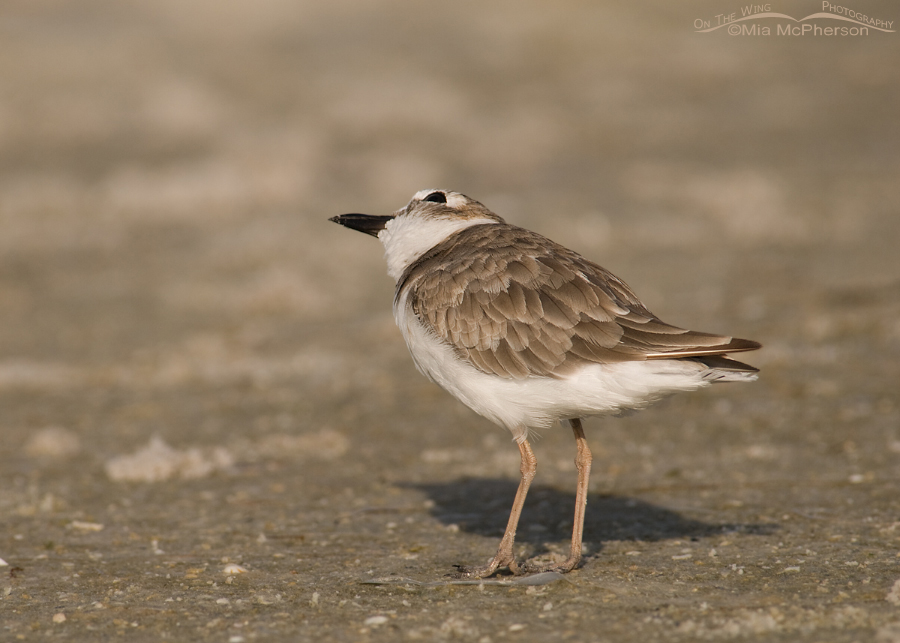
Wilson's Plover with an eye on the sky

Wilson’s Plover with an eye on the sky
Pinellas County, FL
D200, f7.1, 1/640, ISO 160, 80-400mm VR at 400mm, natural light

There are times that I open an image on my computer screen and I can’t help but laugh. This is one of those images for me because of the tilt of the head of the Wilson’s Plover (Charadrius wilsonia). It isn’t what bird photographers would call an “ideal” bird image because it does not have eye contact and there isn’t a visible catchlight in the eye, but I find it to be a charming photo despite that. This Wilson’s Plover was scanning the sky for any sign of a predator, for instance, a Peregrine Falcon.

I love to photograph birds but I also like the knowledge about each species that I gain while I am seeing them through my viewfinder. I learn about their movements, which habitats they prefer, which food they look for and I become very familiar with thier shapes, plumage variation and more.

For me; there is something satisfying when I take a shot and know I didn’t miss the action because I “knew” what the bird might do next.

Mia

Facebook Twitter