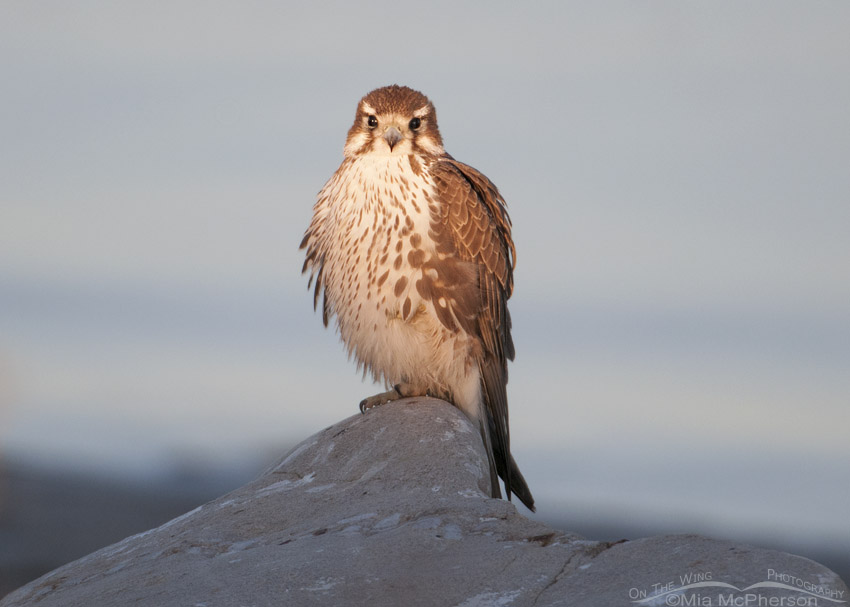
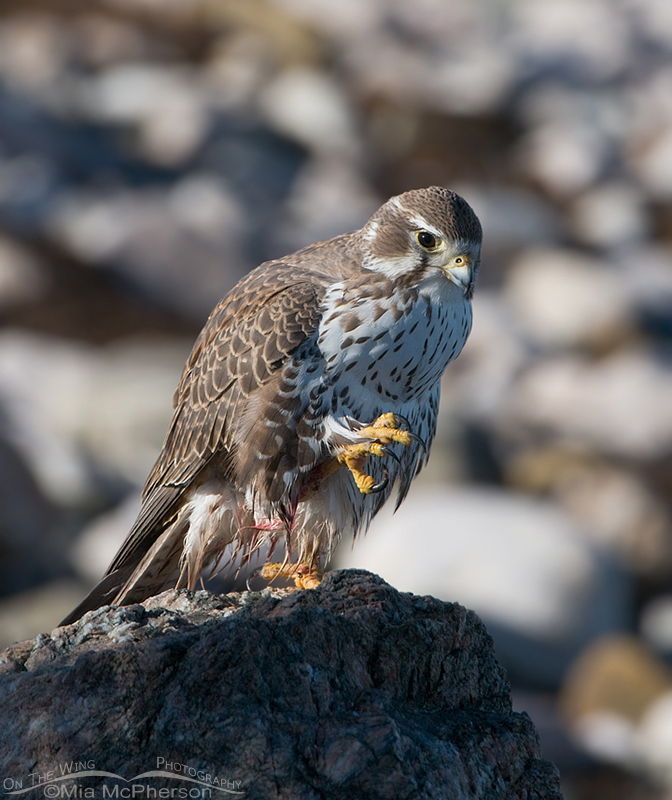
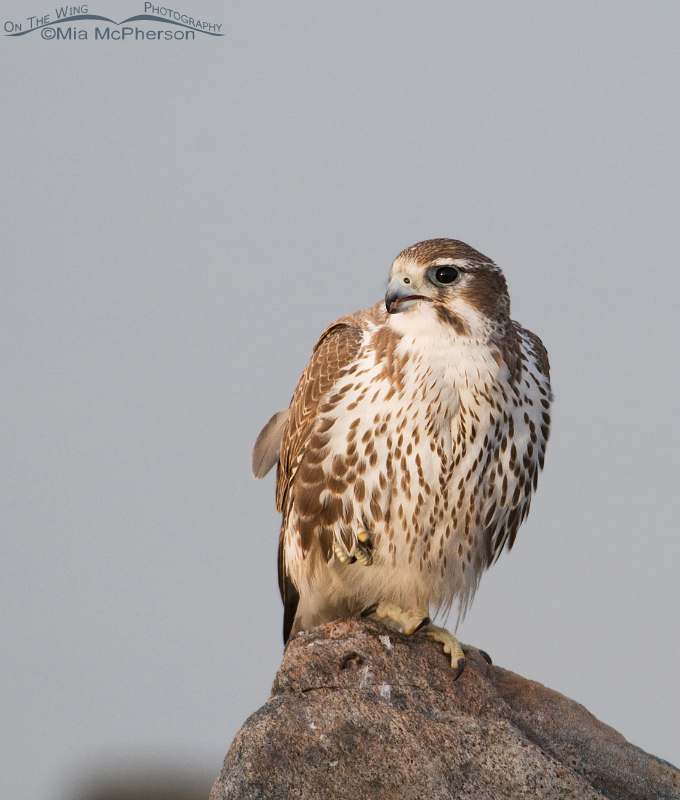
Adult Prairie Falcon after a meal – Nikon D300, f8, 1/1250, ISO 640, Nikkor 200-400mm VR with 1.4x TC at 328mm, natural light, not baited
There was some beautiful light yesterday after several days of gloomy gray so I had to get out to see if I remembered how to use my camera.
After leaving Antelope Island I spotted this adult Prairie Falcon perched on a rock near the shoulder of the causeway. It was obvious that the falcon had just finished a meal because there was blood showing on the ventral feathers, there were bits of meat on the talons and most importantly the bird’s crop was bulging. The crop is an expandable muscular pouch near the throat or gullet used for food storage prior to the digestive process. In this image the crop extends down from just below the bill to just slightly above the raised foot and talons of the falcon and side to side to the frontal edge of the mantle and scapulars.
I wish I had been in a better position with a better angle of light but due to vegetation growing along the road there were just a few clear areas between the Rabbitbrush to get an unobstructed view of the Prairie Falcon but I do like how the photo shows off the full crop.
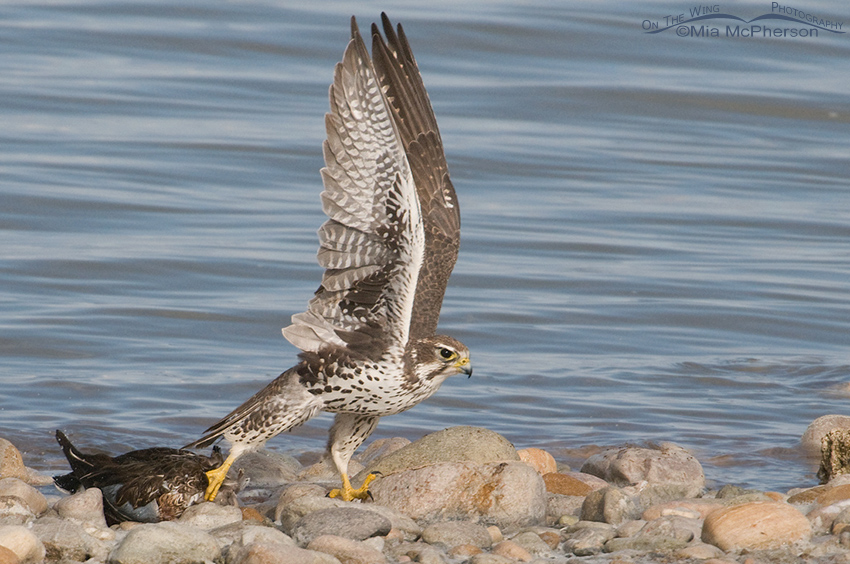
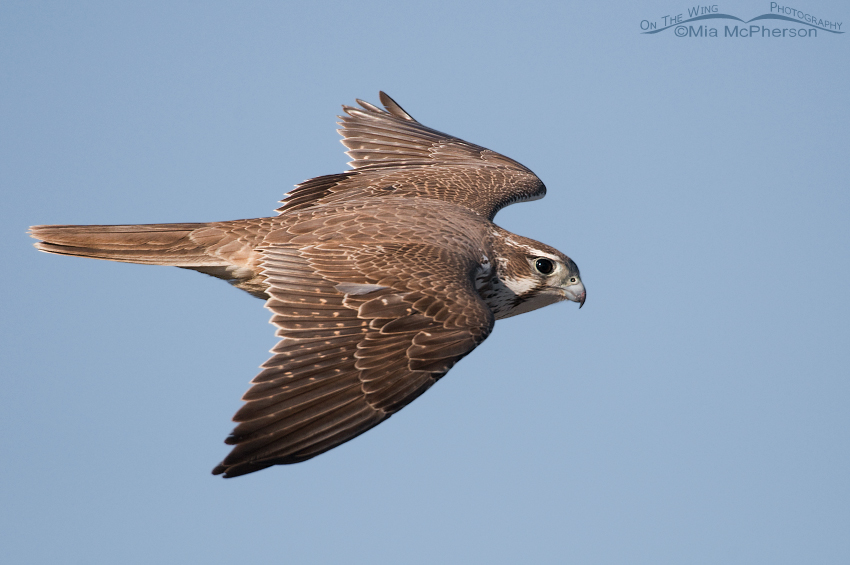
Prairie Falcon fly by after attacking the Northern Shoveler
Earlier this morning I spotted a Prairie Falcon perched on a rock while on the Antelope Island Causeway, before we could get stopped and into position to photograph the falcon it took off over the water and attacked a Northern Shoveler. The duck was floundering in the water and the Prairie Falcon flew over and past it when I took this image.
Another flyby – Prairie Falcon
The Prairie Falcon made several passes up and down the shoreline, landing, then taking off again. The waves pushed the dying Northern Shoveler closer and closer to the shore.
Prairie Falcon with Northern Shoveler at the edge of the Great Salt Lake
When the duck reached the shoreline the falcon showed a bit of hesitation about going over to it and after a bit the bird flew over to the Shoveler which was still part way in the water.
Prairie Falcon tearing into the neck of the Northern Shoveler
The Prairie Falcon tore into the neck of the duck at this point even while the waves rocked the duck and the falcon gently back and forth.
Prairie Falcon moving the Northern Shoveler from the water 1
The the falcon gripped the duck with its talons, I wasn’t sure if it was going to fly away with its prey or just bring it on to the shore.
Prairie Falcon moving the Northern Shoveler from the water 2
The Prairie Falcon seemed to struggle a bit with the weight of the Shoveler which can weigh up to 1.3 pounds (375 grams).
Prairie Falcon moving the Northern Shoveler from the water 3
The falcon used its wings and its free foot to move the duck.
Prairie Falcon moving the Northern Shoveler from the water 4
It seemed determined to move it away from the water.
Prairie Falcon moving the Northern Shoveler from the water 5
I really liked this pose and the great eye contact the raptor was giving me.
Prairie Falcon moving the Northern Shoveler from the water 6
The falcon continued to drag the duck to drier ground.
Prairie Falcon with Northern Shoveler on the shore
It finally made it! The small waves were not reaching this section of the shoreline. I like how this shows the yellow feet, the dark tips of the talons and the yellow cere of this adult Prairie Falcon.
Prairie Falcon devouring the Northern Shoveler
The falcon wasted no time and tore into the breast of the Northern Shoveler and feathers were flying as it did. I wish that the bird had been closer but if it had been it might not have stuck around to eat its prey in front of us. The light began to fade as another cloud came in from the west, it was snowing (again) to the south and west.
Prairie Falcon with a pile of feathers from the Northern Shoveler
The falcon really chowed down on the Shoveler as we watched and photographed. When we left because the light was leaving us the handsome raptor was still there and still eating the duck.
I have to tell you it feels totally awesome to watch a falcon attack, bring in and eat the prey it caught naturally. These birds are simply amazing.
All of these images were taken with my Nikon D300 and Nikkor 200-400mm VR with 1.4x TC lens resting on my noodle. The Prairie Falcon wasn’t baited, it supplied its own food.
Mia
(I took a boat load of images of this falcon, these were just a few that I liked)
As I write this the first snow of winter is falling outside my living room window. For the past week I have seen the snow on the mountain tops and I had been looking forward to seeing the snow covering the Salt Lake Valley. It might now snow enough to do that today but I know it won’t be long. Here are some images from previous winters here in Utah.
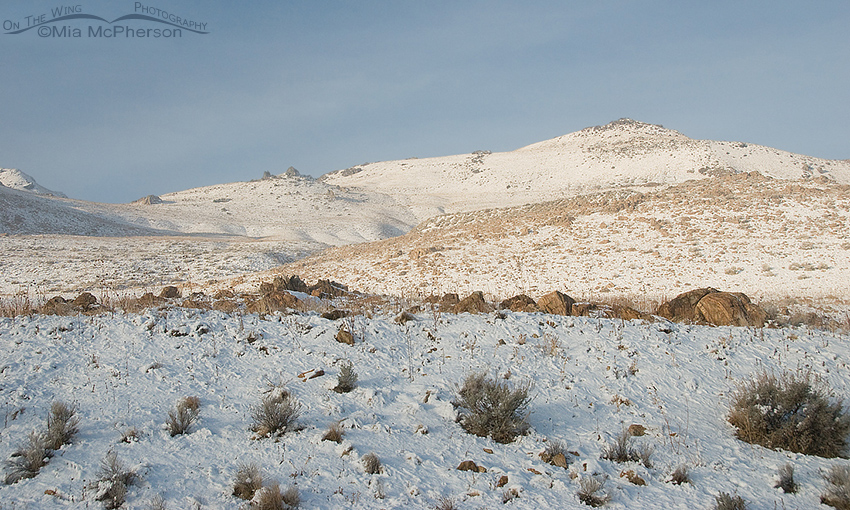
Fresh Snow on Antelope Island
This was taken last winter, it had snowed during the night and the island had a light covering of it. Winter last year; if you can call it that, was mild. I’m hoping that we get more snow in the valley than we did then.
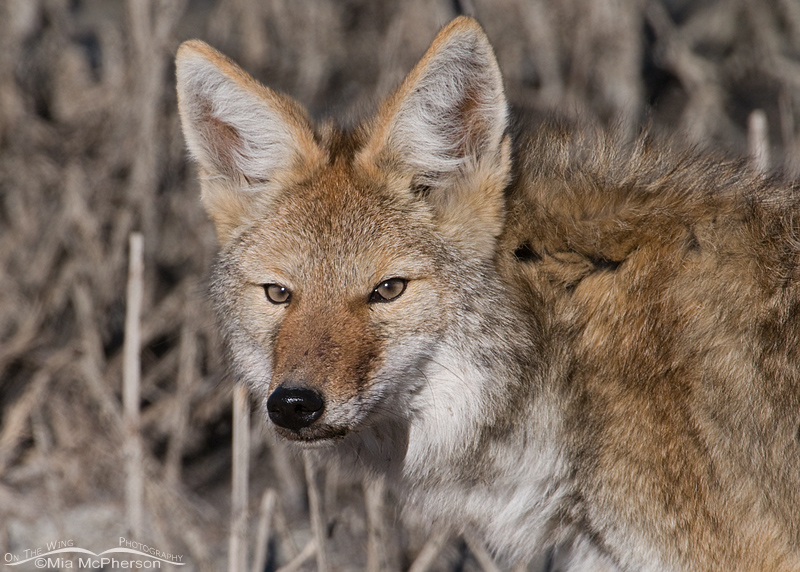
Coyote eating Falcon leftovers
Even though we didn’t get much snow last winter the temps were bitter cold some days, cold enough that the Great Salt Lake would freeze and when it would warm back up enough to thaw some of the ice the north wind would blow huge sheets of ice to the shore and large piles of ice would form there. This Coyote was eating falcon leftovers with the sheets of ice piled up behind it.
Frost covered Barn Owl
Winters can be harsh here in the Salt Lake Valley with bitter cold temperatures, icy fog, high winds and heavy snow. This Barn Owl shows the effects of a very cold night, that is hoar frost all over its face and back. The birds that stay here in the winter… they are tough, they have to be!
Landing Bald Eagle
Very soon I will be seeing Bald Eagles in the valley. During the summer I rarely see them here, I either need to go up into the high country or head north to see them. But during the winter Bald Eagles from the far north migrate to the Salt Lake Valley to overwinter. Last winter the numbers were low because it had been mild but during a typical winter it is not unusual to count more than a hundred eagles in a morning.
Great Blue Heron on thin ice
Our Great Blue Herons are year round residents and once the ponds, marshes and lakes freeze over they hunt voles in through the snow instead of hunting for prey in the water. Even the Great Blues are tough birds.
Mallard on ice
The pond down the hill from where I live will host Mallards, American Coots, Canada Geese, Pied-billed Grebes, gulls and if I am lucky I’ll see other ducks species and mergansers too. It is so close that I hope to spend time down there perfecting my skills at photographing them in falling snow like I did with the male Mallard above.
Prairie Falcon with the frozen Great Salt Lake in the background
It will become easier to approach raptors like this Prairie Falcon, when it gets colder the birds get stickier and are less apt to fly away so quickly. Our American Kestrels, Prairie and Peregrine Falcons are year round residents but during the warmer months they are a challenge to get close to. Rough-legged Hawks will soon be arriving and the Red-tailed Hawks are coming down from the high country to spend the winter in the valley. Merlins have already been reported. Who knows, maybe some Snowy Owls will show up too. I’ll also want to go to the west desert to look for Golden Eagles and Ferruginous Hawks.
White-crowned Sparrow on frost covered Rabbitbrush
Even smaller birds like this adult White-crowned Sparrow get stickier when the weather turns colder, I am able to get more images of sparrows during the winter than I can get during the summer.
I heard thunder awhile ago, I’ve always gotten a kick out of thunder-snow.
After living for five years in the heat and humidity of Florida I relish fall and winter. Bring on the snow!
Kind a of a crazy title but it is a mantra that I live by when it comes to my bird and nature photography. It simply means that unless I go out shooting I won’t know what I am missing.
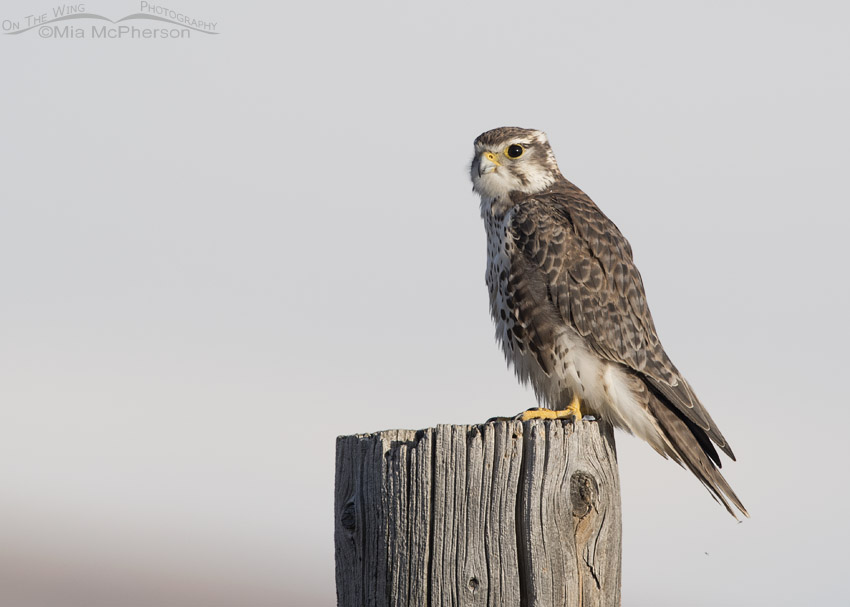
Yesterday morning started off in an exciting way when I saw a California Gull chasing a bird over the Great Salt Lake, the bird that was being chased moved fast. Really fast. I noticed the shape then the color and realized it was a falcon but I wasn’t sure which one, a Prairie or a Peregrine. Then the falcon broke away from the gull, headed towards the shore and perched on a boulder. By then I knew it was a Prairie Falcon (Falco mexicanus).
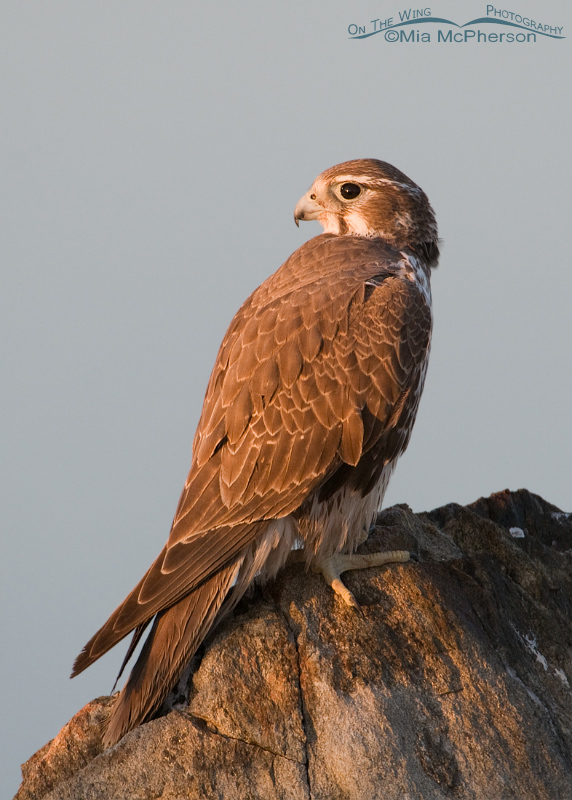
Adult Prairie Falcon – Nikon D300, f6.3, 1/200, ISO 1000, +0.3 EV, Nikkor 200-400mm VR with 1.4x TC at 400mm, natural light, not baited
The sun had risen and there was gorgeous golden light on the falcon when it was flying around with the gull but the boulder where it landed was still in the shadows and I didn’t have that great, warm light. I had to raise my ISO to 1000 to just get 1/200 for my shutter speed and I increased my exposure compensation to +0.3 to expose the bird well in the light I had. Because I didn’t have to lighten the bird or anything else in the frame I avoided unwanted noise.
Noise happens when an image isn’t properly exposed in the camera and post processing can make it much more noticeable when the exposure is raised then. Color noise is even worse, for instance after raising the exposure in post processing specks of odd colors like green, yellow and red can show up in feathers that are supposed to be black, dark brown or even light colors. If my images show even the slightest bit of color noise… they go into my delete bin.
Exposing correctly in the camera produces a much better image and one that will require less time and work in post processing.
That said; this image was slightly flat right out of the camera so I selected a warmer white balance in Adobe Camera Raw (ACR) when working with the raw file, I saw that I needed a bit more black and increased that then bumped up the contrast slightly by using a curves layer. I finished up by masking the bird and the boulder it is perched on and applied some smart sharpening.
You can still tell this image was taken in low light and that the post processing looks very natural not artificial or over processed.
It felt great to have a Prairie Falcon be the first bird I photographed.
After publishing edit: I should mention that the gull that had been chasing the falcon landed on the water underneath of where I first saw the birds, there were a couple other gulls already on the water. I noticed something moving between two of the gulls and scoped it with my lens. I could see an Eared Grebe in distress, listing on its side with its legs out of the water and fluttering. I can’t be certain but it is possible that the Falcon had struck the grebe though I am not sure why the gulls were staying close to it. When the falcon left it did not fly to the grebe but flew west away from it.
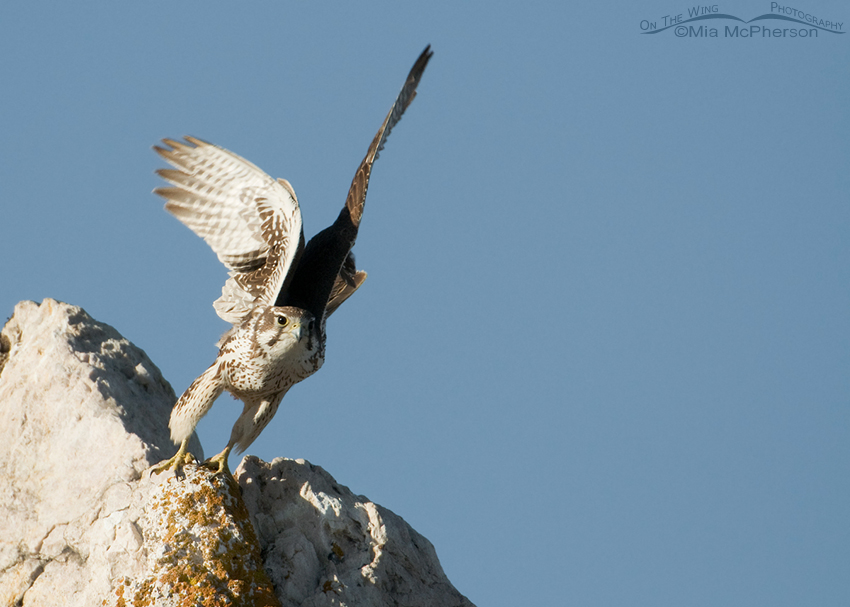
Red-tailed Hawk juvenile high up on the rocks – Nikon D300, f6.3, 1/1600, ISO 640, +0.3 EV, Nikkor 200-400mm VR with 1.4x TC at 400mm, natural light,not baited
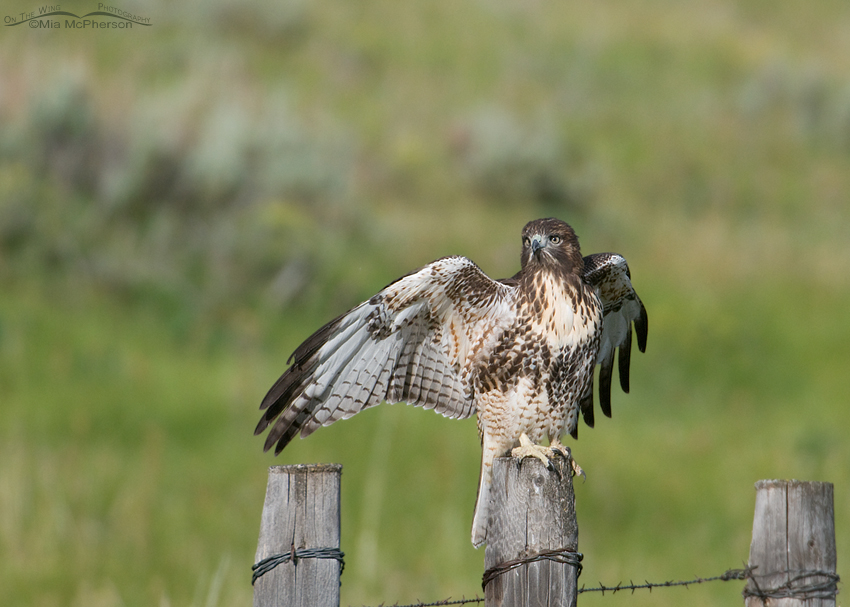
Later on in the morning I spotted one of the juvenile Red-tailed Hawks (Buteo jamaicensis) I’ve been photographing for over two months now. The immature Red-tailed was perched on some rocks above the road with its back towards me and it pretty much stayed in that position until it lifted off from the outcropping. Of course it lifted off facing away from me. (drat!) I have taken tons of those butt shots during my time photographing birds and they were deleted right away. This juvenile didn’t cooperate much yesterday but that is okay, I’ll likely have more opportunities with this bird and its siblings again.
It wasn’t particularly ”birdy” on the island but the sky was blue, the light was wonderful, the scenery spectacular and any day spent in the field is a true pleasure for me.
Western meadowlark on a salt-encrusted boulder – Nikon D300, f6.3, 1/3200, ISO 640, Nikkor 200-400mm VR with 1.4x TC at 400mm, natural light
Before leaving the island we stopped off at the area near the marina and saw this Western Meadowlark perched on a boulder near the water line, just a few weeks ago these boulders looked black with thousands & thousands of Brine Flies covering them but yesterday the true colors of the boulders were apparent as was the salt that has become encrusted on them from being so close to the hyper saline Great Salt Lake.
There are very few Brine Flies now because of the much cooler temperatures.
While I was photographing this bird some movement to my right caught my attention.
Coyote Portrait I – Nikon D300, f9, 1/1250, ISO 640, Nikkor 200-400mm VR with 1.4x TC at 400mm, natural light, not baited or called in
It was a Coyote (Canis latrans) moving along the shoreline almost parallel to the truck and water. My problem was that even when I backed my zoom to 200mm the coyote was too large in the frame so I zoomed back out to 400mm and took portrait images of it.
Coyote Portrait II – Nikon D300, f9, 1/1250, ISO 640, Nikkor 200-400mm VR with 1.4x TC at 400mm, natural light, not baited or called in
It isn’t everyday that I am so close to a Coyote that I can get portrait images like these so I was very happy that I listened to the words “You’ll never know unless you go” that I hear in my head most mornings before going out into the field.
The cooler weather we are having in Utah has me thinking of frosty mornings, snow, crystal clear skies, low light and the foggy mornings that the Great Salt Lake can create. After having lived in Florida for five years I don’t take those weather conditions for granted, I revel in them.
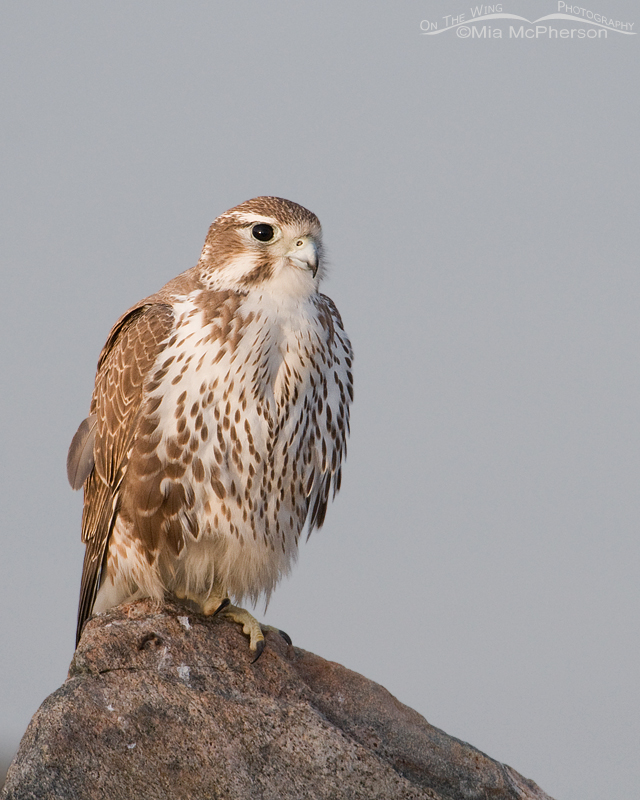
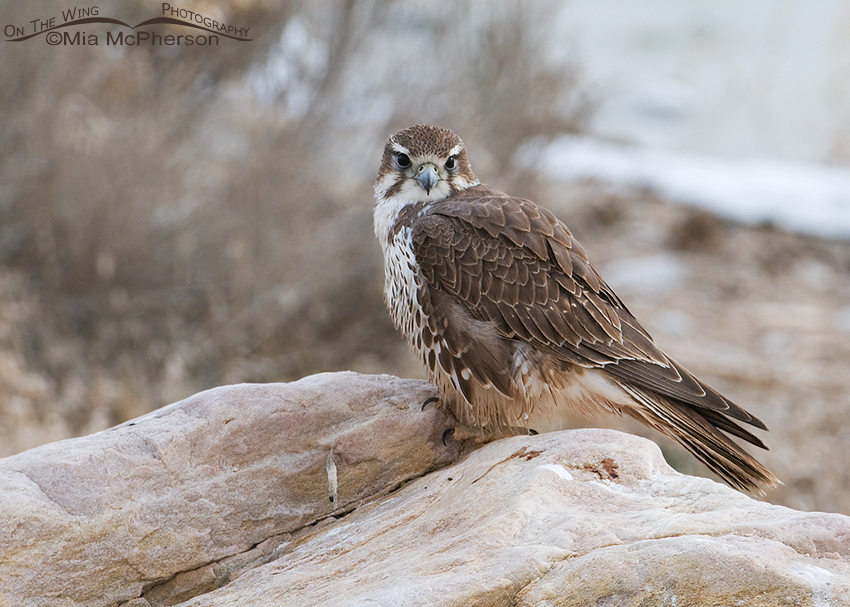
Portrait of a juvenile Prairie Falcon in low light – Nikon D300, f5.6, 1/1600, ISO 800, +0.7 EV, Nikkor 200-400mm VR with 1.4x TC at 400mm, natural light, not baited or set up
One foggy morning last December I spotted this juvenile Prairie Falcon (Falco mexicanus) perched on a frost-covered rock on the causeway to Antelope Island SP with the Great Salt Lake in the background. There was some fog and the light was low but with the right settings I was able to get a sharp image without noise. My exposire compensation for this image was very important, I increased the exposure so that I would not have to brighten the image in post processing which can often introduce unwanted noise. I also used f5.6 knowing I wouldn’t get the grasses in the foreground sharp but I felt I needed to make a compromise to keep my shutter speed up in case the young falcon decided to lift off.
I know that I could have increased the saturation and contrast while I was processing this image in PhotoShop to give it what some people call more “pop” but I would much rather process my images to appear natural rather than oversaturated, over-processed and artificial. This image is what it is, a photo of this bird taken in low light.
Immature Prairie Falcon in low light – Nikon D300, f7.1, 1/500, ISO 500, Nikkor 200-400mm VR with 1.4x TC at 271mm, natural light, not baited or set up
This is the same immature bird a little later after it had flown to the other side of the road. Because the Prairie Falcon seemed “stickier” I wanted some images where the foreground boulder was in focus so I selected f7.1 which gave me sufficient depth of field to bring the boulder into focus as well as the bird. I decreased my ISO to bring out more fine details in the plumage and the perch and while that slowed down my shutter speed but at the time I felt that the falcon was comofrtable with my presence and wouldn’t fly off right away. I could see on my histogram that I didn’t need to increase or decrease my exposure compensation to acquire a well exposed image so I set it at 0.0.
For myself; I feel it is important to process and present my images to represent the lighting conditions, colors and contrast as close as possible to what I saw through my viewfinder, other wise it simply does not look or feel natural to me.
Neither of these images “pop” off the screen but given that they were created in low light I don’t expect them to.
P.S.: If you had subscribed to Google FeedBurner to recieve email updates on my new blog posts please re-subscribe using the subscribe widget on the right hand side to continue recieving email notifications of my new posts. See here for the reason for that change.