A Winter Inversion along with -10 degrees Fahrenheit

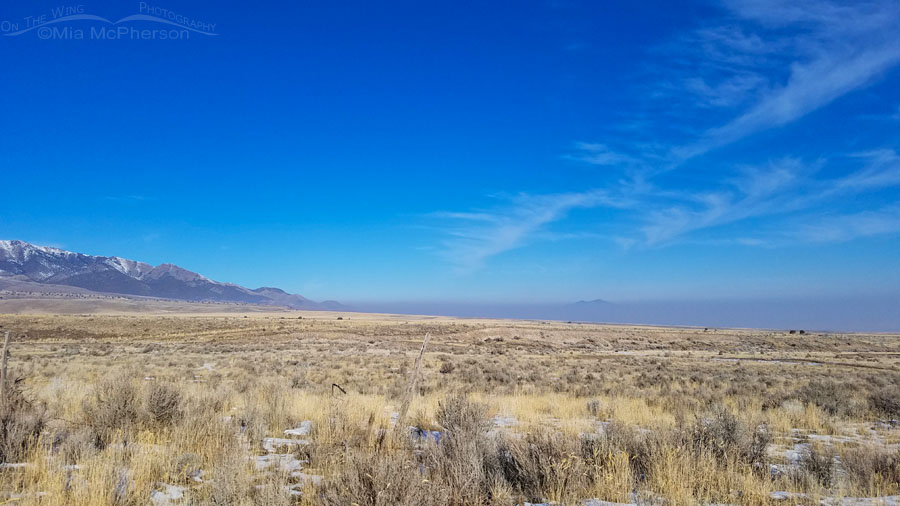
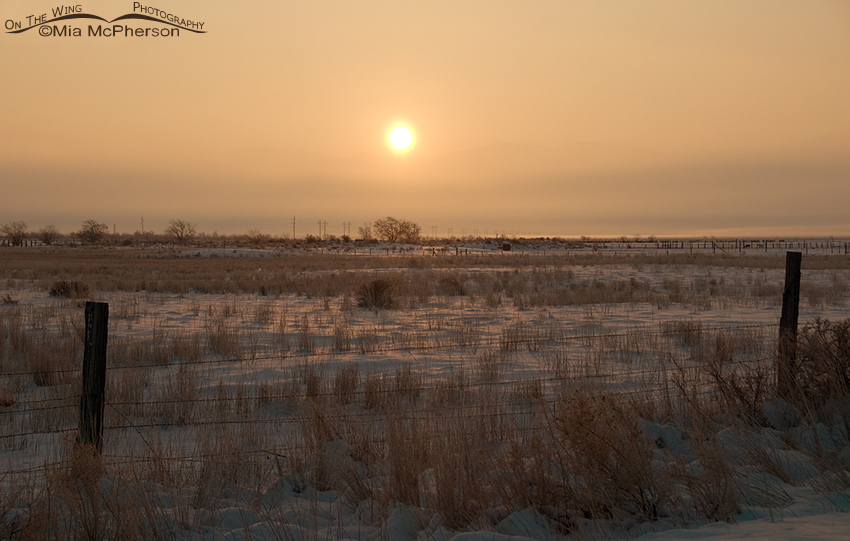
A few of my non-Utahn friends have asked me what an inversion is after I have mentioned it, this image might help to show what an inversion can look like.
Tooele County, Utah - Inversion at sunrise

Tooele County, Utah – Inversion at sunrise

Inversions here in the Salt Lake City area happen during mid-winter. It is not pretty and it can be very unhealthy. I took this photo this morning as we headed to North and South Willow Canyons in Tooele County, Utah to look for birds to photograph. If you squint your eyes and look just to the right of the sun you can see the Oquirrh mountain range which is all but hidden in the haze.

From Wikipedia:

One of the most significant weather events in Salt Lake City occurs in mid-winter, when temperature inversions sometimes form, resulting in cold and extremely foggy, hazy weather in the city while the surrounding mountains enjoy warmer temperatures and sunshine. Temperature inversions are extremely unhealthy and can occur weeks at a time, and are most pronounced in the heart of winter, although may occur in other seasons to a lesser extent. Humidity is only high enough and temperatures cold enough for fog to occur in the heart of winter, although haze and smog can be found year-round. Inversions occur when strong areas of high pressure park themselves over the Great Basin. It usually takes a cold front to force out or break down the high pressure. Consequently, inversions are very rare in spring and fall, when the atmosphere usually takes on a progressive pattern, with fronts moving through frequently.

It was very cold this morning when I took this image at -10 degrees Fahrenheit, it was bone-chilling to say the least.

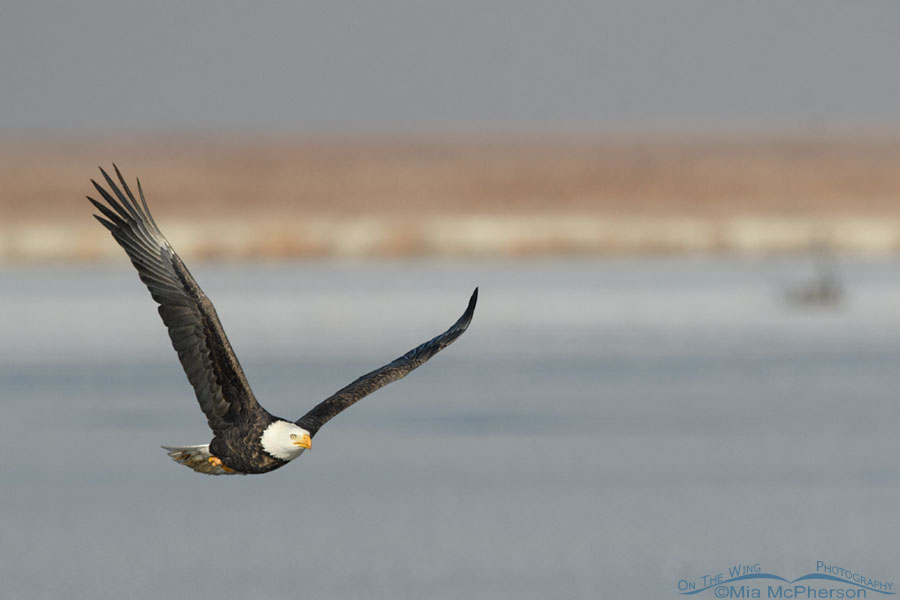
These nasty inversions can create challenges for bird photographers when photographing birds in flight that have the inversion layer behind them because the sky can have some weird hues to it.

Salt Lake City actually has five seasons, winter, spring, summer, fall and Inversion. Okay it is not truly a season, but it ought to be.

Did I mention it is not pretty?

Mia

Facebook Twitter

Northern Harrier in Low Light

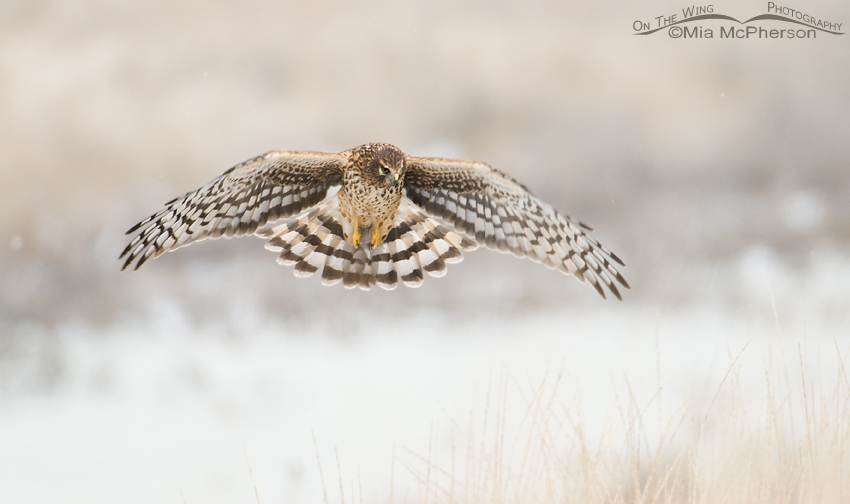
Hovering Northern Harrier (Circus cyaneus)

Hovering Northern Harrier (Circus cyaneus), 1st frame
Farmington Bay Waterfowl Management Area, Davis County, Utah
Nikon D200, f6.3, 1/640, ISO 400, +0.7 EV, Nikkor 200-400mm with 1.4x TC at 400mm, natural light, not baited

I was digging through my archives to place my 2011 photos into a new external harddrive when I came across these two images of a Northern Harrier hovering that I had taken in January of this year and decided to post them because of the low light conditions I photographed the harrier in.

Utah weather can be unpredictable anytime of the year but during the winter it can look bright and sunny where I live and then when I get to my location to photograph it can be quite a different story. The Salt Lake Valley has mountains to the east and the west and mountains do make their own weather. Plus given the fact that Northern Harriers prefer areas with marshes or shorelines and the fog found there can create even more challenges.

These two images were taken when there was snow falling, the light was low and there was some fog. I had to increase my exposure compensation so that the images would not be under exposed which decreased my shutter speed giving the images some motion blur. Newer cameras than mine do handle higher ISO settings than 400 quite well which would give the users of those cameras higher shutter speeds than I was able to get with my trusty, but old, Nikon D200.

Hovering Northern Harrier (Circus cyaneus)

Hovering Northern Harrier (Circus cyaneus),  2nd frame
Farmington Bay Waterfowl Management Area, Davis County, Utah
Nikon D200, f6.3, 1/640, ISO 400, +0.7 EV, Nikkor 200-400mm with 1.4x TC at 400mm, natural light, not baited

I don’t mind the motion blur in these images and because northern harriers hunt by looking down at the ground for their prey I was very happy to get eye contact in both frames. The habitat with dried vegetation, snow on the ground and bits of falling snow make the photos appealing to me as do the poses that the harrier gave me.

I could have used some fill flash but at least 99% or more of my images are taken in natural light. I prefer photographing birds without flash partly because I don’t care for the “flashed” look and because I also do not want to startle or scare the birds. I’ve seen people get close to birds and when the flash goes off…so does the bird in many cases.

Appealing and compelling images can be produced even when the conditions are not the best. I enjoy the challenges that low light creates, it test my skills as a photographer and I like that. Low light images are also a challenge to post process and keep the photo looking like what it is, an image taken in low light.

Mia

More Northern Harrier images

Facebook Twitter