Shades of Blue – Wildflowers, Birds, Sky and Sea

Blue-eyed GrassBlue-eyed Grass – Nikon D200, handheld, f6.3, 1/400, ISO 200, Nikkor 80-400mm VR at 400mm, natural light

Last week I was Thinking Pink so this week I thought I would focus on the shades of blues found in wildflowers, birds, the sky and seas. Blue-eyed Grass (Sisyrinchium angustifolium) is one of my favorite blue wildflowers from the eastern United States. Blue-eyed Grass isn’t actually a grass at all, it is from the Iris family and may have gotten the “Grass” part of its name because the leaves are very thin and grass-like. I found and photographed this beauty under the pines of the Osprey Trail at Honeymoon Island State Park in Florida.
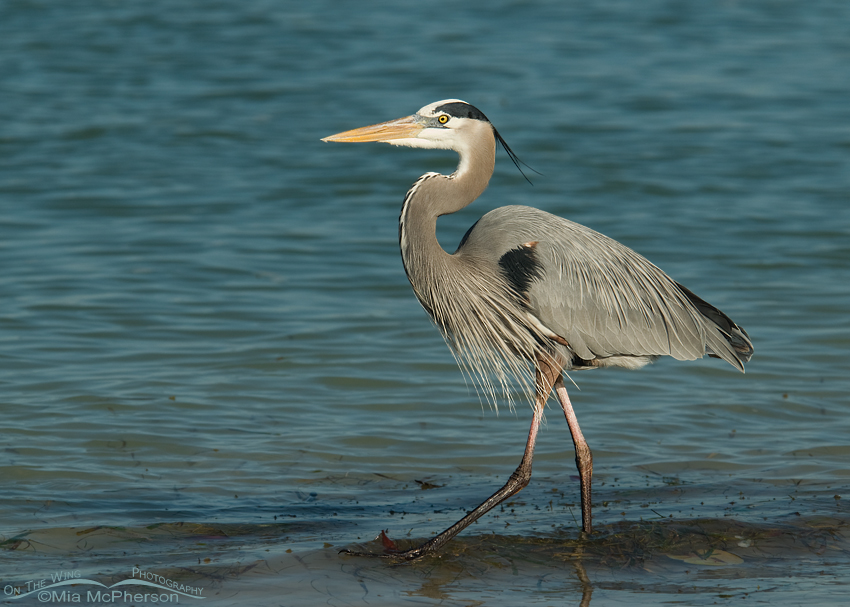
Great Blue Heron in the Gulf of MexicoGreat Blue Heron in the Gulf of Mexico – Nikon D200, handheld, f6.3, 1/1000, ISO 200, Nikkor 80-400mm VR at 230mm, natural light

It seems to me that Great Blue Herons (Ardea herodias) are misnamed because they are more gray than they are blue, in fact when I see a Great Blue Heron posted on line that is very blue I scratch my head because they really aren’t that blue. I photographed this Great Blue Heron as it walked along the shoreline of the Gulf of Mexico at Fort De Soto’s north beach in Florida.

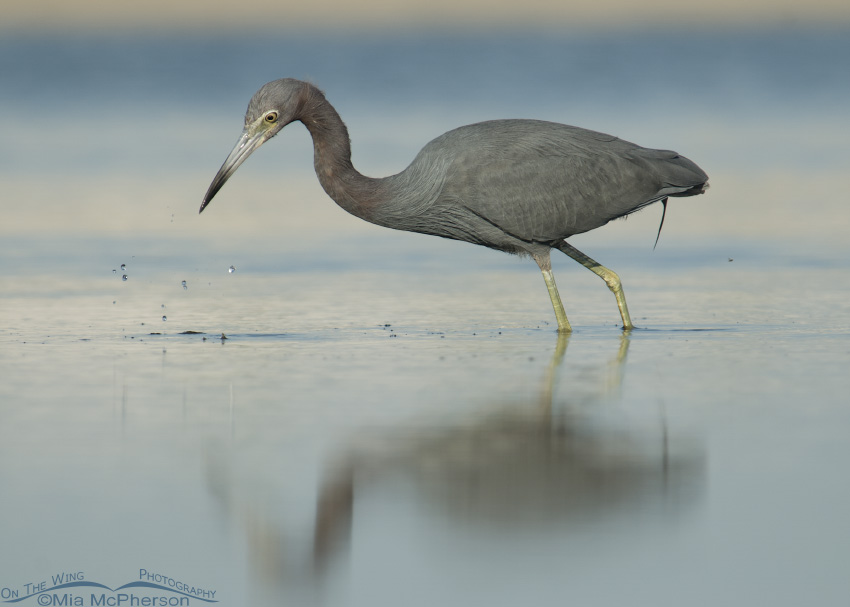
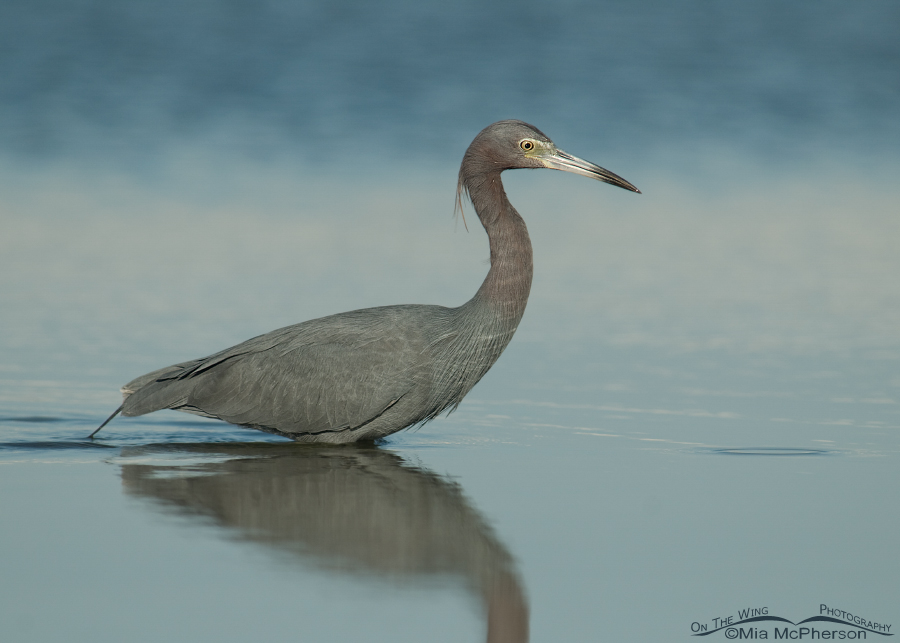
Little Blue Heron stalking prey in a tidal lagoonLittle Blue Heron stalking prey in a tidal lagoon – Nikon D200, handheld, f7.1, 1/640, ISO 200, Nikkor 80-400mm VR at 360mm, natural light

Little Blue Heron (Egretta caerulea) adults are more blue than Great Blue Herons, at least from the base of the neck to their tails, their necks have a reddish cast to them. I was sitting in the lagoon with the Little Blue Heron approached me while it was stalking and hunting prey at Fort De Soto County Park in Florida.

Male Lazuli BuntingMale Lazuli Bunting – Nikon D200, f8, 1/500, ISO 250, Nikkor 200-400mm VR with 1.4x TC at 400mm, natural light

Male Lazuli Buntings (Passerina amoena) have a gorgeous azure blue head as well as some blue on other parts of their bodies. The word “lazuli” come from the semi-precious gemstone Lapis Lazuli which comes in various shades of blue with gold colored specks. I photographed this Lazuli Bunting in the San Rafael area of Utah and the background is the color of sandstone found in that area.

Mountain BluebirdMountain Bluebird - Nikon D200, f6.3, 1/2500, ISO 500, -0.3 EV, Nikkor 200-400mm VR with 1.4 TC at 400mm, natural light

Mountain Bluebirds (Sialia currucoides) are one of the bluest bird species I have photographed, especially the males. I didn’t add any color saturation to this image at all, this is how blue the bird looked in the light conditions I had at the time I took this image at Red Rock lakes National Wildlife Refuge in Montana. The males during the breeding season are a rich, vibrant blue.

Blue skies at Red Rock Lakes National Wildlife Refuge, MontanaBlue skies at Red Rock Lakes National Wildlife Refuge, Montana – Nikon D200, handheld, f20, 1/160, ISO 400, +0.3 EV, Nikkor 18-200mm VR at 18mm, natural light

Some of the bluest skies I have ever seen have been at Red Rock Lakes National Wildlife Refuge in southwestern Montana where on a clear (or not so clear) day you can see for miles & miles. I loved how this wave of clouds fanned out in this frame and added a nice contrast to the blue tones in the sky.

Amazing blues of Magens Bay, Saint Thomas, USVIAmazing blues of Magens Bay, Saint Thomas, USVI – No techs, this is a panorama made from several images that were joined together

The colors of the seas and oceans have always drawn me to water because they can vary from the palest aquamarine to deep royal blues and everything in between. Magens Bay in Saint Thomas and the Atlantic Ocean beyond it give this image wonderful shades of blue that I find very soothing and it brings back nice memories of my stay on the island.

Shades of blue…

Mia

Facebook Twitter

Monday Blues – Little Blue Heron that is

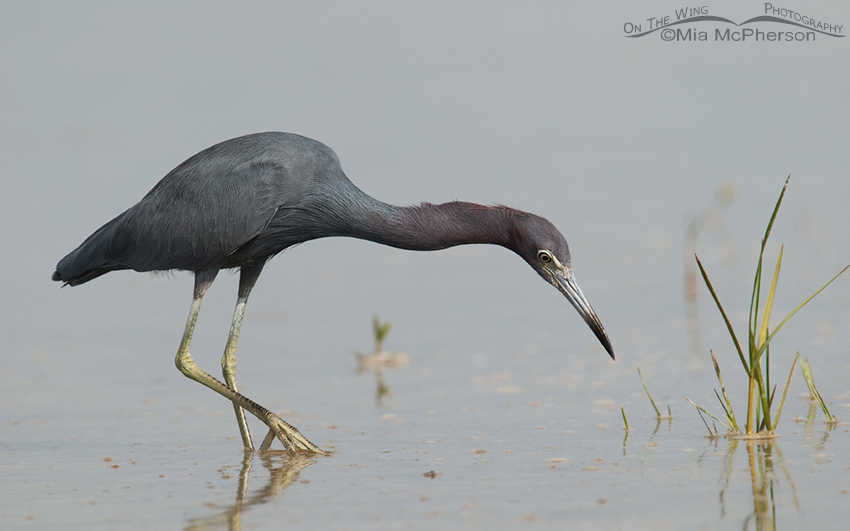
Little Blue Heron hunting in a lagoonLittle Blue Heron hunting in a lagoon – Nikon D200, handheld, f6.3, 1/1000, ISO 200, Nikkor 80-400mm VR at 400mm, natural light, not baited

I don’t know how much snow fell over night here in the Salt Lake Valley because it is still dark outside and while I am truly not “blue” about it I thought some images from warmer times of a blue bird might be in order for a Monday. These images were taken at Fort De Soto County Park’s north beach on what I felt was a magical day. In fact I did a post about it called “Some Days Are Magic” some time ago.
Little Blue Heron still huntingLittle Blue Heron still hunting – Nikon D200, handheld, f6.3, 1/1000, ISO 200, Nikkor 80-400mm VR at 400mm, natural light, not baited

For February; even in Florida, the day was warm and the slight sea breeze was delightful. I was in the company of good friends and there were plenty of birds to photograph including this very cooperative and active Little Blue Heron. It hunted, caught and ate prey and looked gorgeous in the blue waters of the lagoon.

Little Blue Heron after missing preyLittle Blue Heron after missing prey – Nikon D200, handheld, f6.3, 1/800, ISO 200, Nikkor 80-400mm VR at 400mm, natural light, not baited

The Little Blue Heron was a terrific subject and I took quite a few images of it, these files have been sitting on my hard drive just waiting to be edited and shared.

It’s hard to be blue on a Monday looking at images of this heron!

Mia

More Little Blue Heron images

Facebook Twitter

Birds, Beasts and Bits About Me – My 500th Blog Post

Wow, this is my 500th blog post and it has been great fun to share my images and the stories behind them. I thought I’d share a few images and bits about my thoughts on photography.
Adult Dunlin feeding

Adult Dunlin feeding – Nikon D200, handheld, f7.1, ISO 200, 1/250, Nikkor 80-400mm VR at 400mm, natural light

What got me hooked on bird photography?

I would say shorebirds are why I am addicted to bird photography because they fascinated me and photographing them allowed me to crawl through mud, sand and water.

When I first started photographing shorebirds I could walk around covered in mud with my camera in my hand people just ignored me or would say “Wow, that camera must take good pictures”. Maybe they were too polite to mention that I had sand all over my face, muddy legs or a combination thereof.

Sanderling in nonbreeding plumage

Sanderling in nonbreeding plumage – Nikon D200, handheld, f6.3, 1/1000, ISO 200, Nikkor 80-400mm VR at 400mm, natural light

I simply loved being out in nature, the feel of the sea breeze on my skin, having warm water lapping against my legs and the birds that I saw everywhere around me. I learned that if I sat or laid very still the birds would approach me and allow close ups like the Sanderling image above. Even when there were no birds around I could wade into the water fully clothed and just make it “look” like I was searching for birds while cooling off and giggling because I was in the water with all my clothes on and I didn’t care one bit.

While slithering around in mud and sand crawling through sugar sand I had many wonderful opportunities to meet and makes friends with a lot of like-minded people who love nature. I figured if they crawled around in the mud with me and didn’t mind that I smelled like a combination of fish and crab poop they had to be great people.

I learned a lot about shorebird ID, which were peeps, plovers and sandpipers and then figured out the rest. Breeding and nonbreeding plumage puzzled me for a bit but with experience, people who let me pick their brains and field guides I’ve become proficient at figuring out shorebird ID.

Roseate Spoonbill in morning light

Roseate Spoonbill in morning light – Nikon D200, handheld, f6.3, 1/750, ISO 250, Nikkor 80-400mm VR at 400mm, natural light

Then there were the larger wading birds, some with razor-sharp bills, some that curved downwards, looked like wood and spoons! I got addicted to photographing them too.

I learned not to over saturate the colors of my subjects in post processing so that they looked like what I saw through my viewfinder.  The Roseate Spoonbill above is colorful enough without pushing that saturation slider up.

Why do I always mention “natural light” in my techs under the images I post?

My answer to that is that nature provides terrific light and I don’t like using flash on birds or other wildlife. I just prefer natural light over artificial.

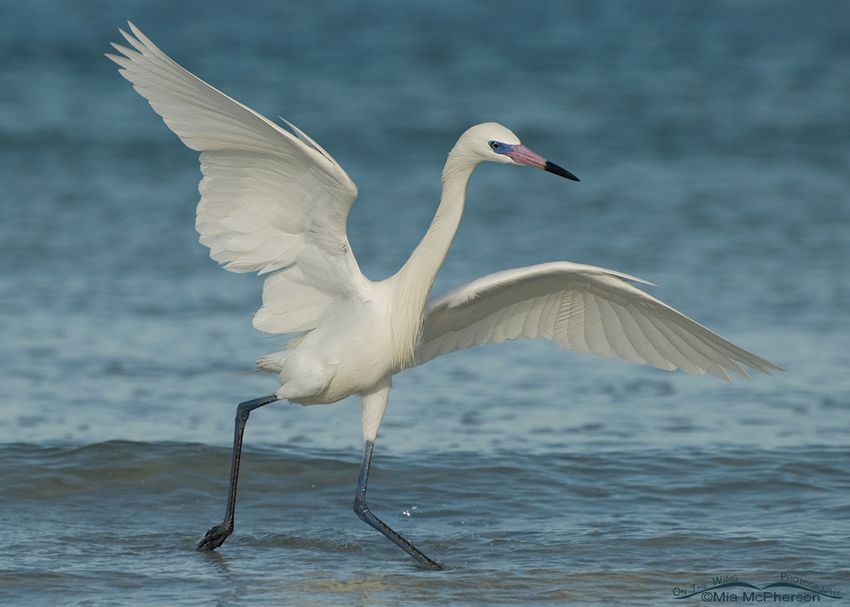
Dancing white morph Reddish Egret

Dancing white morph Reddish Egret – Nikon D200, handheld, f6.3, 1/1250, ISO 250, Nikkor 70-300mm VR at 250mm, natural light

I studied the behavior of my subjects so I could tell when they were about to take flight, bathe, catch prey or dance like the white morph Reddish Egret above. The egret isn’t truly dancing, it is actively chasing after prey.

By observing my subjects I have gotten great action images that I might have missed if I hadn’t been able to anticipate their next move.

Little Blue Heron with a Pipefish

Little Blue Heron with a Bay Pipefish – Nikon D200, handheld, f6.3, 1/800, ISO 160, Nikkor 80-400mm VR at 400mm, natural light

I found out that going out to photograph with other people was very enjoyable and that knowledge about techniques could flow easily back and forth. I photographed the Little Blue Heron with a Bay Pipefish above with two photographer friends and we all walked away with images that we were very happy with.

Singing male Red-winged Blackbird

Singing male Red-winged Blackbird – Nikon D200, handheld, f7.1, 1/200, ISO 250, Nikkor 80-400mm VR at 400mm, natural light

I worked on my stalking skills and patience so I could get closer to my subjects without stressing them or making them flush. Of course; some still flush & fly.

Laughing Gull in breeding plumage at a water fountain

Laughing Gull in breeding plumage at a water fountain – Nikon D200, handheld, f6.3, 1/1000, ISO 250, Nikkor 80-400mm VR at 400mm, natural light

I feel that all birds are worthy subjects and that even the most common birds can be uncommonly beautiful in the right light, pose or setting. Normally I prefer natural settings and perches but I also enjoy images that have manmade items in them. I think the water fountain as a perch for this Laughing Gull adds a touch of whimsy.

Male Northern Harrier in flight

Male Northern Harrier in flight – Nikon D200, f7.1, 1/2000, ISO 320, +0.3 EV, Nikkor 200-400mm VR with 1.4x TC at 400mm, natural light, not baited

Paying attention to how close the background material is to the subject is important. If the dried Phragmites behind this male Northern Harrier had been any closer to the bird the background may have looked very messy but because of the distance from the harrier to the vegetation plus my choice of aperture and the bokeh of the lens created a background that doesn’t draw attention away from the subject.

Loggerhead Shrike perched on Sagebrush

Loggerhead Shrike perched on Sagebrush – Nikon D300, f6.3, 1/640, +0.7 EV, Nikkor 200-400mm VR with 1.4x TC at 400mm, natural light

I selected the colors for this blog and my web site using the hues of greens from Sagebrush, a shrub that is found in many areas of my adopted state of Utah. I find the gray greens soothing and I have to admit I find the aroma of Sagebrush very appealing. Besides, Sagebrush makes a great perch for many of my subjects.

Pronghorn does on a hilltop at sunset

Pronghorn does on a hilltop at sunset – Nikon D300, f6.3, 1/3200, ISO 1000, Nikkor 200-400mm VR with 1.4x TC at 400mm, natural light

Even though birds are my primary passion for photographic subjects I can’t resist taking images of other subjects like the Pronghorn does above. If there aren’t birds around I will take images of flowers, scenery, mammals, insects and more.

The Wedge in the San Rafael Swell, Utah

The Wedge in the San Rafael Swell, Utah – Nikon D200, handheld, f9, 1/2000, ISO 400, -0.3 EV, Nikkor 18-200mm VR at 18mm, natural light

I see spectacular views, sun rises and sunsets because of my photographic journeys, some time the views take my breath away. Looking down into the Little Grand Canyon from The Wedge certainly did.

Coyote eating Falcon leftovers

Coyote eating Falcon leftovers – Nikon D300, f6.3, 1/640, ISO 800, Nikkor 200-400mm VR with 1.4x TC at 314mm, natural light, not baited or called in

There are times when paying attention to one species gives clues about another. I’d seen Peregrine Falcons feeding on ducks on the shoreline of the Great Salt Lake and later saw a Coyote feeding on the falcon’s leftovers, now I know why the Coyotes were along the causeway the year before which had puzzled me. I love the piled up sheets of ice in the background of this image.

Adult Bald Eagle in flight

Adult Bald Eagle in flight – Nikon D200, f6.3, 1/2500, ISO 400, +0.7 EV, Nikkor 200-400mm VR with 1.4x TC at 400mm, natural light, not baited

Patience is needed for bird photography, waiting for a bird to fly, waiting for the right banking turn to light the whole bird up and sometimes just waiting for birds to show up.

Perched adult western Burrowing Owl

Perched adult western Burrowing Owl – Nikon D200, f6.3, 1/400, ISO 200, Nikkor 200-400mm VR with 1.4x TC at 400mm, natural light, not baited

Because of my bird and nature photography I have met the most interesting people in person and have become friends with many of you through this blog or yours and I appreciate you all. Life is good.

500 posts. Wow.

Mia

Facebook Twitter

Little Blue Heron on the hunt

Little Blue Heron on the Hunt

Little Blue Heron on the Hunt – Nikon D200, handheld, f6.3, 1/750, ISO 200, Nikkor 80-400mm VR at 340mm, natural light

This Little Blue Heron (Egretta caerulea) was photographed in Florida as it hunted for prey in a shallow lagoon the edge of a marsh in late afternoon light.  The heron stalked small fish, crabs and shrimp while I sat in the warm water photographing it and the other birds nearby.
Mia

More Little Blue Heron images

Facebook Twitter

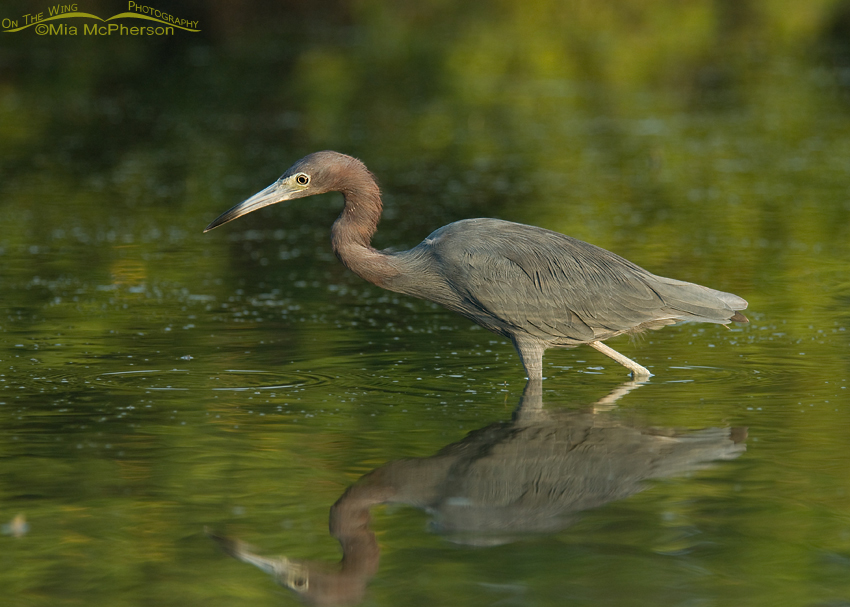
Little Blue Heron hunting in a lagoon

Little Blue Heron hunting
Pinellas County, Florida
Nikon D200, f5.6, 1/320, ISO 500, Nikkor 80-400mm VR at 185mm, natural light

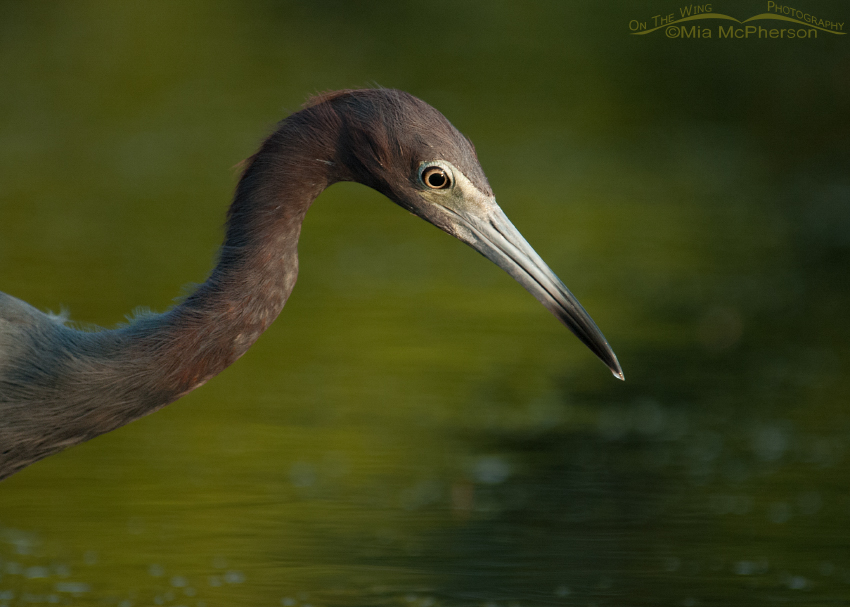
Little Blue Herons were a wading bird that I saw often in Florida. The day I photographed this Little Blue Heron I was sitting quietly in the shallow water of a lagoon when this bird flew in and began to hunt. Nearby mangroves reflections made the water appear green and I felt that complimented the heron’s coloring nicely. This heron paid very little attention to me while I photographed it, maybe it just thought I was an odd looking piece of driftwood.
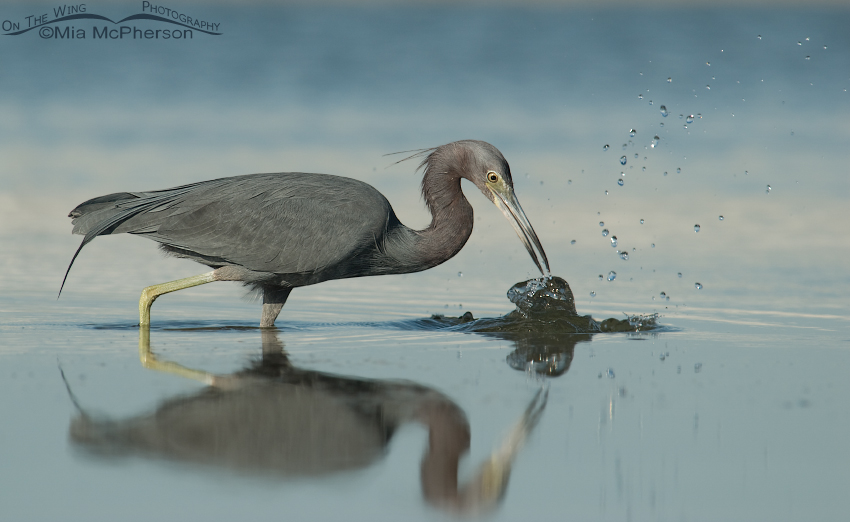
No matter what the bird thought of me sitting there clicking my shutter button I was able to take many images of this bird as it stalked small fish and shrimp in the lagoon that morning.

Pretty great way to start the day. Any day really.

Mia

More Little Blue Heron images

Facebook Twitter