Great Blue Herons in Florida and Utah

Great Blue Heron flying over the Gulf of Mexico

Great Blue Heron flying over the Gulf of Mexico – Nikon D200, handheld, f5.6. 1/2000, ISO 500, Nikkor 80-400mm VR at 260mm, natural light

Great Blue Herons are year round residents in both Florida and Utah although conditions during the winter months can be starkly different for these large wading birds in the two locations and climates. Florida during the winter can be cool but comfortable.

The Great Blue Heron above was photographed as it flew over the Gulf of Mexico in Florida.
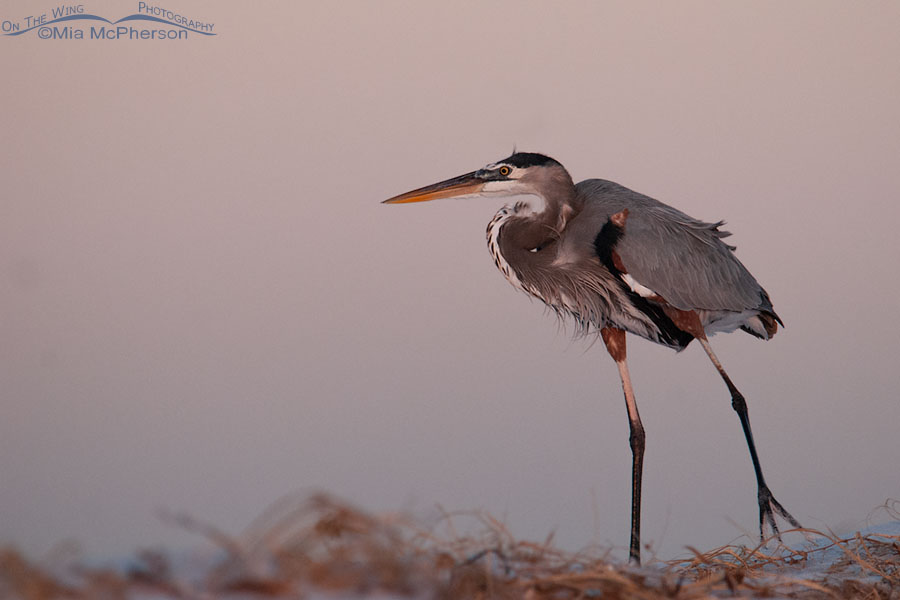
Great Blue Heron hunting voles in winterGreat Blue Heron hunting voles in winter – Nikon D200, f7.1, ISO 400, 1/2000, Nikkor 200-400mm VR with 1.4x TC at 400mm, natural light

Winters in Utah can be harsh, bitter cold and the ground can stayed covered in snow for weeks. Some times the freshwater freezes and the Great Blue Herons can no longer find food from the marshes, ponds and streams so they hunt for voles instead. The Great Blue Heron shown above was stalking voles near snow-covered vegetation at Farmington Bay Waterfowl Management Area. I remember having numb hands when I took this image, it was that cold!

Great Blue Herons nestingGreat Blue Herons nesting – Nikon D200, handheld, f8, 1/1000, ISO 320, Nikkor 80-400mm VR at 400mm, natural light

This photo was taken at the end of December of 2008 at Fort De Soto County Park in Florida where the Great Blue Herons were already building nests by that time, can’t imagine that happening here in Utah. Note the blue lores that both of these birds have, that is a sign that they are in breeding plumage. The setting sun gave this image that golden glow of “sweet light”.

By the way, I unknowingly stepped into a fire ant hill when I took this image, thankfully I realized it right away, moved, brushed off the ants and continued shooting images.

Great Blue preening in the snowGreat Blue preening in the snow – Nikon D300, f7.1, ISO 400, 1/2500, +0.3 EV, Nikkor 200-400mm VR with 1.4x TC at 400mm, natural light

Great Blue Herons in Utah do seem to have a tougher life but they appear to deal with it quite well. I spotted this heron a few weeks ago as it preened on the snowy banks of a small stream. We’d had lots of snow that week and there was over a foot of it at Farmington Bay WMA.

Great Blue Heron in pursuitGreat Blue Heron in pursuit – Nikon D200, handheld, f6.3, 1/1500, ISO 400, Nikkor 80-400mm VR at 98mm, natural light

Great Blue Herons in Florida have to deal with extreme weather too because tropical storms and hurricanes can batter all of the birds with high winds, driving rains, pounding waves and loss of habitat. This Great Blue Heron was chasing off a rival for some prime fishing grounds in a territorial pursuit.

Great Blue Herons survive in both locations because they are adaptable and if they can’t locate their normal prey they will find another.

Mia

More Great Blue Heron images

Facebook Twitter

Killdeer – Wash, Fluff and Dry

Last week I photographed a Killdeer (Charadrius vociferus) bathing at Farmington Bay Waterfowl Management Area in Davis County, Utah. I was in a mobile blind (vehicle) and the shorebird was quite comfortable in my presence. I used my Nikon D300, resting on my Noodle, f6.3, ISO 400, Nikkor 200-400mm VR with 1.4x TC at 400mm, 0.0 EV and my shutter speed ranged from 1/1600 to 1/2000.

The images are posted in sequential order.

Killdeer bathing

Killdeer bathing

The Killdeer was bathing when we first pulled up and it stopped momentarily.

Killdeer bathing

Killdeer bathing

It soon began bathing again, vigorously. I like the flying water droplets and how the water is running off of the birds back.

Killdeer bathing

Killdeer bathing

The Killdeer would press its body into the water and then rise back up.

Killdeer bathing

Killdeer bathing

Then it would spread out its wings a bit.

Killdeer bathing

Killdeer bathing

Sometimes the Killdeer would dip its head into the water, twist it and fling water over its back. While I wish that some of the water wasn’t in front of the eye blocking the catchlight I am happy that the bird had its eye open in this frame. I love the action shown here.

Killdeer bathing

Killdeer bathing

The Killdeer also bobbed its body up and down without immersing its whole body.

Killdeer bathing

Killdeer bathing

I liked this image because I caught the bill open.

Killdeer bathing

Killdeer bathing

I like the great eye contact in this frame.

Killdeer bathing

Killdeer bathing

And the fluffed up feathers in this frame.

Killdeer bathing

Killdeer bathing

Even 1/1600 wasn’t fast enough to stop the motion blur of the feathers but it did freeze most of the water droplets.

Killdeer bathing

Killdeer bathing

Then the Killdeer stood up and called.

Killdeer bathing

Killdeer bathing

Turned its back and gave us an over the shoulder look…

Killdeer bathing

Killdeer bathing

And it began to preen.

Killdeer bathing

Killdeer bathing

I thought this was a funny pose.

Killdeer bathing

Killdeer bathing

And this one too!

Killdeer after the bath

Killdeer after the bath

The bird moved away from the water and gave itself a final fluff before it flew away.

Mia

More Killdeer images

Facebook Twitter

Great Egret – Preening

Great Egret Preening

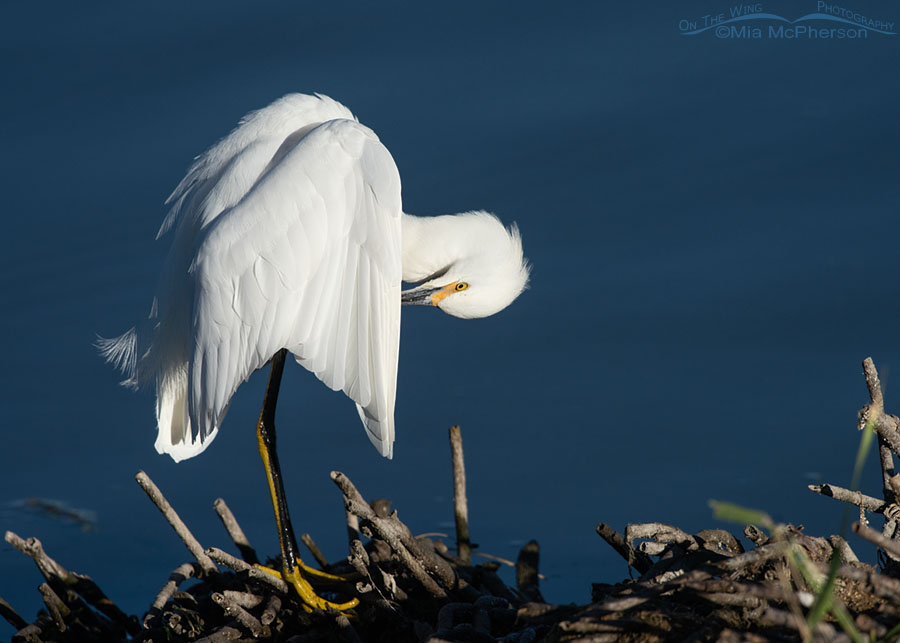
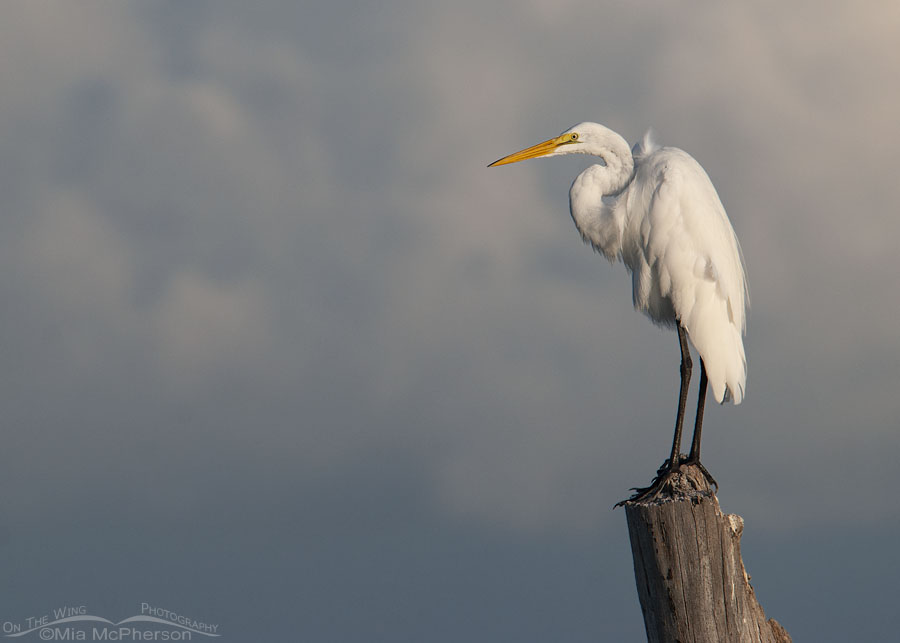
Great Egret Preening – Nikon D200, handheld, f6.3, 1/1600, ISO 200, Nikkor 80-400mm VR at 340mm, natural light

Just a simple Great Egret (Ardea alba) image that always seems to tickle my funny bone when I view it because of the pose. I was wandering through a Florida Spartina marsh when I came across this egret preening and watched as it seemed to turn itself into a pretzel!

Mia

More Great Egret images

Facebook Twitter

American Oystercatcher

Preening adult American Oystercatcher (Haematopus palliatus)
Preening adult American Oystercatcher (Haematopus palliatus) ~ Fort De Soto County Park, Florida
Nikon D200, handheld, f7.1, 1/500, ISO 200, Nikkor 80-400mm VR at 400mm, natural light

This American Oystercatcher image was taken nearly three years ago, it seems difficult to believe that is has been that long but I like it as much today as the morning I photographed it. The pose makes me want to laugh and perhaps give the image a caption like “Pilates anyone?”.

The morning light fell on the bird so nicely, illuminating the long orange bill, lemony yellow eyes and the beautiful brown and white plumage. I think American Oystercatchers are lovely birds right down to thier black Goth-like toenails. Although it was only February when I photographed this bird the Oystercatchers were already pairing up in preperation of nesting season.

I have yet to see and photograph the related Black Oystercatchers found on the Pacific coastline, one day soon perhaps!

Mia

More American Oystercatcher images

Facebook Twitter

A preening American Kestrel ~ Friday Photos

American Kestrels hold a special interest for me, they are North America’s smallest falcon but what they lack in size they make up for in attitude. These falcons can be fiesty.

Perched American Kestrel (Falco sparverius)  male ~ Davis County, Utah
Perched American Kestrel (Falco sparverius) male ~ Davis County, Utah
Nikon D300, f6.3, 1/1600, ISO 400, +1.0 EV, Nikkor 200-400mm VR with 1.4x TC at 400mm, natural light, not baited

Here in Utah they are difficult to approach except for during the winter, they get “stickier” in the cold. We have a stable population of American Kestrels in Utah but in other parts of the United States their populations are declining.

Even American Kestrels can look goofy
Nikon D300, f6.3, 1/1250, ISO 400, +1.0 EV, Nikkor 200-400mm VR with 1.4x TC at 400mm, natural light, not baited

I spotted this male American Kestrel resting on the top of a Rabbitbrush that was fairly close to the road I was on and after a few minutes the kestrel began to preen. As handsome as they are most of the time they can look quite goofy while preening.

American Kestrel preening its tail feathers
D300, f6.3, 1/1000, ISO 400, +1.0 EV, Nikkor 200-400mm VR with 1.4x TC at 400mm, natural light, not baited

I’m always pleased when I can get close enough to an American Kestrel to get images but I was even happier to get these while the small falcon was preening and paid little attention to me. In the photo above the bird was pulling its tail feather through its bill to clean it.

American Kestrel with tail fanned
Nikon D300, f6.3, 1/1250, ISO 400, +1.0 EV, Nikkor 200-400mm VR with 1.4x Tc at 400mm, natural light, not baited

As the falcon preened I was able to anticipate the movements it made and that gave me some interesting shots. 

What a cute pose!
What a cute pose!
Nikon D300, f6.3, 1/1250, ISO 400, +1.0 EV, Nikkor 200-400mm VR with 1.4x TC at 400mm, natural light, not baited

I really liked the pose above, the Kestrel was just rubbing its head against its shoulder while it preened and quite often the eyes are closed when this occurs so I was glad that I had eye contact in this frame plus the lifted wing.

American Kestrel cleaning his feet
Nikon D300, f6.3, 1/1600, ISO 400, +1.0 EV, Nikkor 200-400mm VR with 1.4x TC at 400mm, natural light, not baited

I had a lot of fun photographing this American Kestrel and appreciated the lovely setting, light and the various poses that it gave me.

Mia

More American Kestrel images

Facebook Twitter