Springtime Pronghorns on Antelope Island

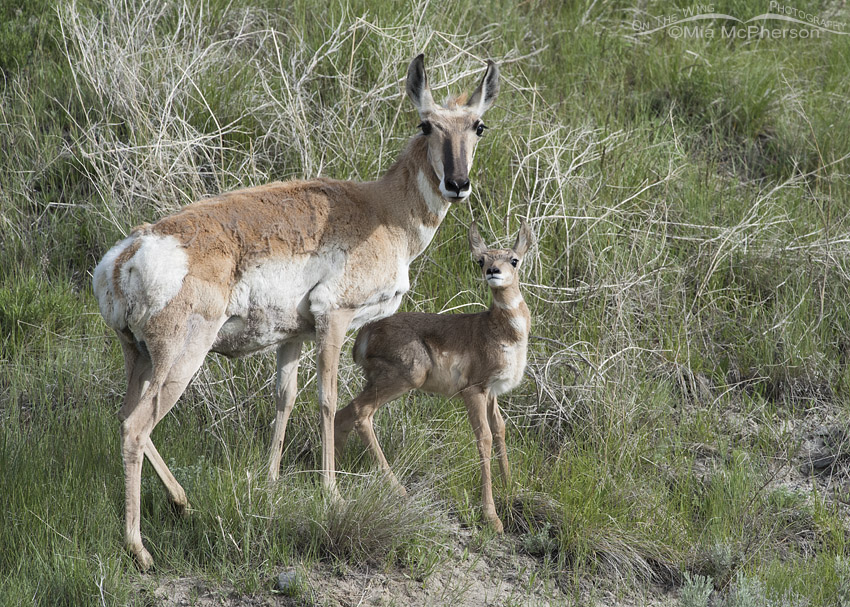
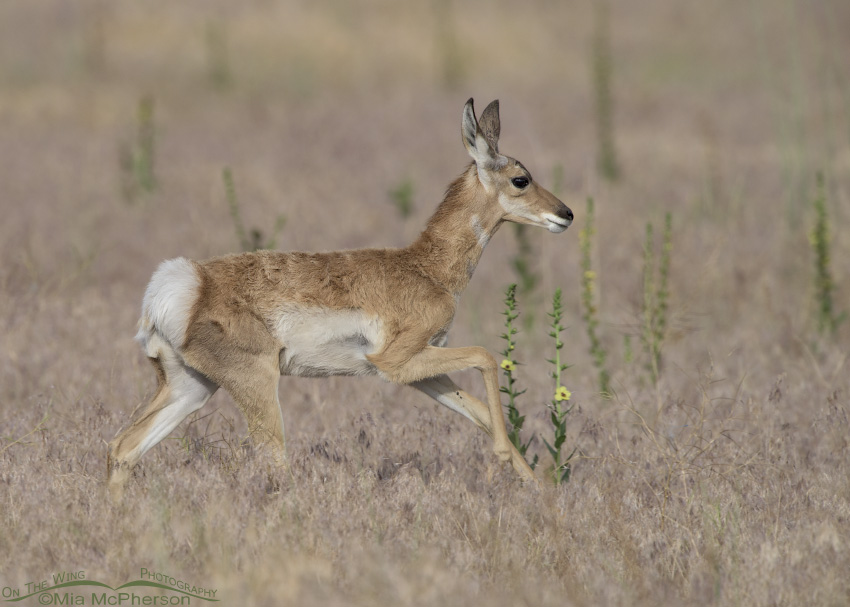
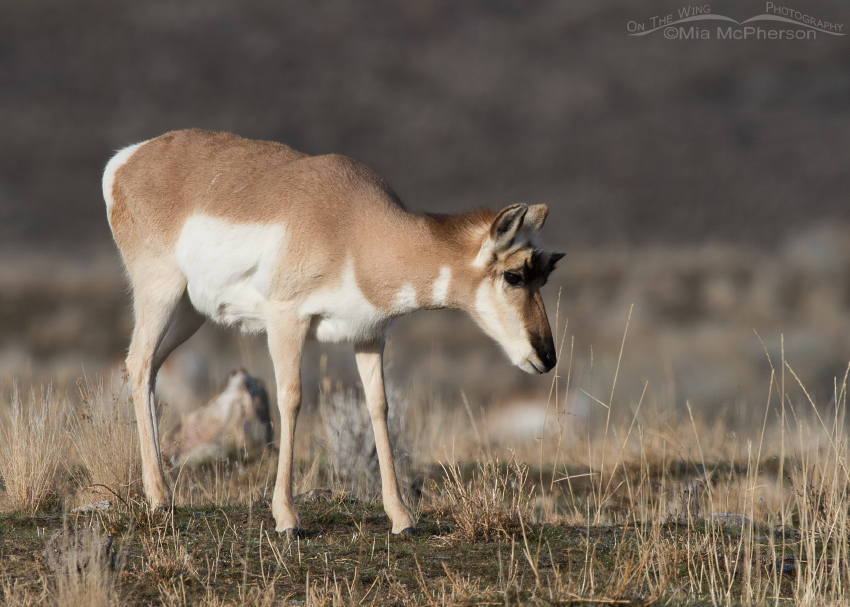
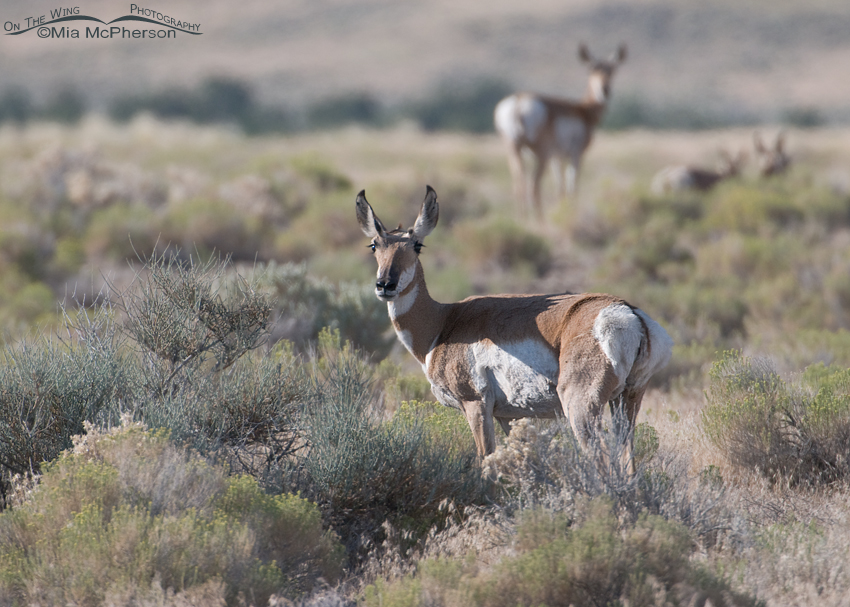
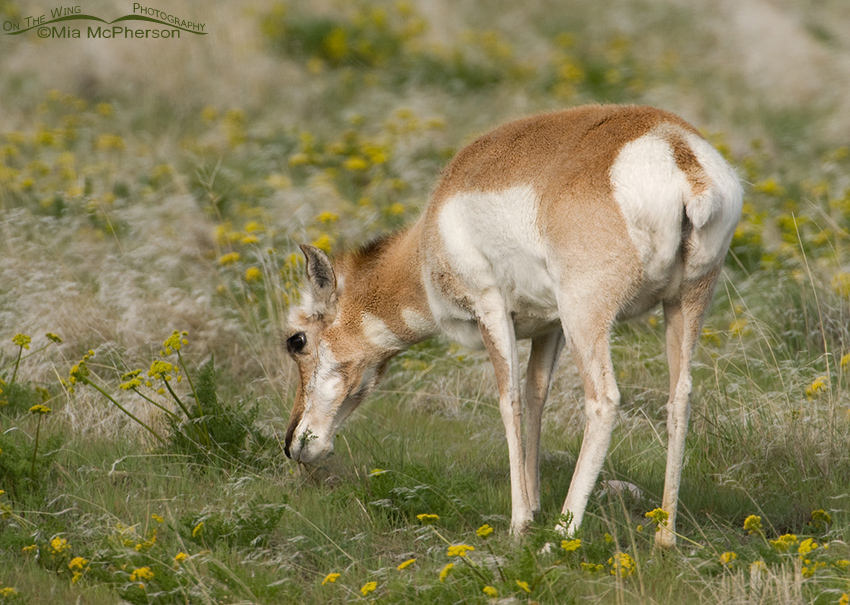
Pronghorn doe in the springPronghorn doe in the spring

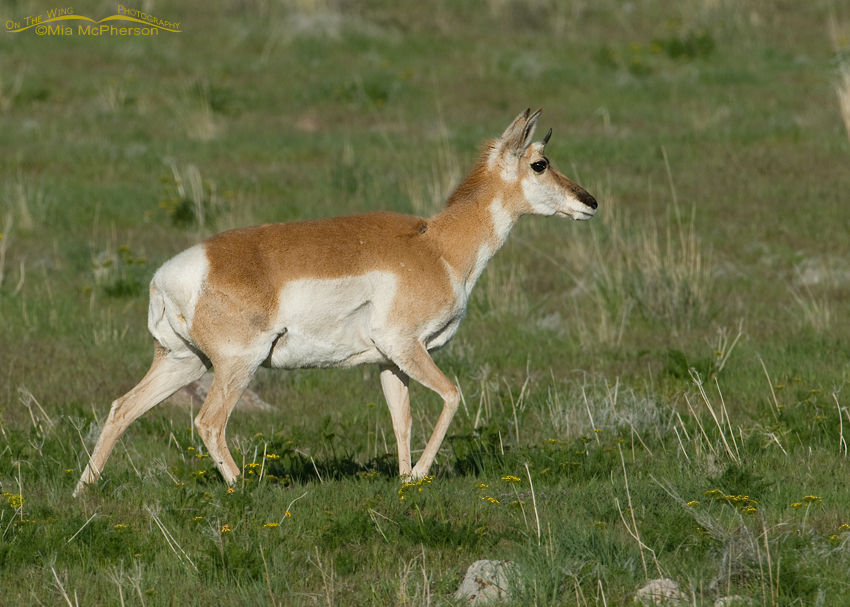
There may still be snow in the high country in Utah but down in the Salt Lake Valley things have begun to green up and I am already seeing the first wildflowers blooming.  These Pronghorn images were taken a few years ago during the spring and I thought I would share them this morning partly because the yellow flowers in these images; Gray’s Biscuitroot (Lomatium grayi), have just started to bloom this year.
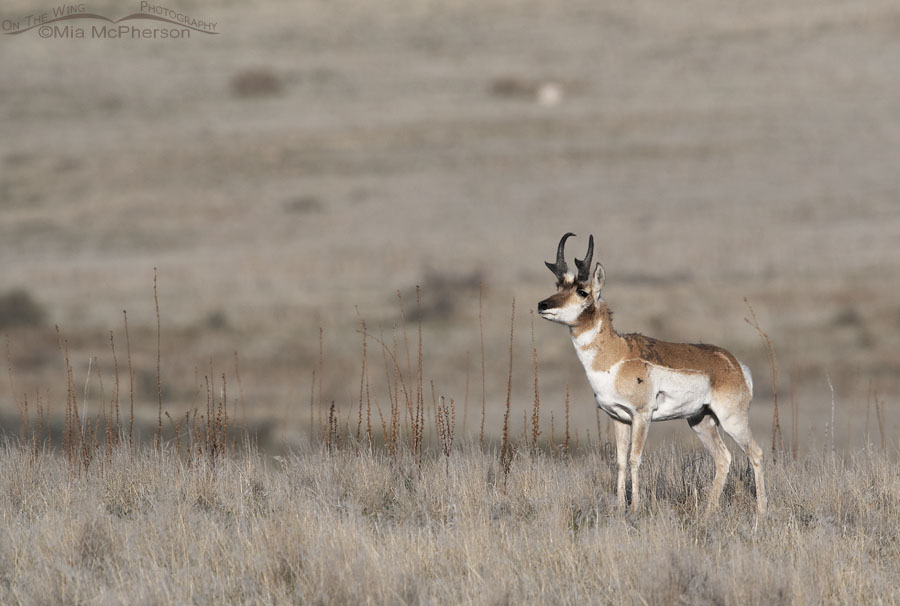
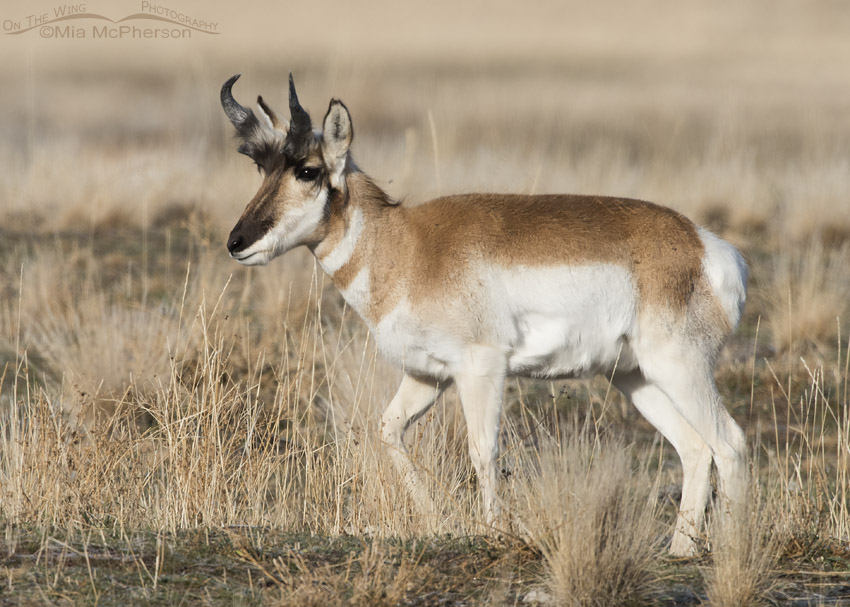
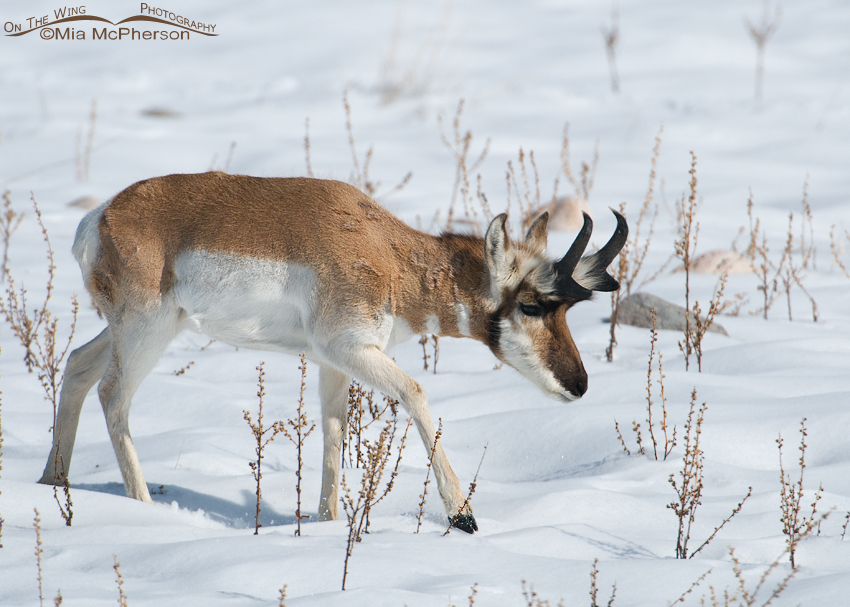
Pronghorn buck resting in green grassesPronghorn buck resting in green grasses

It is wonderful to see the Pronghorn and Bison feeding on fresh, young shoots again after our long, cold and very snowy winter. I saw some Pronghorn yesterday and they; along with the Gray’s Biscuitroot, reminded me of these images.

Pronghorn doe walking through spring grassesPronghorn doe walking through spring grasses

It won’t be long before the Pronghorn does give birth to their young and they are about the cutest little critters in Utah in my opinion.

Mia

More Pronghorn images

Facebook Twitter

Birds and Mammals from the past week

Bison Bull

Bison Bull

It has been a slow week bird-wise but never the less I’ve been out taking images of birds and mammals such as this grazing Bison bull near the Visitor Center on Antelope Island State Park with the Great Salt Lake and Promontory Point in the background.

Great Horned Owl

Great Horned Owl

Then finding a Great Horned Owl in an unusual and unexpected location near a bridge on the cause way to Antelope Island State Park. There are some Rabbitbrush nearby, plenty of boulders and mud flats. I thought it was just a fluke and that the owl would quickly move on but I spotted the owl in that location again two days ago. This is a terrible image and I hope to get the owl in better light if it does stick around.

Coyote baring teeth

Coyote baring teeth

I think this Coyote was just urinating as it stopped in front of the pickup but I am not sure why it was baring its teeth in this frame at all.

Horned Lark

Horned Lark

The sweet calls of Horned Larks have been delighting me out on Antelope Island and in the west desert, this male was shaking its feathers after a very brief preening session.

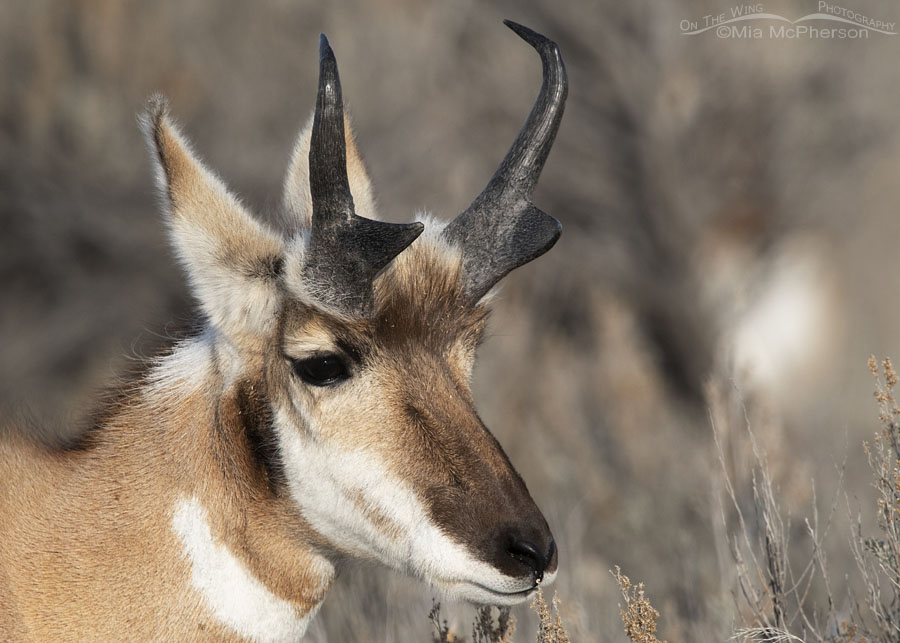
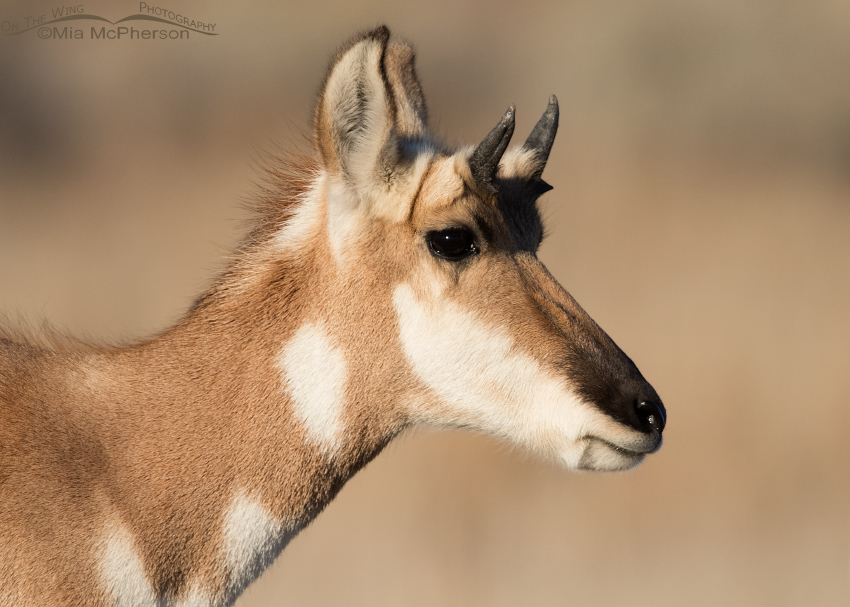
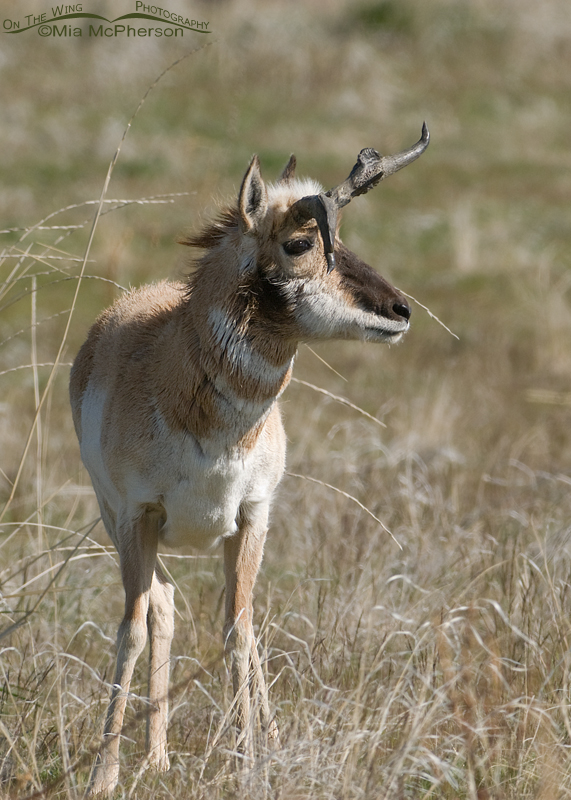
Young Pronghorn Buck

Young Pronghorn Buck

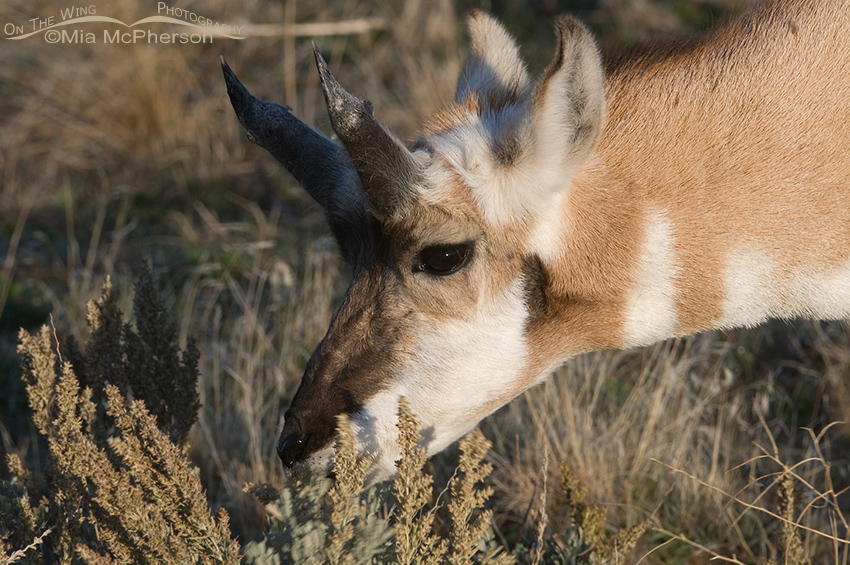
This is a young Pronghorn buck that came so close to the pickup two days ago that I opted to just do portraits of him as he chewed on some vegetation.

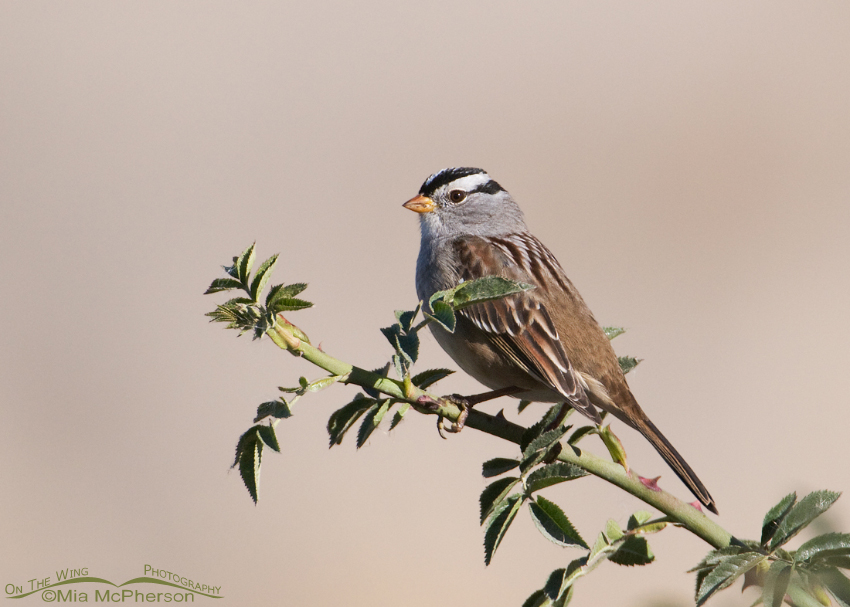
Adult White-crowned Sparrow on a wild Rose

Adult White-crowned Sparrow on a wild Rose

There are several wild Rose bushes along the gravel roads at Farmington Bay Waterfowl Management Area and at this time of the year I always hope to find sparrows perched on them because of the red rosehips, this image didn’t have the rose hips visible but I like the alert pose of the adult White-crowned Sparrow, the laciness of the leaves and the smooth background.

Just a few images from this past week.
Mia

Facebook Twitter

The Horns of Pronghorns

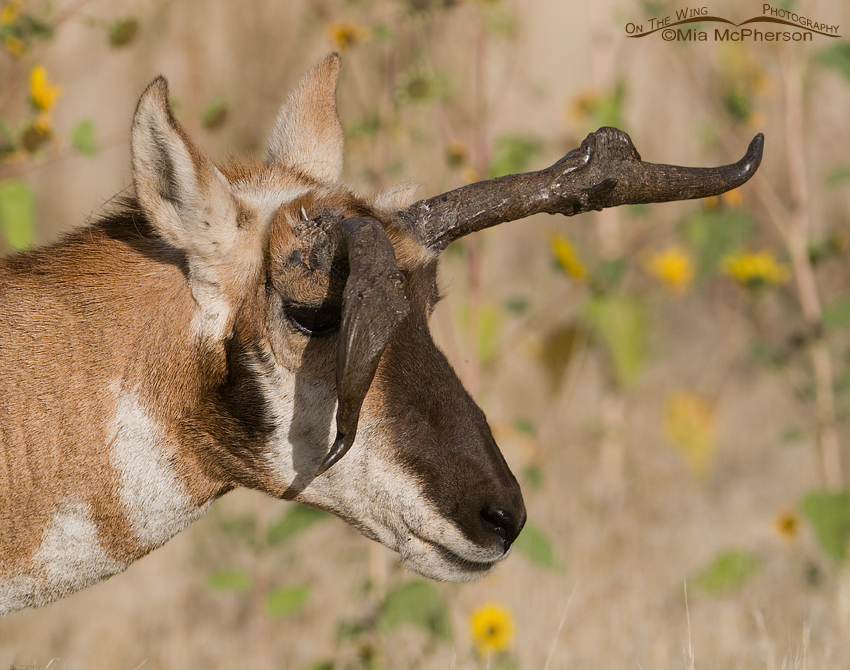
Pronghorn buck in horn regrowth

Pronghorn buck in horn regrowth – Nikon D300, f10, 1/320, ISO 1000, Nikkor 200-400mm VR with 1.4x TC at 200mm, natural light

Yesterday some Pronghorns came so close to the vehicle that I had two choices; 1. grab the back up D200 with the Nikkor 18-200mm VR lens attach and photograph the Pronghorn with it or, 2. Use the D300 with the 200-400mm VR + 1.4x TC attached and do close-ups. Since I have many fully body images I decided to do close-ups and I am glad that I did. The image above is 100% full frame and I was barely able to get the tips of the ears of the buck to fit.

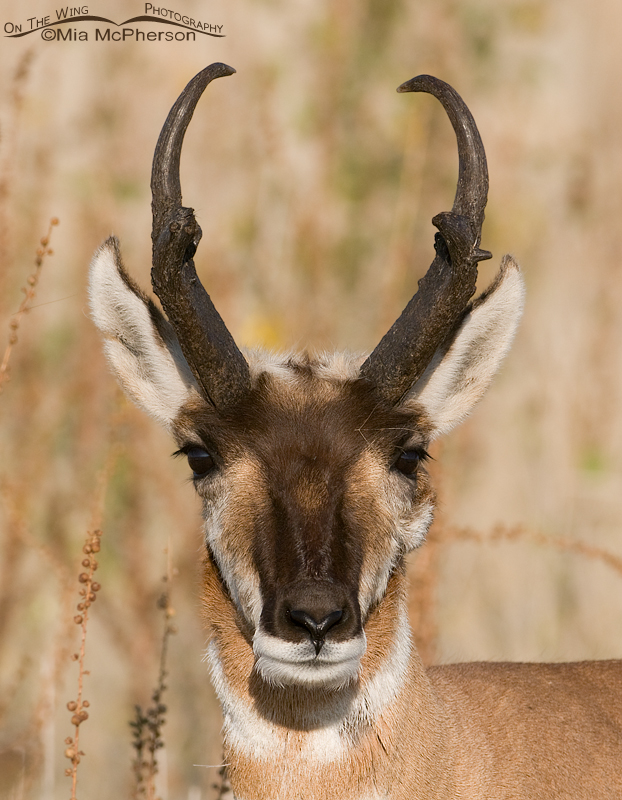
Close up showing the horns of a male Pronghorn

Close up showing the horns of a male Pronghorn - Nikon D300, f10, 1/320, ISO 1000, Nikkor 200-400mm VR with 1.4x TC at 200mm, natural light

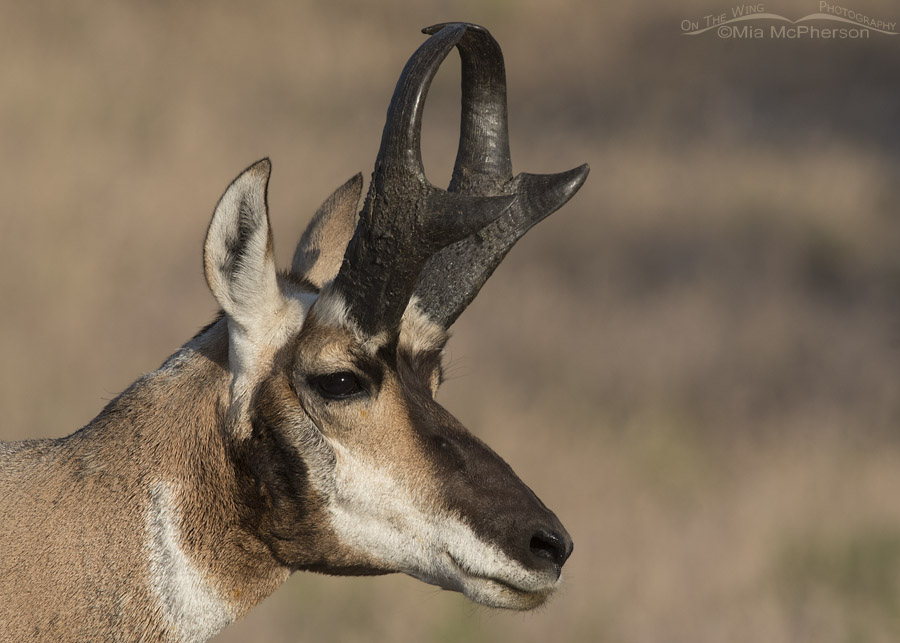
The Pronghorn rut season is over and the pronghorns are in the process of replacing the outer sheathing on their horns. The horns of Pronghorns are composed of  a permanent slender, laterally flattened blade of bone which grows from the front of the skull that is covered by  sheath of hairlike substance (keratin) that grows around the bony core that is shed and regrown annually.

In the image above the flattened blades of bone can be seen at the tips, notices how slender the horns are there. The hair-like keratin regrowth begins at the base of the horn and moves towards the tips. I find it fascinating that in this frame the hair-like keratin is plainly visible where the horns are regrowing and that it also shows the regrowth process is not yet complete.

Keratin is the substance that human hair and fingernails are composed of.

Adult Pronghorn Buck

Adult Pronghorn Buck – Nikon D300, f6.3, 1/1250, ISO 800, Nikkor 200-400mm VR with 1.4x TC at 400mm, natural light

This image shows a buck before the outer sheath has been shed, notice that his horns are relatively smooth, slightly shiny at the tips and show no signs of being “hairy”.

Pronghorns are the only North American mammal that retain their horns yet shed and replace the outer sheath annually.

Mia

More Pronghorn images

Facebook Twitter

Birds, Beasts and Bits About Me – My 500th Blog Post

Wow, this is my 500th blog post and it has been great fun to share my images and the stories behind them. I thought I’d share a few images and bits about my thoughts on photography.
Adult Dunlin feeding

Adult Dunlin feeding – Nikon D200, handheld, f7.1, ISO 200, 1/250, Nikkor 80-400mm VR at 400mm, natural light

What got me hooked on bird photography?

I would say shorebirds are why I am addicted to bird photography because they fascinated me and photographing them allowed me to crawl through mud, sand and water.

When I first started photographing shorebirds I could walk around covered in mud with my camera in my hand people just ignored me or would say “Wow, that camera must take good pictures”. Maybe they were too polite to mention that I had sand all over my face, muddy legs or a combination thereof.

Sanderling in nonbreeding plumage

Sanderling in nonbreeding plumage – Nikon D200, handheld, f6.3, 1/1000, ISO 200, Nikkor 80-400mm VR at 400mm, natural light

I simply loved being out in nature, the feel of the sea breeze on my skin, having warm water lapping against my legs and the birds that I saw everywhere around me. I learned that if I sat or laid very still the birds would approach me and allow close ups like the Sanderling image above. Even when there were no birds around I could wade into the water fully clothed and just make it “look” like I was searching for birds while cooling off and giggling because I was in the water with all my clothes on and I didn’t care one bit.

While slithering around in mud and sand crawling through sugar sand I had many wonderful opportunities to meet and makes friends with a lot of like-minded people who love nature. I figured if they crawled around in the mud with me and didn’t mind that I smelled like a combination of fish and crab poop they had to be great people.

I learned a lot about shorebird ID, which were peeps, plovers and sandpipers and then figured out the rest. Breeding and nonbreeding plumage puzzled me for a bit but with experience, people who let me pick their brains and field guides I’ve become proficient at figuring out shorebird ID.

Roseate Spoonbill in morning light

Roseate Spoonbill in morning light – Nikon D200, handheld, f6.3, 1/750, ISO 250, Nikkor 80-400mm VR at 400mm, natural light

Then there were the larger wading birds, some with razor-sharp bills, some that curved downwards, looked like wood and spoons! I got addicted to photographing them too.

I learned not to over saturate the colors of my subjects in post processing so that they looked like what I saw through my viewfinder.  The Roseate Spoonbill above is colorful enough without pushing that saturation slider up.

Why do I always mention “natural light” in my techs under the images I post?

My answer to that is that nature provides terrific light and I don’t like using flash on birds or other wildlife. I just prefer natural light over artificial.

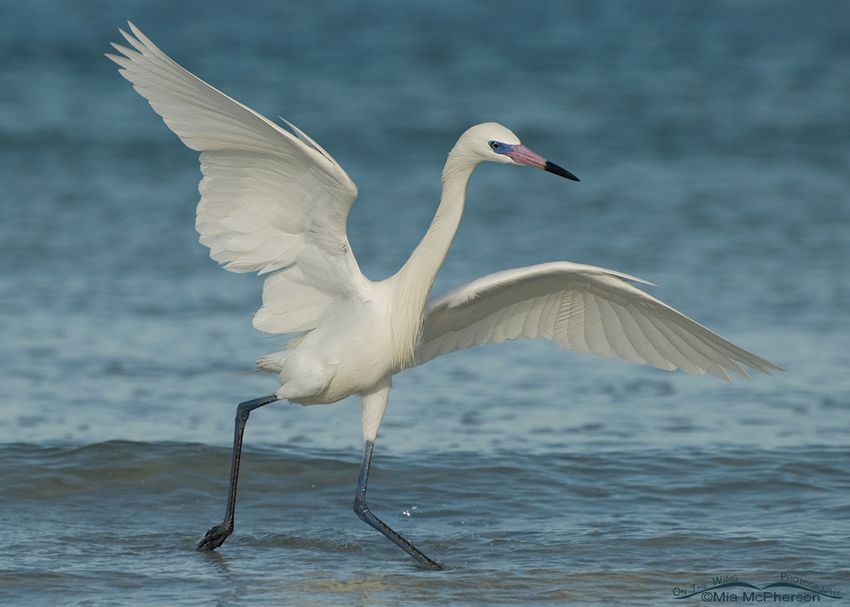
Dancing white morph Reddish Egret

Dancing white morph Reddish Egret – Nikon D200, handheld, f6.3, 1/1250, ISO 250, Nikkor 70-300mm VR at 250mm, natural light

I studied the behavior of my subjects so I could tell when they were about to take flight, bathe, catch prey or dance like the white morph Reddish Egret above. The egret isn’t truly dancing, it is actively chasing after prey.

By observing my subjects I have gotten great action images that I might have missed if I hadn’t been able to anticipate their next move.

Little Blue Heron with a Pipefish

Little Blue Heron with a Bay Pipefish – Nikon D200, handheld, f6.3, 1/800, ISO 160, Nikkor 80-400mm VR at 400mm, natural light

I found out that going out to photograph with other people was very enjoyable and that knowledge about techniques could flow easily back and forth. I photographed the Little Blue Heron with a Bay Pipefish above with two photographer friends and we all walked away with images that we were very happy with.

Singing male Red-winged Blackbird

Singing male Red-winged Blackbird – Nikon D200, handheld, f7.1, 1/200, ISO 250, Nikkor 80-400mm VR at 400mm, natural light

I worked on my stalking skills and patience so I could get closer to my subjects without stressing them or making them flush. Of course; some still flush & fly.

Laughing Gull in breeding plumage at a water fountain

Laughing Gull in breeding plumage at a water fountain – Nikon D200, handheld, f6.3, 1/1000, ISO 250, Nikkor 80-400mm VR at 400mm, natural light

I feel that all birds are worthy subjects and that even the most common birds can be uncommonly beautiful in the right light, pose or setting. Normally I prefer natural settings and perches but I also enjoy images that have manmade items in them. I think the water fountain as a perch for this Laughing Gull adds a touch of whimsy.

Male Northern Harrier in flight

Male Northern Harrier in flight – Nikon D200, f7.1, 1/2000, ISO 320, +0.3 EV, Nikkor 200-400mm VR with 1.4x TC at 400mm, natural light, not baited

Paying attention to how close the background material is to the subject is important. If the dried Phragmites behind this male Northern Harrier had been any closer to the bird the background may have looked very messy but because of the distance from the harrier to the vegetation plus my choice of aperture and the bokeh of the lens created a background that doesn’t draw attention away from the subject.

Loggerhead Shrike perched on Sagebrush

Loggerhead Shrike perched on Sagebrush – Nikon D300, f6.3, 1/640, +0.7 EV, Nikkor 200-400mm VR with 1.4x TC at 400mm, natural light

I selected the colors for this blog and my web site using the hues of greens from Sagebrush, a shrub that is found in many areas of my adopted state of Utah. I find the gray greens soothing and I have to admit I find the aroma of Sagebrush very appealing. Besides, Sagebrush makes a great perch for many of my subjects.

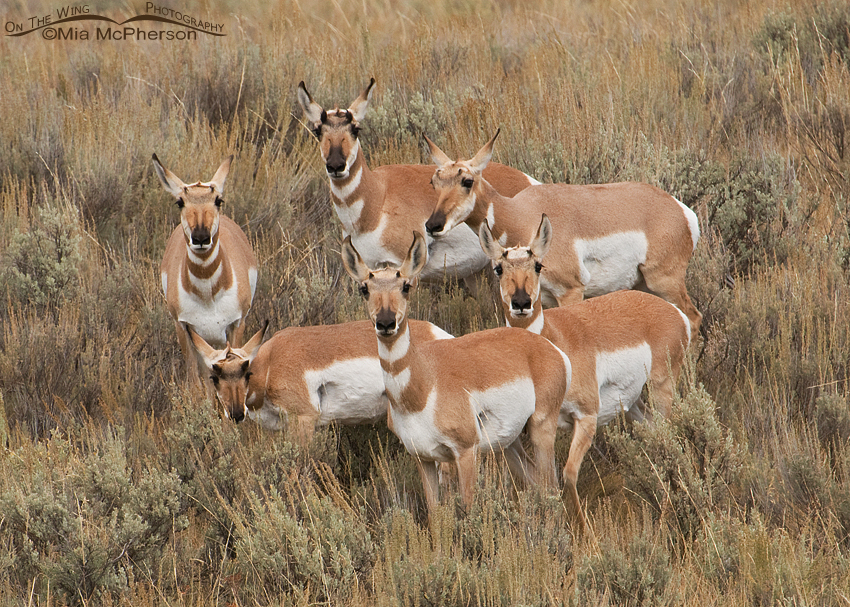
Pronghorn does on a hilltop at sunset

Pronghorn does on a hilltop at sunset – Nikon D300, f6.3, 1/3200, ISO 1000, Nikkor 200-400mm VR with 1.4x TC at 400mm, natural light

Even though birds are my primary passion for photographic subjects I can’t resist taking images of other subjects like the Pronghorn does above. If there aren’t birds around I will take images of flowers, scenery, mammals, insects and more.

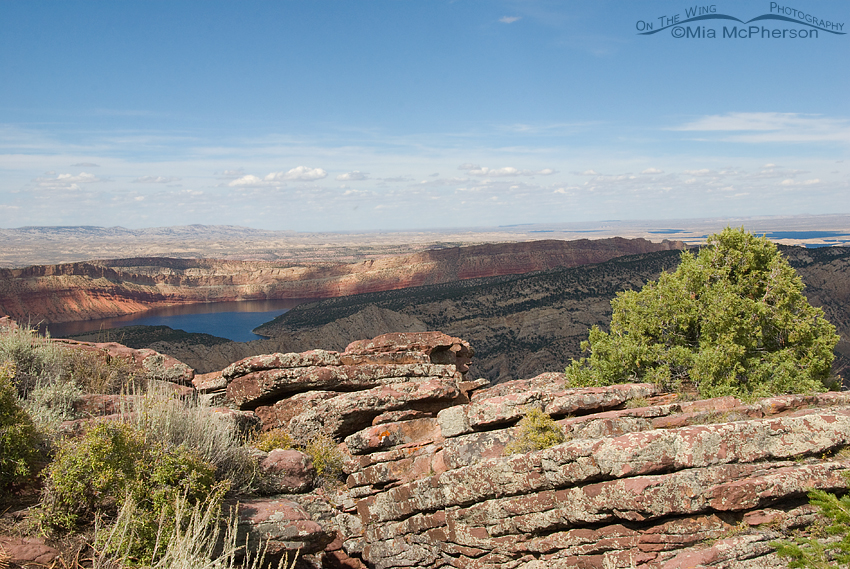
The Wedge in the San Rafael Swell, Utah

The Wedge in the San Rafael Swell, Utah – Nikon D200, handheld, f9, 1/2000, ISO 400, -0.3 EV, Nikkor 18-200mm VR at 18mm, natural light

I see spectacular views, sun rises and sunsets because of my photographic journeys, some time the views take my breath away. Looking down into the Little Grand Canyon from The Wedge certainly did.

Coyote eating Falcon leftovers

Coyote eating Falcon leftovers – Nikon D300, f6.3, 1/640, ISO 800, Nikkor 200-400mm VR with 1.4x TC at 314mm, natural light, not baited or called in

There are times when paying attention to one species gives clues about another. I’d seen Peregrine Falcons feeding on ducks on the shoreline of the Great Salt Lake and later saw a Coyote feeding on the falcon’s leftovers, now I know why the Coyotes were along the causeway the year before which had puzzled me. I love the piled up sheets of ice in the background of this image.

Adult Bald Eagle in flight

Adult Bald Eagle in flight – Nikon D200, f6.3, 1/2500, ISO 400, +0.7 EV, Nikkor 200-400mm VR with 1.4x TC at 400mm, natural light, not baited

Patience is needed for bird photography, waiting for a bird to fly, waiting for the right banking turn to light the whole bird up and sometimes just waiting for birds to show up.

Perched adult western Burrowing Owl

Perched adult western Burrowing Owl – Nikon D200, f6.3, 1/400, ISO 200, Nikkor 200-400mm VR with 1.4x TC at 400mm, natural light, not baited

Because of my bird and nature photography I have met the most interesting people in person and have become friends with many of you through this blog or yours and I appreciate you all. Life is good.

500 posts. Wow.

Mia

Facebook Twitter

The Pronghorn are in rut on Antelope Island SP

Early last week I thought that the Pronghorn (Antilocapra americana) bucks on Antelope Island State Park might be in rut, later in the week a buck’s behavior confirmed that they are. For the next few weeks it ought to be more fun than usual photographing them.

Pronghorn does

Pronghorn does – Nikon D300, f6.3, 1/2500, ISO 640, +0.3 EV, Nikkor 200-400mm VR with 1.4x TC at 285mm, natural light

There were several does in the harem…

Pronghorn yearling nibbling on Mullein

Pronghorn yearling nibbling on Mullein- Nikon D300, f6.3, 1/2000, ISO 640, +0.3 EV, Nikkor 200-400mm VR with 1.4x TC at 400mm, natural light

Plus a few young Pronghorn that were born earlier this spring…

Keeping an eye on his harem

Keeping an eye on his harem – Nikon D300, f6.3, 1/2500, ISO 640, +0.3 EV, Nikkor 200-400mm VR with 1.4x TC at 400mm, natural light

And this buck who kept a close eye on his harem.

Pronghorn yearling

Pronghorn yearling – Nikon D300, f6.3, 1/2000, ISO 640, +0.3 EV, Nikkor 200-400mm VR with 1.4x TC at 328mm, natural light

The fawns born this spring have sure grown a lot yet they are still pretty darn cute.

Alert Pronghorn buck

Alert Pronghorn buck – Nikon D300, f6.3, 1/2000, ISO 640, +0.3 EV, Nikkor 200-400mm VR with 1.4x TC at 350mm, natural light

Pronghorn bucks expend a lot of energy during the rut keeping the does in his harem close to him and by fending off the other males.

Pronghorn buck chasing his does

Pronghorn buck chasing his does – Nikon D300, f6.3, 1/2000, ISO 640, +0.3 EV, Nikkor 200-400mm VR with 1.4x TC at 350mm, natural light

When one of the does or fawns breaks loose from the harem the buck will chase after them to get them back into the herd.

Pronghorn buck passing by

Pronghorn buck passing by – Nikon D300, f6.3, 1/2000, ISO 640, +0.3 EV, Nikkor 200-400mm VR with 1.4x TC at 350mm, natural light

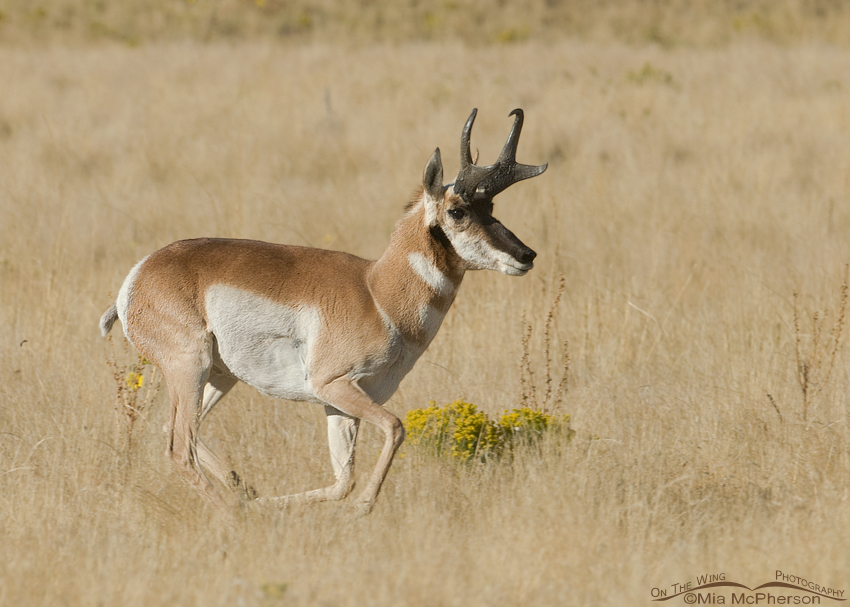
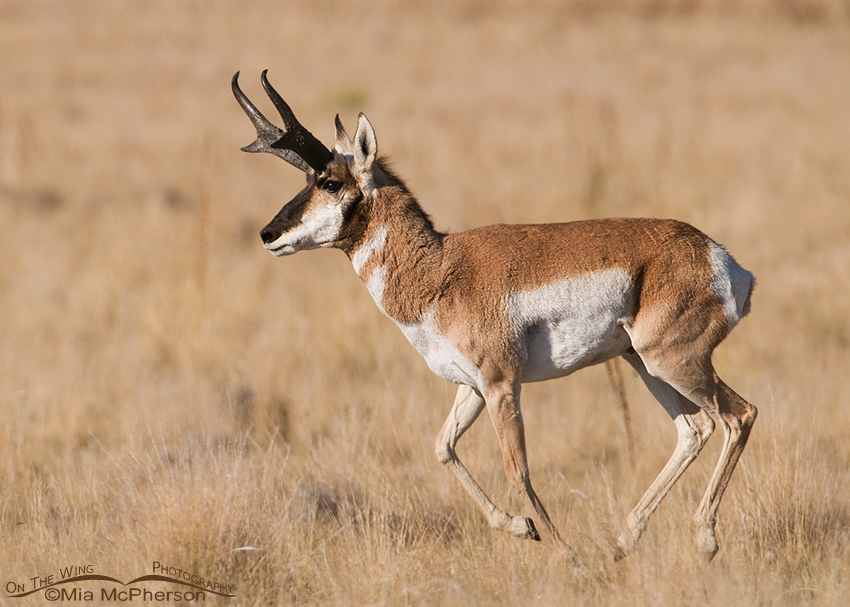
I think it is awesome to watch the powerful muscles of Pronghorn as they run, they are the fastest land mammal in North America.

Buck running after his harem

Buck running after his harem – Nikon D300, f6.3, 1/1600, ISO 640, +0.3 EV, Nikkor 200-400mm VR with 1.4x TC at 350mm, natural light

When this buck’s harem ran across the road he followed them close on their heels.

My mother’s visit went great, she saw many lifer birds and wild animals, she loved seeing Utah and spending time with me. I hated to see her leave.

I’ll be slowly catching up on viewing your blogs and images and replying to the wonderful comments you have left here while I was enjoying her company.

Mia

More Pronghorn images

Facebook Twitter