Shades of Blue – Wildflowers, Birds, Sky and Sea

Blue-eyed GrassBlue-eyed Grass – Nikon D200, handheld, f6.3, 1/400, ISO 200, Nikkor 80-400mm VR at 400mm, natural light

Last week I was Thinking Pink so this week I thought I would focus on the shades of blues found in wildflowers, birds, the sky and seas. Blue-eyed Grass (Sisyrinchium angustifolium) is one of my favorite blue wildflowers from the eastern United States. Blue-eyed Grass isn’t actually a grass at all, it is from the Iris family and may have gotten the “Grass” part of its name because the leaves are very thin and grass-like. I found and photographed this beauty under the pines of the Osprey Trail at Honeymoon Island State Park in Florida.

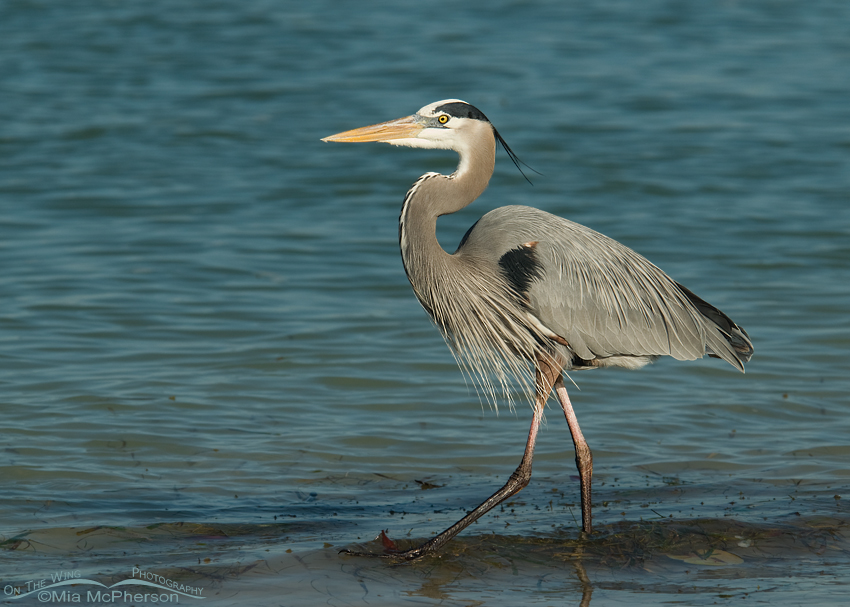
Great Blue Heron in the Gulf of MexicoGreat Blue Heron in the Gulf of Mexico – Nikon D200, handheld, f6.3, 1/1000, ISO 200, Nikkor 80-400mm VR at 230mm, natural light

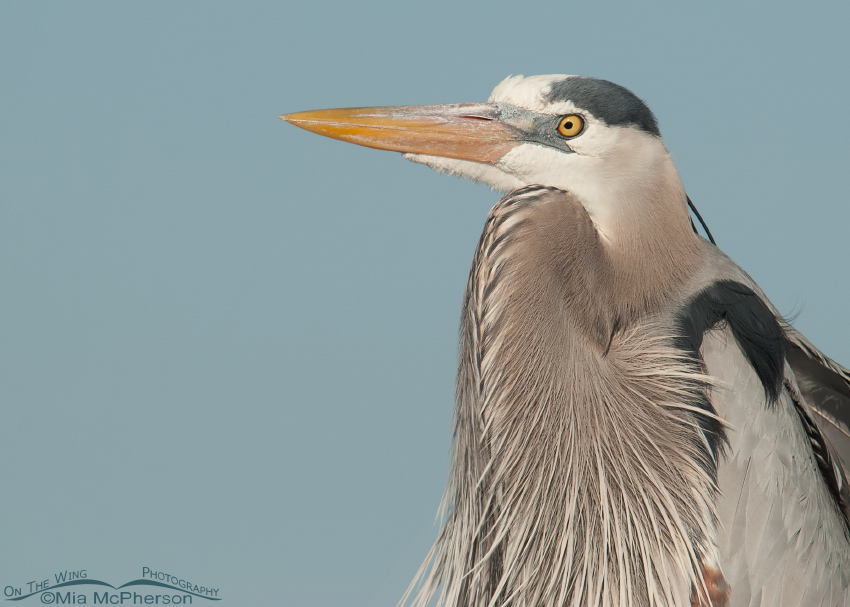
It seems to me that Great Blue Herons (Ardea herodias) are misnamed because they are more gray than they are blue, in fact when I see a Great Blue Heron posted on line that is very blue I scratch my head because they really aren’t that blue. I photographed this Great Blue Heron as it walked along the shoreline of the Gulf of Mexico at Fort De Soto’s north beach in Florida.

Little Blue Heron stalking prey in a tidal lagoonLittle Blue Heron stalking prey in a tidal lagoon – Nikon D200, handheld, f7.1, 1/640, ISO 200, Nikkor 80-400mm VR at 360mm, natural light

Little Blue Heron (Egretta caerulea) adults are more blue than Great Blue Herons, at least from the base of the neck to their tails, their necks have a reddish cast to them. I was sitting in the lagoon with the Little Blue Heron approached me while it was stalking and hunting prey at Fort De Soto County Park in Florida.

Male Lazuli BuntingMale Lazuli Bunting – Nikon D200, f8, 1/500, ISO 250, Nikkor 200-400mm VR with 1.4x TC at 400mm, natural light

Male Lazuli Buntings (Passerina amoena) have a gorgeous azure blue head as well as some blue on other parts of their bodies. The word “lazuli” come from the semi-precious gemstone Lapis Lazuli which comes in various shades of blue with gold colored specks. I photographed this Lazuli Bunting in the San Rafael area of Utah and the background is the color of sandstone found in that area.

Mountain BluebirdMountain Bluebird - Nikon D200, f6.3, 1/2500, ISO 500, -0.3 EV, Nikkor 200-400mm VR with 1.4 TC at 400mm, natural light

Mountain Bluebirds (Sialia currucoides) are one of the bluest bird species I have photographed, especially the males. I didn’t add any color saturation to this image at all, this is how blue the bird looked in the light conditions I had at the time I took this image at Red Rock lakes National Wildlife Refuge in Montana. The males during the breeding season are a rich, vibrant blue.

Blue skies at Red Rock Lakes National Wildlife Refuge, MontanaBlue skies at Red Rock Lakes National Wildlife Refuge, Montana – Nikon D200, handheld, f20, 1/160, ISO 400, +0.3 EV, Nikkor 18-200mm VR at 18mm, natural light

Some of the bluest skies I have ever seen have been at Red Rock Lakes National Wildlife Refuge in southwestern Montana where on a clear (or not so clear) day you can see for miles & miles. I loved how this wave of clouds fanned out in this frame and added a nice contrast to the blue tones in the sky.

Amazing blues of Magens Bay, Saint Thomas, USVIAmazing blues of Magens Bay, Saint Thomas, USVI – No techs, this is a panorama made from several images that were joined together

The colors of the seas and oceans have always drawn me to water because they can vary from the palest aquamarine to deep royal blues and everything in between. Magens Bay in Saint Thomas and the Atlantic Ocean beyond it give this image wonderful shades of blue that I find very soothing and it brings back nice memories of my stay on the island.

Shades of blue…

Mia

Facebook Twitter

Roseate Spoonbills in a sea fog

Roseate Spoonbills in a sea fog
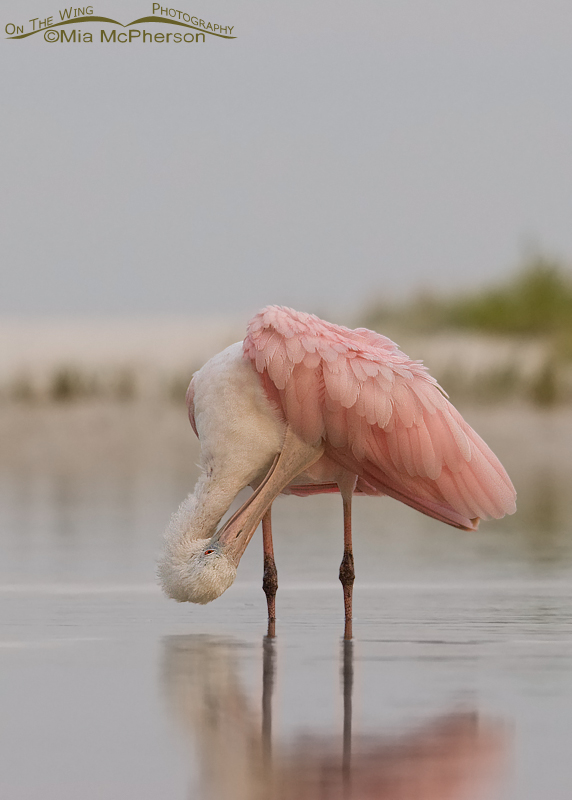
Roseate Spoonbills in a sea fog – Nikon D200, handheld, f7.1, 1/180, ISO 400, Nikkor 80-400mm VR at 250mm, natural light

One very foggy May morning I came across a small flock of Roseate Spoonbills in a tidal lagoon at Fort De Soto’s north beach and photograph them for about 15 minutes before they flew off to find food. The fog muffled the sounds of the waves of the Gulf of Mexico rushing onto the shore just beyond the sand dunes you can see behind these two birds and the fog felt great on my skin that very warm morning. The adult Roseates were mostly resting but the juvenile pictured above began to preen while I laid in the tidal mud observing and photographing these large, pink wading birds.
Photographing in fog presents challenges in determining exposure, aperture, shutter speed and ISO, for this image I used a lower ISO because I wanted as much detail as I could achieve and while that gave me a  low shutter speed the juvenile Roseate wasn’t moving quickly and that helped to get sharp images. This image did have a small amount of Noise Reduction applied to everything except the preening juvenile Roseate Spoonbill to smooth out some of the noise I could detect prior to post processing.

Mia

More Roseate Spoonbill images

Facebook Twitter

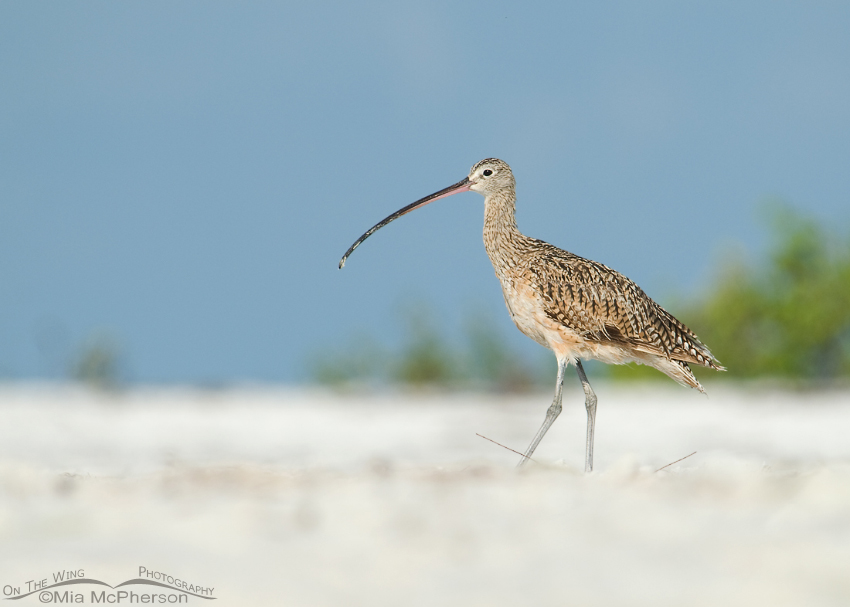
Low angle Long-billed Curlew

Long-billed Curlew on the beach at Fort De Soto

Long-billed Curlew on the beach at Fort De Soto – Nikon D200, f6.3, 1/750, Nikkor 80-400mm VR at 400mm, natural light

Since winter has thus far decided to stay in more northern latitudes and higher elevations I decided to post an image of a Long-billed Curlew taken in southern, sub-tropical climes a few years ago. Maybe it will tick Winter off enough to show up in its frosty cloak and icy breath. We’ve only had snow twice and it is December??
A few weeks before I left Florida to move to Utah a Long-billed Curlew showed up at Fort De Soto County Park’s north beach and stayed there for the entire nesting season which ended weeks after I had moved west. I had fun photographing the graceful shorebird before I moved.

When I photographed this female curlew I was flat on my stomach and a little lower than the bird, there were little mounds of out of focus sand between the bird and my lens and my selection of a shallow depth of field created the soft blur near the birds feet.  Because of my low angle and the birds elevation on the sand dune there is only sky in the background, the water of the Gulf of Mexico was below the sand dune.

Mia

More Long-billed Curlew images

Facebook Twitter

Nesting American Oystercatchers

American Oystercatchers Nesting

American Oystercatcher Nesting #1
Fort De Soto County Park, Pinellas County, Florida
The images on this page were taken with a Nikon D200, apertures of f6.3 & f7.1, ISO 200,
shutter speeds that varied between 1/500 and 1/800, Nikon 80-400mm  VR at 400mm.

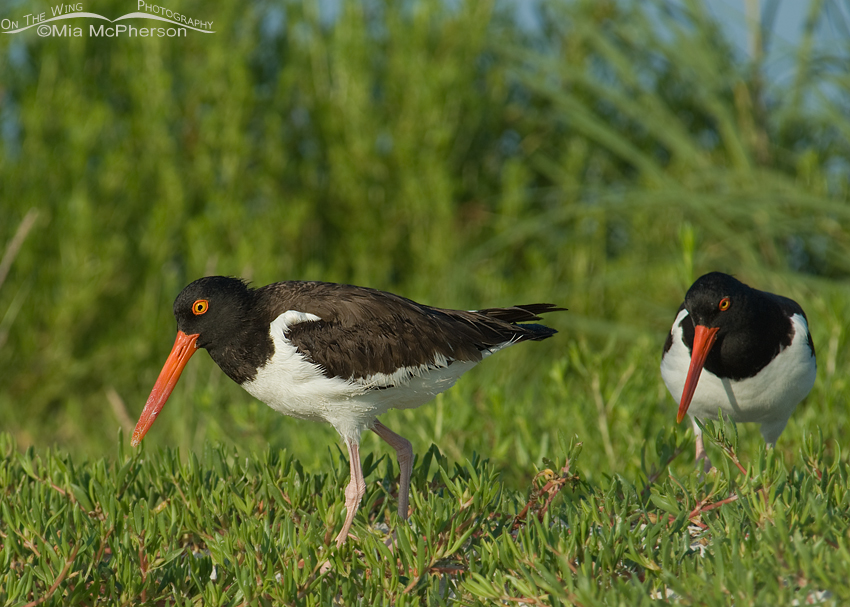
I watched this pair of American Oystercatchers (Haematopus palliatus)  for about half an hour and was able to observe and photograph them taking turns sitting on the nest in the Sea Purslane. American Oystercatchers are colorful, with an orange eye  ring, bright yellow eyes, thick pinkish legs and a long orange bill that they use to pry open bivalve mollusks. They have white underparts and are dark brown over the wings and tail while  the head is mostly black.

American Oystercatchers Nesting

American Oystercatcher Nesting #2

The nests of Oystercatchers are simple scrapes on coastal beaches, dunes and salt Marshes. They usually lay between 2-3 eggs around April to May. There are times when the first brood fails and they do re-nest. American Oystercatchers are exclusive to saltwater coastal habitats. This pair created their nest on a small purslane  and sea oat covered dune.

American Oystercatchers Nesting

American Oystercatcher Nesting #3

While one adult sits on the eggs the other goes off to feed. I noticed that the time interval between switching was between half an hour to forty-five minutes.

American Oystercatchers Nesting

American Oystercatcher Nesting #4

This pair of Oystercatchers first nest failed because a raccoon invaded  it and ate the eggs.  I have also witnessed Great Blue Herons attempting to steal the eggs.

American Oystercatchers Nesting

American Oystercatcher Nesting #5

Photographing American Oystercatchers can be challenging with the high contrast of whites, darks and oranges. Photographing them in early morning or late afternoon light helps or photographing on a day when the clouds diffuse the light.

Mia

Ethics on photographing nesting birds:

  • Do not approach too closely
  • If the birds show any sign of distress, back away
  • Don’t trim leaves, twigs or branches to get a clearer shot, you may inadvertently attract predators or cause the eggs/chicks to over heat
  • Follow local, state and federal guidelines concerning nesting birds
  • Don’t harrass the birds to get an action shot

More of my American Oystercatcher images

Facebook Twitter