Great Horned Owl fledgling in a Montana granary window

Great Horned Owl fledgling in Glacier County, MontanaGreat Horned Owl fledgling in Glacier County, Montana – Nikon D200, tripod mounted, f6.3, 1/320, ISO 400, +0.3 EV, Nikkor 200-400mm VR with 1.4x TC at 272mm, natural light, not baited or called in

Currently throughout the breeding range of Great Horned Owls the owls have either begun to nest or have nested already. Great Horned Owls have a large range and are found in the U.S., Canada and Central America. Great Horned Owls can begin breeding as early as November in Florida and as late as May in the most northern part of their range.

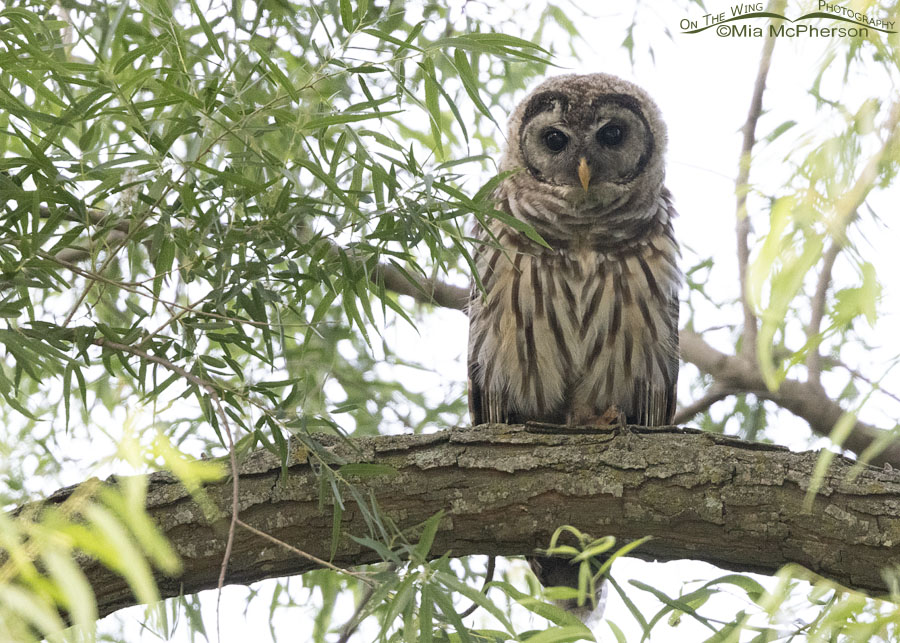
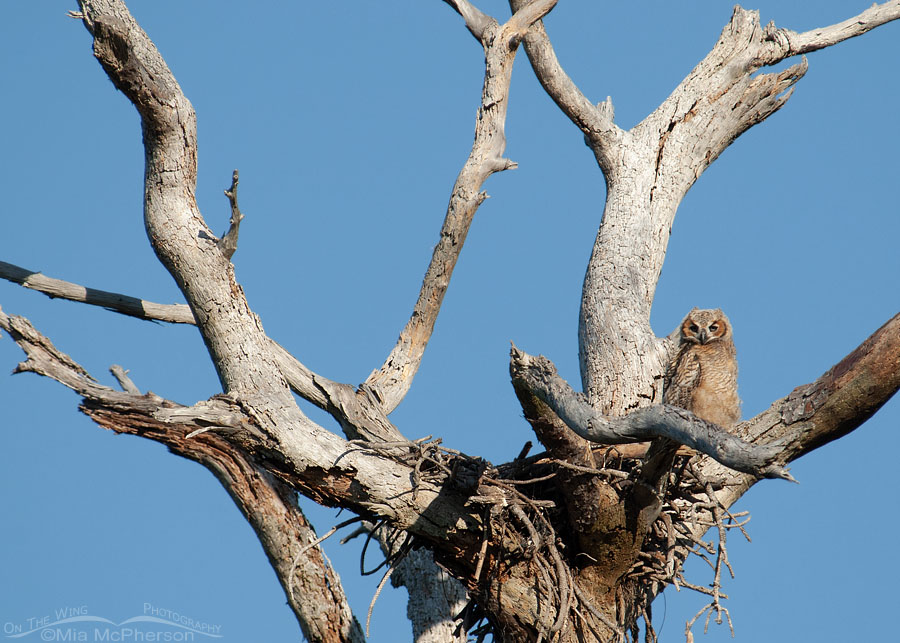
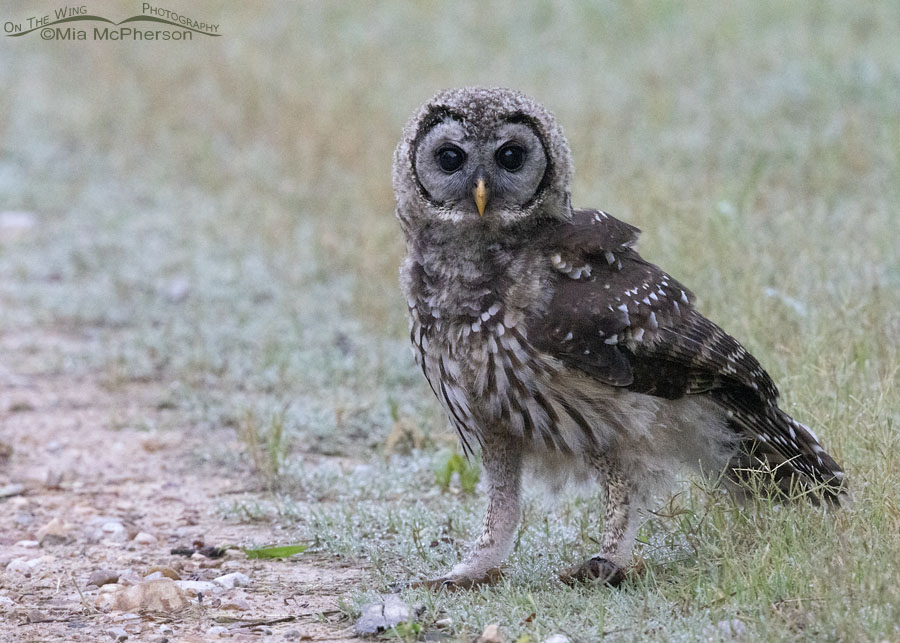
This fledgling Great Horned Owl was photographed in the month of June in Glacier County, Montana in the window of an old granary, the strong winds in northern Montana have pushed the granary to a slant. Even at this young age the horns of the owlet were visible. Looking at this young Great Horned Owl I can visualize what it will look like as an adult and earns the nickname “Tiger of the Sky”.

Mia

More Great Horned Owl images

*Because of Google’s changes it Image Search and how they have begun to hotlink to my larger images I will no longer post large versions of my files on my blog.

Facebook Twitter

Juvenile Black-crowned Night Heron – A Winter Treat

Young Black-crowned Night Heron on ice
Young Black-crowned Night Heron on ice – Nikon D300, f7.1, 1/640, ISO 400, Nikkor 200-400mm VR with 1.4x TC at 400mm, natural light

I’ve mentioned before that Great Blue Herons stay in the Salt Lake Valley over winter even though the temperatures get very cold and so do some of the Black-crowned Night Herons. I had just mentioned that I hadn’t been seeing the Black-crowned Night Herons when I saw this juvenile flying over the Phragmites near a pond at Farmington Bay Waterfowl Management Area and then it landed on the ice close to some open water.

Alert juvenile Black-crowned Night Heron
Alert juvenile Black-crowned Night Heron – Nikon D300, f6.3, 1/1250, ISO 400, Nikkor 200-400mm VR with 1.4x TC at 357mm, natural light

Juvenile Black-crowned Night Herons look quite different from the adults in plumage but they have the same general shape. Aren’t those orange eyes brilliant in morning light? And like the American Coot images I posted yesterday from the same session, they both have big feet.

Immature Black-crowned Night Heron
Immature Black-crowned Night Heron – Nikon D300, f7.1, 1/640, ISO 400, Nikkor 200-400mm VR with 1.4x TC at 400mm, natural light

I don’t see the Black-crowned Night Herons as often in the winter as I do other times of the year so this young bird was a lovely treat.

Mia

More Black-crowned Night Heron images

Facebook Twitter

Birds and Mammals from the past week

Bison Bull

Bison Bull

It has been a slow week bird-wise but never the less I’ve been out taking images of birds and mammals such as this grazing Bison bull near the Visitor Center on Antelope Island State Park with the Great Salt Lake and Promontory Point in the background.

Great Horned Owl

Great Horned Owl

Then finding a Great Horned Owl in an unusual and unexpected location near a bridge on the cause way to Antelope Island State Park. There are some Rabbitbrush nearby, plenty of boulders and mud flats. I thought it was just a fluke and that the owl would quickly move on but I spotted the owl in that location again two days ago. This is a terrible image and I hope to get the owl in better light if it does stick around.

Coyote baring teeth

Coyote baring teeth

I think this Coyote was just urinating as it stopped in front of the pickup but I am not sure why it was baring its teeth in this frame at all.

Horned Lark

Horned Lark

The sweet calls of Horned Larks have been delighting me out on Antelope Island and in the west desert, this male was shaking its feathers after a very brief preening session.

Young Pronghorn Buck

Young Pronghorn Buck

This is a young Pronghorn buck that came so close to the pickup two days ago that I opted to just do portraits of him as he chewed on some vegetation.

Adult White-crowned Sparrow on a wild Rose

Adult White-crowned Sparrow on a wild Rose

There are several wild Rose bushes along the gravel roads at Farmington Bay Waterfowl Management Area and at this time of the year I always hope to find sparrows perched on them because of the red rosehips, this image didn’t have the rose hips visible but I like the alert pose of the adult White-crowned Sparrow, the laciness of the leaves and the smooth background.

Just a few images from this past week.

Mia

Facebook Twitter

Immature Franklin’s Gulls

I like gulls, I know that gulls are not always a popular subject for many bird photographers and that they will often pass them by but to me they are as delightful, beautiful and fascinating as any other bird. I’m an unbiased bird photographer, if it has feathers and flies… I will photograph it. Sure certain species of gulls can be very common in some areas but they aren’t in other parts of the world. Why pass them up?

Juvenile Franklin's Gulls

Juvenile Franklin’s Gulls – Nikon D300, f6.3, 1/1000, ISO 400, Nikkor 200-400mm VR with 1.4x TC at 400mm, natural light, not baited

I photographed these two juvenile Franklin’s Gulls (Larus pipixcan) while in the Centennial Valley of southwestern Montana last week. There were large flocks of Franklin’s Gulls in the area and I felt lucky that these two young birds were close enough to photograph. There was a third immature Franklin’s that was in a beautiful setting with small yellow flowers surrounding it but unfortunately a large California Gull that was behind it just didn’t listen to me when I politely asked it to remove its rump from behind my intended subject because it was distracting. Oh well, these two posed nicely for me.

Franklin’s Gulls are unique in that it is believed that they molt twice a year because they may need fresh flight feathers for their 5000 mile migration from their wintering and breeding grounds and back again. I enjoy the bright white, broad eye arcs of this species, it always gives them a wide-eyed look!

Mia
OnTheWingPhotography

Facebook Twitter

Three and a half months with a young American Oystercatcher

In 2008 I had the great pleasure of observing and photographing a family of American Oystercatchers from the day after the chicks hatched until three and a half months later. It is difficult to explain how amazing it feels to witness the growth of the chicks over a long period of time, I can tell you that I felt extremely privileged.

American Oystercatcher with two-day old chicks

American Oystercatcher with two-day old chicks – Nikon D200, handheld, f8, 1/500, ISO 200, Nikkor 80-400mm VR at 400mm, natural light

I found this adult American Oystercatcher family with these two-day old chicks on Fort De Soto’s north beach on June 13, 2008.

I have very strong ethics about nesting birds and chick photography and gave these beauties a lot of distance between where they were located and where I laid down to photograph them. This image represents 36% of the original frame which is far more than I normally crop but I would rather crop heavily and have the chicks small in the frame than to risk upsetting them or stressing the adults. These chicks and the adult were relaxed because I didn’t intrude into their comfort zone and I also laid very still so that I wouldn’t startle them by making any sudden moves. The young Oystercatchers rested and poked around in the sand while the adult preened and fluffed its feathers. I stayed just a few minutes with the birds and moved on.

The bills of the chicks are tiny compared to the adult’s bill and the coloration of the bill and their plumage blends in quite well with their surroundings.

Eight day old American Oystercatcher chick in low light

Eight day old American Oystercatcher chick in low light – Nikon D200, handheld, f5.6, 1/500, ISO 250, Nikkor 80-400mm VR at 400mm, natural light

A week later I found the Oystercatcher family foraging on north beach very early in the morning, there was just enough light to capture a few images of them before they moved into the spartina marsh. This chick was on a mound of sand at the shoreline poking its bill into the wet sand.

Again, this is a large crop from the original frame. I stayed quite some distance from the young chicks and the adults that were close by.

Thirteen day old American Oystercatcher chick

Thirteen day old American Oystercatcher chick – Nikon D200, handheld, f6.3, 1/200, ISO 320, Nikkor 80-400mm VR at 400mm, natural light

Five days later the chicks are getting bigger, their bills and legs are longer and they ventured further away from the adults. Their bills are also more colorful.  Feather shafts are visible on the wings. The chicks still need to be fed by the parents because their bills aren’t strong enough to open the bivalves that are their prey.

This is also a big crop.

Twenty-one day old American Oystercatcher chick

Twenty-one day old American Oystercatcher chick – Nikon D200, handheld, f6.3, 1/160, ISO 320, Nikkor 80-400mm VR at 400mm, natural light

At twenty-one days old the bill and legs have gotten even longer and the chicks have gotten more adventurous. They wander further from the adults and appear very curious about what is food and what isn’t. The back and head plumage is darker.

Large crop.

Thirty-eight day old American Oystercatcher chick

Thirty-eight day old American Oystercatcher chick – Nikon D200, handheld, f8, 1/400, ISO 200, Nikkor 80-400mm VR at 400mm, natural light

At thirty-eight days old this Oystercatcher chick is almost the same size as the adult, the bill has gotten strong enough to pry open its prey and it can fly. I thought that about this time that the other chick had died because I wasn’t seeing it with the adults or its sibling but later found it much further down the beach feeding independently, perhaps it was the “rebel” fledgling.

By this time I could lay very still and the youngster would approach me so I didn’t have to crop as heavily.

Seventy-three day old American Oystercatcher

Seventy-three day old American Oystercatcher – Nikon D200, handheld, f7.1, 1/800, ISO 250, Nikkor 80-400mm VR at 400mm, natural light

At seventy-three days of age the immature Oystercatcher was fairly independent but it still kept close to the adults. Its bill has just a few millimeters to grow until it is as large as its parents.

 Oops – I pressed publish instead of save draft last night, there are more images to come…

Seventy-nine day old American Oystercatcher with adult

Seventy-nine day old American Oystercatcher with adult – Nikon D200, handheld, f6.3, 1/640, ISO 320, Nikkor 80-400mm VR at 400mm, natural light

On day seventy-nine the young Oystercatcher was as large as the adult and was still staying with the adults. Its bill  and eyes were still darker than the parents which made it easier to identify the immature bird.

Seventy-nine day old American Oystercatcher foraging

Seventy-nine day old American Oystercatcher foraging – Nikon D200, handheld, f6.3, 1/640, ISO 200, Nikkor 80-400mm VR at 330mm, natural light

By day seventy-nine if I laid very still the Oystercatcher would approach me rather closely, here I had to zoom back to get the bird in focus. In this image I can see that the eye is getting lighter and will soon start to change to the lemony yellow color of the adults.

American Oystercatcher at 103 days old

American Oystercatcher at 103 days old – Nikon D200, handheld, f6.3, 1/2500, ISO 320, Nikkor 80-400mm VR at 400mm, natural light

By day 103 the Oystercatcher chick spent most of its time foraging alone but the adults were often within sight. Except for the eye and bill color this young shorebird looked, sounded and acted like its parents.

Due to inclement weather and other obligations I wasn’t able to spend as much time looking for and photographing this bird after this date. I spotted it once again at what would have been day 122 and took a few images of it that I grossly over exposed so I am not sharing those (I only kept one to remind me of the date). On day 122 the young birds eyes were a dark yellow and the bill was losing the black tip.

I believe at about that time the adults may have chased the young bird out of their territory because I didn’t photograph it again.

Adult American Oystercatcher in the surf of the Gulf of Mexico, February 2009

Adult American Oystercatcher in the surf of the Gulf of Mexico, February 2009

Or did I? This adult Oystercatcher photographed in February of the next year might have been the bird I photographed the year before, it would be very difficult to tell. Or the bird may have picked a new territory nearby on Shell or Egmont Key.

I had such an amazing time watching that young bird grow up and felt I had been given a unique opportunity to follow its growth.

American Oystercatcher on nest with eggs

American Oystercatcher on nest with eggs – May 2009

In May of 2009 I photographed this American Oystercatcher from behind the boundary ropes on its nest with three eggs, it may have been the bird I followed the year before but I will never know. I moved from Florida that summer and didn’t have time to photograph more American Oystercatcher chicks growing up.

Nesting boundary sign

Nesting boundary sign

Ethics on photographing nesting birds:

  • Do not approach too closely
  • If the birds show any sign of distress, back away
  • Don’t trim leaves, twigs or branches to get a clearer shot, you may inadvertently attract predators or cause the eggs/chicks to over heat
  • Follow local, state and federal guidelines concerning nesting birds
  • Don’t harass the birds to get an action shot
  • Don’t stay a long time with nesting birds or chicks, that disrupts their normal behavior

For more information on the ethics of photographing nesting birds or chicks:  the Principles of Birding Ethics published by the American Birding Association. Also NANPA’s Ethical Practices (pdf)

Mia

More American Oystercatcher images

Facebook Twitter