

Mourning Cloak Butterfly Images, Facts and Information:
Nymphalis antiopa
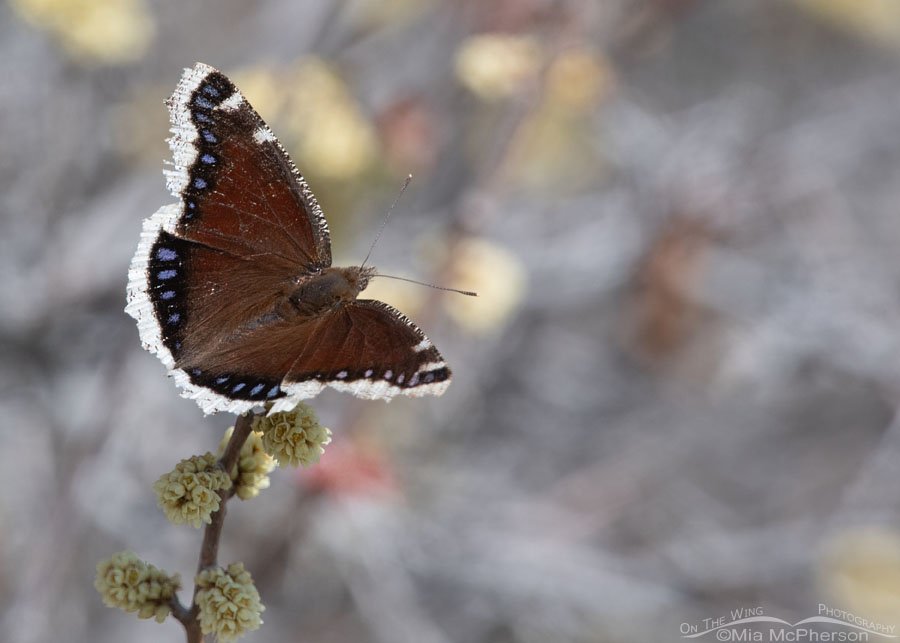
- Mourning Cloak butterflies are large, distinctive butterflies recognized by their dark maroon-brown wings edged with pale yellow borders and rows of iridescent blue spots. Their wingspans range from 3 to 4 inches, and their undersides are dark and bark-like, providing effective camouflage.
- Mourning Cloak butterflies are migratory and widespread across North America, from Alaska and Canada south through the United States and into northern Mexico. They inhabit woodlands, forest edges, parks, and suburban areas, and are often seen basking on tree trunks or sunlit paths.
- Adult Mourning Cloaks feed on tree sap, rotting fruit, and occasionally nectar. They are among the earliest butterflies to appear in spring, often seen flying on warm winter days after emerging from hibernation.
- Females lay clusters of eggs on the leaves of host trees such as willow, elm, hackberry, and poplar. The spiny black caterpillars feed communally before dispersing to pupate. Adults overwinter in sheltered crevices, leaf litter, or under bark.
- Mourning Cloak butterflies are also known as “Camberwell Beauty” in Europe, where they are rare visitors.
- A group of butterflies can be called a “kaleidoscope” of butterflies.
I hope you enjoy viewing my Mourning Cloak butterfly photos.
Mia McPherson
Mourning Cloak butterfly on Fragrant Sumac
Title: Mourning Cloak butterfly on Fragrant Sumac
Location: Box Elder County, Utah
Date: 5/5/2019