


Palm Warbler Images, Facts and Information:
Setophaga palmarum
- Palm Warblers are small songbirds with olive-brown backs, yellow underparts, rusty caps, pale eyebrow stripes, and constantly wagging tails. Males and females look similar, though breeding males appear brighter in color.
- Palm Warblers are long-distance migrators. They breed in northern bogs and open coniferous forests of Canada and the northeastern U.S. and winter across the southeastern U.S., the Gulf Coast, the Caribbean, and parts of Central America.
- Palm Warblers occur in open woodlands, brushy edges, grassy fields, forest clearings, and coastal thickets during migration and winter.
- Palm Warblers eat insects, spiders, berries, seeds, and small fruits.
- Palm Warblers lay 4 to 5 eggs in a nest built near or on the ground, often concealed in low vegetation. The female incubates for about 12 days.
- Palm Warblers are easily recognized by their near-constant tail bobbing behavior.
- A group of Palm Warblers can be called a “flock” or “cluster” of warblers
- The oldest known Palm Warbler was at least 6 years old.
I hope you enjoy viewing my Palm Warbler photos.
Mia McPherson

Palm Warbler perched on Sea Purslane
Title: Palm Warbler perched on Sea Purslane
Location: Fort De Soto County Park, Pinellas County, Florida
Date: 3/6/2009
Mia McPherson
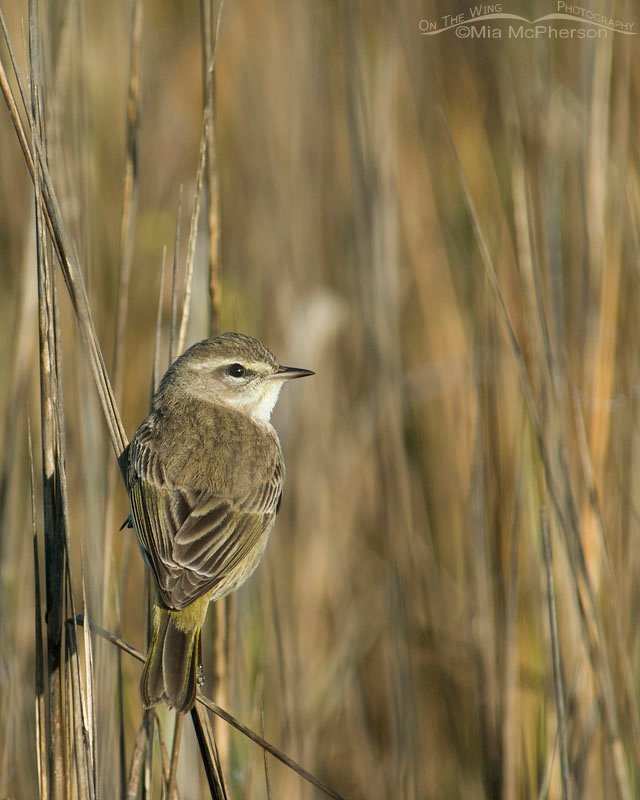
Palm Warbler in Spartina
Title: Palm Warbler in Spartina
Location: Fort De Soto County Park, Pinellas County, Florida
Date: 2/13/2009
Mia McPherson
Palm Warbler on mangrove
Title: Palm Warbler on mangrove
Location: Fort De Soto County Park, Pinellas County, Florida
Date: 2/13/2009
Mia McPherson
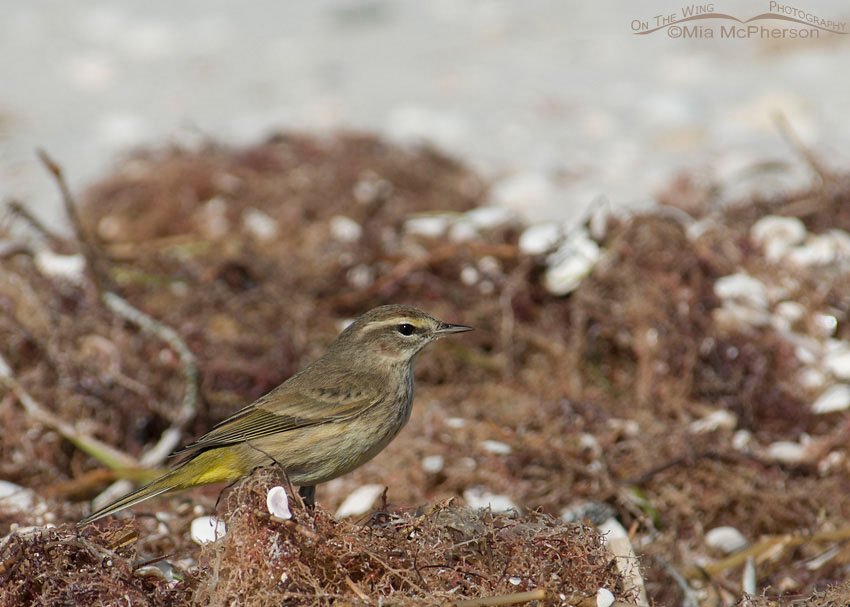
Palm Warbler in seaweed
Title: Palm Warbler in seaweed
Location: Honeymoon Island State Park, Pinellas County, Florida
Date: 2/8/2009
Mia McPherson

Palm Warbler in a mangrove on the beach
Title: Palm Warbler in a mangrove on the beach
Location: Fort De Soto County Park, Pinellas County, Florida
Date: 11/28/2008