


Pipevine Swallowtail Butterfly Images, Facts and Information:
Battus philenor
- Pipevine Swallowtail butterflies are large, colorful butterflies with black wings and iridescent blue hindwings. Males have velvety black forewings with blue-green scaling and pale spots, while females are duller with more prominent pale spots.
- Pipevine Swallowtails are found in North America and Central America, thriving in habitats such as forests, grasslands, woodlands, meadows, and gardens. They prefer warmer climates and are commonly seen in open woodlands, forest margins, and roadsides.
- Pipevine Swallowtail butterflies feed on nectar from a variety of flowers using a specially designed tongue. The larvae feed on plants of the genus Aristolochia, which provide them with toxic chemicals that make them distasteful to predators.
- Pipevine Swallowtail butterflies undergo complete metamorphosis. Eggs are laid on the leaves of host plants and hatch into larvae, which are black or red with orange spots. The larvae eventually pupate in a brown or green chrysalis before emerging as adult butterflies.
- Pipevine Swallowtail butterflies are not currently considered at risk, but it is of “Special Concern” in Michigan, which is at the northern edge of its range. The butterfly is known for its chemical defense mechanisms and is often mimicked by other butterfly species to deter predators.
I hope you enjoy viewing my Pipevine Swallowtail butterfly photos.
Mia McPherson
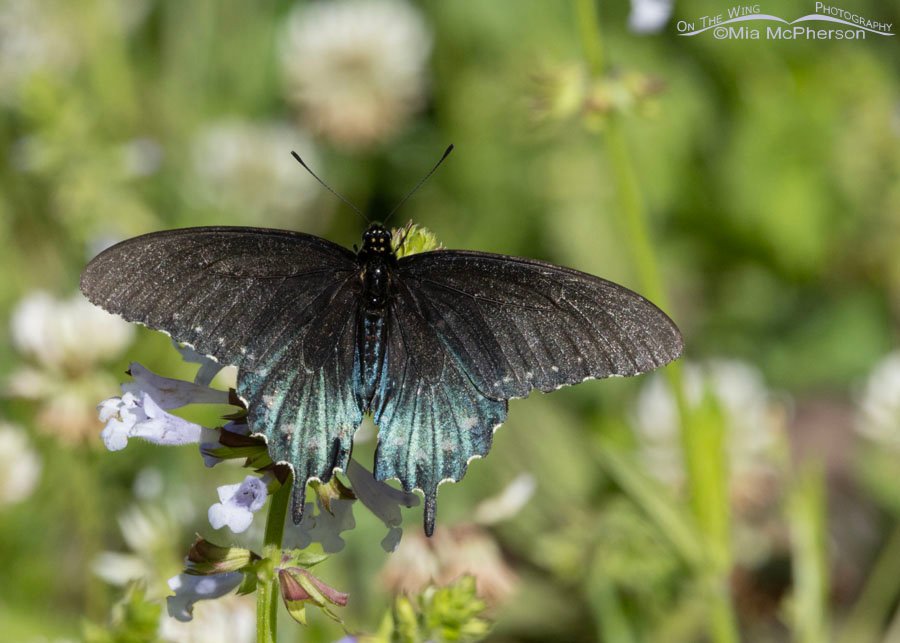
Male Pipevine Swallowtail butterfly at Sequoyah National Wildlife Refuge
Title: Male Pipevine Swallowtail butterfly at Sequoyah National Wildlife Refuge
Location: Sequoyah National Wildlife Refuge, Oklahoma
Date: 04/06/2026
Mia McPherson
Pipevine Swallowtail next to the Arkansas River
Title: Pipevine Swallowtail next to the Arkansas River
Location: Sequoyah National Wildlife Refuge, Oklahoma
Date: 8/14/2024