

About two weeks ago I photographed a molting Northern House Wren high in the Wasatch Mountains as it perched near a willow thicket.
The wren looked messy because of tiny pin feathers showing on its head and ragged looking feathers on it throat, belly and chest.
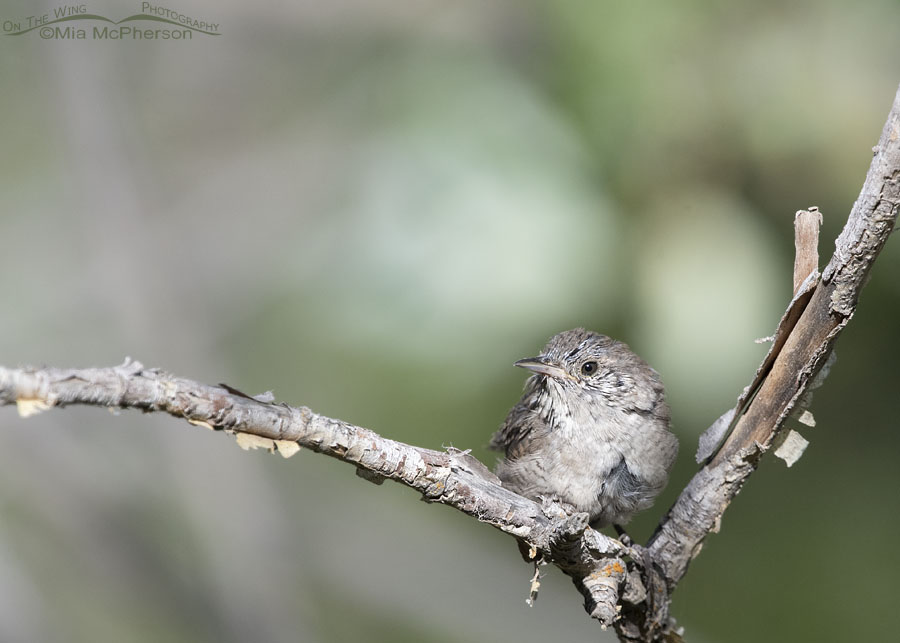 Molting Northern House Wren in the Wasatch Mountains – Nikon D500, f7.1, 1/1250, ISO 500, Nikkor 500mm VR with 1.4x TC, natural light
While I photographed the Northern House Wren I thought it might be a young bird but after looking closer at the images I took of it I believe that it is an adult with worn feathers after a busy breeding season.
This wren’s legs are dark and they would be lighter colored in an immature bird and the gape isn’t fleshy like I would expect to see in a young bird hatched this year.
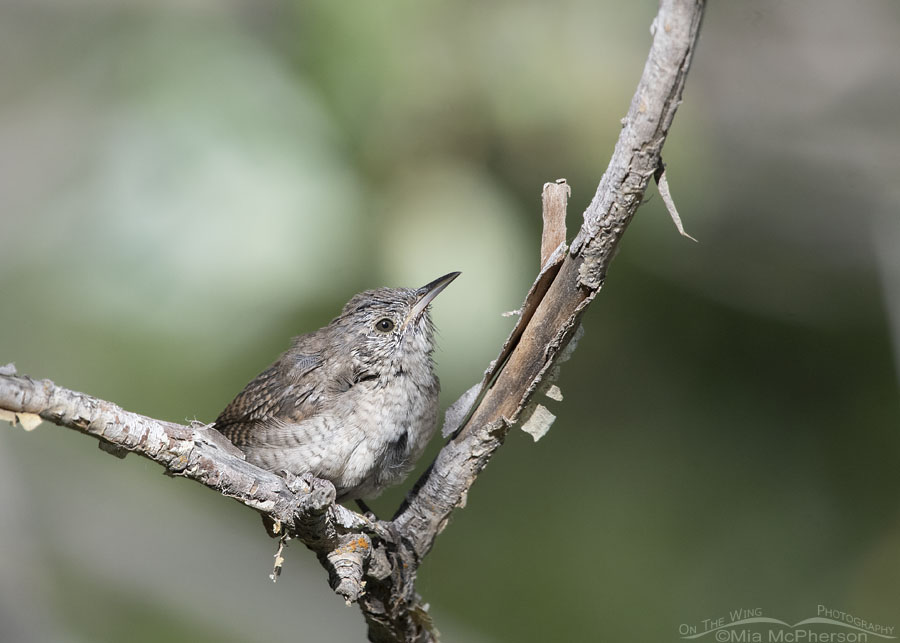 Molting Northern House Wren perched in a fork of branches – Nikon D500, f7.1, 1/1250, ISO 500, Nikkor 500mm VR with 1.4x TC, natural light
Even though the feathers of the Northern House Wren in these two photos are worn and tattered I’m glad I took photos of it.
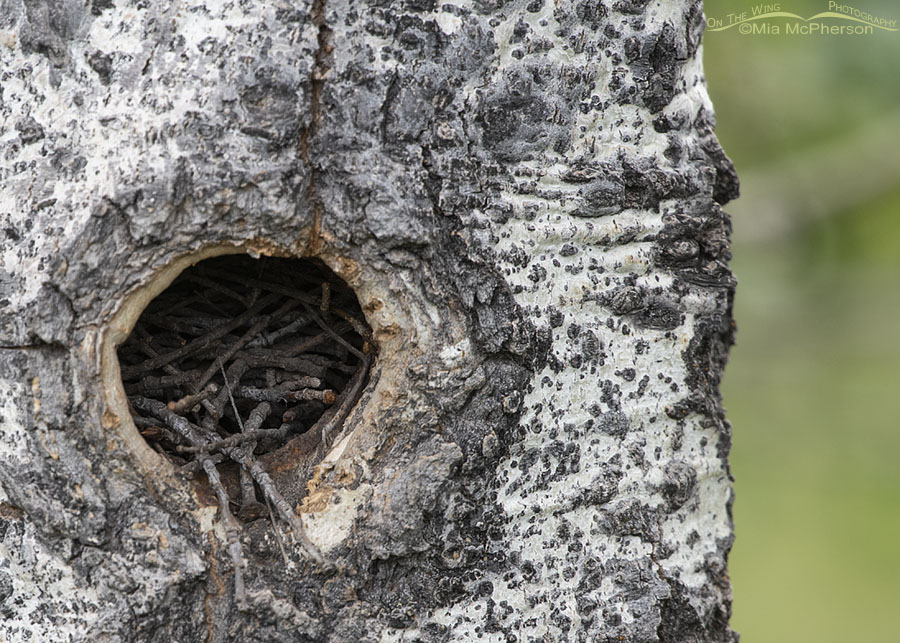 House Wren nest in an aspen – Nikon D810, f6.3, 1/250, ISO 500, -0.7 EV, Nikkor 500mm VR with 1.4x TC, natural light
Northern House Wrens are cavity nesters and they often stuff the cavities full of twigs which can be rough on the feathers as they enter and exit the nest cavity.
I photographed this nest in the Targhee National Forest in Clark County Idaho July of 2016. It shows just how full these wrens stuff twigs into the cavity.
Only the female Northern House Wrens incubate and brood the young but after they hatch both parents enter and exit the nesting cavity to feed their young and to remove the fecal sacs the chicks produce. That has to be rough on their feathers. These wrens often have multiple broods in a nesting season which can make the damage to their feathers worse.
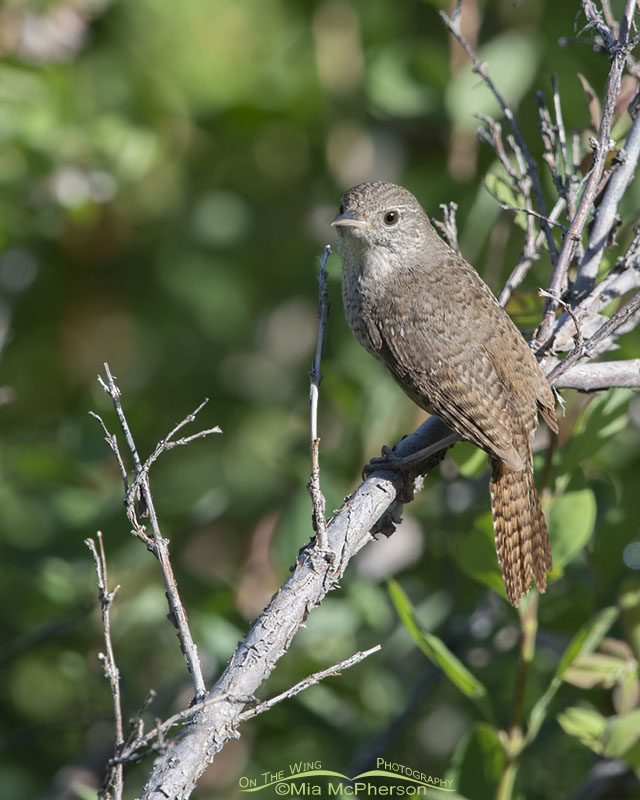 Adult Northern House Wren perched in a serviceberry – Nikon D500, f7.1, 1/500, ISO 500, Nikkor 500mm VR with 1.4x TC, natural light
Northern House Wrens here in northern Utah do migrate in the fall and the adults molt before they migrate. The wrens need their feathers in good condition for their long journeys to their wintering grounds.
I decided to share a photo of a Northern House Wren I photographed last June whose feathers are in good condition for comparison. This adult was photographed just a couple of hundred feet away from where the molting House Wren was photographed.
Life is good. Stay safe.
Mia
Click here to see more of my Northern House Wren photos plus facts and information about this species.
Definitely the picture in the dictionary next to the definition of “bedraggled.” Poor little thing.
I am not at all surprised that parenting shows in their feathers. I suspect that all parents of very young children (whatever the species) would empathise.
Very nice photos of molting. I wish I could convince them to live in the gully behind my house!