

It was exactly three years ago today when I took this young Black-necked Stilt portrait on the marshes of Bear River Migratory Bird Refuge in northern Utah.
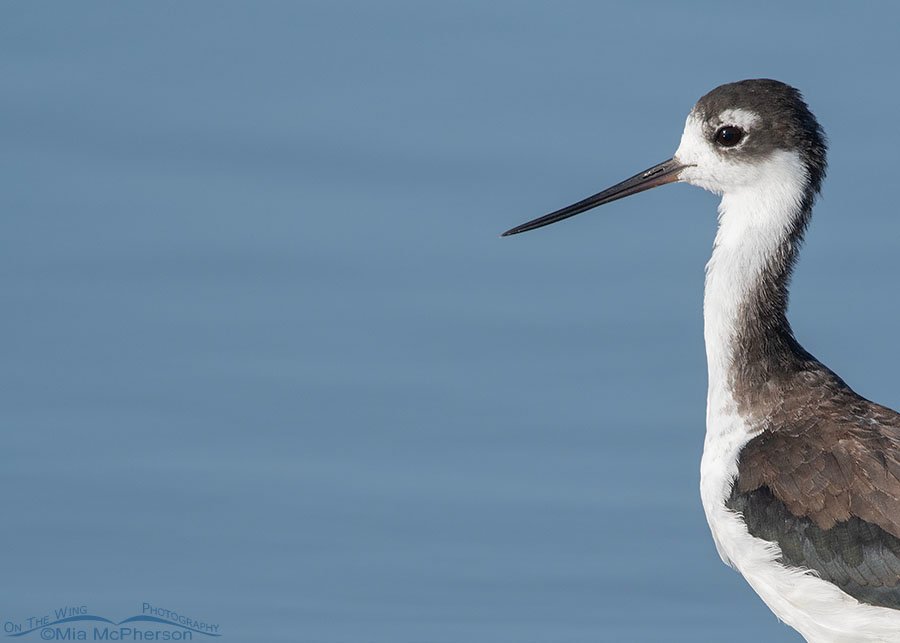 Young Black-necked Stilt portrait in Utah
August in Utah is normally a time when shorebirds are seen in large numbers at the refuge. The shorebirds that nested there have mostly finished raising their young and are preparing for migration.
Shorebirds that nested and raised their young further north pass through the refuge during migration, stopping to rest and feed before continuing on their long journeys. The wetlands here provide the food and shelter they need to refuel, making August a busy and important time for these travelers.
During good water years, thousands of Black-necked Stilts breed and raise their young at the refuge. In dry years, their numbers can drop off sharply, and fewer nests succeed.
Utah is in a drying pattern again. I can’t help but wonder how that will affect the number of stilts and other shorebirds that return to the refuge to nest.
Shorebirds need shallow water and healthy mudflats. When the water dries up, the invertebrates they feed on can disappear.
That makes me worry about the migrants too. They stop at the refuge to rest and refuel on their long journeys. If the food supply drops, their flights south could become even more difficult.
Life is good. But life isn’t easy for shorebirds, on their breeding grounds, in their overwintering areas, or during migration. We can and should do more to help them.
Mia
Click here to see more of my Black-necked Stilt photos plus facts and information about this species.
I remember this terrific shot with it’s remarkable clarity and detail from a few years back. It’s a shame that Northern Utah continues to experience these terrible drought conditions. Birds, wildlife, even people, are paying the price. The only folks who don’t suffer are the mercenary developers, who experience the rapture whenever they see an acre of land they can cover with concrete. Shameful.
,
Excellent narrative. Thanks Mia
Pepe, it’s sad to see the water situation in Utah and the Great Salt Lake getting worse. The lake keeps dropping, which means the mountains get less snow, less snow means less water feeding back into the lake, and on top of that the inland ports, giant data centers, and more are sucking up water that should be going there.
It’s a lose-lose situation. The tipping point has already been passed, and people and corporations are still wasting water.
Looking back to your 2017 post of Black-Necked Stilts there is one photo that hypnotizes me. It is the young Stilt waking in shallow water. Thanks for sharing.
Thank you, Gary!
Mia, such a beauty … I saw your note on FB that this was taken 3 years ago … I hope their environment has improved by now?
Thanks Lois. Sadly, from what I have seen and read, no, things in northern Utah, the refuge, and other locations are getting worse and drier for birds.
Lovely shot. Wish I could bring the rains…
Thank you Burdoo