

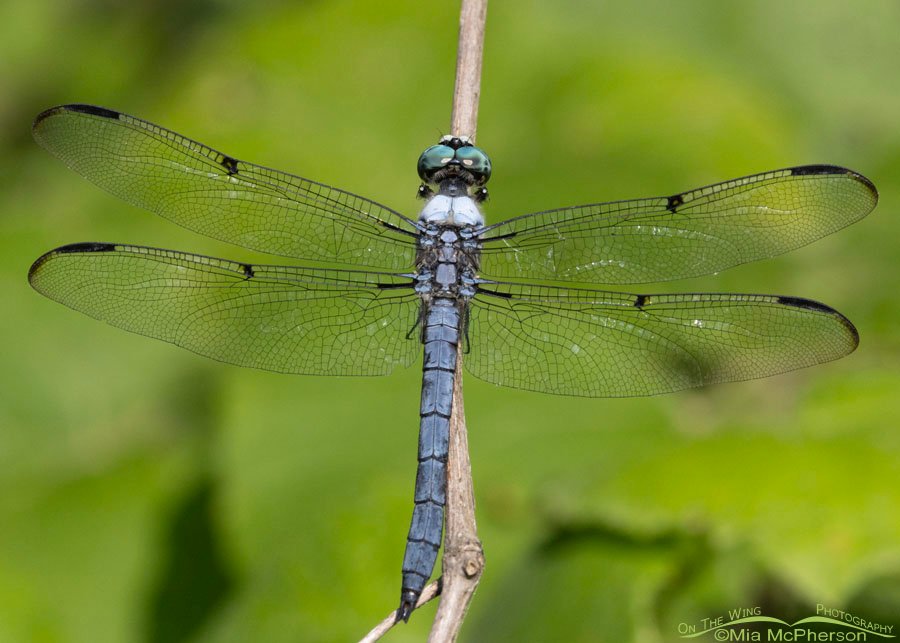
 Male Great Blue Skimmer dragonfly at Sequoyah National Wildlife Refuge – Canon R7, beanbag, f11, 1/640, ISO 640, Canon RF 100-500mm at 500mm, natural light
This July, I added Great Blue Skimmer as a lifer dragonfly. These photos of both sexes of skimmers were taken at Sequoyah National Wildlife Refuge in Oklahoma.
When I first had the male Great Blue Skimmer in my viewfinder, I knew it was larger than a Blue Dasher. I also knew that it didn’t have dark eyes like a Slaty Skimmer, and the end of his tail wasn’t right for an Eastern Pondhawk.
As I photographed this dragonfly I didn’t know what species it was but I knew that it was new to me.
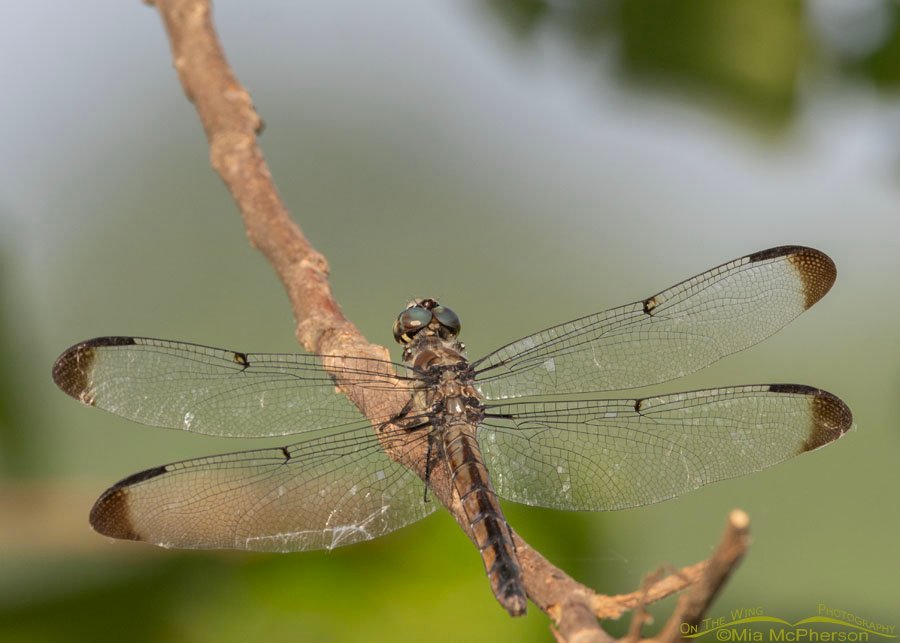 Female Great Blue Skimmer dragonfly at Sequoyah National Wildlife Refuge – Canon R7, beanbag, f10, 1/250, ISO 400, +0.3 EV, Canon RF 100-500mm at 500mm, natural light
Then I found another dragonfly nearby and realized that it could be a female of the same species. Knowing that actually made it easier for me to identify once I got home and did some research on iNaturalist for dragonflies in Sequoyah County, Oklahoma.
As I scrolled through the Sequoyah County dragonfly observations, I found a female/immature Great Blue Skimmer dragonfly that looked just like the photo above.
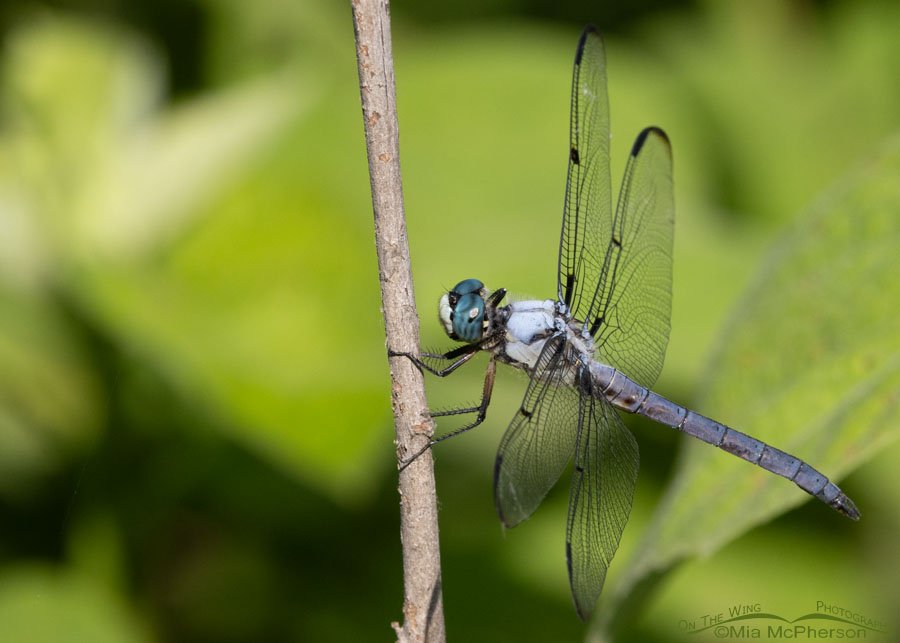 Male Great Blue Skimmer perched on a vine in Oklahoma – Canon R7, beanbag, f11, 1/640, ISO 640, Canon RF 100-500mm at 500mm, natural light
Then I carefully looked at male Great Blue Skimmer dragonfly photos on iNaturalist and realized that is the species I saw and photographed.
Sometimes I shorten the name for Great Blue Heron and use Great Blue when I am talking to other people. Now though? I guess that abbreviation might also fit Great Blue Skimmers.
I’ll just need to be aware of whether I’m talking to a birder or someone into dragonflies when I use the abbreviation “Great Blue.” 🙂
Life is good.
Mia
Click here to see more of my insect and spider images.
Ditto.
Absolutely beautiful shots!