

While at Sequoyah National Wildlife Refuge two days ago, I found a rather large Water Moccasin sunbathing near the edge of a gravel road.
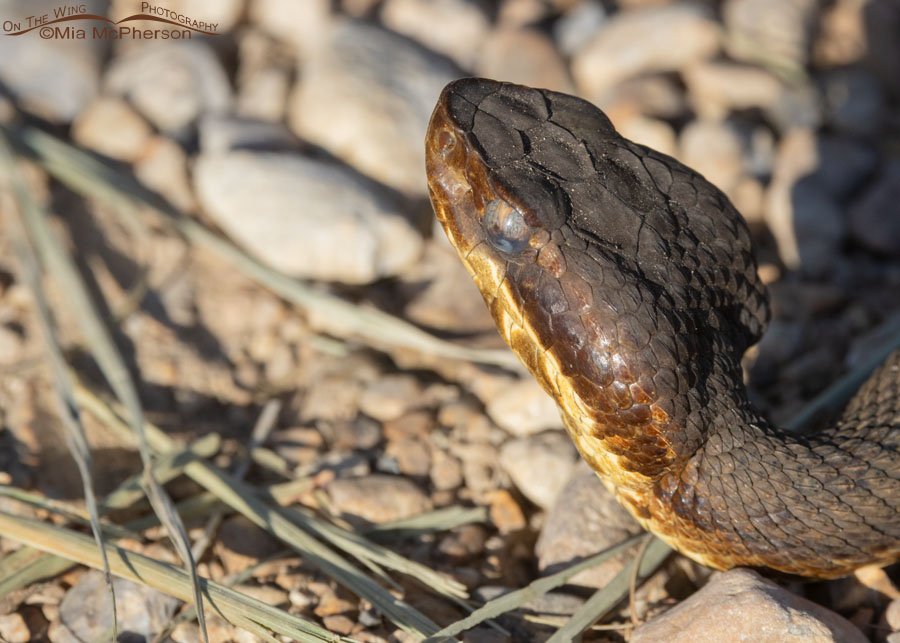 Water Moccasin aka Northern Cottonmouth close up at Sequoyah National Wildlife Refuge – Canon R7, handheld, f9, 1/1000, ISO 640, +0.7 EV, Canon RF 100-500mm at 500mm, natural light
I was on the bad side of the rising sun, so I parked my Jeep and hopped out to photograph the snake. After taking a few photos from the west of the moccasin, I walked around the snake so I had the sun at my back.
The snake didn’t move and I was able to take a series of close portraits. The cooler morning temperature may have made the moccasin sluggish.
I didn’t notice the strange appearance of the eye of this snake until I uploaded the photos I had taken at home to my hard drive. Viewing the images on a larger screen made me wonder what was going on with this snake’s eye.
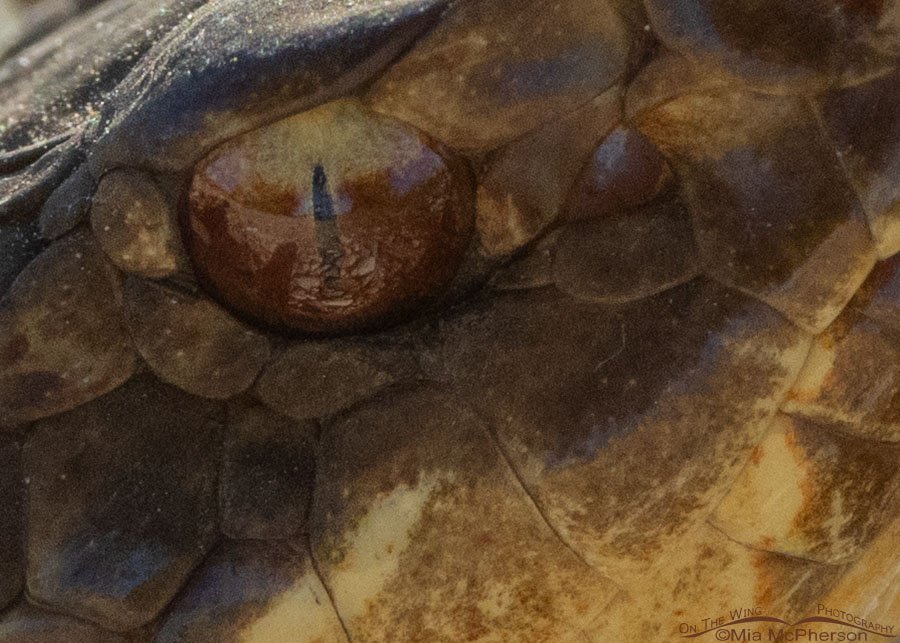 Water Moccasin eye close up – Canon R7, handheld, f9, 1/640, ISO 640, +0.7 EV, Canon RF 100-500mm at 500mm, natural light
So, I looked at the close-up photos I had taken while I was west of the moccasin and noticed that the right and left eyes appeared different. In this closeup, I can see the trees behind me and the gravel road reflected in the eye of the snake. The pupil stands out well, which it doesn’t in the first photo.
The Water Moccasin, aka Northern Cottonmouth, may have been getting ready to shed for the final time this season. Snakes and reptiles at the refuge are getting ready for the cooler months of the year.
I’m not certain that is what was happening to the eye of this snake, but it could be why the eyes looked different.
Just noticing the little things in nature is interesting.
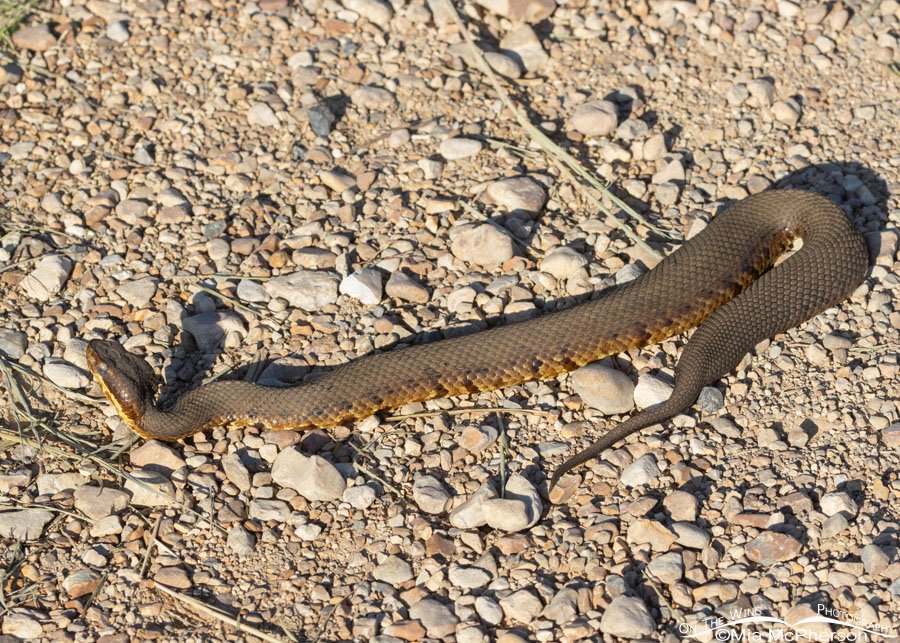 Large Northern Cottonmouth on a gravel road at Sequoyah National Wildlife Refuge – Canon R7, handheld, f9, 1/1250, ISO 640, +0.7 EV, Canon RF 100-500mm at 109mm, natural light
I did take a few photos of the full body of the snake, especially because it is the largest Northern Cottonmouth I’ve ever seen at the refuge.
The snake barely moved at all the entire time I had it in my viewfinder. The last two I found in the previous month slithered across the road so quickly I wasn’t able to photograph them before they were hidden by the roadside grasses. I was glad this one was a little sluggish.
Life is good.
Mia
Click here to see more of my Northern Cottonmouth/Water Moccasin photos plus facts and information about this species.
I am a huge fan of snakes so I appreciate the details of your encounter. Thank you for educating myself and the rest of your fan base. I love the variety of reptiles, birds, insects and wildlife. Keep up the great work.