

 Male Horned Lark singing on a shrub – Nikon D200, f6.3, 1/1500, ISO 320, Nikkor 200-400mm VR with 1.4x TC at 400mm, natural light
Yesterday was awesome for Horned Larks in Tooele County, Utah. The day was sunny with a few thin clouds overhead and as the sun rose the air warmed fast, in fact, in Salt Lake City a record was broken yesterday.
The horned larks must have felt as though a touch of spring was in the air because they were almost all singing from rocks and shrubs. The image above shows the “horns” of this species well. In Europe and Asia this species is also know as the Shore Lark.
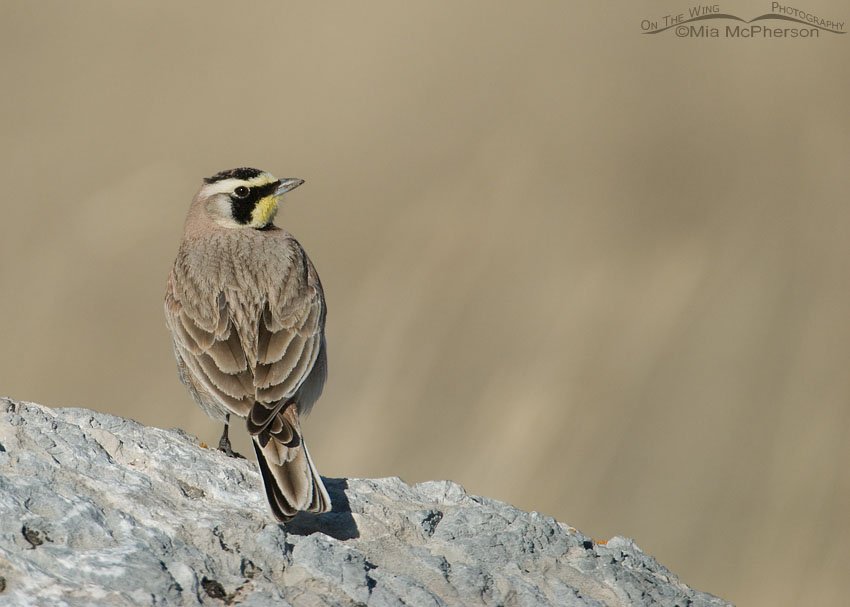 Male Horned Lark back view – Nikon D200, f6.3, 1/200, Nikkor 200-400mm VR with 1.4x TC at 400mm, natural light
Horned Larks are birds of open country and are found areas with lots of bare ground, they can be found throughout North America. Horned Larks flourish in areas of the Great Basin from arid areas to the tundra above the timberline.
They nest in a depression on the bare ground sometimes sheltered by low shrubs and grasses. They lay 2-5 eggs and can have as many as three broods a year.
 Female Horned Lark in Tooele County, Utah – Nikon D200, f6.3, 1/1250, ISO 320, Nikkor 200-400mm VR with 1.4x TC at 400mm, natural light
Horned Larks are ground foragers, they eat mostly insects in the summer and on the seeds of sedges and grasses in the winter. When they are feeding they can be a challenge to photograph as they scurry along the ground in search of seeds.
Quite often the larks blend into the habitat because of their coloring and plumage patterns. There are times I do not see them until they move.
You sure can hear them though! They have a lovely call and seem to enjoy singing it often, once you have heard the call you will likely remember it for the rest of your life.
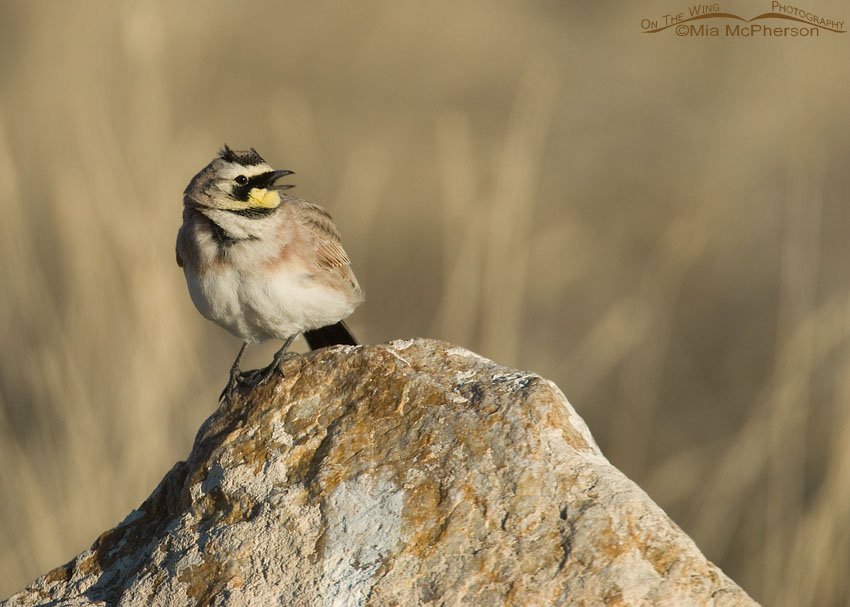 Horned Lark singing on a rock – Nikon D200, f6.3, 1/1000, ISO 320, Nikkor 200-400mm VR with 1.4x TC at 400mm, natural light
Last month I saw several flocks of these larks numbering in the hundreds, it was the most Horned Larks I had ever seen flocked together.
The larks swirled over the open ground in waves similar to blackbirds and starlings. They are a hardy species and winter from southern Canada south to Mexico.
 Alert Horned Lark male – Nikon D200, f6.3, 1/2000, ISO 320, Nikkor 200-400mm VR with 1.4x TC at 400mm, natural light
It did feel like spring is on its way yesterday and the Horned Larks enhanced that feeling with their presence and song. What a great day! Great light, plenty of birds, and the sun kissing my face… who could ask for anything more?
Life is good.
Mia
Click here to see more of my Horned Lark photos plus facts and information about this species.
Beautiful photos of these handsome birds. I have never seen this species in the field, but it would be a thrill. By the way, Mia, I really like the information you provide with your images.
Julie,
Thanks for the comment on my Horned Lark images, I agree with you that they are handsome birds.
LOVE these little guys! I never even heard of them. Of course, the male really does look like a little devil!!!
Kathy,
Horned Larks are handsome little devils!