

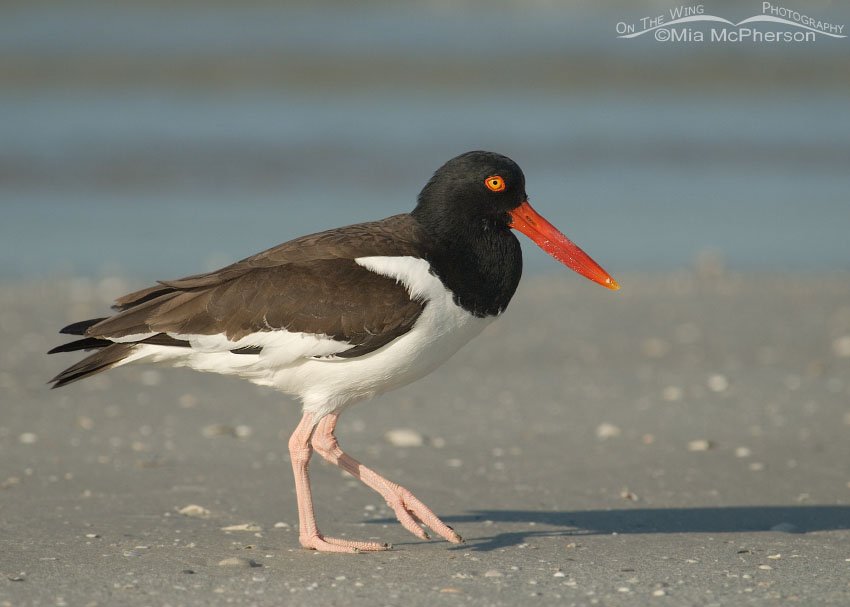
 Strolling Oystercatcher – Nikon D200, f6.3, 1/2000, ISO 400, Nikkor 80-400mm VR at 400mm, natural light
American Oystercatchers used to be a nemesis bird for me. They were a challenge to expose correctly because of the high contrasts between the whites and dark plus the orange/red bill. Then one morning I was able to get the exposure right and after that the oystercatchers were no longer a nemesis.
On the Pacific coast in North America there are Black Oystercatchers, they are a nemesis bird but only because I have never had the opportunity to photograph them. Yet.
I think that American Oystercatchers are beautiful shorebirds, they are striking and unusual and a great deal of fun to observe and photograph.
American Oystercatchers nest in Florida and I would see a nest or two during breeding season. On one occasion I observed and photographed chicks and their parents for several weeks.
I kept my distance from the chicks and took larger crops than usual to make sure I didn’t disrupt their normal activity or disturb the adults and chicks.
 Juvenile American Oystercatcher on a sandbar – Nikon D200, f6.3, 1/750, ISO 160, Nikkor 80-400mm VR at 400mm, natural light
I watched and photographed the juvenile oystercatcher above from the time it was just two days old. It had a sibling who apparently had wanderlust because it left the parents much earlier than this one did and moved south down the beach.
Juvenile American Oystercatchers have a dark-tipped bill, the adults have a nearly solid orangey-red bill and the tip is just a touch lighter. Juvenile oystercatchers have dark eyes and develop a red orbital ring during their first year, adults have bright yellow eyes and the red orbital ring is well defined.
American Oystercatchers are amazing birds to photograph. I enjoyed watching them pry open bivalves with their long bill, crunch tiny Coquinas, and swallow them whole, and observing what great parents they are to their chicks.
Life is good.
Mia
Click here to see more of my American Oystercatcher photos plus facts and information about this species.