

For a few days now I said I was going to do a post about the Northern House Wrens I photographed at the same nesting tree as the Williamson’s Sapsuckers, here it is. The Northern House Wrens are lifers for me too although I have seen them before for me they are lifers only when I photograph them.
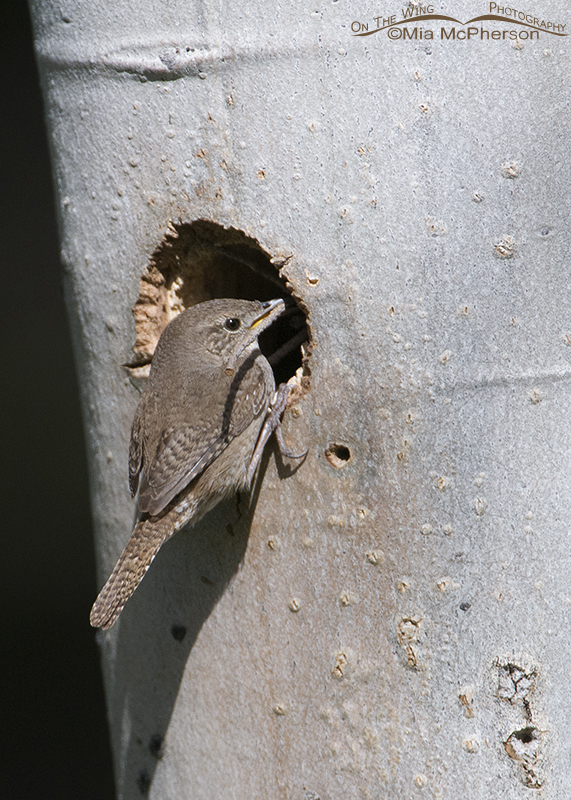 Northern House Wren at a nesting cavity
The Northern House Wrens and their chattering are what clued me in on the nesting tree that the Williamson’s Sapsuckers also showed up at. If you compare this image to the nesting cavity that the Williamson’s Sapsuckers used in this post you will notice that the wrens were trying to nest in the active sapsucker nesting cavity.
After pointing out the wrens, my companion and I were able to both photograph the wrens and other birds at this wonderful nesting tree.
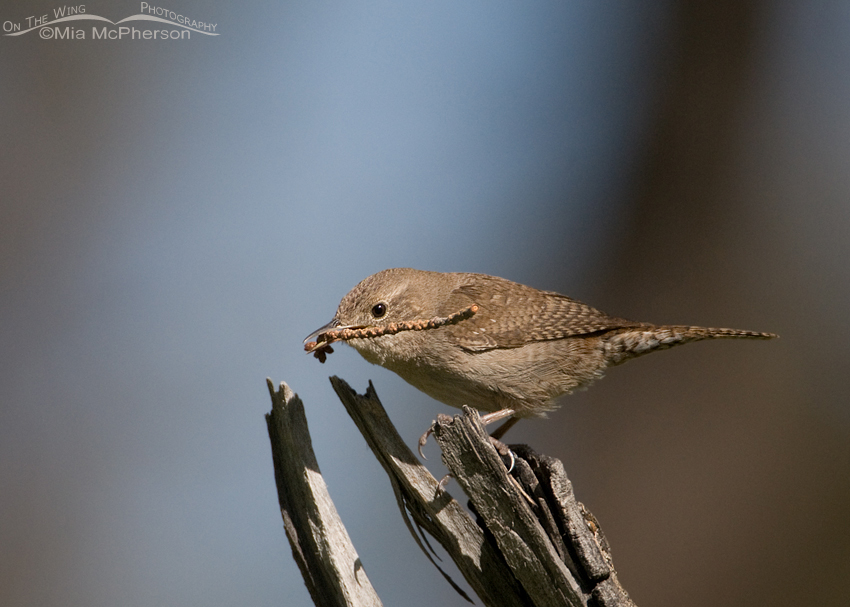 Northern House Wren bringing in nesting material
Northern House Wrens are secondary cavity nesters and this pair has the Williamson’s Sapsuckers to thank for their nesting cavity this year from a cavity the sapsuckers made a previous year. This wren was bringing in some nesting material the first day I photographed them.
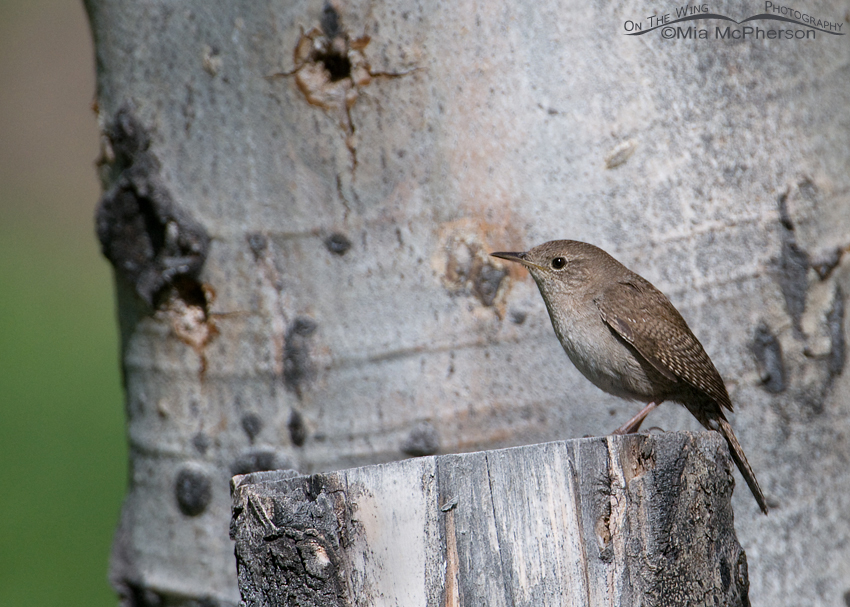 Northern House Wren on an aspen stump
This image shows a perch that the wrens would fly to with nesting material in their bills and from it they would fly up to the nesting cavity. The problem for me as a photographer was that the wrens would fly up to the cavity with their backs to me.
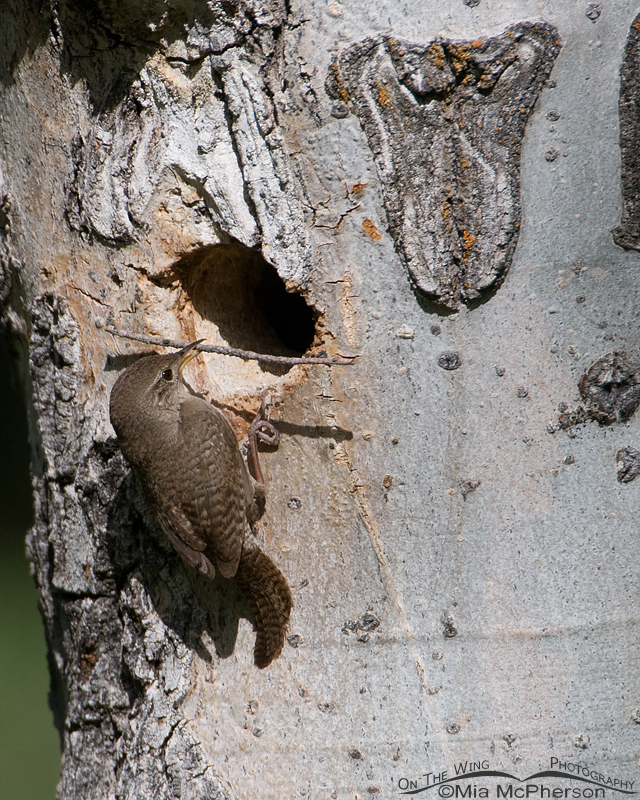 Northern House Wren at the cavity with nesting material
The Northern House Wrens were busy bringing in nesting material the second day I photographed them and it seemed to me that they had settled on this nesting cavity. They chattered quite often on both days and that brought other birds into the area that appeared to want to find out what the noise was all about.
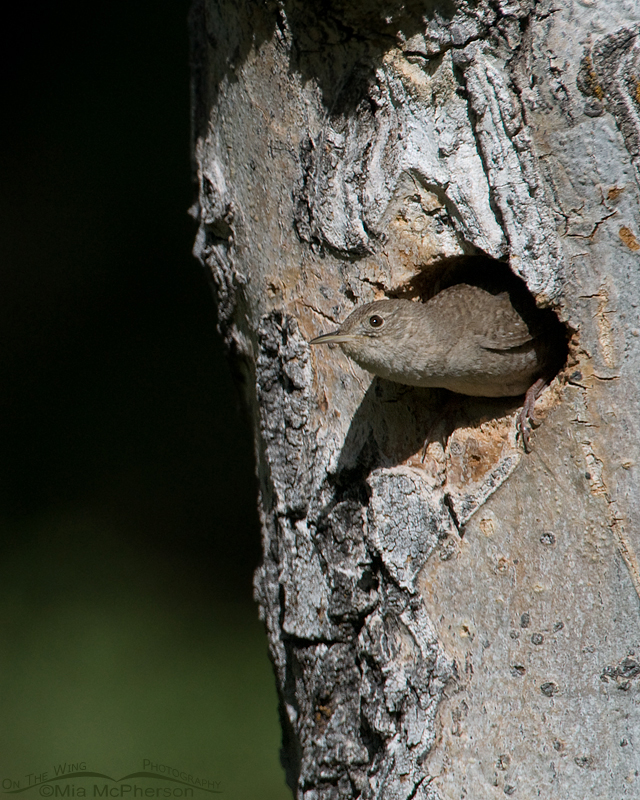 Northern House Wren with its head poking out of the nesting cavity
Tree Swallows were the most persistent of the “visitors” to the nesting tree and they dived towards the cavities whether the Northern House Wrens or Williamson’s Sapsuckers were inside the cavities or not.
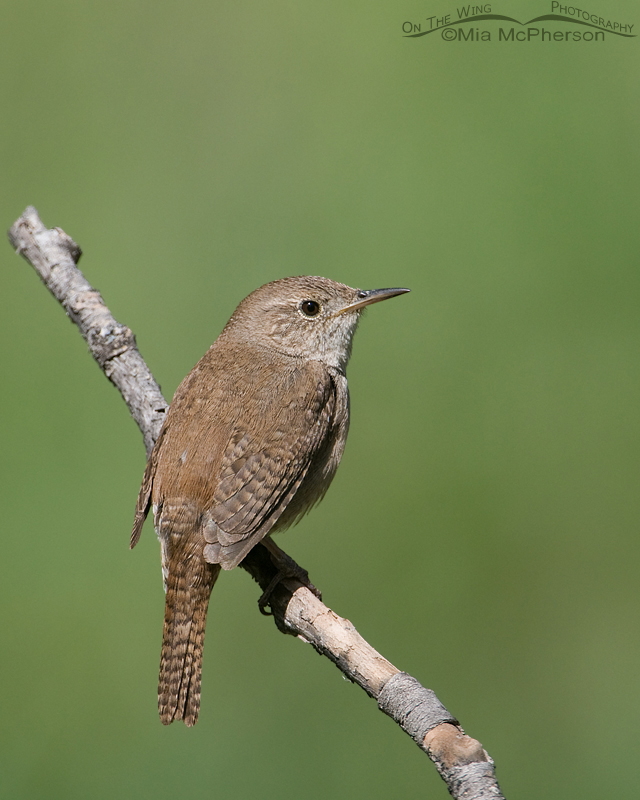 Northern House Wren taking a break from singing and nest building
Occasionally the Northern House Wrens would take a break from singing, chattering and bringing in nesting materials to perch on a branch nearby that had fallen to the ground which gave me opportunities for close up shots of them. One hopped off of that perch and approached within 3 feet of the vehicle but I couldn’t photograph it that close. The Northern House Wrens are tiny little birds but they sure have big attitudes!
Had it not been for my keen eyes, ears, and my observation skills, I could have missed out on these wrens and the other fantastic birds that came in to this tree.
Life is good.
Mia
Click here to see more of my Northern House Wren photos plus facts and information about this species.
The Northern House Wren calls are here
All images were created using my Nikon D300 and the Nikkor 200-400mm VR with a 1.4x TC attached.
Mia,
Thank you for sharing these and the Sapsucker images. Nice job in “following your ears” to locate a special tree! It was surprising to learn this species breeds at those altitudes. They may be little, but they sure are hardy!
Very fine series Mia. And thanks for the link to their interesting songs and calls. I especially was impressed by their calls which feature a “variety of harsh sounds: churrs, chatters, rattles, and scolds, often in response to large animals that might be predators.”
i love their songs and sure appreciate your photographs of their behaviour. I am reading this after the Williamson’s so understand the “lifers” comment.Have a great day!
Terrific series of photos, Mia.
Gorgeous. And I have a huge weakness for birds which ‘punch well above their weight’ on the aggressive front.
Very nice images of a sweet bird!
Excellent Photography and associated narrative. Never yet seen one 😉
Fantastic series and observations Mia !
Great series, interesting info….not only do wrens seem to have big attitudes, but they also have BIG mouths!!! They can drive me crazy sometimes…quickly!!!
Beautiful showing, love ’em.