
 American Barn Owl in front of the Wasatch Range – Nikon D500, f7.1, 1/1250, ISO 400, Nikkor 500mm VR with 1.4x TC, natural light, not baited
Yesterday I spent time photographing a cooperative yet unexpected American Barn Owl at Farmington Bay, unexpected simply because American Barn Owls are primarily nocturnal and I saw it during the day.
 American Barn Owl with bill open and one foot raised – Nikon D500, f7.1, 1/1000, ISO 250, Nikkor 500mm VR with 1.4x TC, natural light, not baited
In northern Utah seeing American Barn Owls during the daylight hours isn’t unexpected during the coldest and snowiest parts of winter because the heavy snow on the ground makes it more difficult for the owls to find enough food during their normal nighttime hunting hours so they extend the time where they look for prey even to the point of hunting all day long.
Also when they American Barn Owls are feeding their young they hunt longer into the morning and earlier in the evening than they typically do.
Yesterday none of those conditions existed so it was a surprise to find this American Barn Owl out in the open, perched on a sign post during the daylight hours.
To me it almost looks like the American Barn Owl is laughing in the photo above.
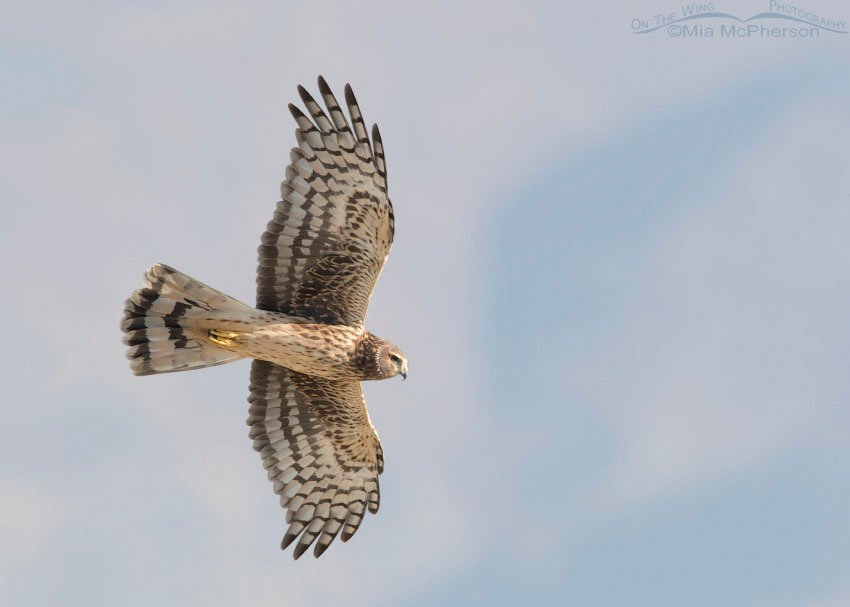 Northern Harrier flying over the Barn Owl – Nikon D500, f7.1, 1/800, ISO 250, +0.3 EV, Nikkor 500mm VR with 1.4x TC, natural light, not baited
A Northern Harrier flew over the American Barn Owl several times and I expected the harrier to dive at the owl and hoped to get some action photos but the harrier flew away.
 Barn Owl watching something in the distance – Nikon D500, f7.1, 1/800, ISO 250, +0.3 EV, Nikkor 500mm VR with 1.4x TC, natural light, not baited
Just before the harrier flew over the owl lifted off the sign post and dove into the grasses after prey but it must have missed it because it flew right back to the post and scanned the area nearby with its dark, ebony eyes.
It might look like there were clouds behind the owl and the harrier in all of these photos but it is actually the Wasatch Mountain Range with some of the snow that has fallen recently on the peaks that only appear to be clouds.
 Rousing American Barn Owl – Nikon D500, f7.1, 1/800, ISO 250, +0.3 EV, Nikkor 500mm VR with 1.4x TC, natural light, not baited
The American Barn Owl preened for a bit and then roused to shake out is feathers and I could see that its chest was still a bit damp from diving into the grasses earlier which were probably still wet from the melting frost. Yes, it has gotten cold enough here for frost to form overnight!
 American Barn Owl on a sign post at Farmington Bay WMA – Nikon D500, f7.1, 1/800, ISO 250, +0.3 EV, Nikkor 500mm VR, natural light, not baited
I must admit I feel a little concerned about the owl because it is unusual for them to be out hunting during the day at this time of the year. It could mean that prey is scarce or that perhaps the vole population has crashed again which would force the owls to hunt for more hours each day. The owl does not appear to be sick and it definitely can fly so I could also be worrying for nothing.
I hope the vole population hasn’t crashed again because it makes winter harder on the American Barn Owls and the other raptors that depend on them for sustenance during the coldest parts of winter.
 American Barn Owl day time flight – Nikon D500, f7.1, 1/800, ISO 250, Nikkor 500mm VR, natural light, not baited
I had removed my teleconverter because I saw a vehicle coming down the road that I thought might make the American Barn Owl take flight and even though I knew the chances weren’t that great for me to get light in the owl’s eyes of it if it took flight I am glad I had removed my teleconverter otherwise I would have clipped the wings of the owl in this frame.
There is just a smidgen of visible light in the owl’s eye but I think what I like most about this photo is how the color of the owl’s plumage is complimented by the autumn colors of the grasses behind it.
I didn’t expect to see a American Barn Owl at all yesterday and it proves to me once again that you never know what you’ll see out in the field unless you go.
Life is good.
Mia
Click here to view more of my American Barn Owl photos plus facts and information about this species.
Nice Collection. The inflight image shows why it’s also called the Monkey-faced Owl.
Love love love!!
Very impressive! I enjoy following you and your images. I am impressed with your production. You sem to always following the wildlife and getting great images!
Wow.
Thank you.
Mia,
You were truly blest. Thank you for sharing that blessing with us. Barn Owls are so very beautiful.
Beautiful photos, beautiful barn owl. I wish her happy hunting and a long life.
Beautiful photos, Mia. Tells a wonderful story.
Great shots Mia…THE D500 seems to be working very well! I’m glad you found the Barn Owl. I thought you guys were a little late…glad I was wrong!!
every pixel is perfection!!!!! always a joy … so uplifting!!!
Enjoyed the photos and commentary!
Hi Mia
I have been getting your pictures for a little while now and I just wanted to tell you that they are the most beautiful bird pictures ever and it is very generous of you to share them. I look forward every day to a new picture and these ones of the barn owls are superb.
Thank you
clare
Great series of photos!
A wonderful series! The first is a classic…these are such beautiful birds–sprinkled with stardust! In the second frame, the bird obviously finds something very funny! I wonder if that post is a favorite perch for owl and Harrier and Harrier was scoping it out, hoping owl would move on….
Well done, Mia.
Terrific series of shots.
Very few signs of voles up here in the mountains this year. quite a change from the infestation we had two years ago. Remarkable how cyclical they are.