This morning, I’m sharing three portraits of an American Crow, two of which include the very pale, nearly icy-blue nictitating membrane that these crows have.
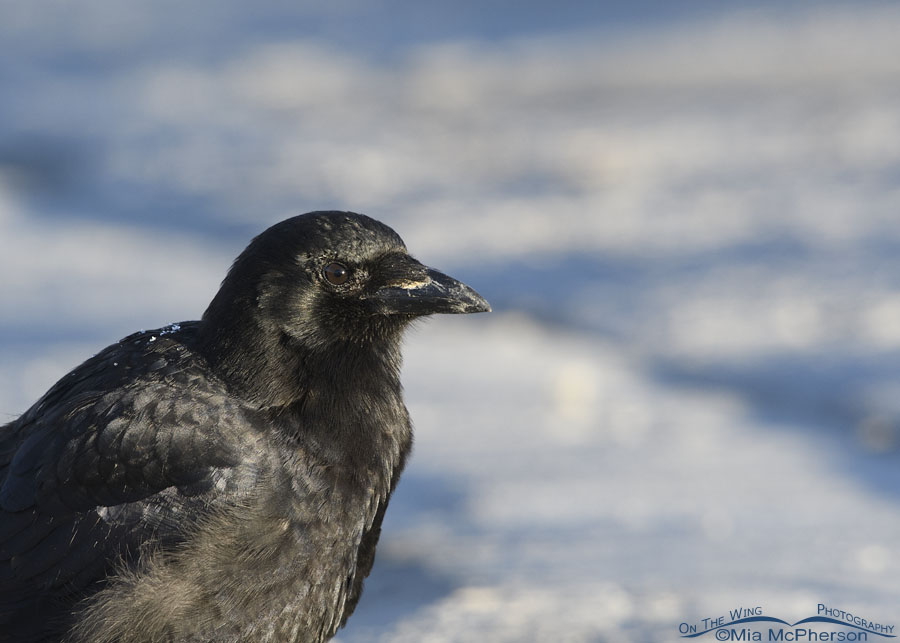 Winter American Crow portrait – Nikon D500, f7.1, 1/400, ISO 500, Nikkor 500mm VR with 1.4x TC, natural light
What is a nictitating membrane?
Birds have eyelids, like humans, that open and close in an up-and-down motion. Like humans, birds close their eyelids to sleep.
Unlike humans, birds have a functioning third eyelid, which is called a nictitating membrane. The nictitating membrane clears debris, moisturizes, and protects the eyes of birds from external damage. In some species, such as crows and black-billed magpies, the nictitating membrane is used for displays and asserting dominance.
In this American Crow portrait, the crow had their eye wide open. The iris is a dark brown in mature crows.
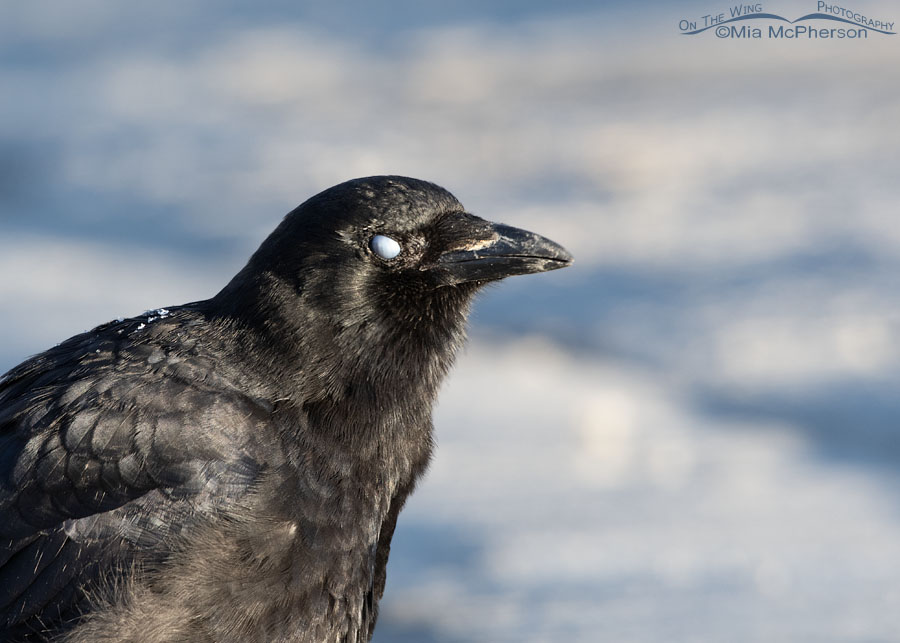 American Crow nictitating membrane – Nikon D500, f7.1, 1/320, ISO 500, +0.7 EV, Nikkor 500mm VR with 1.4x TC, natural light
In this second crow portrait, the nictitating membrane was fully covering the eye of the bird.
This American Crow was surrounded by other crows when I took this portrait, and it was icy cold that morning. The crow might have been communicating with the other crows in the area, or it may have been moisturizing its eye.
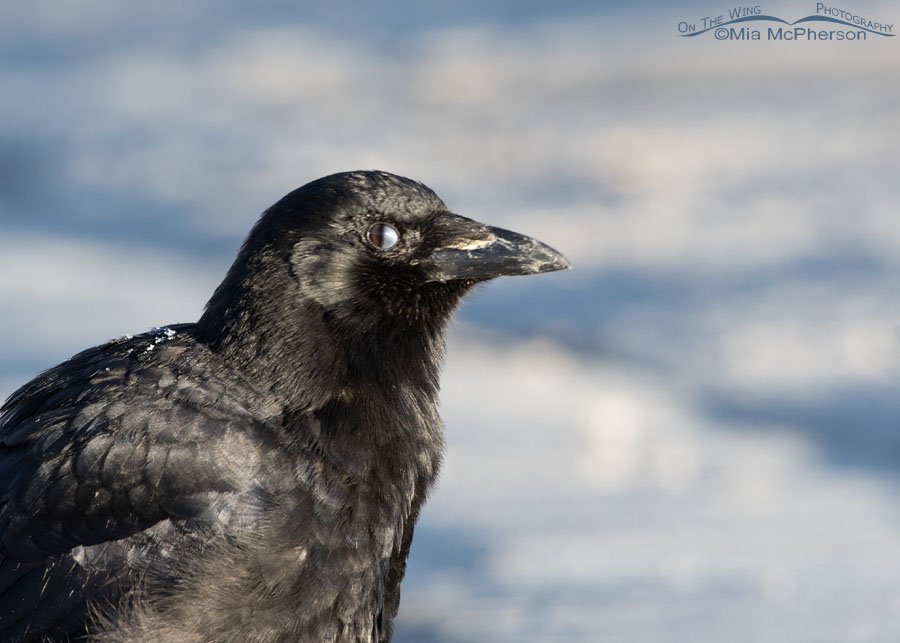 American Crow nictitating membrane halfway over eye – Nikon D500, f7.1, 1/320, ISO 500, +0.7 EV, Nikkor 500mm VR with 1.4x TC, natural light
This last portrait shows the nictitating membrane about halfway over the crow’s eye. I wanted to include this image to show that the nictitating membrane slides across the eye from the front to the back in a side-to-side horizontal motion, not up and down like eyelids.
In some bird species, this membrane is almost clear; in some, it is translucent.
I wish I had been able to get one more portrait of this American Crow that showed her or him with their eyelids closed to complete the illustration of the outer eyelids and nictitating membrane of this crow. Unfortunately, that didn’t happen. The crow didn’t blink.
I was extremely thrilled to take portraits of this crow; having the images that included the nictitating membrane was a bonus.
As a woman with especially dry eyes from having Sjögren’s syndrome, there are times I wish that I had nictitating membranes to keep my eyes moisturized.
Life is good.
Mia
Click here to see more of my American Crow photos plus facts and information about this species.
Like this:
Like Loading...
Related Posts


Fascinating narrative with instructive pics. I never knew about the nictitating membrane on birds eyes before this post. Thanks Mia.
Wouldn’t we all like a nictating membrane. I hadn’t realised that they went across the eye rather than up and down. Thank you.
Fascinating description of the membrane’s different uses.-Jeri
Nice illustration of this feature. I had the habit of discarding any images “ruined” by nictitating membranes, but noted how the male Boat-tailed Grackles commonly deployed them during their aggressive displays when competing for mates. (or harems). Also it seems that Carolina Wrens often close theirs partially when singing. They certainly are multipurpose features.
Very cool.