

A few weeks ago I was able to photograph a Loggerhead Shrike near the marina on Antelope Island State Park, Utah. It was an interesting experience for several reasons.
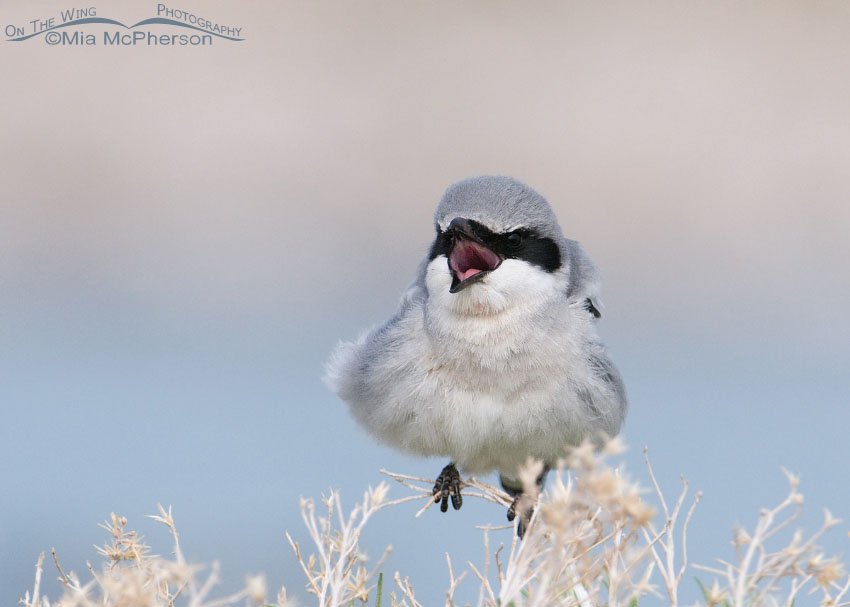 Loggerhead Shrike with its bill open – Nikon D300, f7.1, 1/1600, ISO 800, +0.7 EV, Nikkor 200-400mm VR with 1.4x TC at 357mm, natural light
When I first spotted the shrike it was perched on top of a rabbitbrush and I was able to get several images of the bird before it dove into the base of another nearby bush. I thought it was going to expel a pellet when I took this frame, but it didn’t.
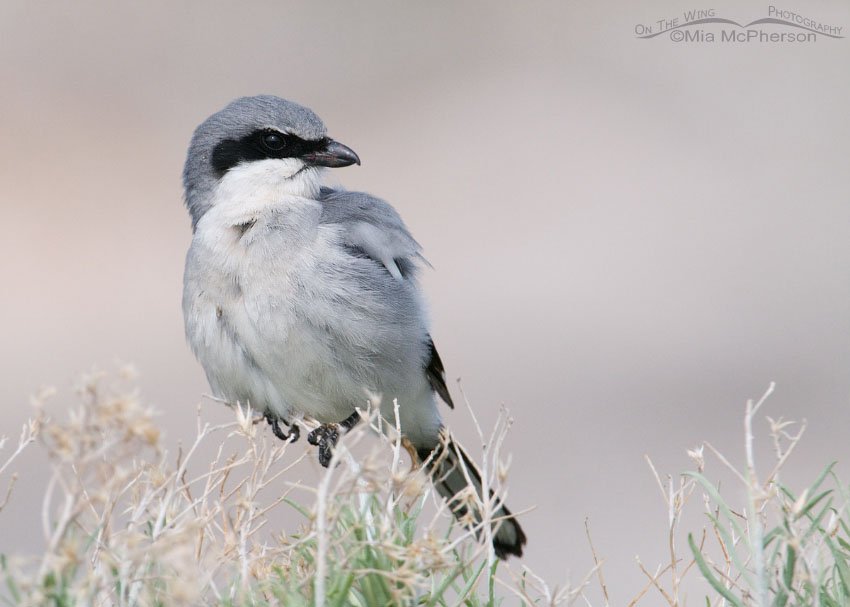 Loggerhead Shrike side view – Nikon D300, f7.1, 1/1600, ISO 800, +0.7 EV, Nikkor 200-400mm VR with 1.4x TC at 357mm, natural light
After a few moments the shrike appeared on top of another rabbitbrush adjacent to the one it had dived underneath. I wanted to get clear images of the bird’s tail without the foreground obstructions so I hoped it would move to another location.
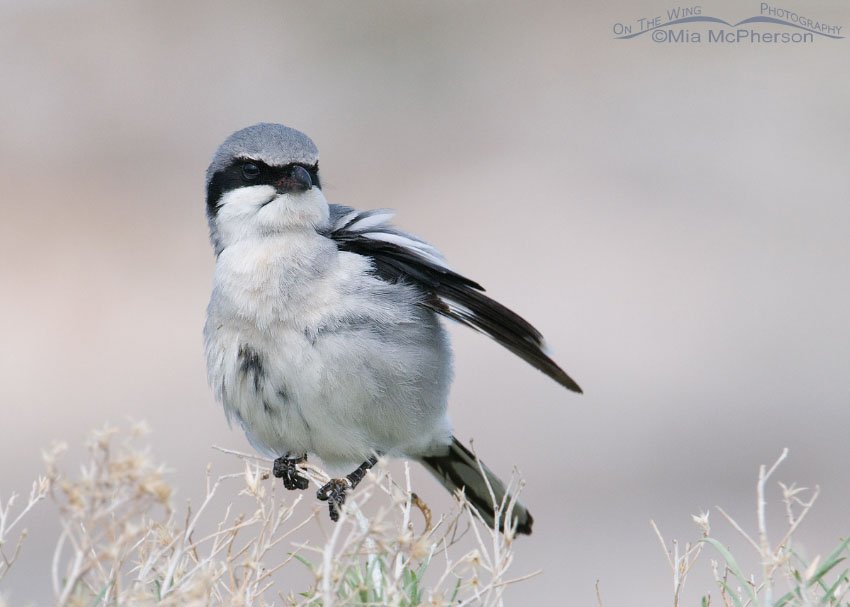 Loggerhead Shrike preening in top of a rabbitbrush – Nikon D300, f9, 1/800, ISO 800, +0.7 EV, Nikkor 200-400mm VR with 1.4x TC at 357mm, natural light
The Loggerhead preened for a bit, it looks like it also needed to clean the blood from a recent meal from its bill too.
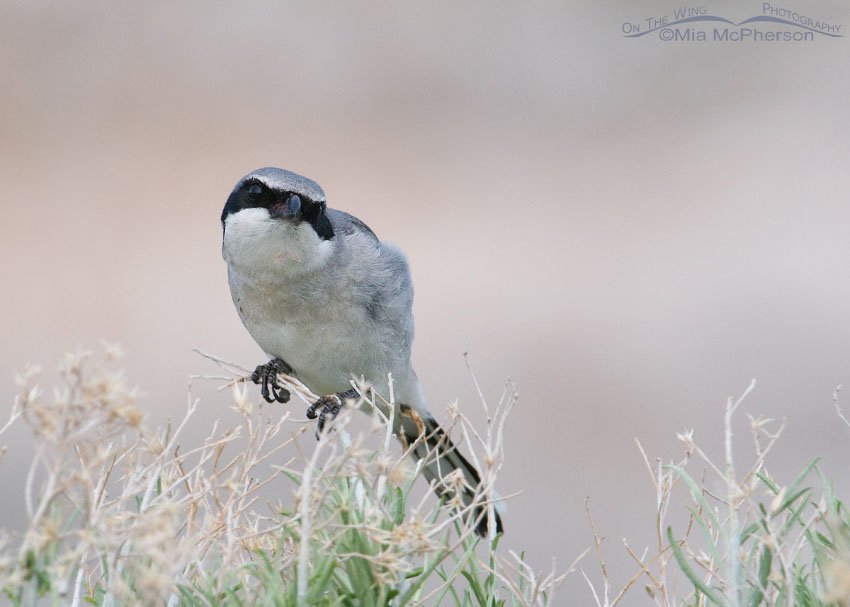 Loggerhead Shrike keeping an eye on a Common Raven – Nikon D300, f8, 1/1000, ISO 800, +0.7 EV, Nikkor 200-400mm VR with 1.4x TC at 321mm, natural light
As I photographed the shrike it suddenly hunched down, getting close to the bush it was perched on and I could tell that it was looking at something above and behind me but the roof of the “mobile blind” was in the way so I wasn’t sure what it was.
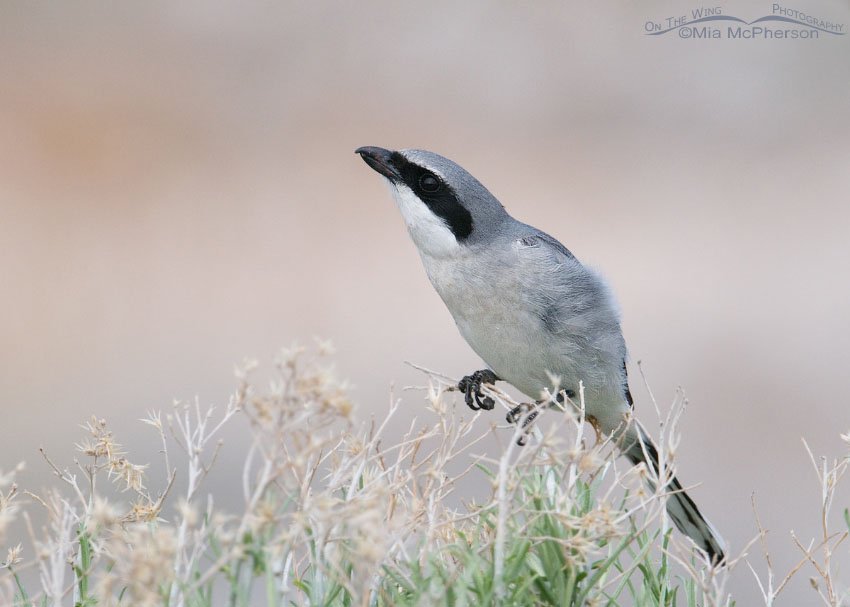 Loggerhead Shrike with one eye on a raven – Nikon D300, f8, 1/1000, ISO 800, +0.7 EV, Nikkor 200-400mm VR with 1.4x TC at 321mm, natural light
By the time I created this frame I could tell that the shrike was watching a Common Raven fly by, I’m fairly certain that ravens do not prey on adult Loggerhead Shrikes but they may prey on their young. I have seen this hunkering down behavior in Loggerhead Shrikes before.
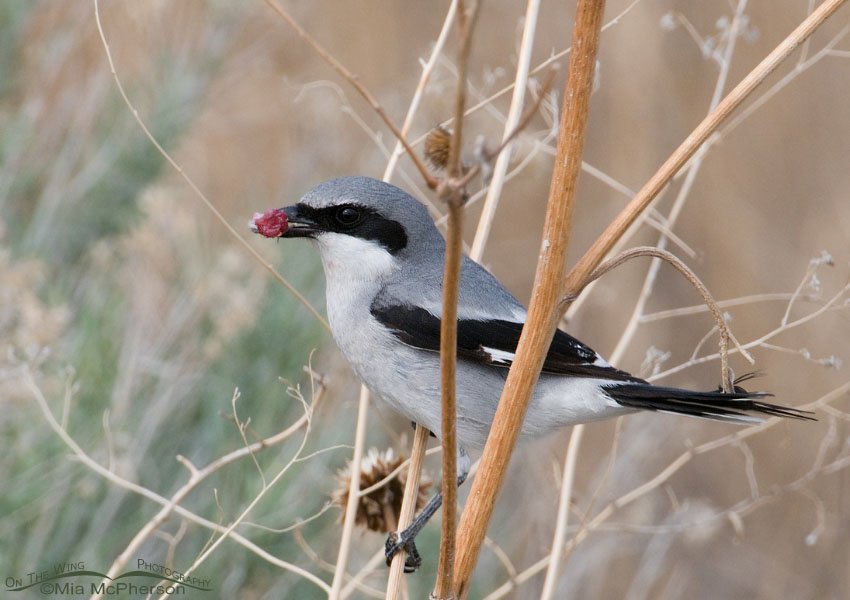 Loggerhead Shrike with a bit of prey in its bill – Nikon D300, f8, 1/1250, ISO 800, Nikkor 200-400mm VR with 1.4x TC at 400mm, natural light, not baited
Within just a few moments after the Raven flew out of range the shrike dove into the base of the same rabbitbrush it had been underneath before. At first I thought it went into the bush for safety reasons but I was soon to find out why it had been returning to that bush.
When the Loggerhead flew out of the bush I could tell it had something in its bill, I quickly zoomed all the way out, locked on focus, and was able to fire off four images as the shrike perched briefly on a dried out sunflower stalk.
A pretty messy environment but I felt the image was interesting because of the prey in the bill.
The bird flew off and out of sight so I got out of the mobile blind and went over to the bush the shrike had gone into both times with one of my backup D200’s that has my Nikkor 18-200mm VR lens attached to it.
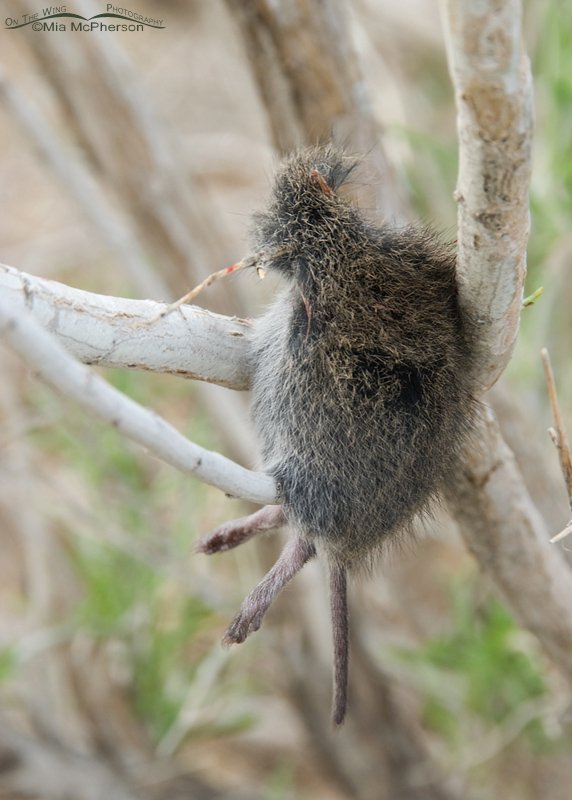 The Loggerhead Shrike’s impaled prey – Nikon D200, handheld, f11, 1/45, ISO 250, +0.3 EV, Nikkor 18-200mm VR at 200mm, natural light
I was tickled to find and point out the shrike’s prey impaled on the bush, they cache prey that way. Think of it as a shrike’s pantry, they know just where to go when they get hungry again.
The day was partly overcast which is why I used a high ISO for the shrike images to get the shutter speeds I thought I might need and also why I was using positive exposure compensation.
It pays to observe your subject, to learn their behaviors and to not start up the engine to pull away too quick or I would have missed the shot of the shrike with the prey in the bill. Having patience is a MUST in bird photography.
Mia
Click here to view more of my Loggerhead Shrike photos plus facts and information about this species.
A truly fascinating post indeed Mia! Incredible job capturing this feeding!!
Thank you Tammy, isn’t nature great?
Wonderful post and awesome photos Mia 🙂
Thank you Susan!
Outstanding Mia! What a great treasure you found there at the end : )
Wonderful behaviors and poses–a great sequence of shots. Your photographic quality is really really on display here. Thanks for sharing.
Laurence, I did feel like I found a treasure. I bet the vole didn’t feel that way though! 😉 Thanks for your comment.
As everyone said, fascinating shrike profile. Never knew about the bird pantry spike. I think the overcast day worked to your advantage.
Fascinating…and marvelous series of shots.
Thank you zephyr.
A fantastic series, Mia. Such amazing detail, too. I am like one of your other readers, I run out of superlatives to describe your work. 🙂
Thank you Bob, you are always so kind.
You got it all in this series, Mia. I am fascinated by shrikes and would love to be able to witness behaviors like this.
By the way, your header image of the Black Skimmer lying on the sand is just fantastic!
Also, I saw the profile that Birdwatching Magazine did of you on birdwatchingdaily.com. Congrats to be one of only three bird photographers that they have profiled. You are in good company. I actually met Marie Read last summer at the Mono Lake Bird Chautauqua through mutual friends.
Julie, I hope you get to see & photograph this kind of behavior in Shrikes soon. I think they are so “raptor like”.
The Black Skimmer juvenile that was laying on the sand and its parents were very cooperative. I love that almost houndstooth pattern the juveniles have in their plumage.
Thanks for the congrats on the BirdWatching profile, I was very honored by them selecting me.
Fantastic. I would comment every day, but I would have to say the same thing in different words-fabulous, awesome, incredible, wow. Thanks for sharing your tremendous work!
Thank you for your comment threecollie, I feel like I have exceptional subjects.
fab shots mia.
Our butcherbirds do the same thing. hang up prey on a spikey thing.
they have a similar bill as well.
cheers,
steve
Steve, a nickname for Loggerhead Shrikes is “Butcher Bird” because they impale their prey on spikes. Thanks for your comment.