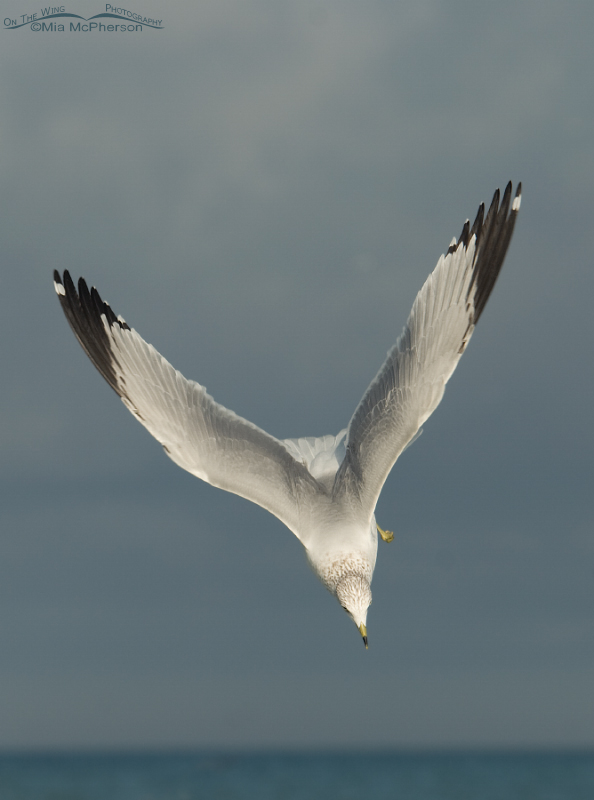
Ring-billed Gull in a dive

Ring-billed Gull in a dive

Ring-billed Gull in a dive – Nikon D200, handheld, f7.1, 1/800, ISO 200, Nikkor 80-400mm VR at 185mm, natural light, not baited

Just a simple image today that I have always liked because of the action even though I don’t have great eye contact with my subject, a Ring-billed Gull. The day I took this image there were huge schools of baitfish running just off the shore of Fort De Soto’s north beach. It almost looked like the Gulf of Mexico’s waters were boiling and there were large flocks of gulls, terns, pelicans and skimmers all in feeding frenzies. I’ve posted about the Brown Pelicans that I photographed that day here, the images are the 3rd through the 6th from the top.

Schools of baitfish running just off the coast can be a great opportunity to photograph flocks of birds, great behavior and fantastic action.

Mia

More Ring-billed Gull images

Facebook Twitter

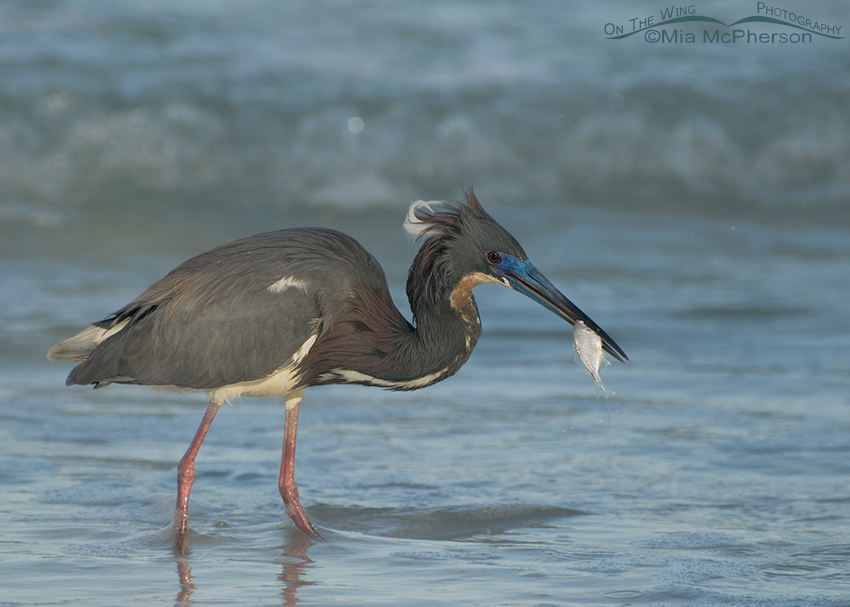
Tricolored Heron in breeding plumage with prey

Tricolored Heron in breeding plumage with prey

Tricolored Heron in breeding plumage with prey – Nikon D200, handheld, f6.3, 1/750, ISO 250, Nikkor 70-300mm VR at 300mm, natural light, not baited

Just a simple image of a Tricolored Heron (Egretta tricolor) in breeding plumage with a small fish in its bill. The heron provided its own bait naturally by capturing it in the Gulf of Mexico.

While in breeding plumage Tricolored Herons have redder legs, darker red eyes, blue lores and blue on the bill plus a longer, white occipital plume than they do during the nonbreeding season. I’ve added no saturation to this image, these are the natural colors.
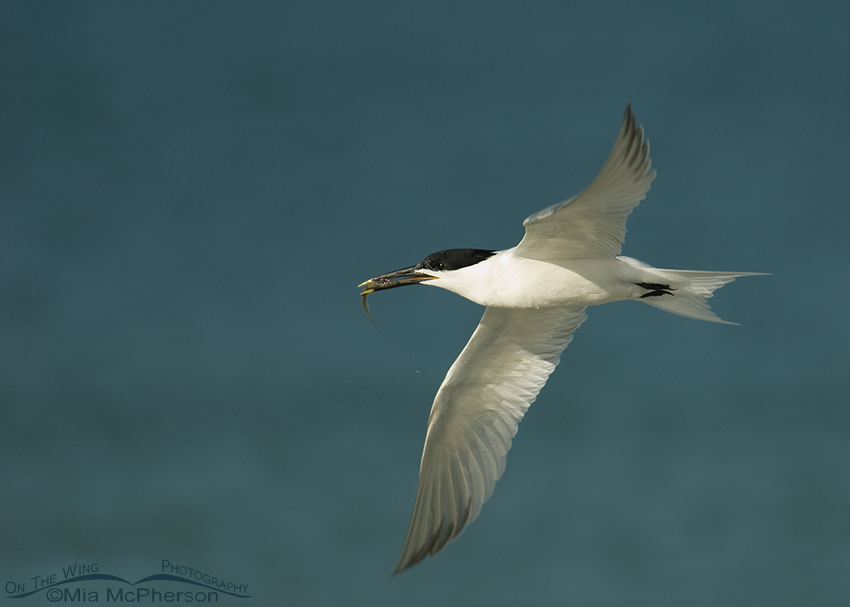
Image taken in 2009 at Fort De Soto’s north beach.

Mia

More Tricolored Heron images

Facebook Twitter

Sandwich Tern in flight with prey

Sandwich Tern in flight with prey

Sandwich Tern in flight with prey – Nikon D200, handheld, f5.6, 1/1250, ISO 200, Nikkor 80-400mm at 400mm, natural light, not baited

This image Sandwich Tern (Thalasseus sandvicensis acuflavida ) was taken at Fort De Soto County Park’s north beach several years ago, it was a breezy, very warm day and there were schools of baitfish running just offshore in the Gulf of Mexico. It was a great day for practicing handheld flight photography.
Learning how to photograph birds in flight is definitely a challenge because you have to track the bird with your lens, anticipate what the bird might do or what direction it might fly. Then add exposure, shutter speed and locking on focus to that to achieve satisfactory results.

In a post titled “So ya think ya want to be a Bird Photographer” I mention several times that a bird photographer needs to practice, practice, practice and that is especially true of birds in flight. I also mention that bird photographers need tons of patience, probably more than you know.

If you live in an area where there are high numbers of birds, for instance; gulls, ducks or terns, you have great opportunities to practice with these birds in flight because there are so many of them and they take flight often. If you mess up another one will be flying by shortly. So my advice for those who are new to bird photography is to practice with local birds until you start nailing flight shots and delete the bad ones.

Mia

More Sandwich Tern images


Recently the AOU (American Ornithologists’ Union) changed the genus from Sterna to Thalasseus. These terns were originally called Cabot’s Terns but the common name changed to Sandwich Tern with the American Ornithologists’ Union 5th Edition (1957). The common name may change again because there are Sandwich Terns in both North America and in Europe but until that happens officially it is best; as it always is, to use the current common name found in up to date bird guides, BNA and the AOU so that novice birders and the general public know the current correct name. 

Facebook Twitter

Reddish Egret, Laughing and Ring-billed Gulls

Ring-billed Gull chasing baitfish in the shallows

Ring-billed Gull chasing baitfish in the shallows
 Fort De Soto County Park, Pinellas County, Florida
D200, f5.6, 1/2000, ISO 320, 80-400mm VR at 300mm, natural light

Yesterday was another gray day here in Utah so I worked on processing some of my older images, these are from September 12, 2008. Hurricane Gustav was churning out in the Gulf of Mexico heading towards the Texas coast and although Florida escaped the brunt force of the storm we did get some strong winds and wave action. The sky was clear when I left home and headed towards Fort De Soto’s north beach but I could feel the wind blowing as I drove to the county park. The wave action was destructive to the shoreline but it also pushed baitfish towards the shore. Tossed around in the waves, injured and probably dazed baitfish appear to be easy catches for sea, shore and wading birds.

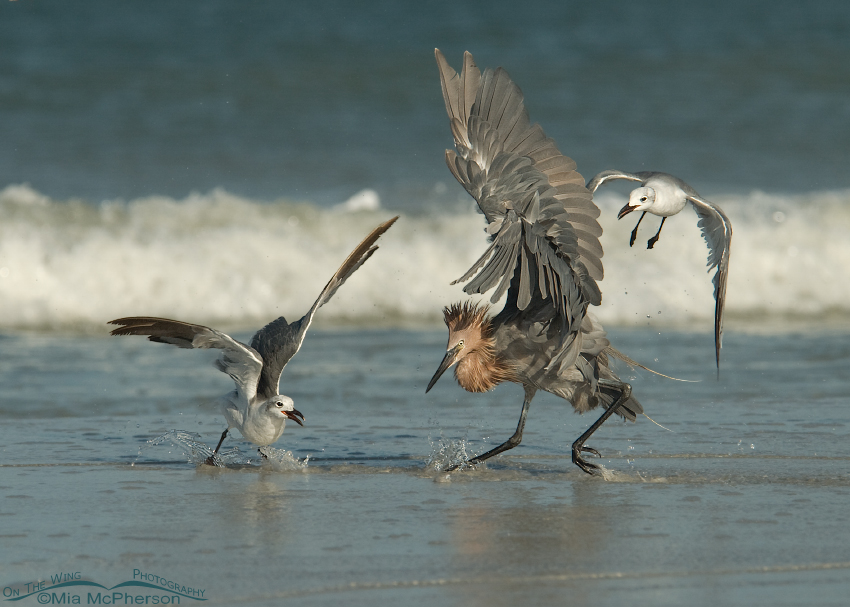
Laughing Gulls chasing a Reddish Egret in hopes of stealing egret's prey

Laughing Gulls chasing a Reddish Egret in hopes of stealing egret’s prey
Fort De Soto County Park, Pinellas County, Florida
D200, f5.6, 1/2500, ISO 320, 80-400mm VR at 250mm, natural light

There were quite a few Laughing Gulls (Leucophaeus atricilla) on and near the shoreline, a few Ring-billed Gulls (Larus delawarensis) and two Reddish Egrets (Egretta rufescens) hunting on the beach that day. I always have great fun watching the reddish egrets hunting, they dance in the waves, dash back and forth at near break-neck speed, wings flying in all different directions. At times they look graceful and quite often comical.

Because of the wave action that day there were plenty of baitfish where the waves on the beach are shallowest and the reddish egret was in its full glory. The laughing and ring-billed gulls seem to instinctively know if they follow the egret around they may get a chance to steal some prey from them. It was amazing to observe and photograph these gulls and the egret dashing around.

Landing Ring-billed Gull

Landing Ring-billed Gull
Fort De Soto County Park, Pinellas County, Florida
D200, f7.1, 1/1600, ISO 320, 80-400mm VR at 400mm, natural light

None of us liked how Hurricane Gustave affected the beaches of Fort De Soto, it was without a doubt damaging to everything in or near its path. It did; however, create some amazing conditions for photographing these birds.

Have a great day.

Mia

Facebook Twitter