

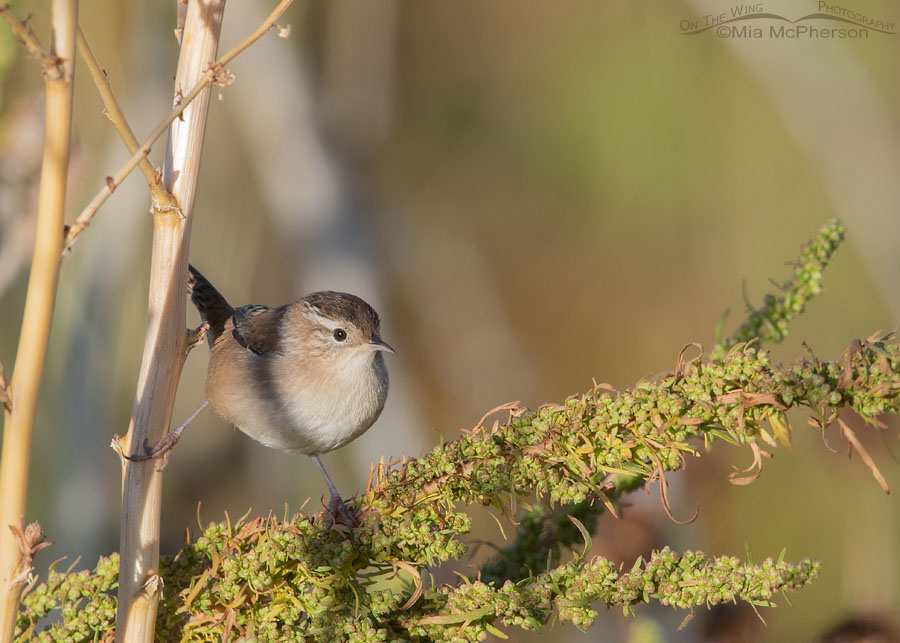
 Western Marsh-Wren in Autumn at Farmington Bay WMA – Nikon D500, f7.1, 1/1600, ISO 800, Nikkor 500mm VR with 1.4x TC, natural light
Western Marsh-Wren are year round residents here in northern Utah and this week I’ve photographed them in the marshes of both Farmington Bay WMA and Bear River Migratory Bird Refuge.
Usually I hear these saucy little songsters before I see them except during the winter when they are quieter than the other seasons of the year.
Two days ago I was able to photograph this Western Marsh-Wren in the marshes at Farmington Bay WMA as it sang near the road.
The wren gave me several nice poses in the phrags and of the three photos I am sharing today I like this one the most because the wren stands out well from the background, there isn’t any out of focus vegetation or shadows crossing its body, and the light I had was lovely.
 Western Marsh-Wren peeking out from the marsh – Nikon D500, f7.1, 1/1600, ISO 500, Nikkor 500mm VR with 1.4x TC, natural light
Yesterday morning I had several Western Marsh-Wrens in my viewfinder at Bear River Migratory Bird Refuge and I made the most of the opportunities I had with them but I didn’t have the great views of them as I did the first photo in this post.
In this photo from the shadow of the stalk of vegetation the wren is grasping with its right foot crosses its body and I’d prefer that the shadow wasn’t there. If the wren had moved over just an inch or so I would have had a great view of the tiny bird without the shadow however that didn’t happen.
I like the light in this photo though, the colors and the curious look I appear to be getting from the wren.
 Saucy looking Autumn Western Marsh-Wren – Nikon D500, f7.1, 1/1000, ISO 500, Nikkor 500mm VR with 1.4x TC, natural light
And in this photo there were sections of the image with out of focus vegetation and some of that crossed the wren’s tail which is a bit distracting to my eyes. But the pose of the wren appeals to me enough that I can ignore the flaws I see in the image. So while the bottom two images in this post are far from perfect I still find them appealing.
Autumn is a great time to see and photograph Western Marsh-Wrens.
Life is good.
Mia
View more of my Western Marsh-Wren photos plus facts and information about this species.
Update: Marsh wrens were split in October 2026 to Eastern and Western Marsh-Wrens. This post has been updated to reflect that change.
Exquisite detail; subtle colors and the composition is, at least tome, perfect. Thanks Mia. .
Yet another dainty beauty.
Thank you.
These are some very neat shots Mia, very nice, love em!
I like the first one as well. Wrens are such cute little birds.