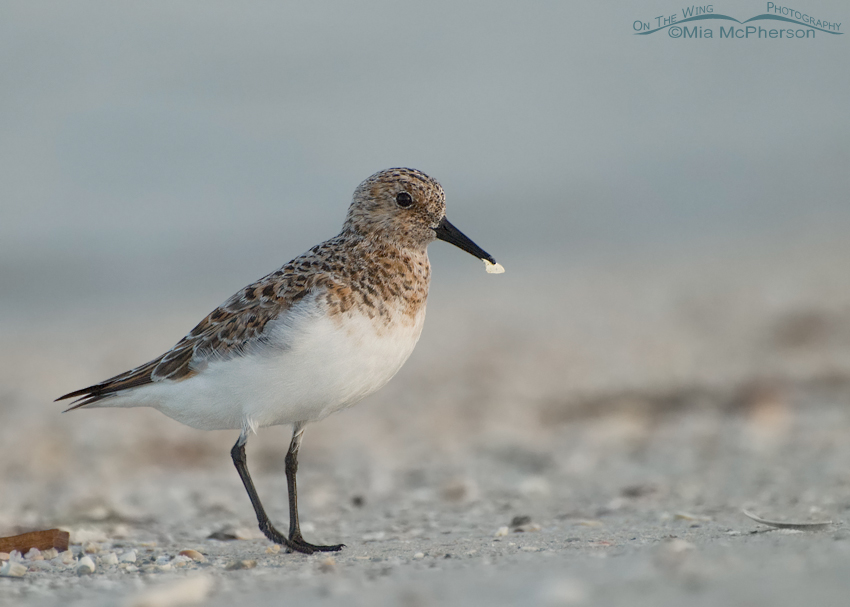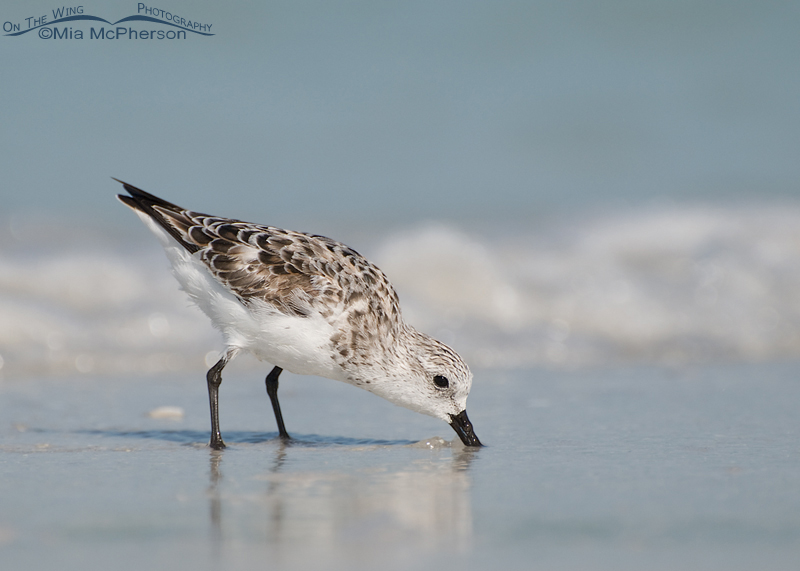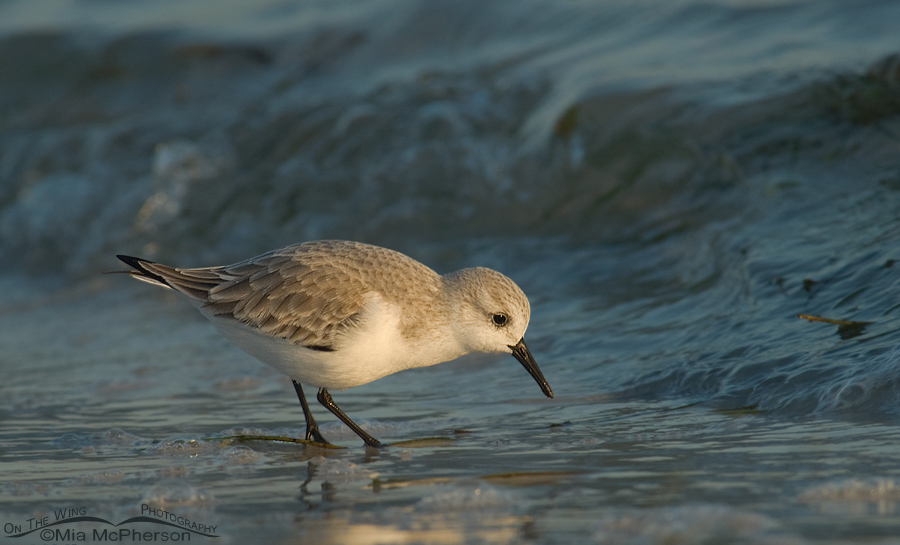

Sanderlings in breeding and nonbreeding plumage

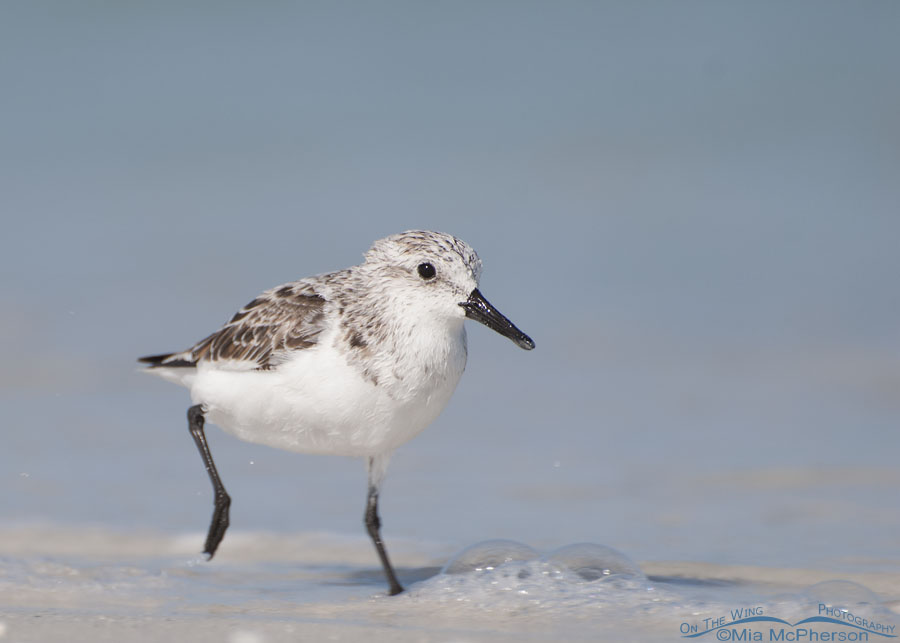
Sanderling in nonbreeding plumage

Sanderling in nonbreeding plumage – Nikon D200, handheld, f6.3, 1/1250, ISO 200, Nikkor 70-300mm VR at 300mm, natural light

Sanderlings look very different in appearance during breeding season and winter and novice birders might even think they are two different species. I’ve heard people call nonbreeding Sanderlings “drab” and “plain” and while they might not be as colorful in nonbreeding plumage I personally wouldn’t call them drab or plain. I would, however; call them a challenge to expose properly and to get them in the frame because they are very active shorebirds when feeding.

The Sanderling above is in nonbreeding plumage and it was racing down the beach hunting for prey when I photographed it. At first I wasn’t happy with the motion blur of the bird’s right foot but the more I looked at this image the more I liked the motion blur because it indicates movement.

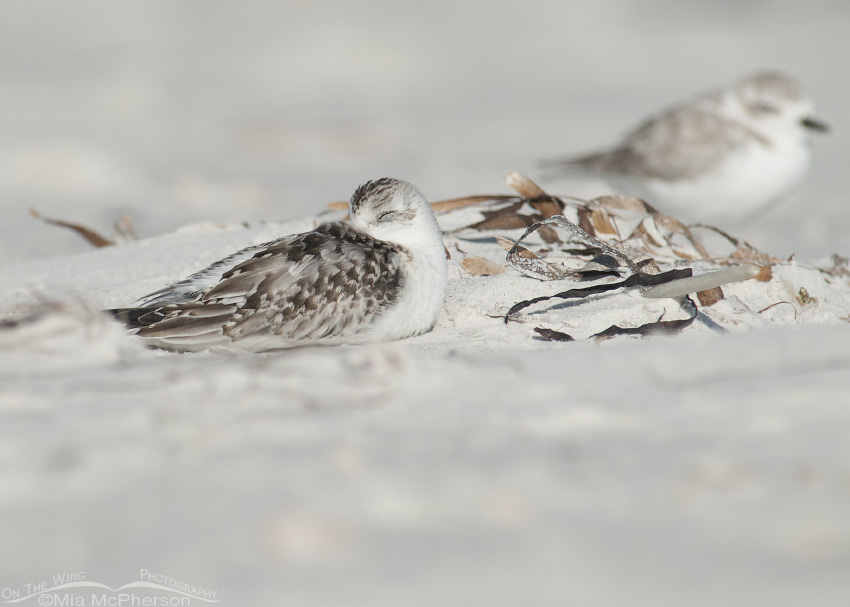
Sanderling in breeding plumage

Sanderling in breeding plumage – Nikon D200, handheld, f6.3, 1/500, ISO 400, Nikkor 70-300mm at 300mm, natural light

This image taken about a month later than the first image shows a Sanderling in breeding plumage, it was created during May which is about the time that the Sanderlings head north to their breeding grounds. Although the belly is still white and the legs and bill are still black the head, neck and back of the bird is quite different. Rufous is the color I think of when seeing a Sanderling in breeding plumage because that color is evident in the head, neck and back of the bird.

A side note; I often hear people say you must have a long (read expensive) lens to photograph birds and in some cases you do actually need a long lens to get frame filling images of birds however in some situations you can get those even with a shorter focal length. Both of the images above were taken with an inexpensive Nikkor 70-300mm VR lens and what made them possible is that these birds were habituated to human presence on the beach so they weren’t as nervous around me and I used very slow belly crawls to get close to them. By being low I appeared less threatening to them and at times the birds would come in so close I could not focus on them. Down & dirty can and does pay off.

Mia

More Sanderling images

Facebook Twitter

Birds, Beasts and Bits About Me – My 500th Blog Post

Wow, this is my 500th blog post and it has been great fun to share my images and the stories behind them. I thought I’d share a few images and bits about my thoughts on photography.

Adult Dunlin feeding

Adult Dunlin feeding – Nikon D200, handheld, f7.1, ISO 200, 1/250, Nikkor 80-400mm VR at 400mm, natural light

What got me hooked on bird photography?

I would say shorebirds are why I am addicted to bird photography because they fascinated me and photographing them allowed me to crawl through mud, sand and water.

When I first started photographing shorebirds I could walk around covered in mud with my camera in my hand people just ignored me or would say “Wow, that camera must take good pictures”. Maybe they were too polite to mention that I had sand all over my face, muddy legs or a combination thereof.

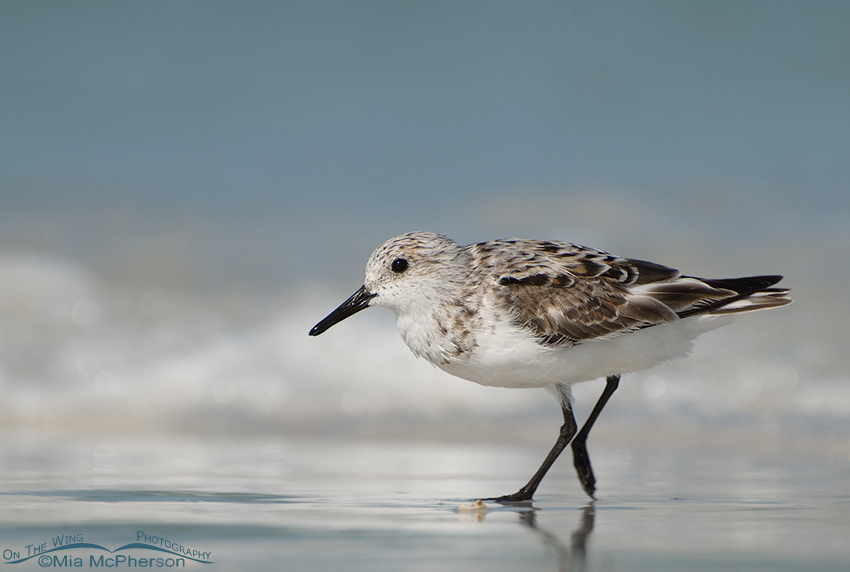
Sanderling in nonbreeding plumage

Sanderling in nonbreeding plumage – Nikon D200, handheld, f6.3, 1/1000, ISO 200, Nikkor 80-400mm VR at 400mm, natural light

I simply loved being out in nature, the feel of the sea breeze on my skin, having warm water lapping against my legs and the birds that I saw everywhere around me. I learned that if I sat or laid very still the birds would approach me and allow close ups like the Sanderling image above. Even when there were no birds around I could wade into the water fully clothed and just make it “look” like I was searching for birds while cooling off and giggling because I was in the water with all my clothes on and I didn’t care one bit.

While slithering around in mud and sand crawling through sugar sand I had many wonderful opportunities to meet and makes friends with a lot of like-minded people who love nature. I figured if they crawled around in the mud with me and didn’t mind that I smelled like a combination of fish and crab poop they had to be great people.

I learned a lot about shorebird ID, which were peeps, plovers and sandpipers and then figured out the rest. Breeding and nonbreeding plumage puzzled me for a bit but with experience, people who let me pick their brains and field guides I’ve become proficient at figuring out shorebird ID.

Roseate Spoonbill in morning light

Roseate Spoonbill in morning light – Nikon D200, handheld, f6.3, 1/750, ISO 250, Nikkor 80-400mm VR at 400mm, natural light

Then there were the larger wading birds, some with razor-sharp bills, some that curved downwards, looked like wood and spoons! I got addicted to photographing them too.

I learned not to over saturate the colors of my subjects in post processing so that they looked like what I saw through my viewfinder.  The Roseate Spoonbill above is colorful enough without pushing that saturation slider up.

Why do I always mention “natural light” in my techs under the images I post?

My answer to that is that nature provides terrific light and I don’t like using flash on birds or other wildlife. I just prefer natural light over artificial.

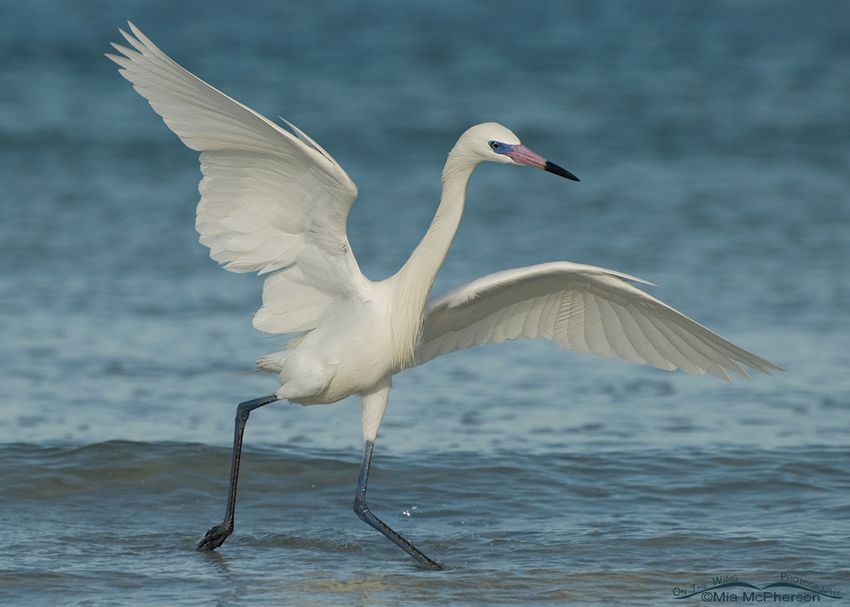
Dancing white morph Reddish Egret

Dancing white morph Reddish Egret – Nikon D200, handheld, f6.3, 1/1250, ISO 250, Nikkor 70-300mm VR at 250mm, natural light

I studied the behavior of my subjects so I could tell when they were about to take flight, bathe, catch prey or dance like the white morph Reddish Egret above. The egret isn’t truly dancing, it is actively chasing after prey.

By observing my subjects I have gotten great action images that I might have missed if I hadn’t been able to anticipate their next move.

Little Blue Heron with a Pipefish

Little Blue Heron with a Bay Pipefish – Nikon D200, handheld, f6.3, 1/800, ISO 160, Nikkor 80-400mm VR at 400mm, natural light

I found out that going out to photograph with other people was very enjoyable and that knowledge about techniques could flow easily back and forth. I photographed the Little Blue Heron with a Bay Pipefish above with two photographer friends and we all walked away with images that we were very happy with.

Singing male Red-winged Blackbird

Singing male Red-winged Blackbird – Nikon D200, handheld, f7.1, 1/200, ISO 250, Nikkor 80-400mm VR at 400mm, natural light

I worked on my stalking skills and patience so I could get closer to my subjects without stressing them or making them flush. Of course; some still flush & fly.

Laughing Gull in breeding plumage at a water fountain

Laughing Gull in breeding plumage at a water fountain – Nikon D200, handheld, f6.3, 1/1000, ISO 250, Nikkor 80-400mm VR at 400mm, natural light

I feel that all birds are worthy subjects and that even the most common birds can be uncommonly beautiful in the right light, pose or setting. Normally I prefer natural settings and perches but I also enjoy images that have manmade items in them. I think the water fountain as a perch for this Laughing Gull adds a touch of whimsy.

Male Northern Harrier in flight

Male Northern Harrier in flight – Nikon D200, f7.1, 1/2000, ISO 320, +0.3 EV, Nikkor 200-400mm VR with 1.4x TC at 400mm, natural light, not baited

Paying attention to how close the background material is to the subject is important. If the dried Phragmites behind this male Northern Harrier had been any closer to the bird the background may have looked very messy but because of the distance from the harrier to the vegetation plus my choice of aperture and the bokeh of the lens created a background that doesn’t draw attention away from the subject.

Loggerhead Shrike perched on Sagebrush

Loggerhead Shrike perched on Sagebrush – Nikon D300, f6.3, 1/640, +0.7 EV, Nikkor 200-400mm VR with 1.4x TC at 400mm, natural light

I selected the colors for this blog and my web site using the hues of greens from Sagebrush, a shrub that is found in many areas of my adopted state of Utah. I find the gray greens soothing and I have to admit I find the aroma of Sagebrush very appealing. Besides, Sagebrush makes a great perch for many of my subjects.

Pronghorn does on a hilltop at sunset

Pronghorn does on a hilltop at sunset – Nikon D300, f6.3, 1/3200, ISO 1000, Nikkor 200-400mm VR with 1.4x TC at 400mm, natural light

Even though birds are my primary passion for photographic subjects I can’t resist taking images of other subjects like the Pronghorn does above. If there aren’t birds around I will take images of flowers, scenery, mammals, insects and more.

The Wedge in the San Rafael Swell, Utah

The Wedge in the San Rafael Swell, Utah – Nikon D200, handheld, f9, 1/2000, ISO 400, -0.3 EV, Nikkor 18-200mm VR at 18mm, natural light

I see spectacular views, sun rises and sunsets because of my photographic journeys, some time the views take my breath away. Looking down into the Little Grand Canyon from The Wedge certainly did.

Coyote eating Falcon leftovers

Coyote eating Falcon leftovers – Nikon D300, f6.3, 1/640, ISO 800, Nikkor 200-400mm VR with 1.4x TC at 314mm, natural light, not baited or called in

There are times when paying attention to one species gives clues about another. I’d seen Peregrine Falcons feeding on ducks on the shoreline of the Great Salt Lake and later saw a Coyote feeding on the falcon’s leftovers, now I know why the Coyotes were along the causeway the year before which had puzzled me. I love the piled up sheets of ice in the background of this image.

Adult Bald Eagle in flight

Adult Bald Eagle in flight – Nikon D200, f6.3, 1/2500, ISO 400, +0.7 EV, Nikkor 200-400mm VR with 1.4x TC at 400mm, natural light, not baited

Patience is needed for bird photography, waiting for a bird to fly, waiting for the right banking turn to light the whole bird up and sometimes just waiting for birds to show up.

Perched adult western Burrowing Owl

Perched adult western Burrowing Owl – Nikon D200, f6.3, 1/400, ISO 200, Nikkor 200-400mm VR with 1.4x TC at 400mm, natural light, not baited

Because of my bird and nature photography I have met the most interesting people in person and have become friends with many of you through this blog or yours and I appreciate you all. Life is good.

500 posts. Wow.

Mia

Facebook Twitter

Low light images

Happy Thanksgiving!

Because I live far from my family and have no children at home my yearly Thanksgiving tradition includes spending a part of my day out photographing birds, mostly early morning outings. This morning I did get out to photograph but I came home “skunked”. There are low heavy clouds here today but even worse, there were no birds close enough to even do low light bird photography. Well my tradition was not broken, I did go regardless of being skunked.

Low light Sanderling in breeding plumage

Low light Sanderling in breeding plumage ~ Fort De Soto County Park, Florida
D200, handheld, laying on the sand, f6.3, 1/500, ISO 400, Nikkor 70-300mm VR at 300mm, natural light

I firmly believe that fine quality, compelling images can be taken in low light. Yes, most of the time bird photographers desire that “sweet light” so often spoke of, but there are situations where no matter how closely you look at the weather on TV or online radar images that the light will not be what you thought (or hoped) it might be.

 The morning I took the Sanderling (Calidris alba) image above the forecast was for partly cloudy skies. The radar looked good so I gathered my gear and drove to Fort De Soto in the very early pre-dawn light. On the way there I could clearly see the sky beginning to turn colors and I was excited about spending the morning sand crawling or immersed in the water to get photograph of the birds I would see. Excited until I looked to my west while at the first bridge just after the toll booth.

Argh, those radar images didn’t pick up the sea fog that was swirling over the north beach.  “Too late” I told myself, “you’ve driven 45 minutes to get here, make the best of that fog!”.

There was enough ambient light coming through the fog to produce fine images of the birds that morning, for the image above I didn’t even feel the need to use exposure compensation which does need to be used on occasion in foggy conditions. When I am processing images taken in low light I try to retain that feeling by not overdoing contrast, saturation or sharpening. The image above “whispers”, it doesn’t “shout” and I like it that way.

Preening juvenile Roseate Spoonbill in low light
Preening juvenile Roseate Spoonbill in low light ~ Fort De Soto County Park, Florida
Nikon D200, handheld, laying on the edge of a lagoon, f7.1, 1/200, ISO 400, Nikkor 80-400mm VR at 250mm, natural light

I found this juvenile Roseate Spoonbill (Platalea ajaja); with some adults, preening in a sea fog one morning that I went to Fort De Soto. The weather forecast for the day was clear, the radar looked good on line but the fog came rolling in not long after I got to the beach. It happens.

When I post processed this image I did apply a minimal amount of Noise Reduction to the background to help with the noise I saw evident while hoping to retain the foggy feeling and only slightly increased the saturation globally.

Today; I could have created similar images like this Sanderling and Roseate Spoonbill… if ONLY there had been birds nearby.

The forecast for today? Partly cloudy. Man, the weather forecasters were wrong.

Again, Happy Thanksgiving!

Mia

Facebook Twitter

Sanderlings – Tiny Dynamos

Winter plumage Sanderling feeding on a Penn Shell

Winter plumage Sanderling (Calidris alba) on a Penn Shell
Fort De Soto County Park, Pinellas County, Florida
Nikon D200, handheld, f6.3, 1/800, ISO 320, Nikkor 80-400mm VR at 400mm, natural light

Sanderlings are little shorebirds that are found high in the Arctic tundra during breeding season and during the winter they can be found on both the Pacific and Atlantic coasts from Canada to Argentina, during migration they can also be found inland on the banks of rivers and the shorelines of lakes.

Sanderlings feed by following waves to capture any small creatures that may have been left by the receding water then as soon as a wave starts to come into the shoreline the sanderlings scramble to keep ahead of the incoming water. It is amusing to watch these frenetic shorebirds as they dash back and forth. They must burn up a lot of calories!

In the image above the Sanderling came across a Penn shell (I always called them Turkey Wings)  that had been washed up on the shore by a storm the day before and was pecking away at something I couldn’t see on the tissue that had extruded from the shell.

Sanderling feeding

Sanderling feeding
Fort De Soto County Park, Pinellas County, Florida
Nikon D200, handheld, f6.3, 1/1000, ISO 200, Nikkor 70-300mm at 300mm, natural light

When photographing shorebirds I like to get down to their level which usually means flopping down on my stomach and holding the lens close to the ground while being very careful to protect the camera and lens from the damage that sand or water could cause. I feel the by being at this low of an angle that I am in the bird’s “world”. In my opinion it is a rather neat feeling to be at eye level with such a small bird.

When I plan on getting “down & dirty”  while photographing I usually always carry along a change of clothes because I just never knew how I would smell after laying in the damp sand or ground.

Breeding plumage adult SanderlingBreeding plumage adult Sanderling
Honeymoon Island State Park, Pinellas County, Florida
Nikon D200, handheld,  f6.3, 1/1000, ISO 200, Nikkor 80-400mm VR at 400mm, natural light

Sanderlings in breeding plumage are colorful with rich browns and warm rufous colors that contrast very nicely against the clean white of their chest and stomach. The head and neck also become more vibrant. Personally I find all the plumage phases of Sanderlings appealing.

Sanderlings can be a challenge to photograph because they move erratically at a very fast pace but creating images of them at their level is well worth the trouble of getting dirty and being exhausted by trying to follow the movements of these tiny dynamos. Just keep the shutter speed up!

Mia

More Sanderling images

Facebook Twitter

Rotation adjustments


Sanderling without rotation adjustmentSanderling without rotation adjustment
D200, handheld, f9, 1/250, ISO 320, 80-400mm VR at 400mm, natural light

Proper rotation can make an image work. Improper rotation can cause the the person viewing to wonder what isn’t right about an image.  Usually when birds are in flight and have nothing but sky behind them rotation isn’t always crucial, but if there is a visible straight line horizon it is easy to see when and how much the image needs to be rotated.

There are times, for instance when a bird is standing on sand, dirt or other feature that you may have to make a choice about the best rotation adjustment.

When a bird is in water you can usually line up some part of the reflection to get the proper rotation adjustment, the catchlight in the eye, reflection of some body part or by the specular highlights present in the water.

There are times though where the shoreline slopes down to the water that can be difficult. The Sanderling (Calidris alba) image above was taken while I laid on sand that was sloping down towards the shoreline where the waves were washing upwards onto shore and as they flowed back down the bubbles on the water surface were on a slant. Most people would feel that this image needs to be rotated.


Sanderling with rotation adjustment
The same Sanderling with rotation adjustment
D200, handheld, f9, 1/250, ISO 320, 80-400mm VR at 400mm, natural light

This is the same image with some rotation adjusment applied. I used a specular highlight and lined up its reflection to make the adjustment as many photographers would do in this case.

For me, the problem is that I like both presentations, the one with the natural slope down towards the water and the one with rotation adjustment applied. I’m not sure which one I like best.

Mia

Facebook Twitter