
The Ant Slaying Snowy Plover

The Ant and the Snowy Plover

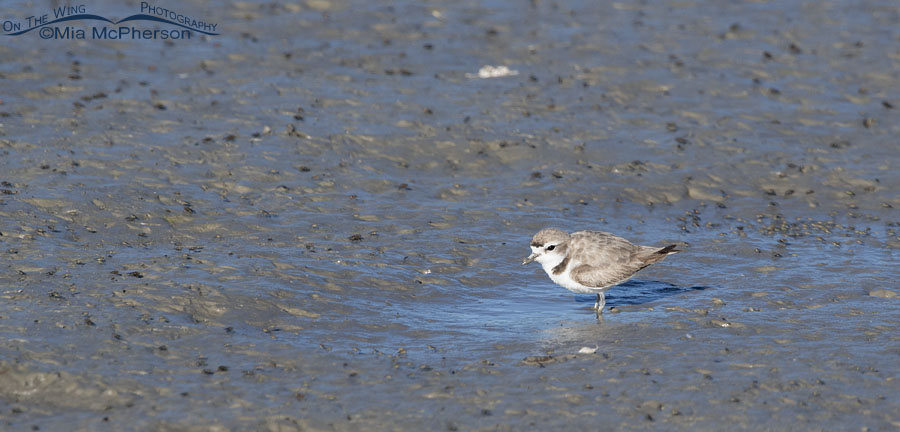
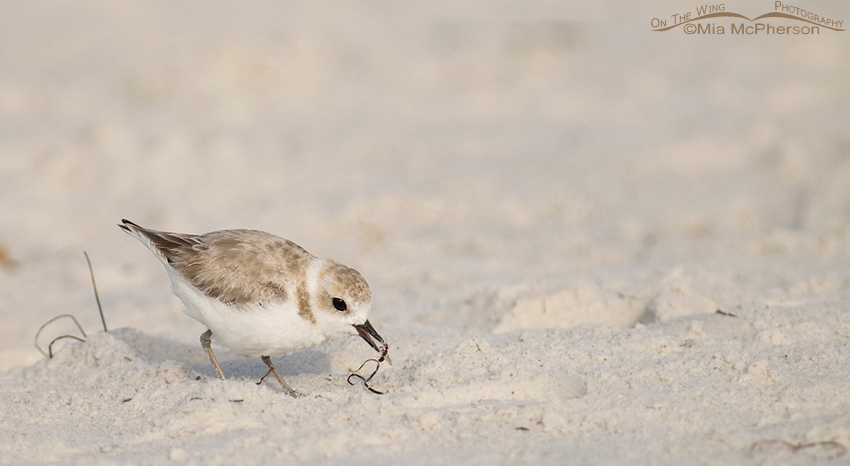
The Ant and the Snowy Plover – Nikon D200, handheld, f5.6, 1/1250, ISO 250, Nikkor 80-400mm VR at 400mm, natural light, prey provided by the bird

While photographing this Snowy Plover in June of 2008 I was able to observe the tiny shorebird snatch an ant from the sugar sand of the north beach of Fort De Soto. I watched as the plover stuffed the ant into the sand then waited a few seconds and then the bird  removed the ant from the sand and repeated the behavior several times before scarfing the ant down. To this day I am still not sure why the Snowy Plover did what it did but I do know that while watching it through my lens I was fascinated.

Mia

Facebook Twitter

Snowy Plover

Snowy Plover

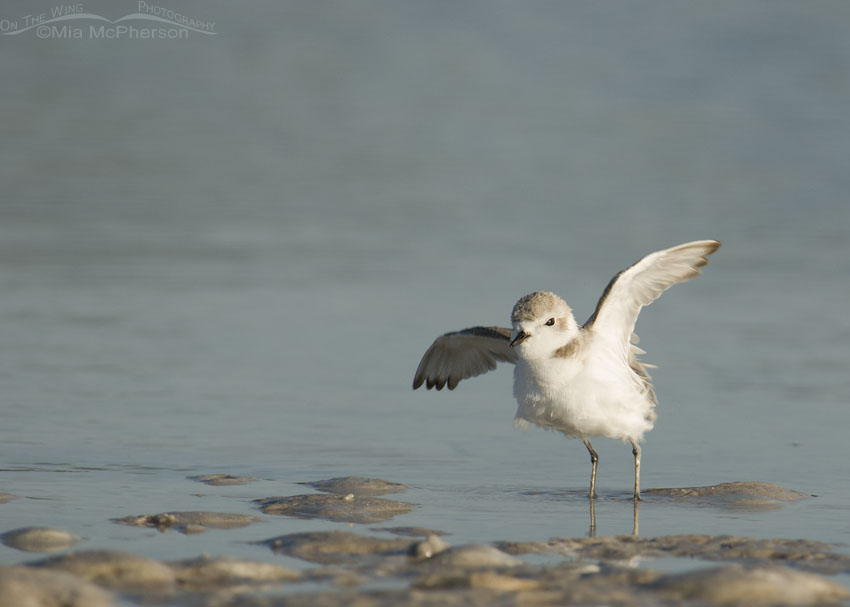
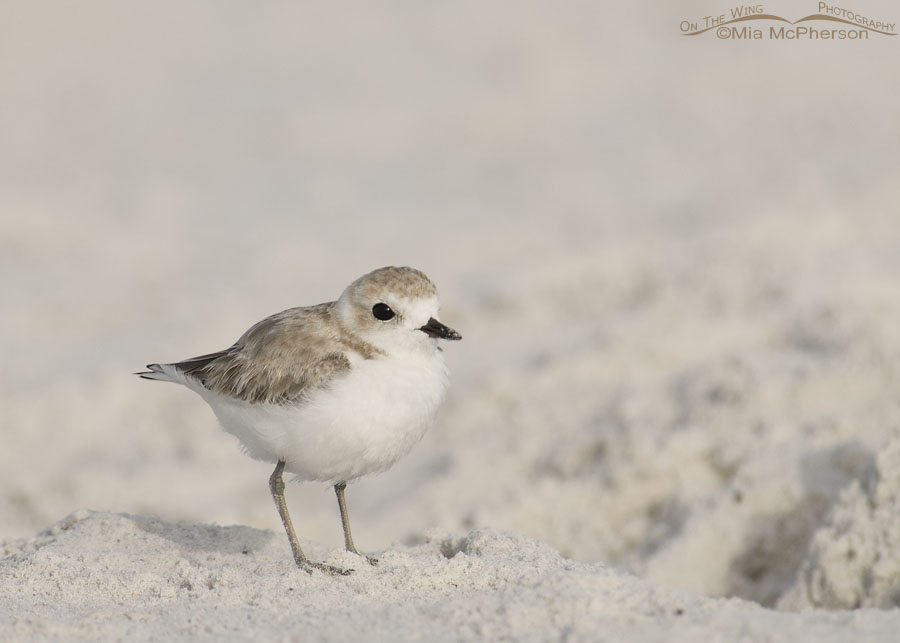
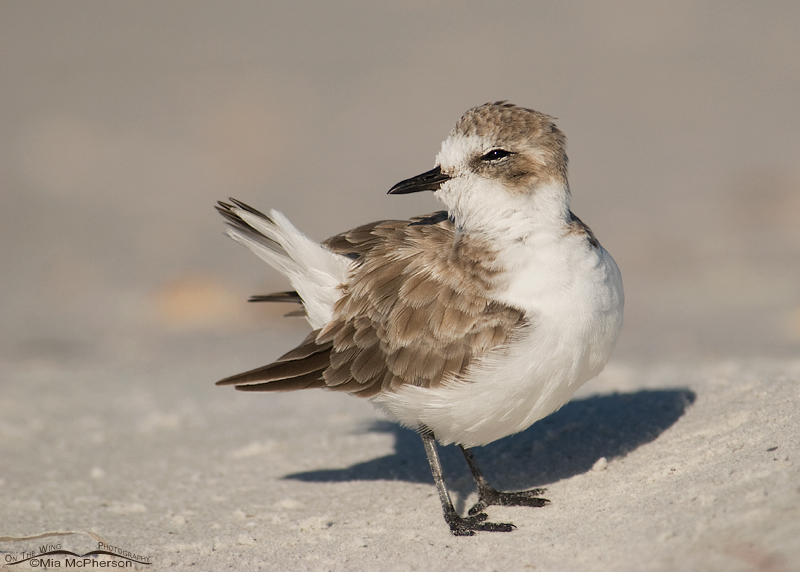
Snowy Plover – Nikon D200, handheld, f6.3, 1/2500, ISO 250, Nikkor 80-400mm VR at 400mm, natural light


A simple image of a beautiful Snowy Plover (Charadrius alexandrius) in a rather goofy looking pose. The plover had been preening and paused for a few frames with its tail lifted up and its eyes barely open. I couldn’t resist sharing.

Mia

Facebook Twitter

Snowy Plover Resting at the Wrack Line

Resting Snowy Plover

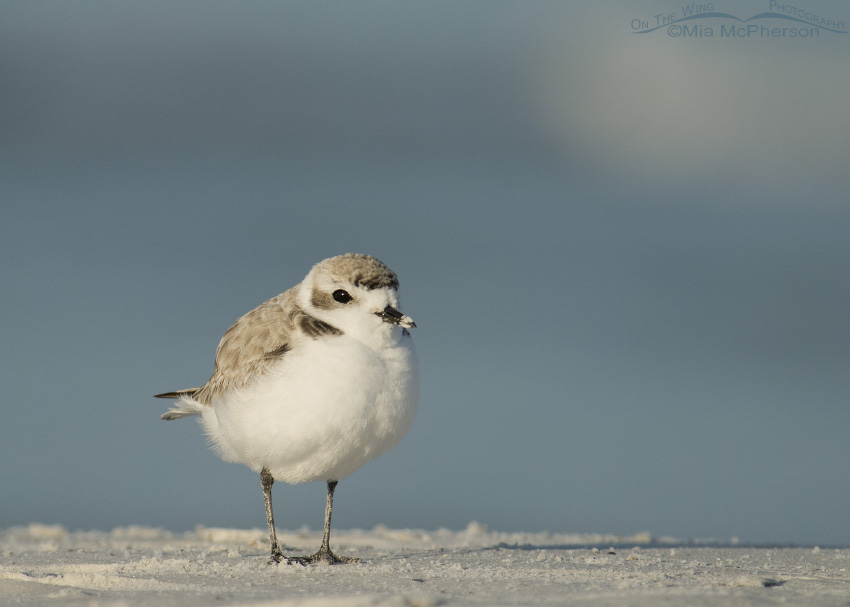
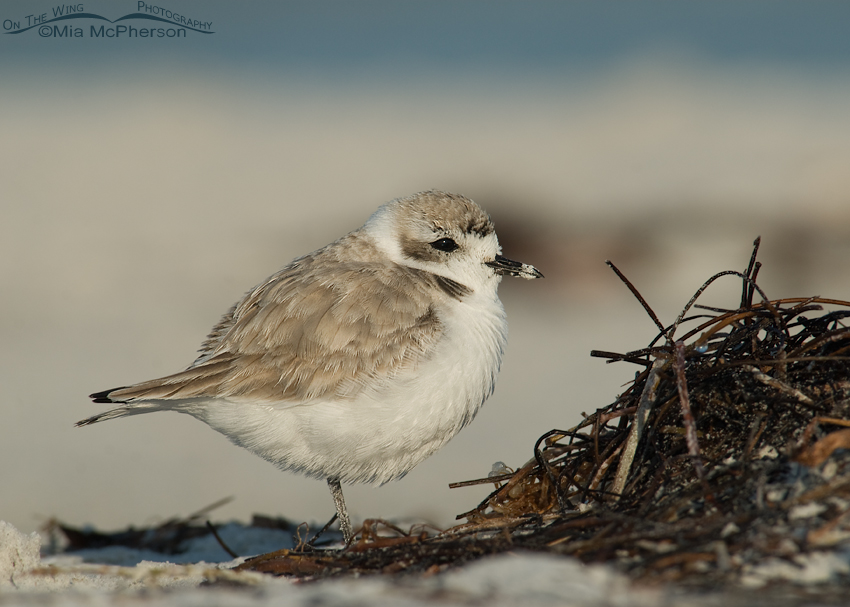
Resting Snowy Plover (Charadrius alexandrius)
Pinellas County, Florida
Nikon D200, f10, 1/350, ISO 160, Nikkor 80-400mm VR at 400mm, natural light

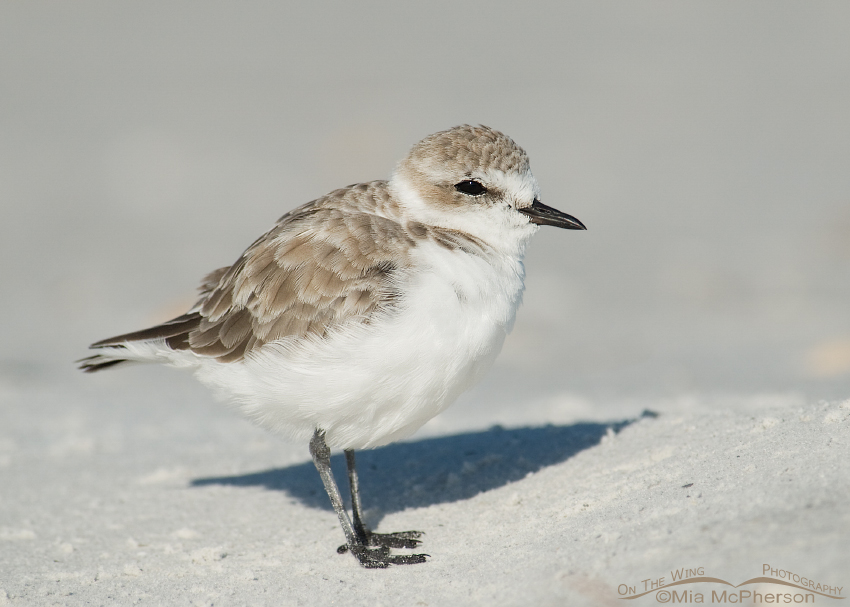
Snowy Plovers are the smallest plover of North America and as their name implies they are very pale colored.  I spotted this plover resting near the wrack line near the Gulf of Mexico during the winter and sand-crawled up close to it to get a low angle in the beautiful light. For Florida the morning was cool so the bird had its feathers fluffed up to help keep the warmth close to its body.

I know that there are those photographers who would have “cleaned up” the sand on the bill of this bird using cloning and other Photoshop techniques but I prefer to leave my images as natural as possible. The sand was there when I took this so I left it alone. Personally I think it adds interest and reality as it is.

Mia

More Snowy Plover images

Facebook Twitter

Shorebirds of Fort DeSoto – The Plovers

Throughout the year you can see and photograph many different species of Plovers on Fort DeSoto’s beaches, tidal lagoons and spartina marshes. Of the plover species that are seen in North America there are seven species that can been seen during their migration or winter grounds, six of those species are seen with regularity and one that is seen infrequently.

  1. American Golden Plover – seen infrequently during migration
  2. Black-bellied Plover
  3. Killdeer- year round resident of Florida, seen mostly inland but does show up at Fort DeSoto’s beaches infrequently
  4. Piping Plover
  5. Semipalmated Plover
  6. Snowy Plover -can be a year round resident and does breed in Florida
  7. Wilson’s Plover – year round resident

Black-bellied Plover in nonbreeding plumage

Black-bellied Plover in nonbreeding plumage
D200, handheld, f6.3, 1/1000, ISO 160, 80-400mm VR at 340mm, natural light

Black-bellied Plovers are the largest and most common of the North American plovers. It feeds in the mudflats, the shallow waters of the lagoons and along the Gulf shoreline of Fort DeSoto.

Black-bellied Plover in breeding plumage

Black-bellied Plover in breeding plumage
D200, handheld, 1/1000, ISO 200, 70-300mm VR at 300mm, natural light

At Fort DeSoto the Black-bellied Plovers are often seen in nonbreeding plumage as well as in breeding plumage. The image above shows the black belly that this species is known and named for.  In breeding and nonbreeding plumage  Black-bellied Plovers show a black underwing part close to the body that distinguishes them from the other Pluvialis plovers.

Killdeer in grasses

Killdeer in grasses
D200, handheld, f6.3, 1/1000, ISO 320, 80-400mm VR at 400mm, natural light
Taken near Ruskin, Florida across Tampa Bay

Killdeer are considered “Upland Plovers” and can be seen far from water in fields, lake and river edges, golf course, air fields, pastures, the sides of roads, parking lots and more. At Fort DeSoto I have seen them on near the mudflats of the lagoons and I have seen them in the grassy areas between the parking lot at North Beach and the sand of the beaches.  It is larger than the Wilson’s and Semipalmated Plover that look similar and has two breastbands instead of one. The only photos I have of Killdeer at Fort DeSoto the birds were small in the frame and I decided to post this one instead for identification purposes.

Puffed up Piping Plover

Puffed up Piping Plover
D200, handheld, f5.6, 1/750, ISO 250, 200-400mm VR with 1.4x TC at 400mm, natural light

Piping Plovers are small and pale, paler than the Semipalmated and Wilson’s Plovers though not quite as pale as Snowy Plovers. It can easily be distinguished from the Snowy Plover by their yellow to orange legs, Snowy Plovers have gray to pinkish legs. The differences in the bills of the two species are also a help with ID,  Piping Plovers have an orange, black tipped bill and Snowy Plovers have a black bill.

Semipalmated Plover in early morning light

Semipalmated Plover in early morning light
D200, handheld, f5.6, 12000, ISO 250, 80-400mm VR at 400mm, natural light

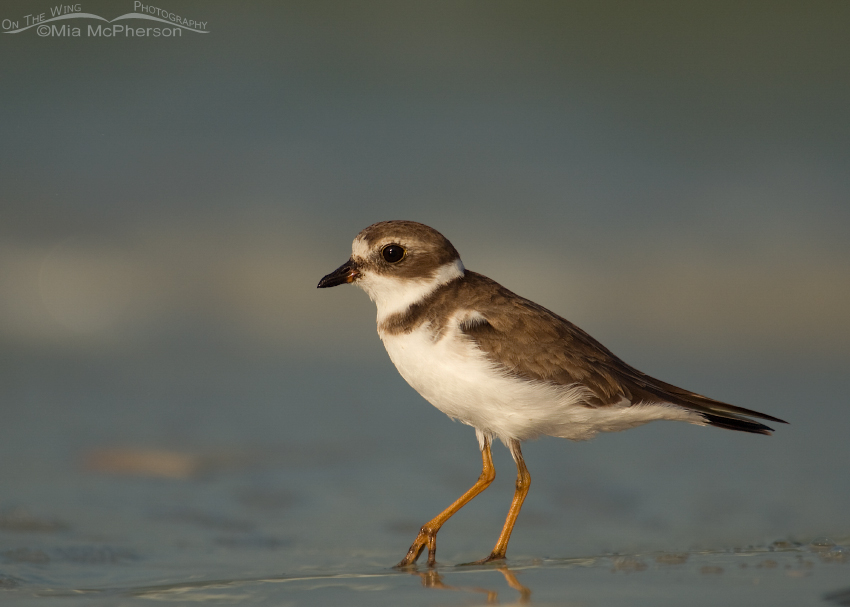
Semipalmated Plovers are seen along the lagoons, mudflats and the Gulf shoreline. On chilly days they seem to enjoy resting in the sand with their feathers all fluffed up. Thier food can be taken right at the surface but they also dig down a few millimeters to find their prey.

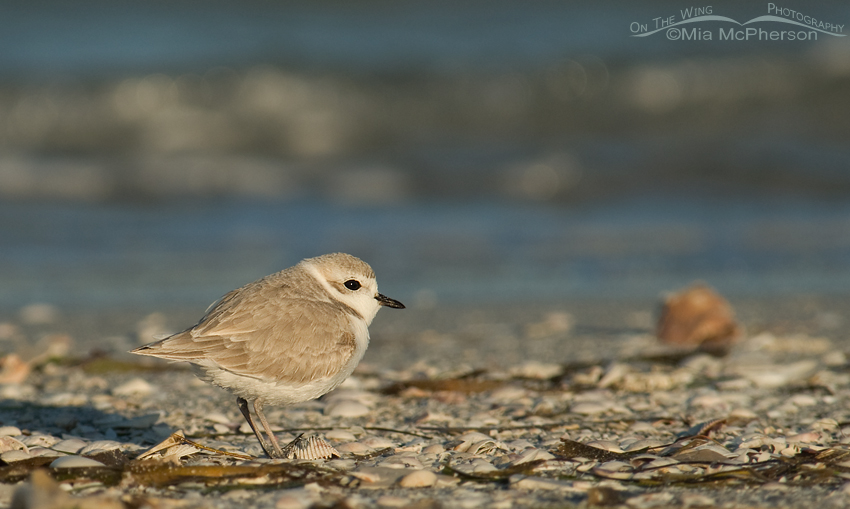
Snowy Plover resting on the wrack line

Snowy Plover resting on the wrack line
D200, handheld, f6.3, 1/1000, ISO 250, 80-400mm VR at 400mm, natural light

Snowy Plovers are the smallest and palest of the plovers seen on Fort DeSoto. In some parts of Florida they are year round residents that breed on open beaches and dunes. This species blends in extremely well with the sand at Fort DeSoto and can run very quickly. Habitat destruction has resulted in declining populations of this charming and diminutive plover.

Adult Wilson's Plover

Adult Wilson’s Plover
D200, handheld, f6.3, 1/800, ISO 250, 80-400mm VR at 400mm, natural light

Wilson’s Plovers are the largest of the Charadrius species of  plovers. They have a heavy belly and usually exhibit a very upright posture. Wilson’s Plover have a thick black bill that is heavier appearing than the other Charadrius plovers.  When they are adults they have brownish upperparts.

Young Wilson's Plover with crab

Juvenile Wilson’s Plover with crab
D200, handheld, f7.1, 1/640, ISO 200, 80-400mm VR at 400mm, natural light

When Wilson’s Plovers are young their plumage can appear much paler than the adults as seen in the image above.

Unfortunately I never had the opportunity to photograph American Golden Plovers at Fort DeSoto and thus I do not have an image to provide for them. Maybe on my next trip I’ll have that chance. I hope so.

Mia

Facebook Twitter