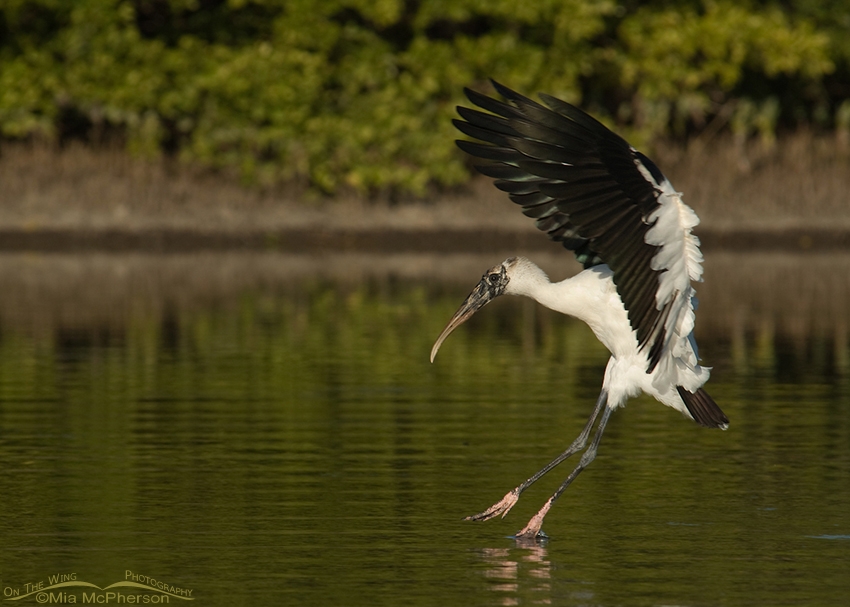
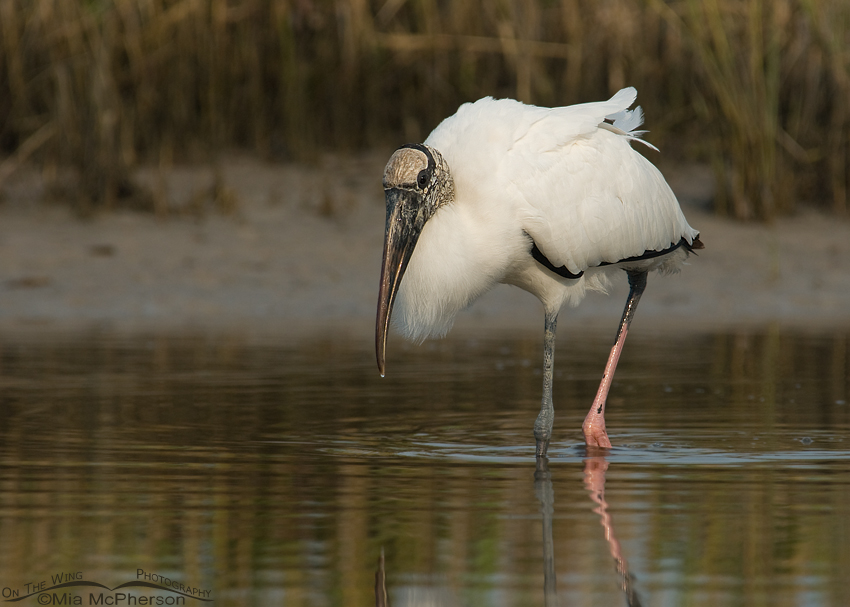
Wood Storks – Diffuse light

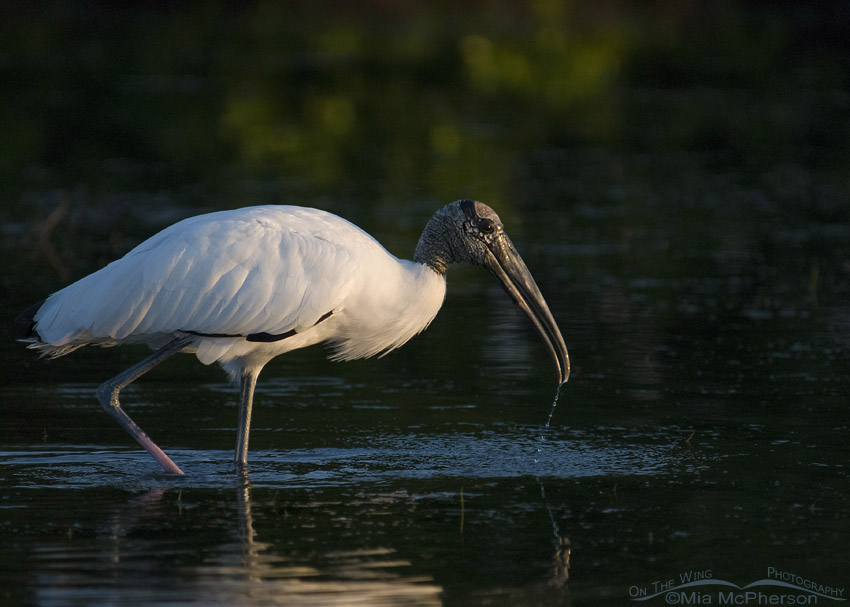
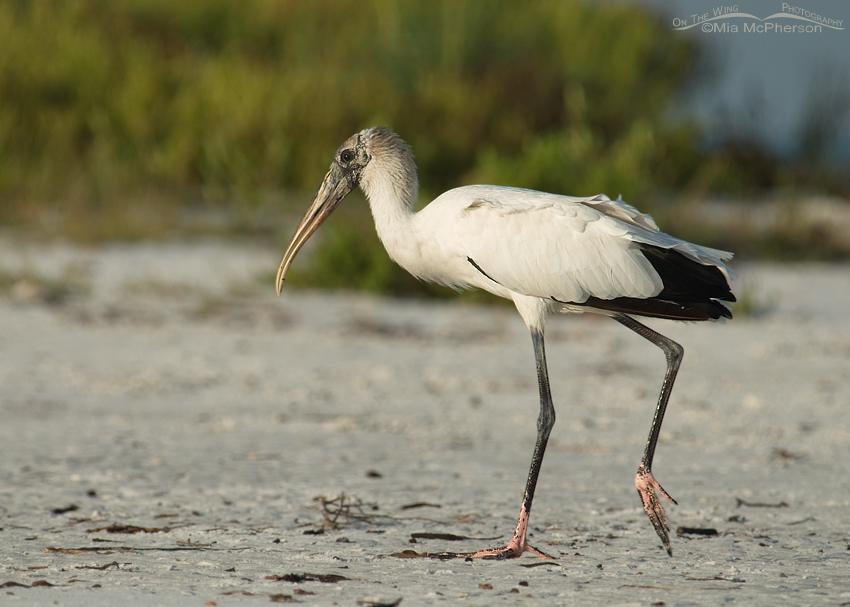
Walking Wood Stork (Mycetaria americana)

Walking Wood Stork (Mycetaria americana)
Pinellas County, Florida
Nikon D200, handheld, f6.3, 1/1000, ISO 320, Nikkor 80-400mm at 400mm, natural light

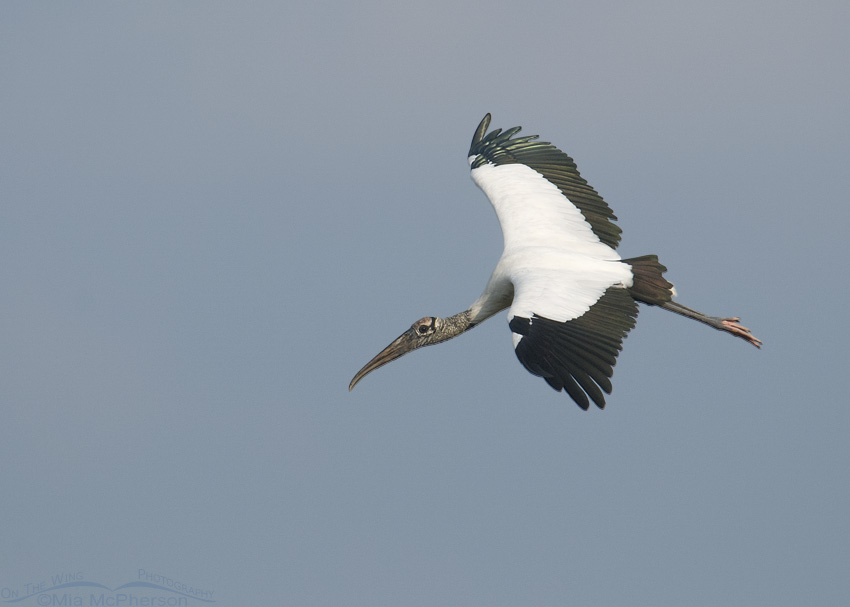
These two images were taken after the “Golden Hour”, though as I recall there wasn’t much golden light that morning. There were high thin clouds and that worked in my favor to photograph these large white birds without blowing out the whites. White feathers in bright light can be challenging to expose properly but the clouds on this day caused a diffusion of the light.
Wood Stork (Mycetaria americana) resting

Wood Stork (Mycetaria americana) resting
Pinellas County, Florida
Nikon D200, handheld, f7.1, 1/640, ISO 320, Nikkor 80-400mm VR at 270mm, natural light

I was either laying in the very shallow water of this lagoon or sitting down in it as low as possible to get a low angle. These are big wading birds though so I didn’t need to go as low as I would for a small shorebird like a Sanderling.

Wood Storks are the only native stork in North America and I think they are very prehistoric looking. I know quite a few people will pass up taking images of Wood Storks for more colorful and “beautiful” birds. Not me.

The diffuse light that day worked in my favor with these fascinating birds.

Mia

More Wood Stork images

Facebook Twitter Stumbleupon Digg Delicious Reddit Posterous Pinterest Email

Share

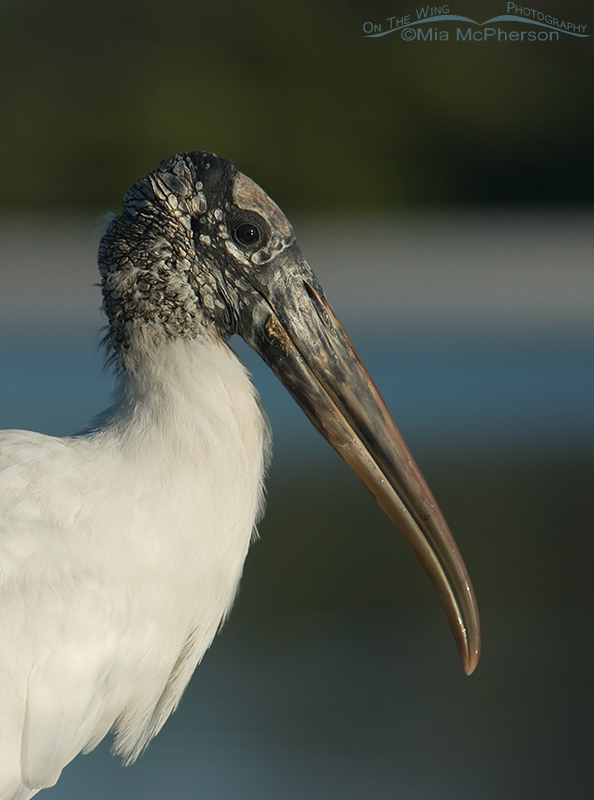
Wood Stork portrait

Wood Stork portrait

Wood Stork portrait
D200, handheld, f7.1, 1/640, ISO 160, 80-400mm VR at 400mm, natural light, a little noise reduction was applied to the background

It is my opinion that Wood Storks (Mycetaria americana) do not get nearly the same exposure as other big white wading birds and even far less than the pink Roseate Spoonbill. On avian critique forums you will see the Great Egret, Snowy Egret, White Ibis and the white morph of the Reddish Egret posted over & over again. Not so with the Wood Storks.

The number of views and comments on the aforementioned big white birds on those critique forums; even when they are technically flawed, will often be double or triple of the views for a perfectly executed Wood Stork photo.

I can not begin to fathom why. It might be the “bald” head of the Wood Stork family but the far more popular mature Roseate Spoonbill has a “bald” head too so I think the fascination with them specifically has to do with the cotton candy pink plumage they sport.

Wood Storks are only member of the stork family and the largest wading bird we have in North America. They are graceful on the ground and in flight and I find the wood-like patina of the bill very intriguing. It is their unique appearance that draws me to them and inspires me to photograph the storks to the best of my skills and abilities.

This particular Wood Stork allowed me opportunities to photograph it in flight as it landed in a lagoon, while it fed and because I sat very still in the water it approached me closely enough to take some closeup images.

For my tastes… bald can be beautiful.

Mia

Facebook Twitter Stumbleupon Digg Delicious Reddit Posterous Pinterest Email

Share