

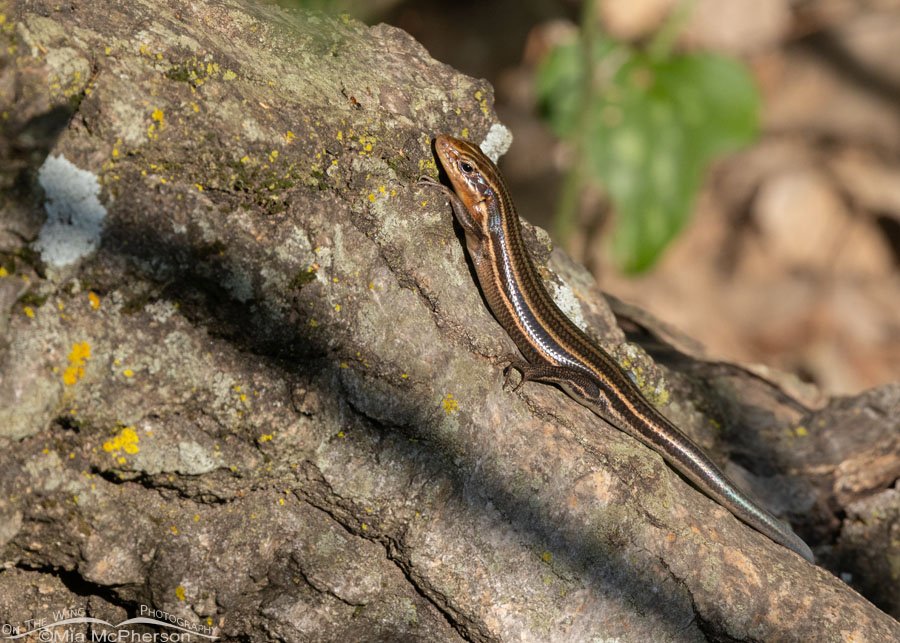
 Common Five-lined Skink on a tree root at Sequoyah National Wildlife Refuge – Canon R7, beanbag, f8, 1/1000, ISO 640, Canon RF 100-500mm at 472mm, natural light
I’ve seen and photographed several Common Five-lined Skinks at Sequoyah National Wildlife Refuge this past month while driving the auto tour route.
The skinks like to bask in the sun once it has warmed up in the morning. Quite often I find them basking on the roots of live trees or on fallen snags at the refuge during the warmest months of the year.
In my area of Oklahoma there are two species of skinks: Common Five-lined Skinks and Little Brown Skinks. I have yet to find a Little Brown Skink, but I keep looking.
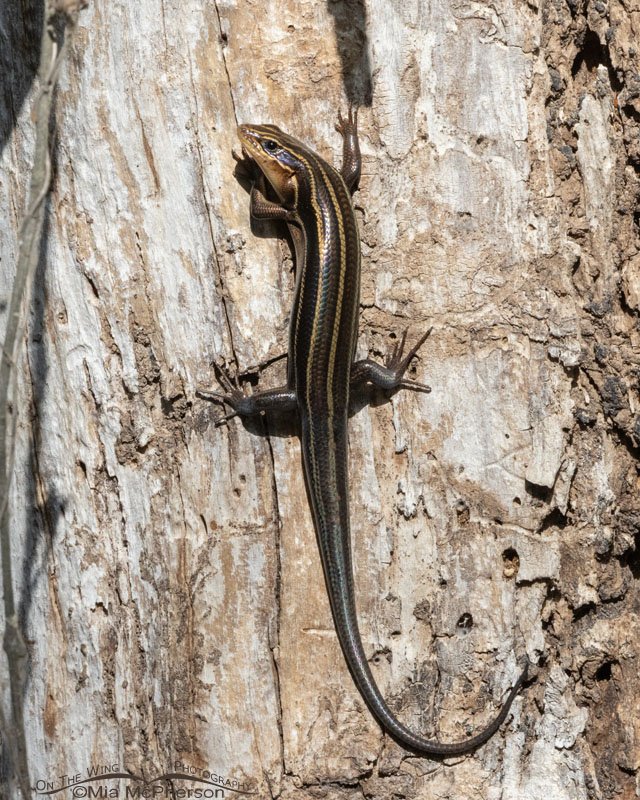 Common Five-lined Skink climbing a dead tree in Oklahoma – Canon R7, beanbag, f13, 1/500, ISO 800, +0.7 EV, Canon RF 100-500mm at 500mm, natural light
On my most recent visit to the refuge, I found a Common Five-lined Skink climbing a dead tree while driving toward the entrance. Of course, I had to stop and take photos of the skink.
I’m glad I did.
Common Five-lined Skinks are primarily found in the eastern and central regions of the United States. Their range extends from southern Ontario, Canada, to northern Florida and westward to the eastern edge of the Great Plains.
Common Five-lined Skinks prefer habitats such as forests, woodlands, meadows, and rocky areas, where they can find suitable shelter and basking spots.
Life is good.
Mia
Click here to see more of my Common Five-lined Skink photos plus facts and information about this species.
Very cool shots and I love your narrative. Thanks Mia.
I live in north Central OK. Enjoy your posts
Nice dorsal shot!