Friday Photos – Wilson’s Plover

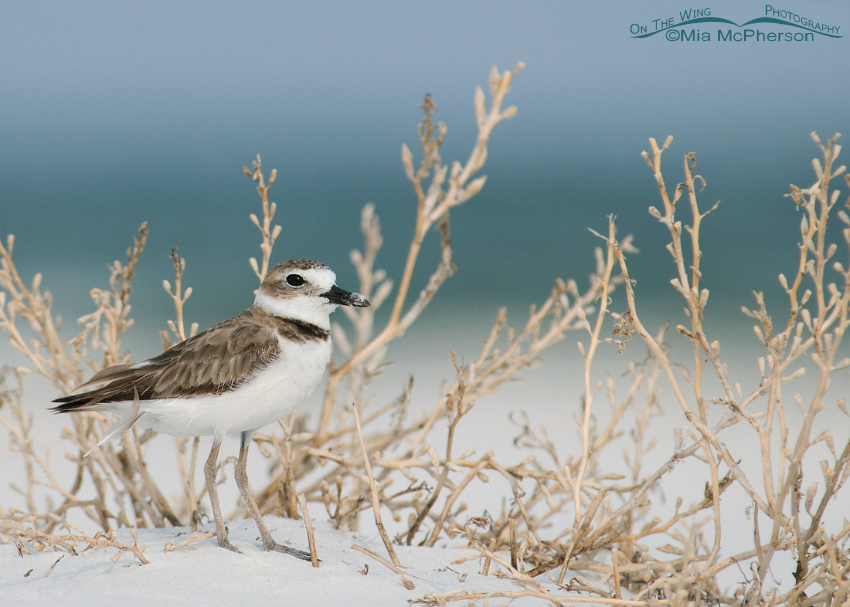
Adult Wilson's Plover (Charadrius wilsonia) in dried Sea Purslane
Adult Wilson’s Plover (Charadrius wilsonia) in dried Sea Purslane
Fort De Soto County Park, Pinellas County, Florida
Nikon D200, handheld, f6.3, 1/640, ISO 250, +0.3 EV, Nikkor 80-400mm VR at 400mm, natural light

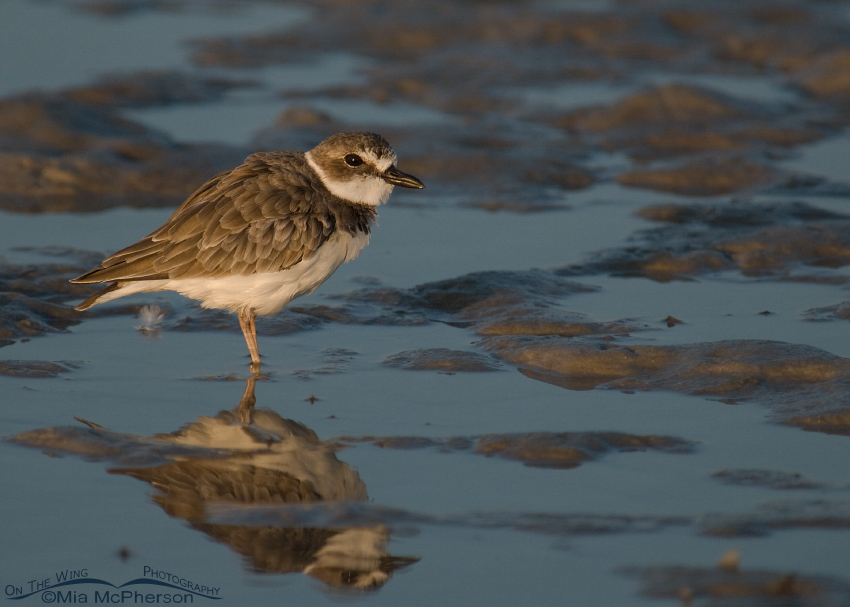
This Friday’s Photo is that of a Wilson’s Plover, a species I very much enjoyed photographing while I lived in Florida. Wilson’s Plovers are strictly coastal shorebirds so here in Utah I don’t get to see them. They are found from the mid-Atlantic states down to Florida, Cuba and all along the Gulf shorelines. A subspecies; Charadrius wilsonia beldingi, is found on the Mexican Pacific coast and the Gulf of California.
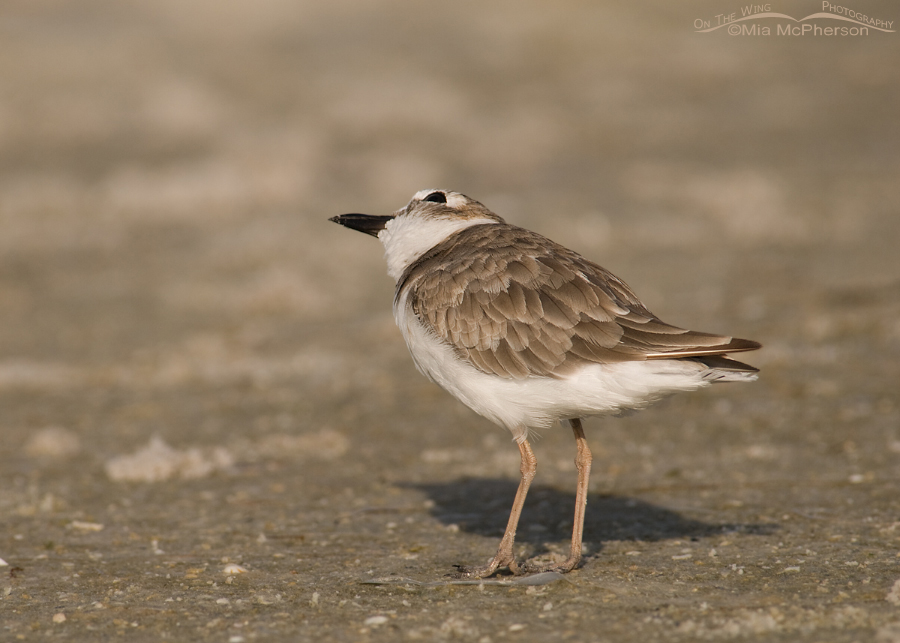
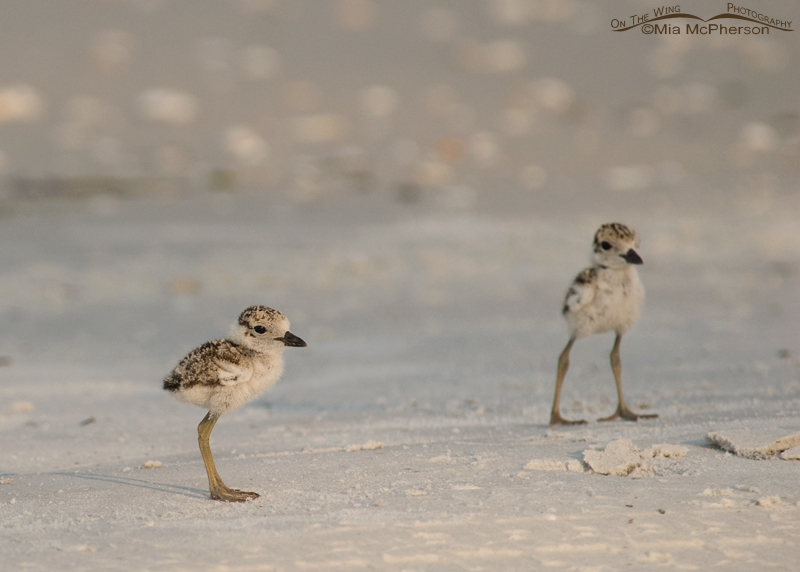
Wilson’s Plovers nest in simple scrapes that can be found on the sandy shorelines and in sand dunes. This adult did have several chicks at the time I photographed it and it had been running along trying to keep up with the young birds when it took a short break on this sand dune amongst some dried Sea Purslane. The chicks appeared to have a mind of their own and were running willy-nilly through the dunes. Must be exhausting for the adults to keep up with with their young. I couldn’t help but laugh at the actions of the seemingly strong-willed but very curious chicks.

Mia

* I’m stuck at home today waiting for the delivery of a replacement for my Jobu Black Widow Gimbal HD head. I had trouble with the older version when my locking pin broke off a few weeks ago. Jobu Design has been great about accepting the old Gimbal head back and replacing it with the newer version for a small upgrade fee. Although I rarely use a tripod, when I need it I really need it! My Nikkor 200-400mm VR f/4 gets a bit heavy to handhold for me so I can’t wait to get this new Gimbal set up.

More Wilson’s Plover images

Facebook Twitter Stumbleupon Digg Delicious Reddit Posterous Pinterest Email

Share

Wilson’s Plover

Wilson's Plover with an eye on the sky

Wilson’s Plover with an eye on the sky
Pinellas County, FL
D200, f7.1, 1/640, ISO 160, 80-400mm VR at 400mm, natural light

There are times that I open an image on my computer screen and I can’t help but laugh. This is one of those images for me because of the tilt of the head of the Wilson’s Plover (Charadrius wilsonia). It isn’t what bird photographers would call an “ideal” bird image because it does not have eye contact and there isn’t a visible catchlight in the eye, but I find it to be a charming photo despite that. This Wilson’s Plover was scanning the sky for any sign of a predator, for instance, a Peregrine Falcon.

I love to photograph birds but I also like the knowledge about each species that I gain while I am seeing them through my viewfinder. I learn about their movements, which habitats they prefer, which food they look for and I become very familiar with thier shapes, plumage variation and more.

For me; there is something satisfying when I take a shot and know I didn’t miss the action because I “knew” what the bird might do next.

Mia

Facebook Twitter Stumbleupon Digg Delicious Reddit Posterous Pinterest Email

Share

Juvenile Wilson’s Plover – Small in the frame

Juvenile Wilson's Plover

Juvenile Wilson’s Plover
Pinellas County, Florida
D200, handheld, f6.3, 1/800, ISO 250, 80-400mm VR at 400mm, +0.3 EV, natural light

This juvenile Wilson’s Plover (Charadrius wilsonia) was in the company of an adult bird and both of them were scurrying along some vegetation on the north beach of Fort De Soto. I have some photos taken that morning where the plover was larger in the frame but I enjoy images where the bird is small in the frame and where the setting is as much a part of the image as the plover, in this case a sloping, sandy dune provides the fore and background. I like how in the background I can still see the ridges in the sand even though they are out of focus and how well the juvenile plover stands out from the setting.

Mia

Facebook Twitter Stumbleupon Digg Delicious Reddit Posterous Pinterest Email

Share

Shorebirds of Fort DeSoto – The Plovers

Throughout the year you can see and photograph many different species of Plovers on Fort DeSoto’s beaches, tidal lagoons and spartina marshes. Of the plover species that are seen in North America there are seven species that can been seen during their migration or winter grounds, six of those species are seen with regularity and one that is seen infrequently.

  1. American Golden Plover – seen infrequently during migration
  2. Black-bellied Plover
  3. Killdeer- year round resident of Florida, seen mostly inland but does show up at Fort DeSoto’s beaches infrequently
  4. Piping Plover
  5. Semipalmated Plover
  6. Snowy Plover -can be a year round resident and does breed in Florida
  7. Wilson’s Plover – year round resident

Black-bellied Plover in nonbreeding plumage

Black-bellied Plover in nonbreeding plumage
D200, handheld, f6.3, 1/1000, ISO 160, 80-400mm VR at 340mm, natural light

Black-bellied Plovers are the largest and most common of the North American plovers. It feeds in the mudflats, the shallow waters of the lagoons and along the Gulf shoreline of Fort DeSoto.

Black-bellied Plover in breeding plumage

Black-bellied Plover in breeding plumage
D200, handheld, 1/1000, ISO 200, 70-300mm VR at 300mm, natural light

At Fort DeSoto the Black-bellied Plovers are often seen in nonbreeding plumage as well as in breeding plumage. The image above shows the black belly that this species is known and named for.  In breeding and nonbreeding plumage  Black-bellied Plovers show a black underwing part close to the body that distinguishes them from the other Pluvialis plovers.

Killdeer in grasses

Killdeer in grasses
D200, handheld, f6.3, 1/1000, ISO 320, 80-400mm VR at 400mm, natural light
Taken near Ruskin, Florida across Tampa Bay

Killdeer are considered “Upland Plovers” and can be seen far from water in fields, lake and river edges, golf course, air fields, pastures, the sides of roads, parking lots and more. At Fort DeSoto I have seen them on near the mudflats of the lagoons and I have seen them in the grassy areas between the parking lot at North Beach and the sand of the beaches.  It is larger than the Wilson’s and Semipalmated Plover that look similar and has two breastbands instead of one. The only photos I have of Killdeer at Fort DeSoto the birds were small in the frame and I decided to post this one instead for identification purposes.

Puffed up Piping Plover

Puffed up Piping Plover
D200, handheld, f5.6, 1/750, ISO 250, 200-400mm VR with 1.4x TC at 400mm, natural light

Piping Plovers are small and pale, paler than the Semipalmated and Wilson’s Plovers though not quite as pale as Snowy Plovers. It can easily be distinguished from the Snowy Plover by their yellow to orange legs, Snowy Plovers have gray to pinkish legs. The differences in the bills of the two species are also a help with ID,  Piping Plovers have an orange, black tipped bill and Snowy Plovers have a black bill.

Semipalmated Plover in early morning light

Semipalmated Plover in early morning light
D200, handheld, f5.6, 12000, ISO 250, 80-400mm VR at 400mm, natural light

Semipalmated Plovers are seen along the lagoons, mudflats and the Gulf shoreline. On chilly days they seem to enjoy resting in the sand with their feathers all fluffed up. Thier food can be taken right at the surface but they also dig down a few millimeters to find their prey.

Snowy Plover resting on the wrack line

Snowy Plover resting on the wrack line
D200, handheld, f6.3, 1/1000, ISO 250, 80-400mm VR at 400mm, natural light

Snowy Plovers are the smallest and palest of the plovers seen on Fort DeSoto. In some parts of Florida they are year round residents that breed on open beaches and dunes. This species blends in extremely well with the sand at Fort DeSoto and can run very quickly. Habitat destruction has resulted in declining populations of this charming and diminutive plover.

Adult Wilson's Plover

Adult Wilson’s Plover
D200, handheld, f6.3, 1/800, ISO 250, 80-400mm VR at 400mm, natural light

Wilson’s Plovers are the largest of the Charadrius species of  plovers. They have a heavy belly and usually exhibit a very upright posture. Wilson’s Plover have a thick black bill that is heavier appearing than the other Charadrius plovers.  When they are adults they have brownish upperparts.

Young Wilson's Plover with crab

Juvenile Wilson’s Plover with crab
D200, handheld, f7.1, 1/640, ISO 200, 80-400mm VR at 400mm, natural light

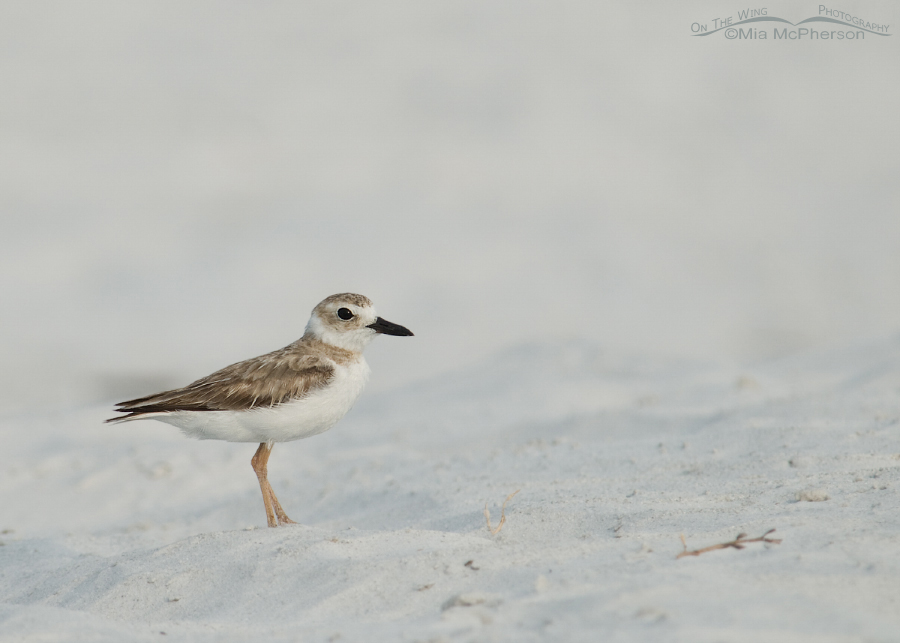
When Wilson’s Plovers are young their plumage can appear much paler than the adults as seen in the image above.

Unfortunately I never had the opportunity to photograph American Golden Plovers at Fort DeSoto and thus I do not have an image to provide for them. Maybe on my next trip I’ll have that chance. I hope so.

Mia

Facebook Twitter Stumbleupon Digg Delicious Reddit Posterous Pinterest Email

Share