

I was delighted to photograph this adult female Indigo Bunting yesterday from one of the gravel roads at Sequoyah National Wildlife Refuge in Oklahoma.
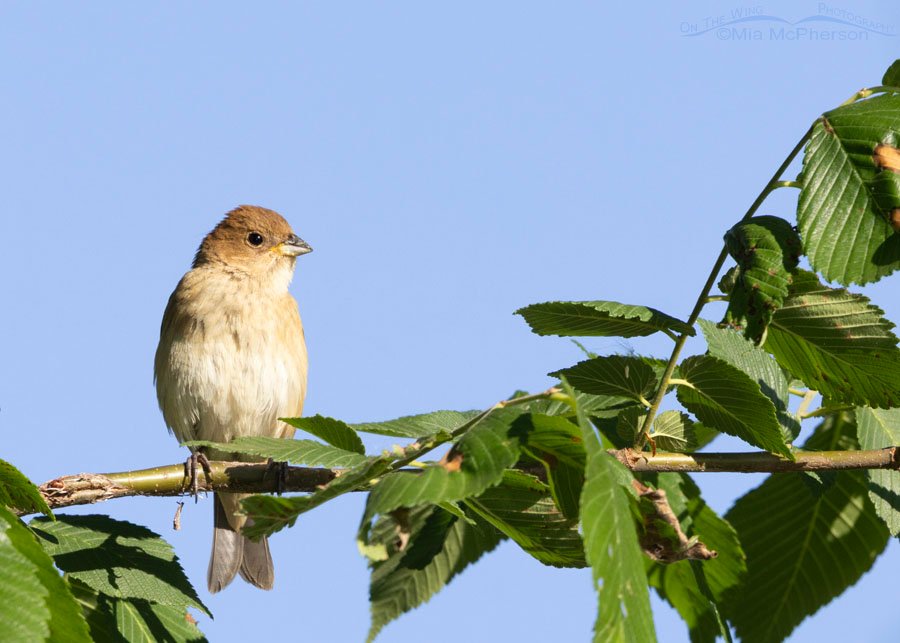 Adult female Indigo Bunting at Sequoyah National Wildlife Refuge – Canon R7, f9, 1/640, ISO 500, +1.0 EV, Canon 100-500mm at 500mm, natural light
Female Indigo Buntings aren’t as flashy as the indigo blue males, but I think they are very pretty. This one stood out beautifully from the bright blue sky behind her.
I never saw a female Indigo Bunting the entire time I lived in Utah, only female Lazuli Buntings.
Right now the male Indigo Buntings at the refuge are busy singing while the females appear to be busy making nests. The females are quite a bit harder to see and find than the males.
Indigo Buntings prefer habitats that include brushy slopes, pastures, fields grown to scrub, woodland clearings, and forest edges. They feed on seeds, forbs, buds, berries, and insects.
In my garden in Virginia, these buntings would nest in the Leyland cypress trees I had planted at the back of my yard by the privacy fence. It always enchanted me to see the adult buntings near my raised strawberry and blueberry beds during their breeding season.
Sometimes, the male would sing from the top of the blueberry bushes and give me great views.
Indigo Buntings are migratory, and I hope to photograph them as often as I can while they are here this year.
Life is good.
Mia
Click here to see more of my Indigo Bunting photos plus facts and information about this species.
Nicely balanced shot. As you said…she’s a pretty little girl. Thanks Mia.