Marbled Godwit on Fort De Soto’s north beach

Marbled Godwit in flight with a TubewormMarbled Godwit in flight with a Tubeworm – Nikon D200, handheld, f5.6, 1/1500, ISO 400, Nikkor 80-400mm at 400mm, natural light, bird provided its own food

Several years ago while I was photographing at Fort De Soto’s beautiful north beach I saw a Marbled Godwit flying in with a dark Tubeworm in its bill and took a few images of it from a distance. I wish that it had been closer to me but this image does give an idea of the size of the worm.

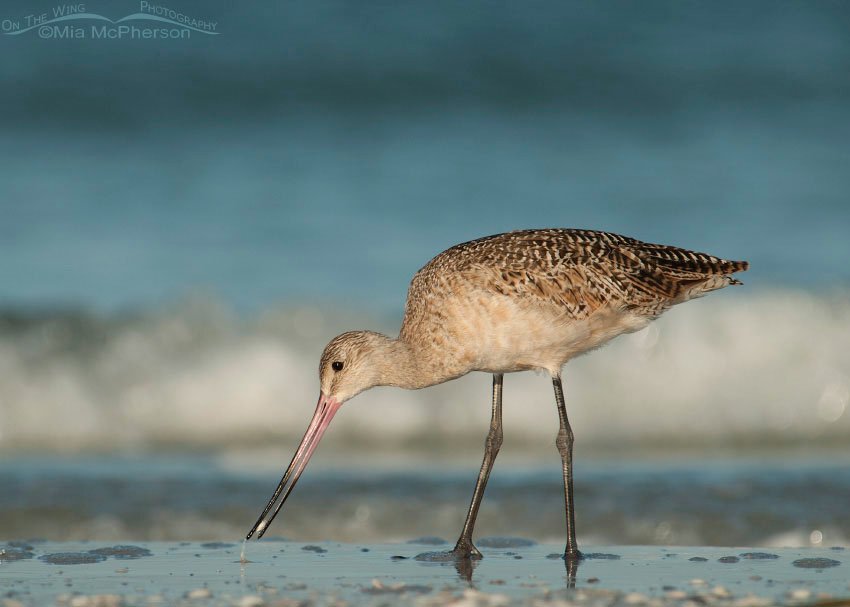
Marbled Godwit walking on the beachMarbled Godwit walking on the beach – Nikon D200, handheld, f6.3, 1/2000, ISO 400, Nikkor 80-400mm at 400mm, natural light

The Godwit gobbled the Tubeworm down so quickly that I didn’t get any images of the action because I needed to change my position in the warm water of the lagoon. After eating the worm the Godwit came closer and strolled right past me. I wish it had been as close with the worm as it was when I created this image!

Marbled Godwits do show up in Utah but I have never been as close to them here as I was in Florida.

Mia

More Marbled Godwit images

Facebook Twitter

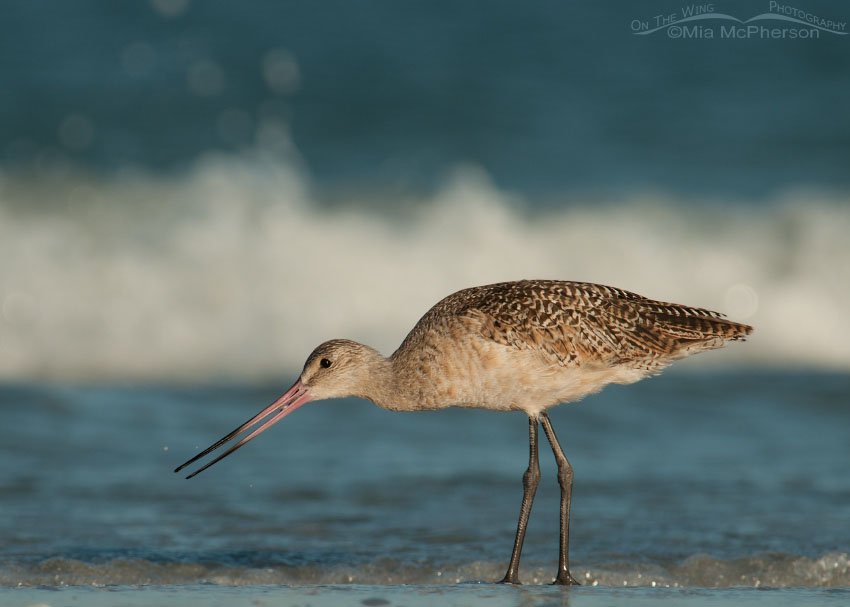
Marbled Godwit in a tidal lagoon

Marbled Godwit in a tidal lagoon

Marbled Godwit in a tidal lagoon – Nikon D200, handheld, f7.1, 1/800, ISO 200, Nikkor 80-400mm VR at 400mm, natural light

Just a single image of a marbled Godwit (Limosa fedoa) that strolled past me while I sat in the water photographing it. Every time I look at this image I feel a wonderful sense of peace, the same feeling I had when I took this photo. Life is good.

Mia

More Marbled Godwit images

Facebook Twitter

Marbled Godwit with its shadow

I have a fondness for Marbled Gowdwits (Limosa fedoa) because of thier pink and black bills and plumage patterns. They also look very elegant walking, standing, feeding and in flight.

Marbled Godwit and shadow

Marbled Godwit and shadow – Nikon D200, handheld, f7.1, 1/800, ISO 200, Nikkor 80-400mm VR at 400mm, natural light

This Marbled Godwit had been feeding on the mudflats of a tidal lagoon at Fort De Soto’s north beach, I like that I was able to get a nice catchlight, a drop of water on the tip of the bill and the shorebird’s shadow.

The coloring of Marbled Godwits make me think of cinnamon, dark chocolate, butterscotch, caramel, Irish Cream and Kahlua.

*I am away for a few days, please feel free to share this post with your friends and family. I’ll catch up on everyone’s great blogs when I get back!

Mia
OnTheWingPhotography

More Marbled Godwit images

Facebook Twitter

Foraging Marbled Godwit

I must admit I have a fondness for shorebirds, their beauty is a big part of why I became (am) addicted to bird photography.

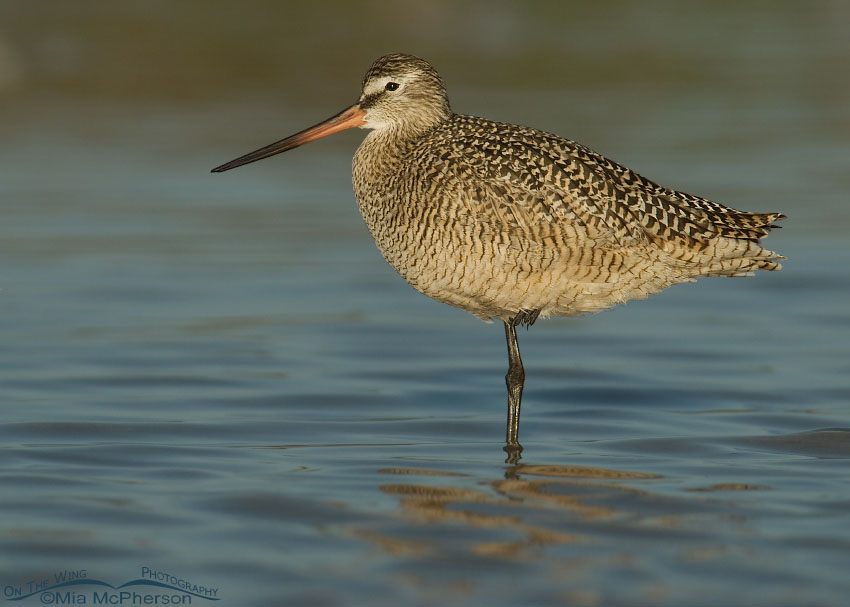
Foraging Marbled Godwit

Foraging Marbled Godwit – Nikon D200, handheld, f7.1, 1/750, ISO 200, Nikkor 80-400mm VR at 400mm, natural light

I love how peaceful this image is with the Marbled Godwit (Limosa fedoa) paying absolutely no attention to me as I sat very still in the warm waters of a tidal lagoon photographing it. I felt as though I had been personally invited to enjoy the scene before me. It felt intimate and enchanting.
Mia

More Marbled Godwit images

Facebook Twitter

Shorebirds of Fort De Soto – Marbled Godwits

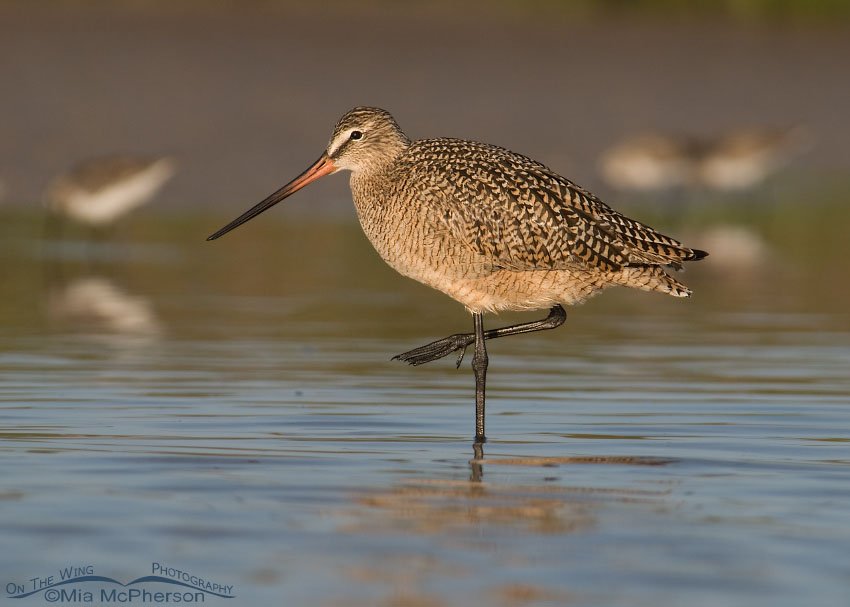
Marbled Godwit resting on one leg

Marbled Godwit resting on one leg
D200, handheld, f7.1, 1/800, ISO 200, 80-400mm VR at 400mm, natural light

Marbled Godwits (Limosa fedoa) are the largest godwits of North America. Marbled Godwits can be seen frequently on the shorelines of Fort De Soto and feeding on the mudflats of the lagoons at low tide. According to Birds of North America from the American Museum of Natural History Marbled Godwits are long-lived, the oldest bird recorded was 29 years old! I was quite astonished to read that.

Marbled Godwit in a funny pose

Marbled Godwit in a funny pose
D200, handheld, f6.3, 1/640, ISO 160, 80-400mm VR at 400mm, natural light

Marbled Godwits feed by probing their bills for crustaceans and mollusks in mudflats and on beaches, they also take small fish and are especially fond of eating grasshoppers they find in grasses. During migration marbled godwits forage almost exclusively on plant tubers.

Marbled Godwit - Serenity ~ Simplified

Marbled Godwit – Serenity ~ Simplified
D200, handheld, f5.6, 1/320, ISO 250, 80-400mm VR at 400mm, natural light

Marbled Godwits associate in flocks and often forage together “stitching” mudflats, probing deeply and rapidly while slowly moving forward. It can at times be a challenge for a bird photographer to isolate a single bird from the flock for images.

Landing Marbled Godwit pano

Landing Marbled Godwit pano
D200, handheld, f7.1, 1/500, ISO 160, 80-400mm VR at 195mm, natural light

On Fort De Soto’s Gulf beaches you will often find Marbled Godwits in mixed flocks of other shorebirds. The breeding grounds of Marbled Godwits are grassy marshes of the Great Plains and as far north as Alaska’s coastal tundra.  

Preening Marbled Godwit

Preening Marbled Godwit
D200, handheld, f7.1, 1/800, ISO 200, 80-400mm VR at 400mm, natural light

Female Marbled Godwits have longer bills than males and females are slightly larger than males over all. Their length is between 16 and 19 inches, the wingspan is from 28 to 32 inches and weight is from 10 to 16 ounces.

Marbled Godwit fly by blur

Marbled Godwit fly by blur
D200, handheld, f7.1, 1/640, ISO 160, 80-400mm VR at 400mm, natural light

Marbled Godwits are graceful birds while on the ground, feeding and in flight. They have a  beautiful cinnamon color, long dark legs and slightly turned up bill. They are truly a joy to photograph.

Mia 

 Similar species:

Whimbrel - Long-billed Curlew comparison image

Facebook Twitter