Royal Tern Over

Royal Tern OverRoyal Tern Over

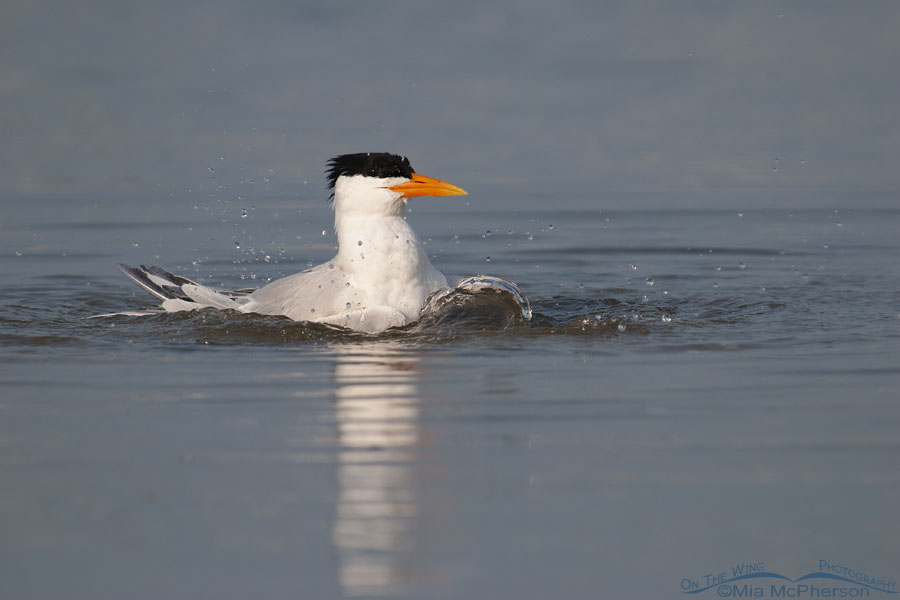
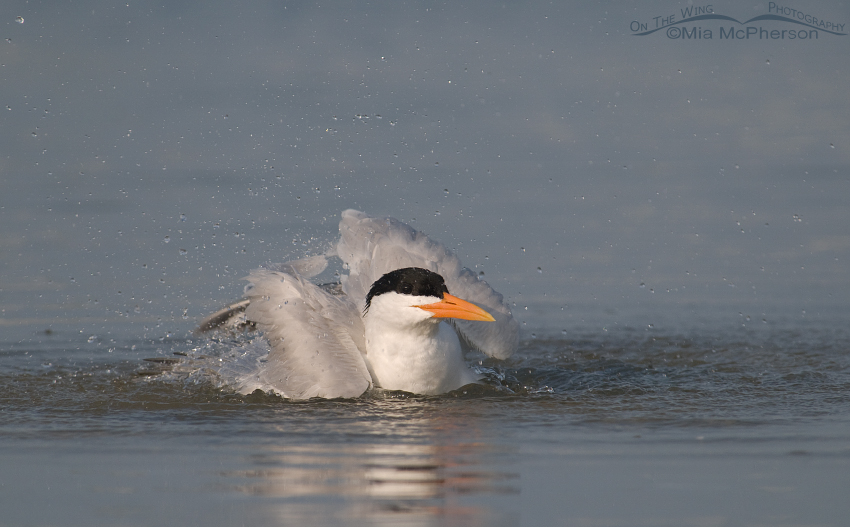
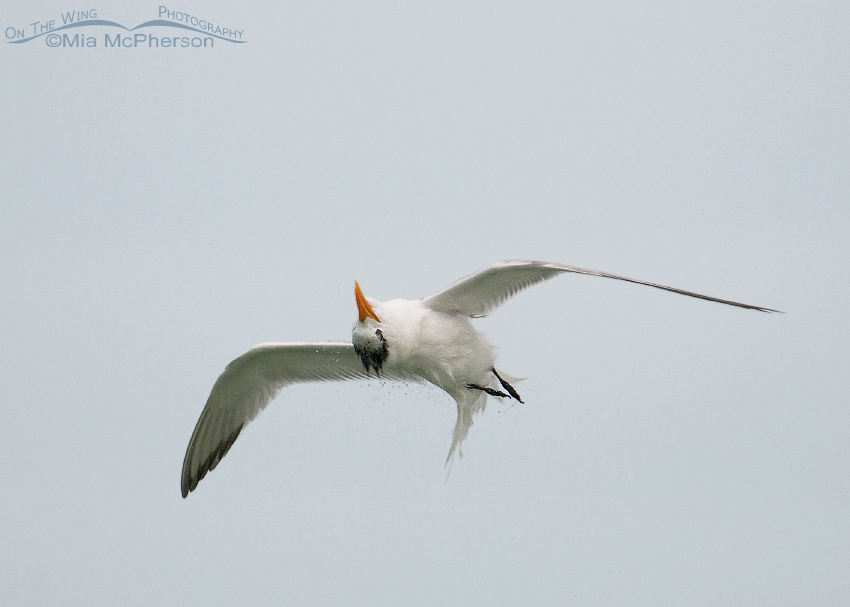
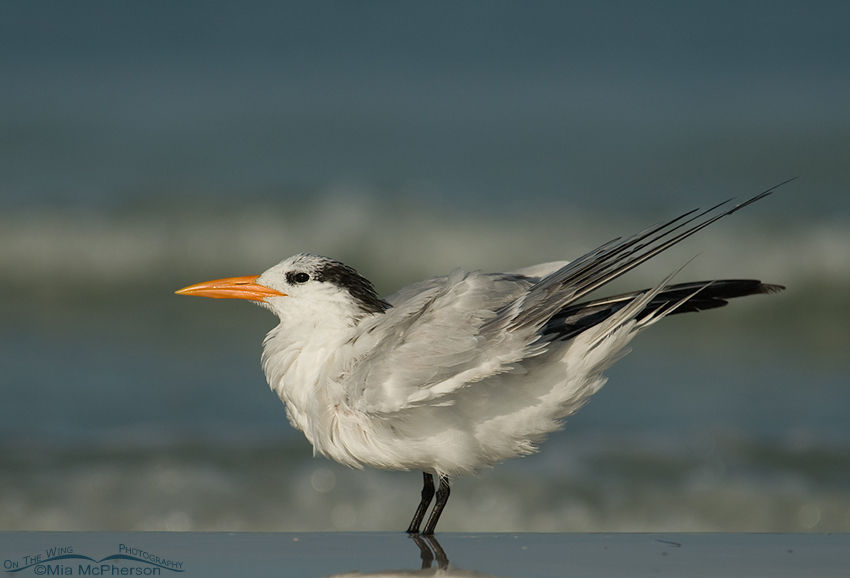
Royals Terns make amazing dive bombs for their prey which are usually small baitfish running close to the surface and sometimes if you are lucky you get to see them “Tern Over” in mid air. This tern is really shaking off the water it soaked up after a dive for prey but it also does make it difficult to tell which way is up!

This was taken on a cloudy morning, man I wish it had been “Sunnyside up”.

Mia

~I’m out of town but will be back soon, please feel free to share this post with your friends and family!

Facebook Twitter

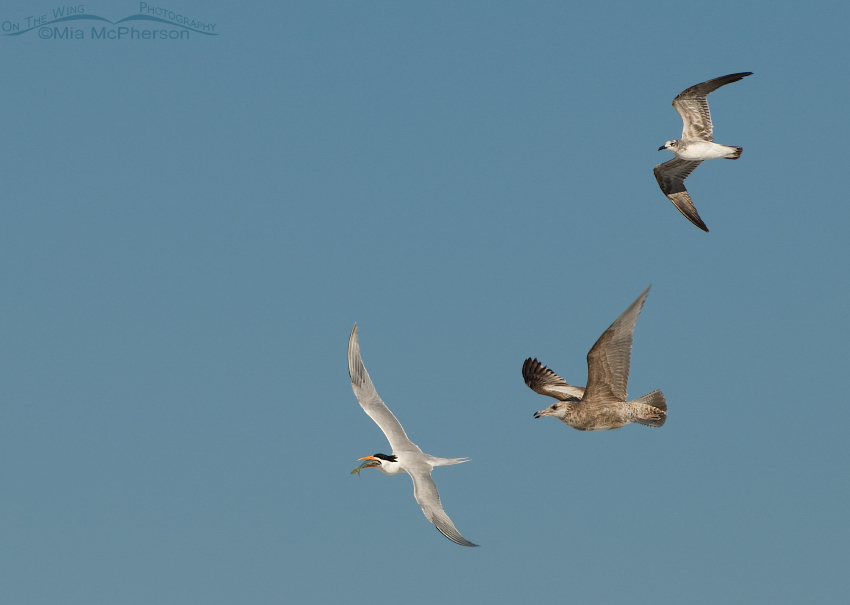
The answer to the Gull and Tern Quiz is…

There were 30 people that voted on this quiz, these were the votes:

Juvenile Western Gull, 1st winter Franklin’s Gull, Elegant Tern: 1 vote (3%)

Juvenile Herring Gull, 1st winter Laughing Gull and Royal Tern: 25 votes (83%)

Juvenile Western Gull, 1st winter Franklin’s Gull, Royal Tern: 3 votes (10%)

Other answer: Clueless LOL = 1 Vote (3%)

The majority of you voted for the correct answer: Juvenile Herring Gull, 1st winter Laughing Gull and Royal Tern
Juvenile Herring GullJuvenile Herring Gull

 The range of Herring Gulls includes Florida as a wintering location. The range of Western Gulls does not extend into to Florida, it is primarily found on the Pacific Coast and it would be a very rare visitor to Florida.

1st winter Laughing Gull1st winter Laughing Gull

Laughing Gulls are found along the Atlantic and Gulf coast year round, Franklin’s Gulls are vagrants to the same area. A 1st Winter Franklin’s Gull would show less brown on the back and upper wings than the bird in the quiz image did and the bill would be smaller.

Royal Tern in breeding plumageRoyal Tern in breeding plumage

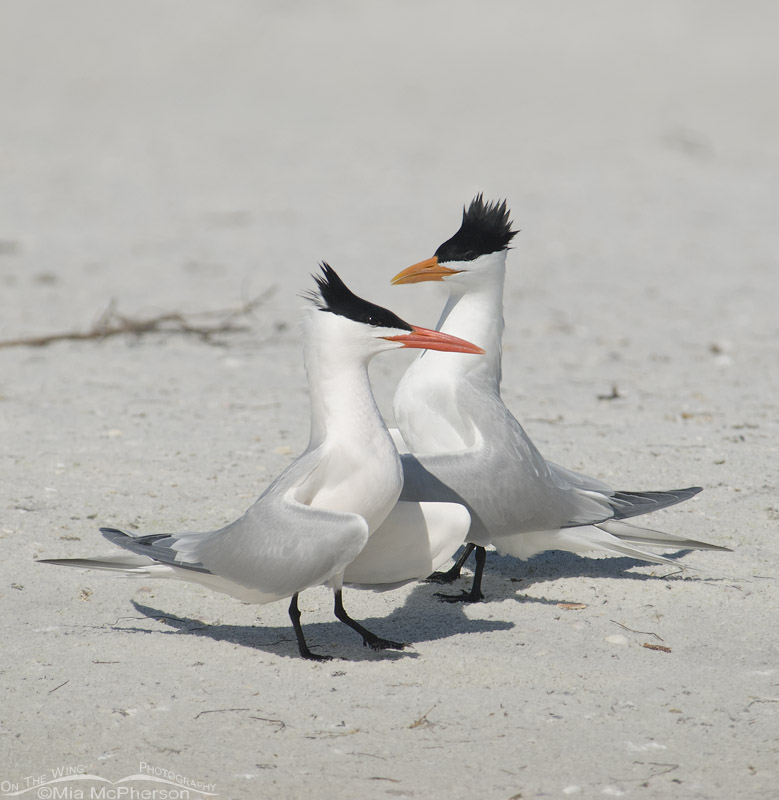
Both Royal Terns and Elegant Terns are large crested Terns. The range of the Royal Tern includes Florida as year round residents while Elegant Terns shows them only as vagrants to the East Coast but does not show them in Florida.

You all did great!

Thanks for playing, it was a fun quiz!

Mia

Facebook Twitter

Royal Terns in breeding and nonbreeding plumage

Royal Tern in nonbreeding plumage

Royal Tern in nonbreeding plumage – Nikon D200, handheld, f6.3, 1/1500, ISO 200, Nikkor 80-400mm VR at 400mm, natural light

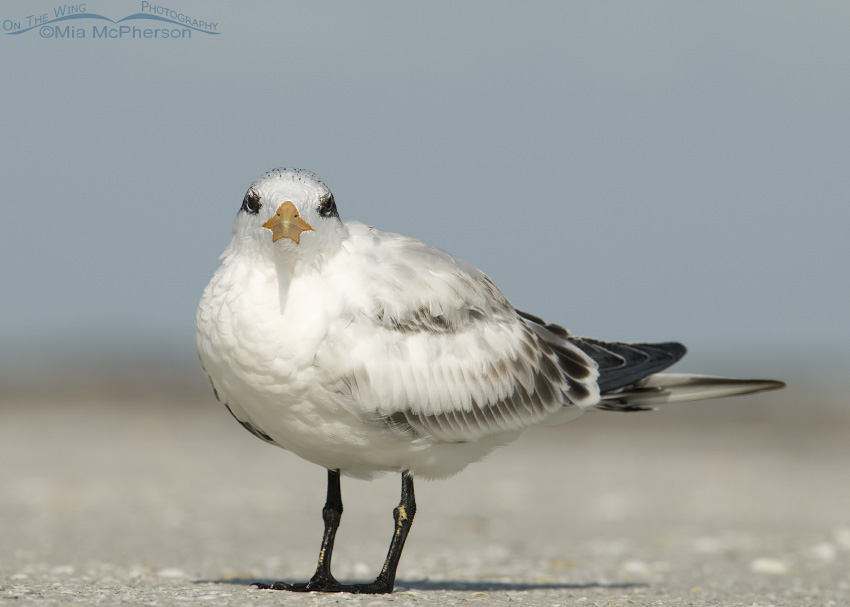
Just a simple post today to show the differences in the breeding and nonbreeding plumage of Royal Terns. Royal Terns are “Crested Terns”, in this image the crest isn’t visible. The white on the top of this terns head indicates that it is in nonbreeding plumage.
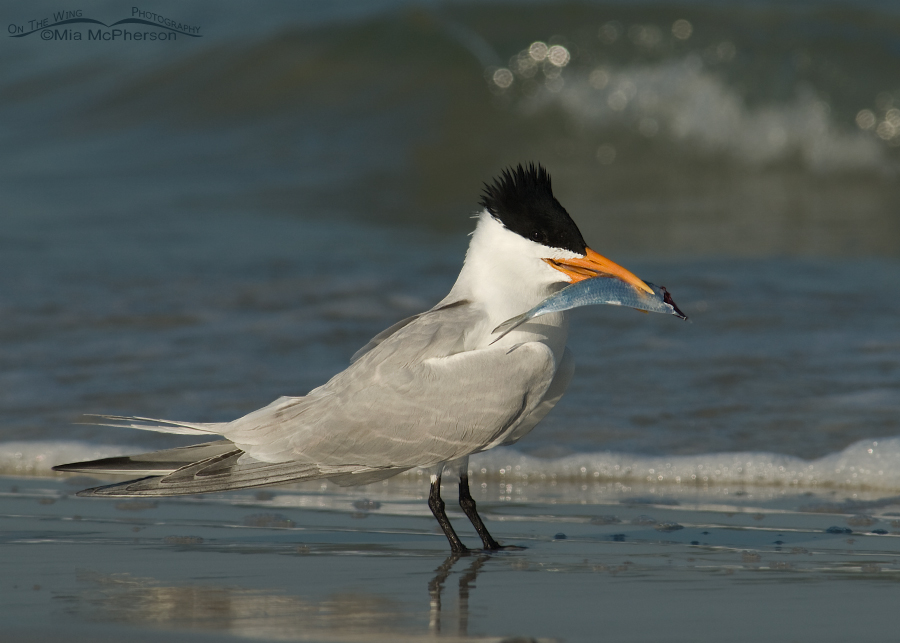
Royal Tern in breeding plumage

Royal Tern in breeding plumage – Nikon D200, handheld, f7.1, 1/1500, ISO 250, Nikkor 80-400mm at 400mm, natural light

The shaggy crest is visible in this image and the black extends from the bill to just under the eye and to the tips of the crest. In some adult Royal Terns the bill can be more red than this adult.

Mia

More Royal Tern images

Facebook Twitter

Gray Days

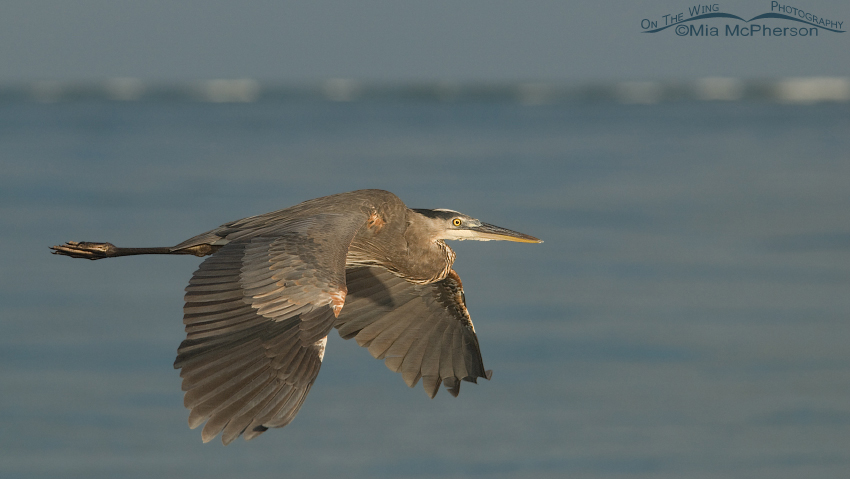
Close Great Blue Heron fly by

Close Great Blue Heron (Ardea herodias) fly by
Fort De Soto County Park, Pinellas County, Florida
D200, f5.6, 1/1600, ISO 500, 80-400mm VR at 260mm, natural light

My good friend Ron chides me for being the “eternal optimist” and I do deserve the teasing he often gives me. I’m even optimistic on these gray, dreary and cloudy days. It seems there is always something to do even when the weather thwarts plans for going out to find birds to photograph because I know I’ll find something wonderful or fulfilling to do.

I’ve been busy cooking today, I made two kinds of homemade soup. It smelled wonderful at home with the savory aromas of simmering soup wafting through the house. I also prepared the fixings for Chicken Monterey so I could wrap them up and freeze them for an easy meal when the weather does open up for bird photography.

You lookin' at me?

Royal Tern (Thalasseus maximus):  You lookin’ at me?
Fort De Soto County Park, Pinellas County, Florida
D200, f6.3, 1/1600, ISO 200, 80-400mm VR, natural light

Gray days sometimes force me to slow down, to take a deep breath and they allow me the luxury of  liesurely looking through my older image files one folder at a time. I’m often busy out in the field taking images of birds, so busy that there are days when I only get to edit a few files in a folder on the day I take the photos. So on gray days I revisit those folders and say hello to my “old friends”, the birds in the files. I swear I’m not hyper but I can’t seem to resist selecting pictures to edit that I had not processed earlier.

Long & Lean Great Blue Heron

Long & Lean Great Blue Heron
Fort De Soto County Park, Pinellas County, Florida
D200, f5.6, 1/1500, ISO 400, 80-400mm VR, natural light

I’m not sure how or why I ended up looking at images from the folder that contained all of the images in this post but I’m glad I opened the folder up again. I can once again feel the wet sand under my body as I wiggle through it trying to get the best possible angles for the shots. I can smell the salt water, watch the feathers of the birds flutter in the sea breeze and feel the warmth of the sun caress me as I focus on my subjects. While it is gray outside it doesn’t feel that way inside my mind.

There are quite a few images in this folder I had not edited yet but today because the of the grayness outdoors, I have time.

Royal Tern busy preening

Royal Tern busy preening
Fort De Soto County Park, Pinellas County, Florida
D200, f6.3, 1/1250, ISO 200, 80-400mm VR at 400mm, natural light

The soups are done and stored away. It’s getting dark and I’m waiting for the snow to start falling from this storm. Despite it being a gray day it has been fulfilling.

Got to go, there are more older bird images I want to edit.

Mia

Facebook Twitter