Low angle Long-billed Curlew
Since winter has thus far decided to stay in more northern latitudes and higher elevations I decided to post an image of a Long-billed Curlew taken in southern, sub-tropical climes a few years ago.



Since winter has thus far decided to stay in more northern latitudes and higher elevations I decided to post an image of a Long-billed Curlew taken in southern, sub-tropical climes a few years ago.

While photographing this Snowy Plover in June of 2008 I was able to observe the tiny shorebird snatch an ant from the sugar sand of the north beach of Fort De Soto.

I don't get to see or photograph Oystercatchers here in Utah but I still dream about these shorebirds and can hear their calls when I look at the thousands of images I took of them.

Black-bellied Plovers in breeding and nonbreeding plumage can look like two different plover species but they aren't.

Several people have remarked on how much they like the resting Black Skimmer juvenile image that was in my rotating banner at the top of this blog so I thought I would post it to show the whole bird.

A simple image of a beautiful Snowy Plover in a rather goofy looking pose. The plover had been preening and paused for a few frames with its tail lifted up

Ruddy Turnstones in breeding and nonbreeding plumage can appear to be two different species to novice birders and bird photographers as can several other bird species.

Least Sandpipers (Calidris minutilla) are the world's smallest shorebird, weighing in at a mere 0.7 ounces (20 g), a length of 6 inches and a wingspan of 13 inches.
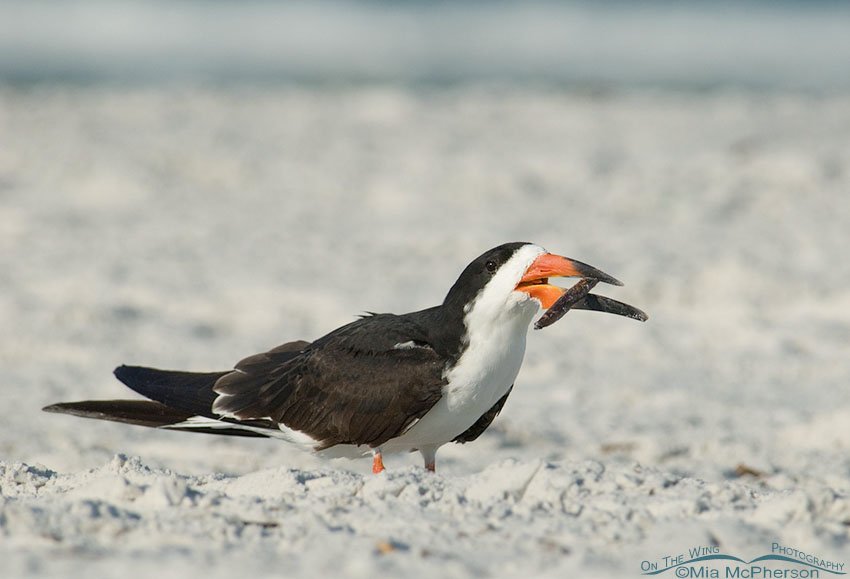
The Black Skimmer had a Mangrove seed pod in its bill and it was twirling the seed pod with its bill, at times the seed pod even went over the top of the bill but unfortunately I didn't get any images of that.

Two Herring Gulls (Larus argentatus) at different stages of life, one an adult in breeding plumage, the other an immature gull in flight.

One of the shorebird species I am able to see in Utah during migration that I photographed often while I lived in Florida are the lovely Black-bellied Plovers (Pluvialis squatarola).

These two photos are of the same adult American Oystercatcher (Haematopus palliatus) in sequential order taken at Fort De Soto County Park in Florida. I was laying in the sand while I created the images to get a low angle and the bird was on a ridge elevated slightly higher than my location.

I've always liked this photo because it shows how this American Oystercatcher (Haematopus palliatus) is using its long bill to pry open a shell.

The weather outside hasn't been good for bird photography today but since I am always behind on editing I thought I'd process this Red-breasted Merganser image that I took in Florida a few years ago.

This American Oystercatcher image was taken nearly three years ago, it seems difficult to believe that is has been that long but I like it as much today as the morning I photographed it.

It didn't take long for me to check my ISO, my aperture and other techs as I dropped onto my knees before laying flat on my belly to photograph the flock of 20 or so Whimbrels.
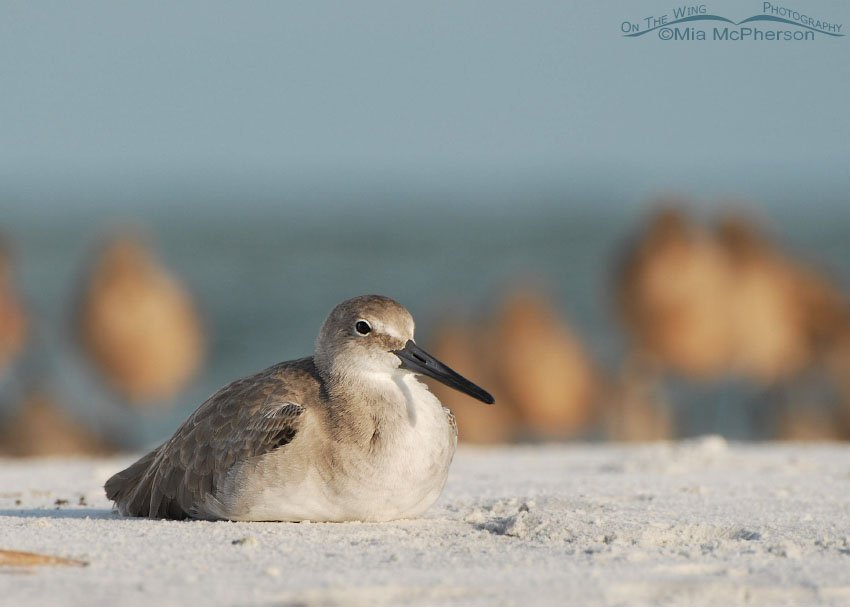
There are images that I have created that as soon as I see them on my monitor become listed as one of my favorites.

My friends say when my images have such a low angle that I must have been "Down 'n dirty". Well I know for sure I was dirty, I had sand everywhere!

I watched this American Oystercatcher juvenile and its sibling from the time they were just tiny chicks beginning the day after they had hatched.

I spotted this plover resting near the wrack line near the Gulf of Mexico during the winter and sand-crawled up close to it to get a low angle in the beautiful light.

Fish Crows are fairly commonplace along the coast of Pinellas County and they are often ignored by photographers because they are a "plain" common bird.

Laughing Gulls are quite common on the east and Gulf coastlines of the US, during breeding season they are usually found near saltwater but in nonbreeding season they are known to wander widely.
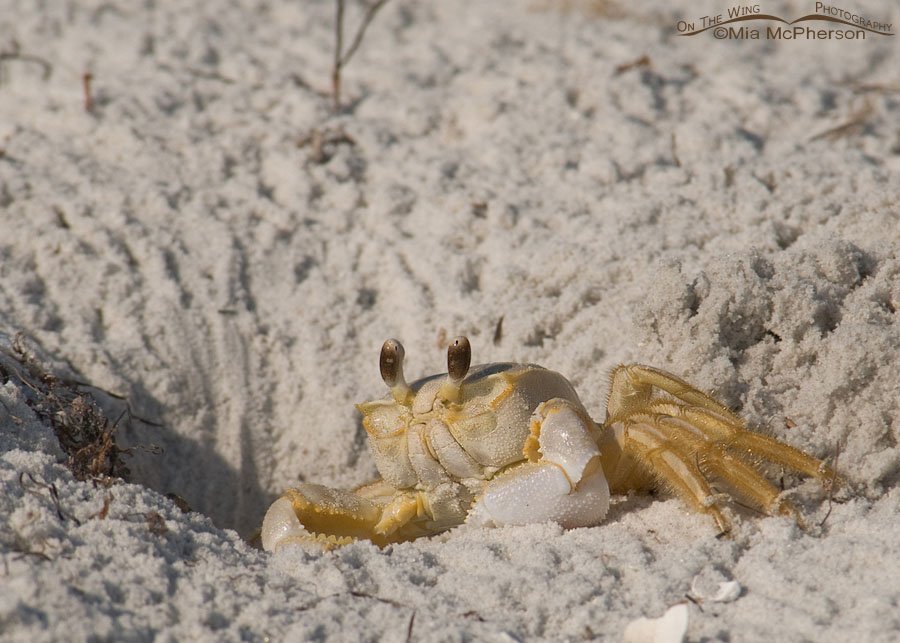
This Atlantic Ghost Crab image was taken on the Gulf coast of Florida while I still lived there.

One of the easier medium-sized shorebirds to identify on Fort De Soto's beaches and tidal mudflats are the Ruddy Turnstones. The only other turnstone that frequents North America is the Black Turnstone and it occurs on the Pacific coast.

Proper rotation can make an image work. Improper rotation can cause the the person viewing to wonder what isn't right about an image.

It didn't take long for the Yellow-crowned Night Heron to grab the crab and send the sand flying.