
Landing Black Skimmer
Black Skimmers are known by several nicknames which include scissorbills, knifebill and cut-water for how their bills slice through the water when they are hunting and how their bills snap shut on prey.
When I did my post the other day on "Missing Fort De Soto" I found this Black Skimmer image in my archives while looking for photos to put in that post and wanted to share it.
A while back I did a post on the Least Sandpiper which is the world's smallest sandpiper so I thought I would do a post about North America's smallest plover, the Snowy Plover.
Laughing Gulls are quite noisy when they are in a flock but I never minded listening to them, in fact they often made me laugh.
I like to include habitat in my images when I am able to do so, especially when the habitat doesn't obstruct the view of my subject or when the habitat helps to define a sense of place.
Royals Terns make amazing dive bombs for their prey which are usually small baitfish running close to the surface and sometimes if you are lucky you get to see them "Tern Over" in mid air.
Besides, to have gotten any lower than the Semipalmated Plover I would have had to have crawled down the burrow of one of those crabs
It really isn't too hard to spot this Spotted Sandpiper on the seawall, I just thought it was a catchy title. I saw my FOY (first of year) Spotted Sandpiper this past week and that got me excited.
Among the shorebirds I enjoyed seeing and photographing while I lived in Florida were Whimbrels, I could see flocks of 25 or more during the winter along the coast.
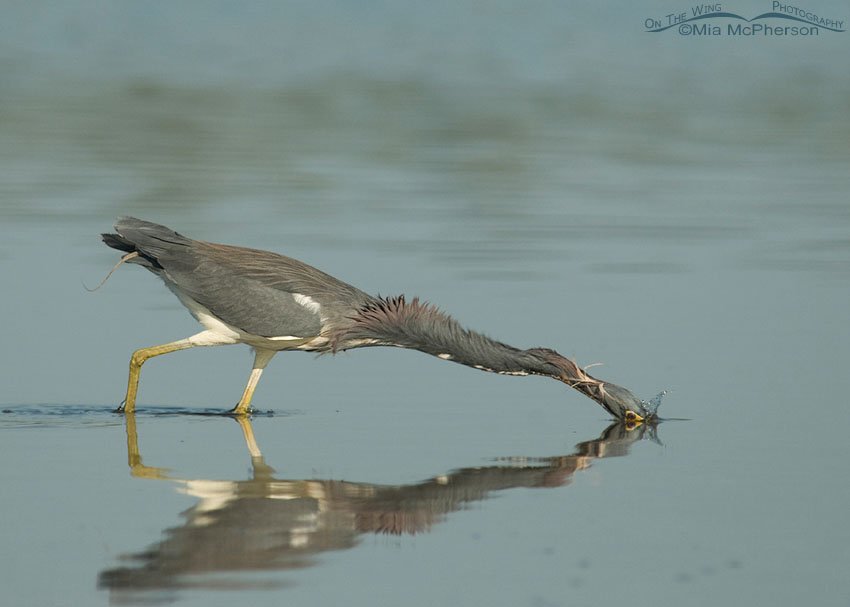
I am intrigued by how these herons evolved to have long necks that give them the ability to make lightning fast strikes at their prey some distance from their bodies.
These two Reddish Egrets; a dark and a white morph, were photographed on the same day at Fort De Soto's north beach in May of 2009 and both of them were showing signs of being in breeding plumage.
Evening can have marvelous light too though as shown in the Roseate Spoonbill image above that I photographed in Florida as it hunted for prey in a tidal lagoon.
A simple image of a Red Knot taken in Florida in early morning light. Morning has been; and is, my favorite time of day to photograph birds and other wildlife because the rising sun can add drama and a warm glow to whatever subject I am photographing.
Sanderlings look very different in appearance during breeding season and winter and novice birders might even think they are two different species.
While photographing this Snowy Plover in June of 2008 I was able to observe the tiny shorebird snatch an ant from the sugar sand of the north beach of Fort De Soto.
Just a simple post today to show the differences in the breeding and nonbreeding plumage of Royal Terns.
Maybe the Tricolored Heron thought Monday might look better upside down? Just a bit of humor for a Monday.
I don't get to see or photograph Oystercatchers here in Utah but I still dream about these shorebirds and can hear their calls when I look at the thousands of images I took of them.
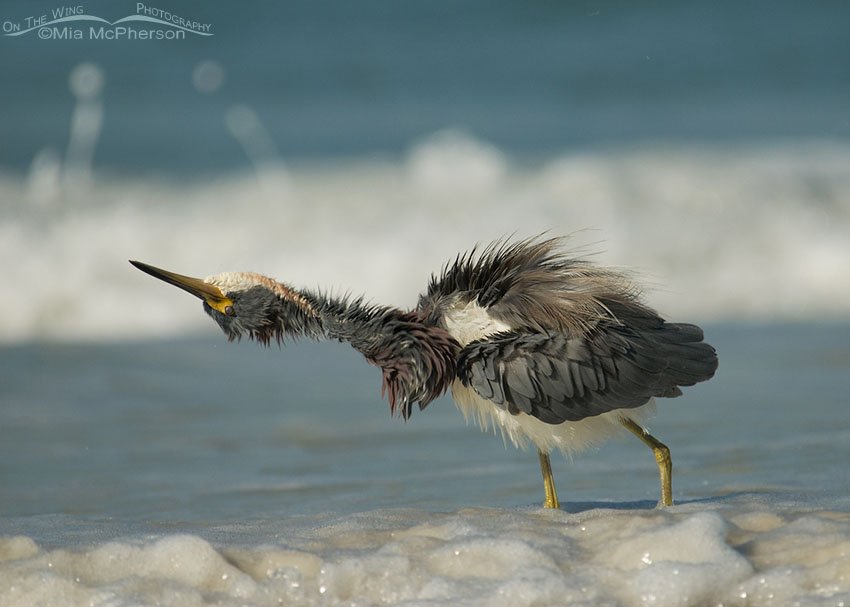
I photographed this Tricolored Heron (Egretta tricolor) a few years ago when I still lived in Florida.
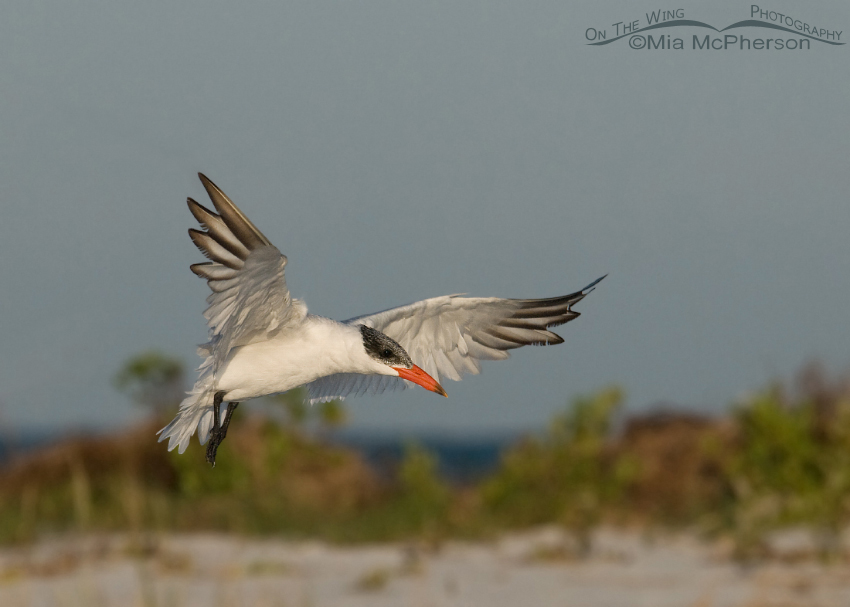
Caspian Terns (Hydroprogne caspia) are North America's largest tern with a wingspan of 50 inches and weighing in at 1.4 pounds.
I photographed this adult Laughing Gull (Larus atricilla) in breeding plumage while it bathed in the shallow waters of a tidal lagoon at Fort De Soto's north beach a few years ago.
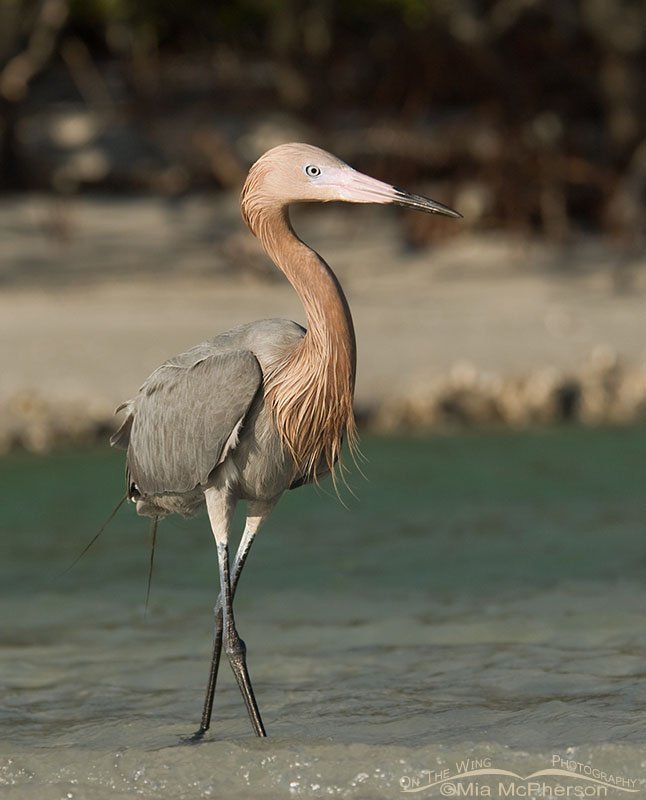
This adult Reddish Egret was going into breeding plumage, it has the pink and black bi-colored bill and the lores are turning bluish purple.
Dunlins exhibit a vast difference between nonbreeding and breeding plumage, so different that a novice birder might mistakenly believe that they were two different species.
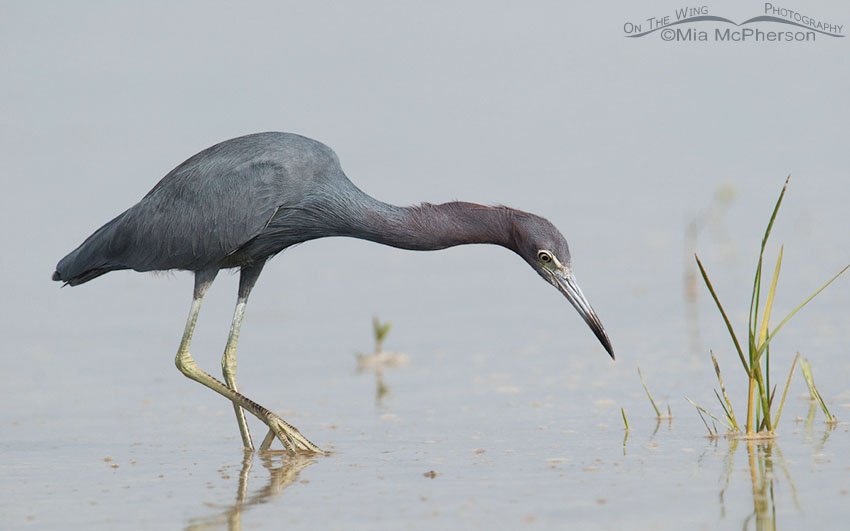
This Little Blue Heron (Egretta caerulea) was photographed in Florida as it hunted for prey in a shallow lagoon the edge of a marsh in late afternoon light.
Wood Storks (Mycetaria americana) are the largest wading bird in North America and the only stork that breeds in the U.S.. Wood Storks are considered endangered primarily due to loss of habitat.
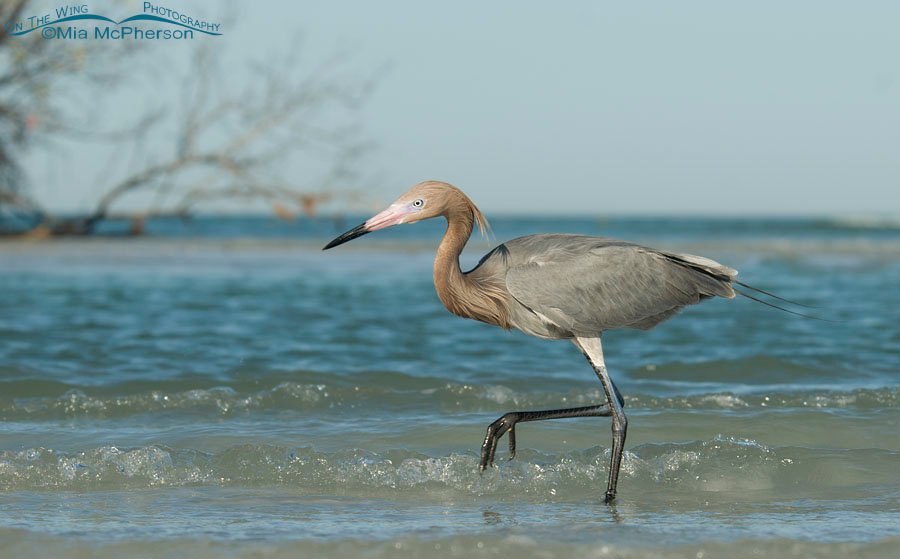
I photographed this Reddish Egret (Egretta rufescens) in October of 2008 at Fort De Soto's north beach.
I think it is great to see a bird with sea blue eyes feeding along a shoreline with water nearly of nearly the hue.
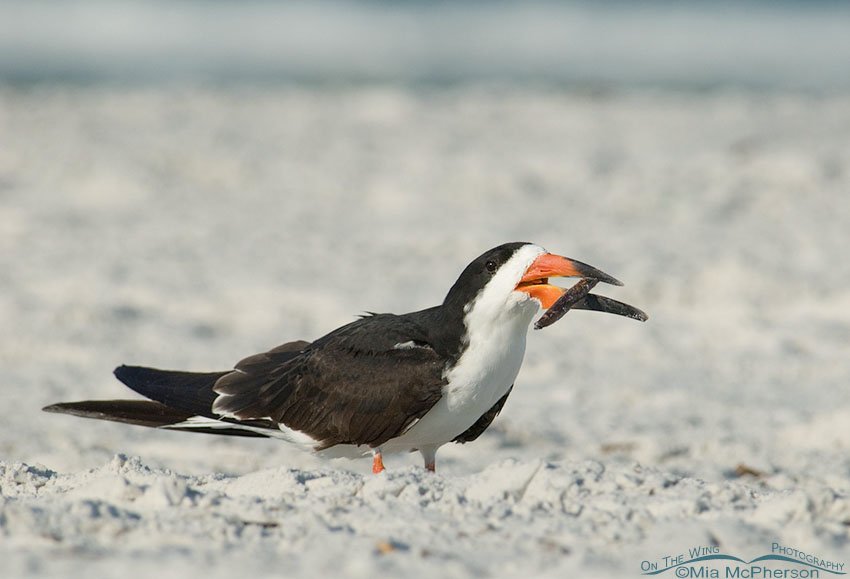
The Black Skimmer had a Mangrove seed pod in its bill and it was twirling the seed pod with its bill, at times the seed pod even went over the top of the bill but unfortunately I didn't get any images of that.
In my two previous posts of a Snowy Egret and a Great Egret I mentioned how the early morning light and a nearby storm gave those images a feeling of drama. These white morph Reddish Egret images were taken that same morning not long after I created the Great Egret photos.
Two Herring Gulls (Larus argentatus) at different stages of life, one an adult in breeding plumage, the other an immature gull in flight.