Black-bellied Plover – Up Close
One of the shorebird species I am able to see in Utah during migration that I photographed often while I lived in Florida are the lovely Black-bellied Plovers (Pluvialis squatarola).



One of the shorebird species I am able to see in Utah during migration that I photographed often while I lived in Florida are the lovely Black-bellied Plovers (Pluvialis squatarola).

Some images remind me of the wonderful day I had when I created a certain image, this photo of a Tricolored Heron in breeding plumage photographed at the north beach of Fort De Soto, Florida is one of those files.

Getting "Down & Dirty" is a way of being at eye level with your subject which brings the viewer into the bird's world and it can make the image feel more intimate too. Achieving those low angle perspectives can be quite messy and/or uncomfortable depending on the habitat.

As much as I like to compose images that are full frame I find that I often allow myself a touch of extra space around my subject so I can recompose in post processing by making different crops.
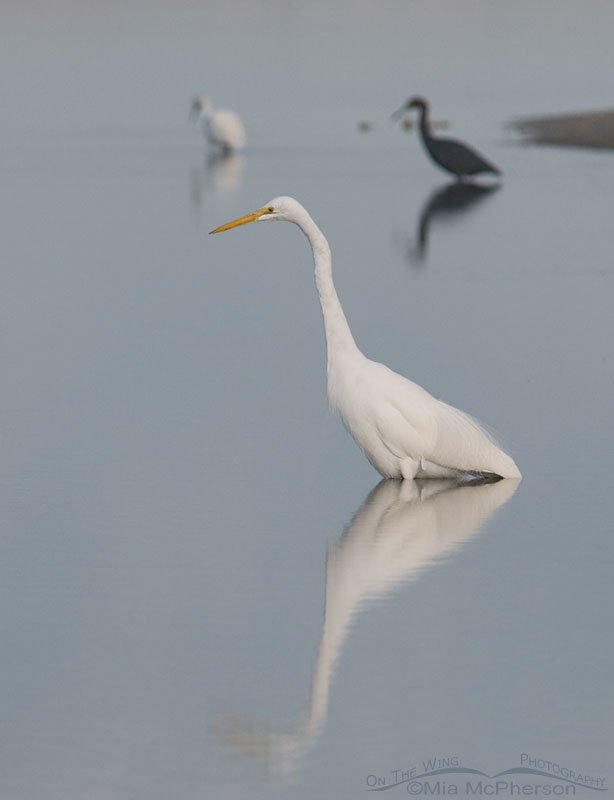
I've always liked the calm mood this image conveys partially because the stalking pose of the Great Egret (Ardea alba), the silky smooth surface of the water, the reflection and how the out of focus Snowy Egret and Little Blue Heron give the frame a depth that wouldn't be there without them.

I've always liked this photo because it shows how this American Oystercatcher (Haematopus palliatus) is using its long bill to pry open a shell.
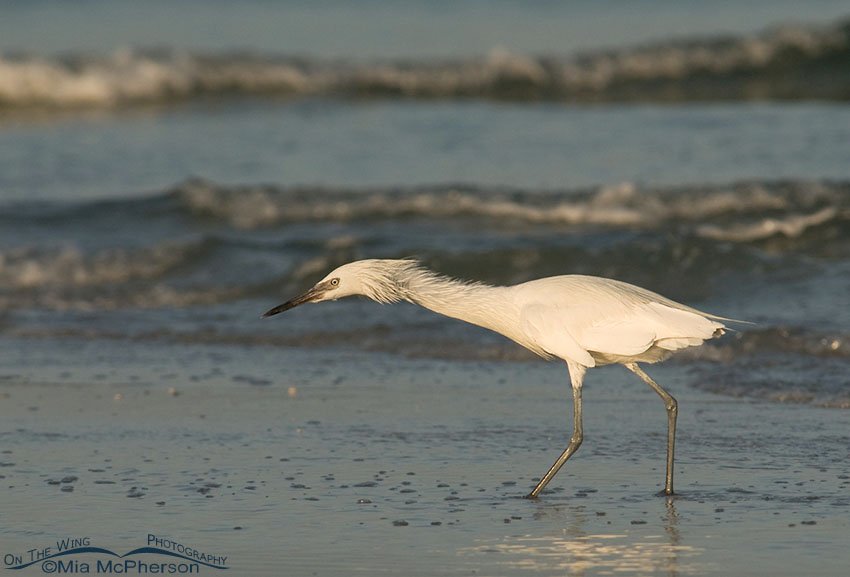
While I lived in Florida I simply adored being able to photograph Reddish Egrets, they can be graceful or goofy looking, they twirl, dash and dance.

I'm always looking for great action or interesting poses when I am out photographing birds and usually I am not disappointed and once in awhile I get some very funny images. Mondays just seem like a great day for some humor.

When I am out in the field I take a large amount of photos and there are times I don't get around to processing them until much later, these are two such images taken at Fort DeSoto, Florida in 2008.

There were high thin clouds and that worked in my favor to photograph these large white birds without blowing out the whites.

I watched this American Oystercatcher juvenile and its sibling from the time they were just tiny chicks beginning the day after they had hatched.

After my experience with screwing my white balance up that day I had to make a note to myself to remember to check my white balance setting on the camera.

Proper rotation can make an image work. Improper rotation can cause the the person viewing to wonder what isn't right about an image.