Images of Christmas Past – Happy Holidays

The port of Burnie, Tasmania - Christmas Eve 2007

The port of Burnie, Tasmania – Christmas Eve day 2007

Yesterday I took a stroll down memory lane, actually I looked for images I have taken either on Christmas Eve or Christmas Day in my files but in a way that is taking a stroll down memory lane.
In 2007 I was onboard a cruise ship crossing Bass Straight from Melbourne Australia to dock in Burnie, Tasmania. Even though it is summer during Christmas in the Southern Hemisphere Tasmania is far enough south for it to be cool. The water was such a deep royal blue that I wanted to jump ship just to feel it on my skin. I went inland from Burnie on Christmas Eve to visit a rehab facility for animals and birds, many of them were native but a few exotics stuck out, like Water Buffalo, Camels and different types of deer.

I loved seeing Tasmanian Devils, Quolls, Black Swans, Wallaby, Wombat,  Kangaroos and Emus. Ok, maybe not the Emus so much but that was because when I was taking a photo of a Wallaby an Emu snuck up and pecked the UV filter on my lens and scared the snot out of me. Imagine all of a sudden seeing a huge beak and two big eyes through your viewfinder as the beak crashes into the glass!  I am just glad I had the UV filter attached otherwise it would have been expensive glass that got beaked.

After getting back on board ship we headed out to make the crossing to the South Island of New Zealand across the Tasman Sea and spent Christmas Day on the open water.

A foggy Christmas Day 2008

A foggy Christmas Day 2008 – Roseate Spoonbill

Christmas Day of 2007 started off very foggy at Fort De Soto County Park’s north beach. Fort De Soto is open on Christmas day which I adored because quite often I would have the north beach to myself. It was a time to soak in the beauty, to relax and reflect on the year that was coming to a close. The friends I had made. The sights I had seen. And the birds of Florida that enchanted me.

The light wasn’t the best when I photographed this Roseate Spoonbill foraging in the tidal lagoon north of the foot bridge but I kept the file any way as a reminder of Christmas all by myself sitting in the waters of the lagoon surrounded by Wood Storks and Roseates.

Snow (sand) Man - Florida Style 2008

Snow (sand) Man – Florida Style 2008

Floridians don’t let the lack of snow stop them from creating the Florida Snowman out of the white sugary sand found at Fort De Soto. This one is decorated with a Sea Urchin on its head, a Mangrove seed pod as a staff and a Leopard Crab as pet. Ingenuity, yes, that is what it is.

Six months after Christmas I made my mind up to leave Florida and move back out west, the west had called to me softly for years while I lived in Florida. The mountains, the big sky, four seasons, snow, fall colors and wide open spaces. After Christmas the western U.S. wasn’t calling to me softly, it was talking long and loud.

A Regal Bald Eagle - Christmas Day 2009

A Regal Bald Eagle – Christmas Day 2009

Christmas of 2009 found me in the state of Utah. I had mountains, 4 seasons, plenty of birds, big skies, deserts, plains, gorges, marshes, lakes, rivers, valleys and plenty of Red Rocks. AND I had the Great Salt Lake close by!

I made new friends and felt a wonderful peace wash over me. I was back where I belong. In the west. Because of my photography I have met the most fascinating people in real life and those who have become friends over the internet that share my interests in nature, birds and photography.

Christmas Day 2009 started foggy at Farmington Bay Waterfowl Management Area in Davis County, Utah. The sun wouldn’t give up though and it broke through the fog to allow me to get close up images of a majestic 4-year-old Bald Eagle perched on an old post.

Spending time with a best friend in nature is the best Christmas present to me.

Common Merganser - Christmas day 2010

Common Merganser – Christmas day 2010

Christmas Day of 2010 came and it was spent again at Farmington Bay Waterfowl Management Area photographing Pied-billed Grebes, Ruddy Ducks and this Common Merganser. The water looked golden because the dried stalks of Phragmites were reflected on it. We pretty much had the place to ourselves for the first few hours. Yes, that is Peace on Earth to me.

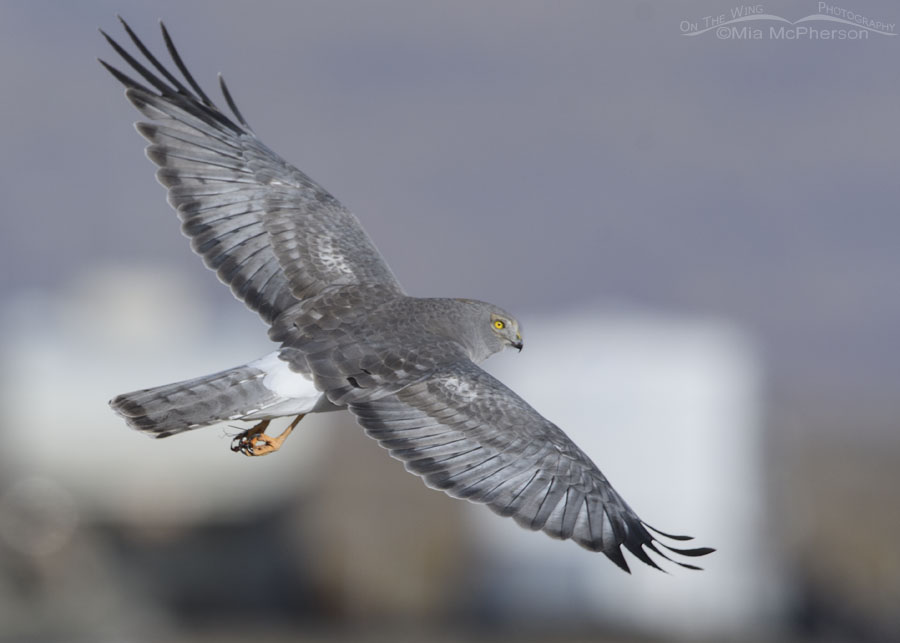
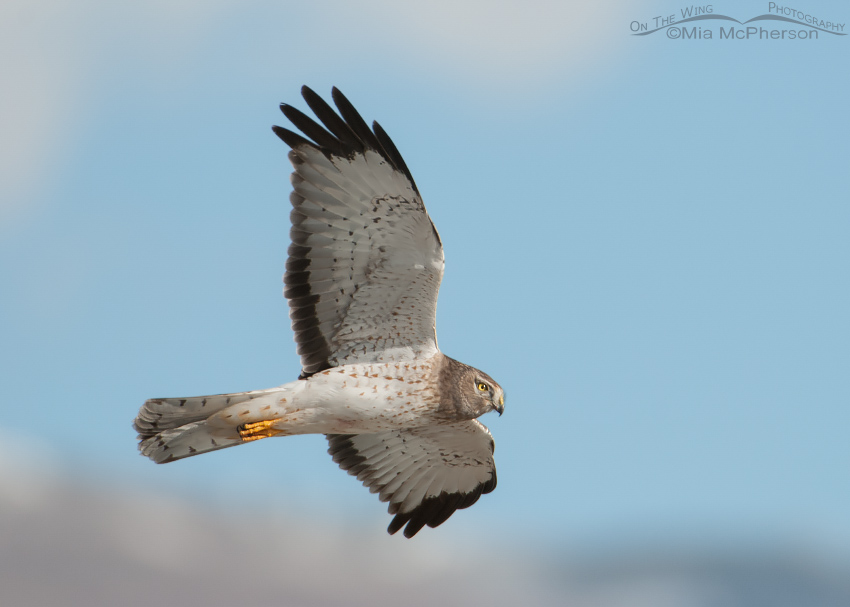
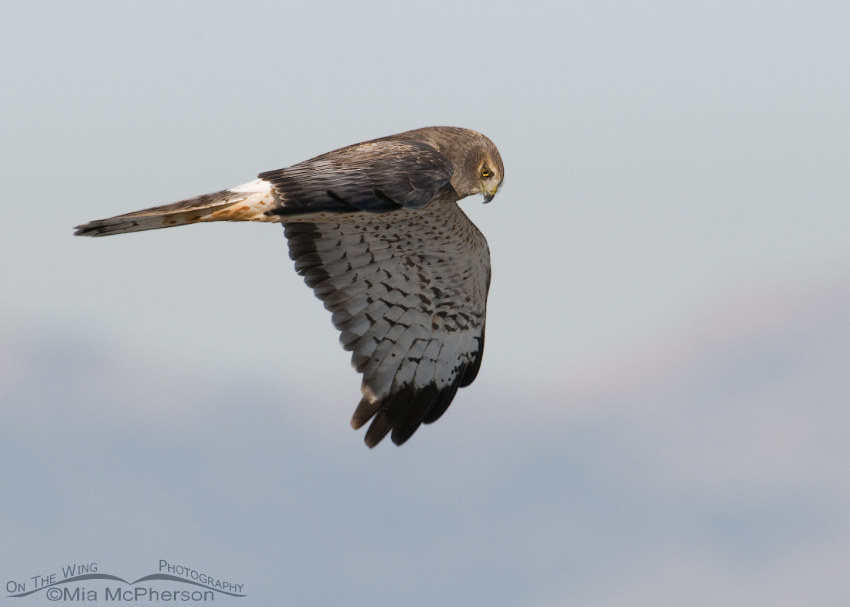
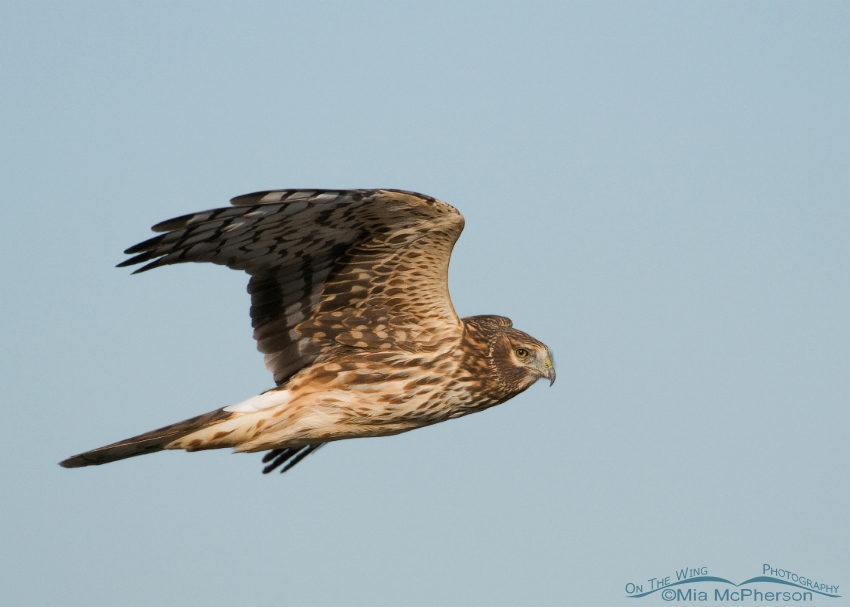
Male Northern Harrier in flight - Christmas Eve 2011

Male Northern Harrier in flight – Christmas Eve day 2011

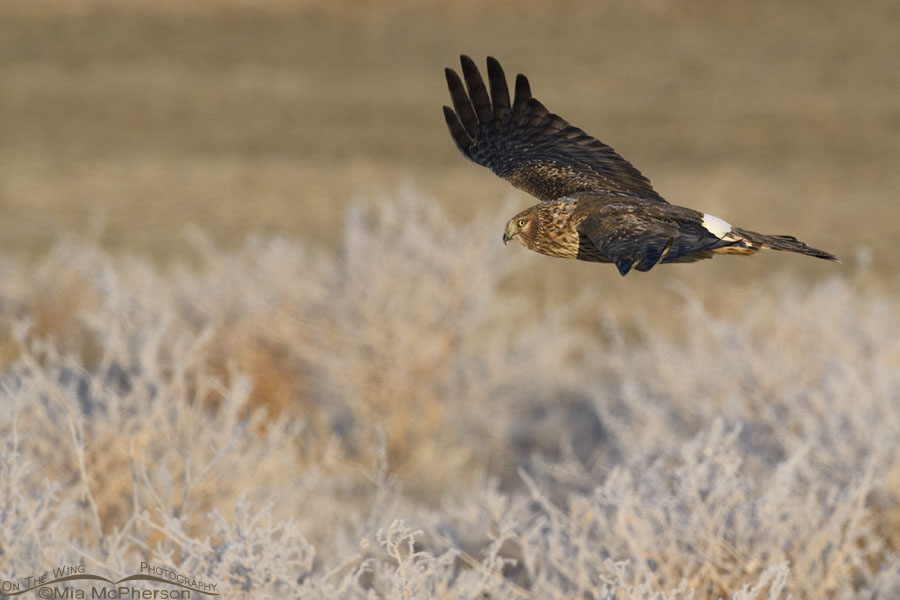
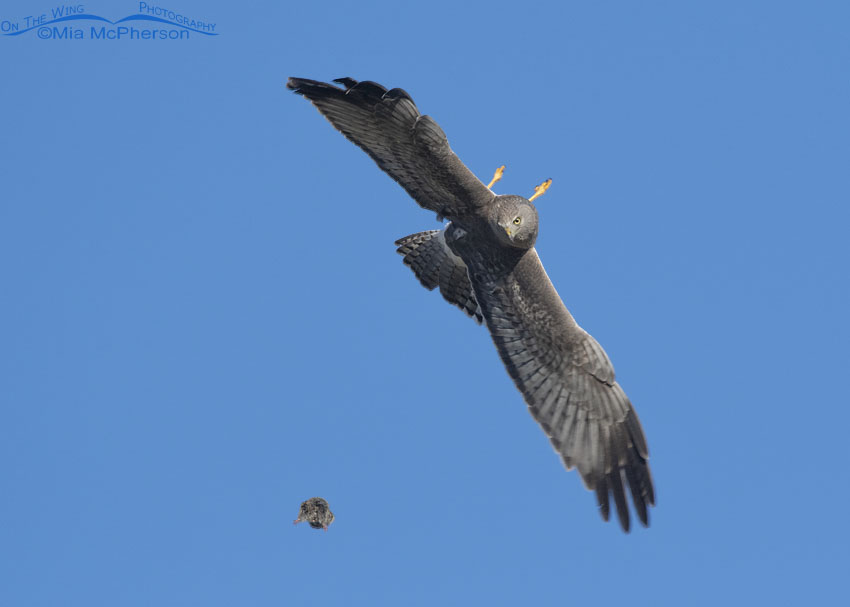
Christmas Eve day of 2011 was spent on Antelope Island State Park  and while the island wasn’t all that birdy or critter the causeway had some Northern Harrier action going on as we went to leave. The “Gray Ghost” was hunting near the shoreline of the Great Salt Lake with the snow-covered Wasatch Mountain Range in the background.

What will Christmas Day 2012 bring? I don’t know for sure but it is going to be a white one and I’ll be spending time in nature enjoying the companionship of a best friend. I can’t ask for a better gift. So while other people are just starting their day and opening their presents I’ll already be enjoying mine.

Mia

Facebook Twitter

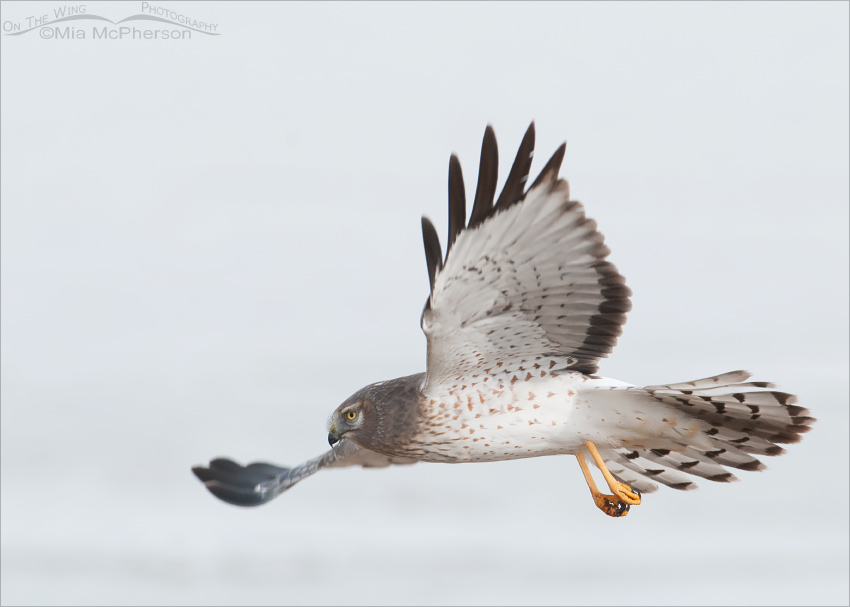
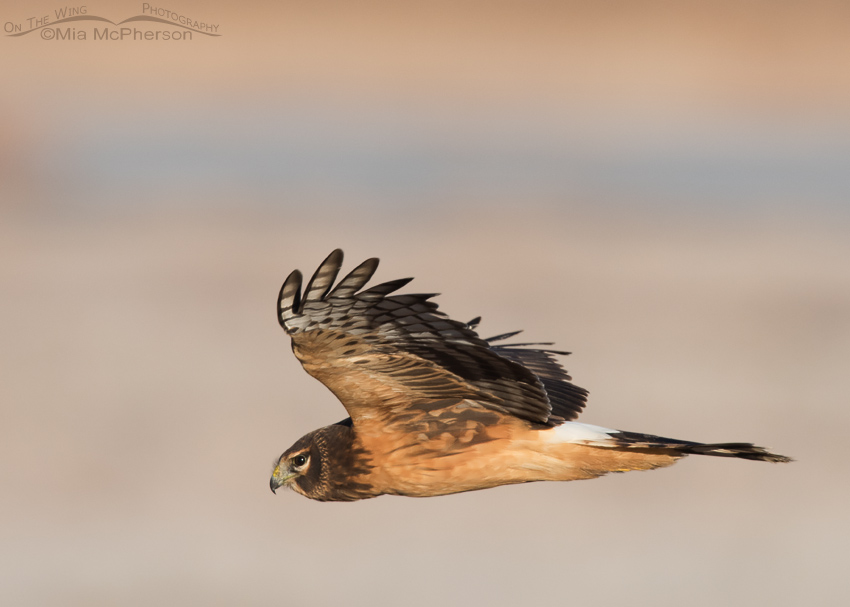
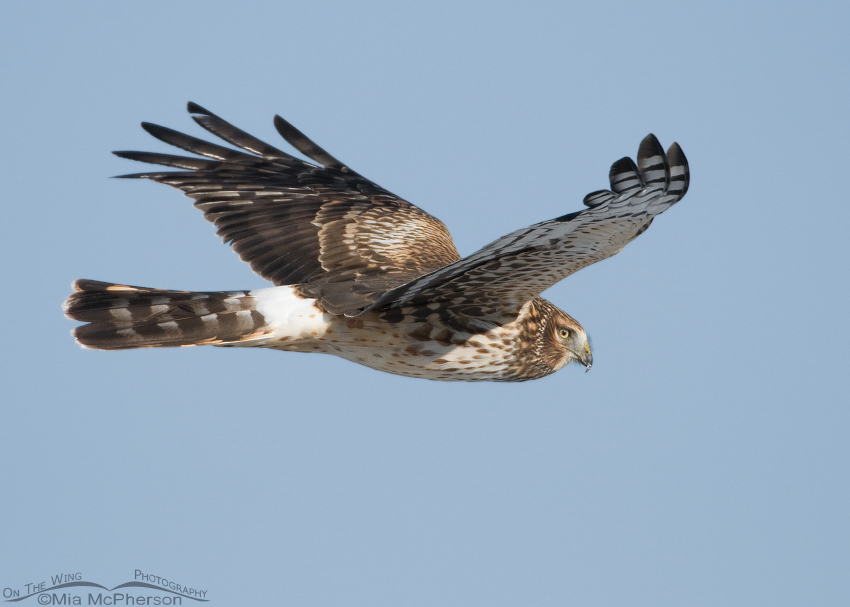
Female Northern Harrier in flight

Female Northern Harrier in flight

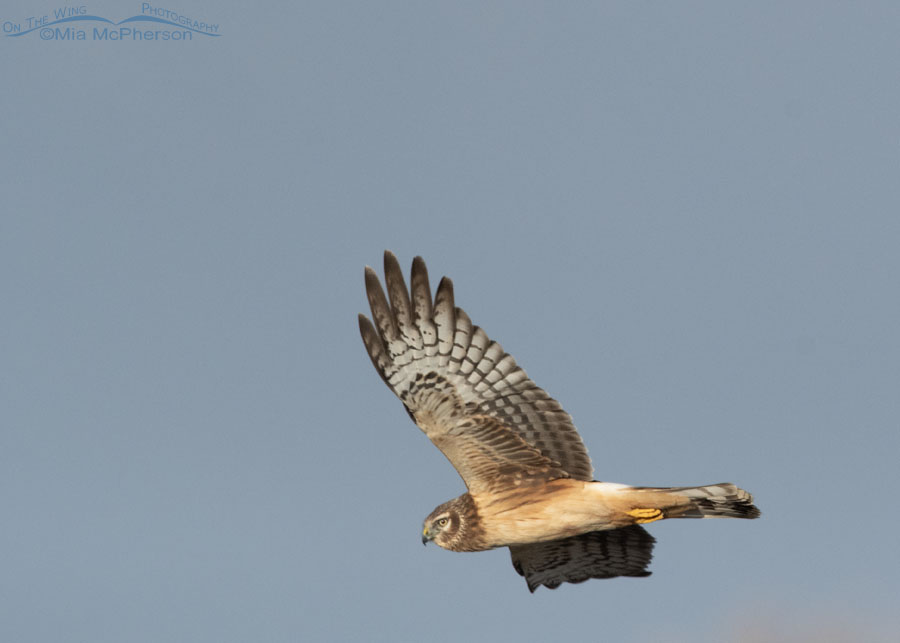
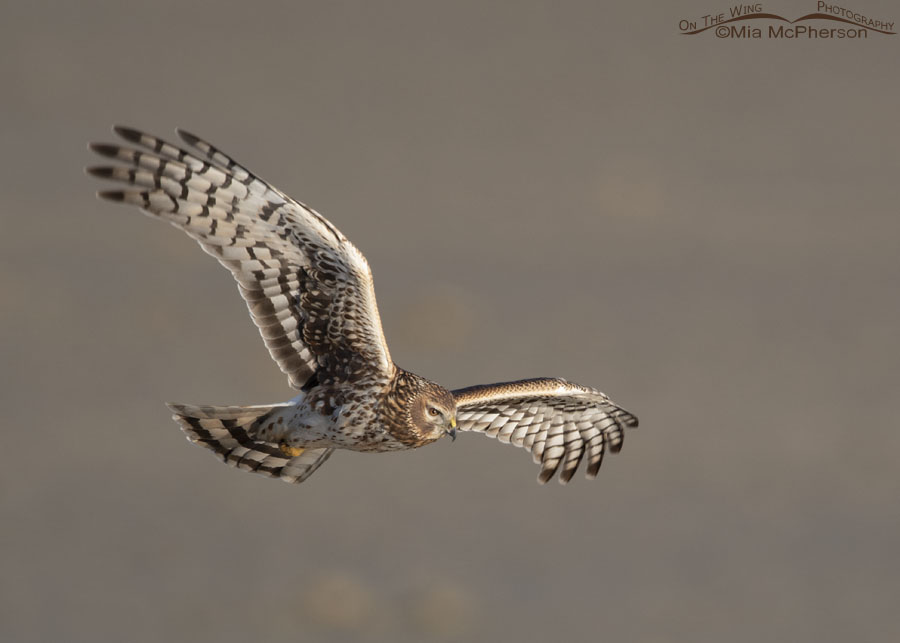
Female Northern Harrier in flight – Nikon D300, f6.3, 1/4000, ISO 640, +0.7 EV, Nikkor 200-400mm VR with 1.4x TC at 400mm, natural light, not baited

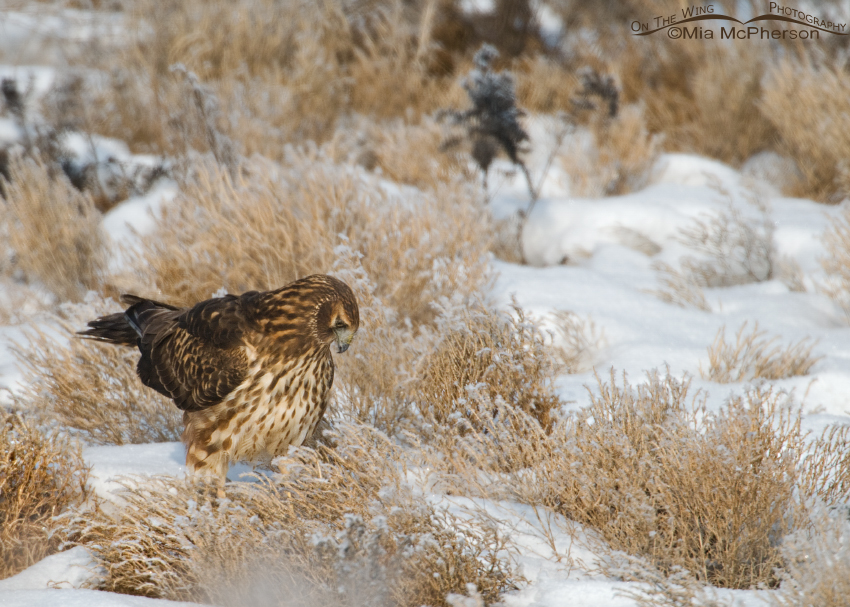
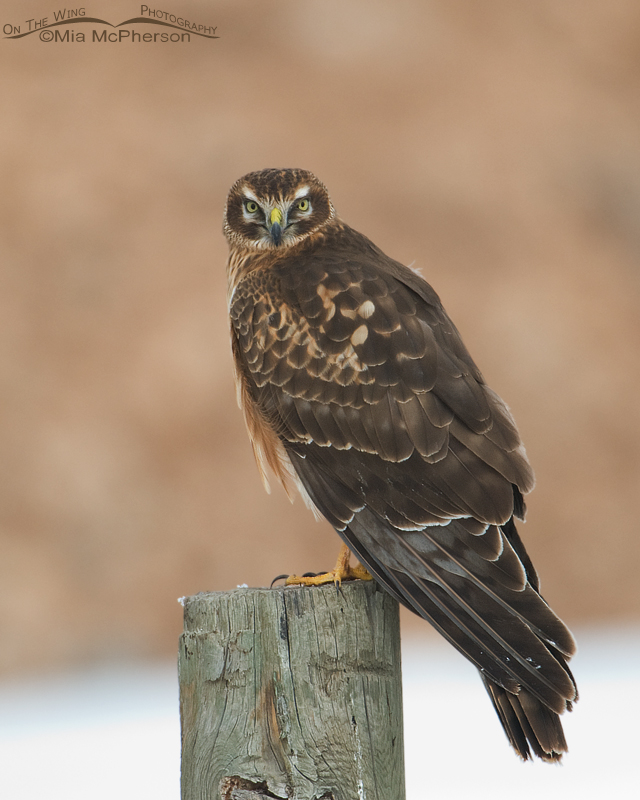
Typically I see far more Northern Harriers in the winter here in Utah than I do during the breeding season which might be partly due to the harriers preferring to nest within marshy wetland areas which are in abundance around the Great Salt Lake. In fact; many people still call Northern Harriers by the name “Marsh Hawk”.
Last year I found a female Northern Harrier bringing nesting material to the nest which was the first time I had located a harrier nest.

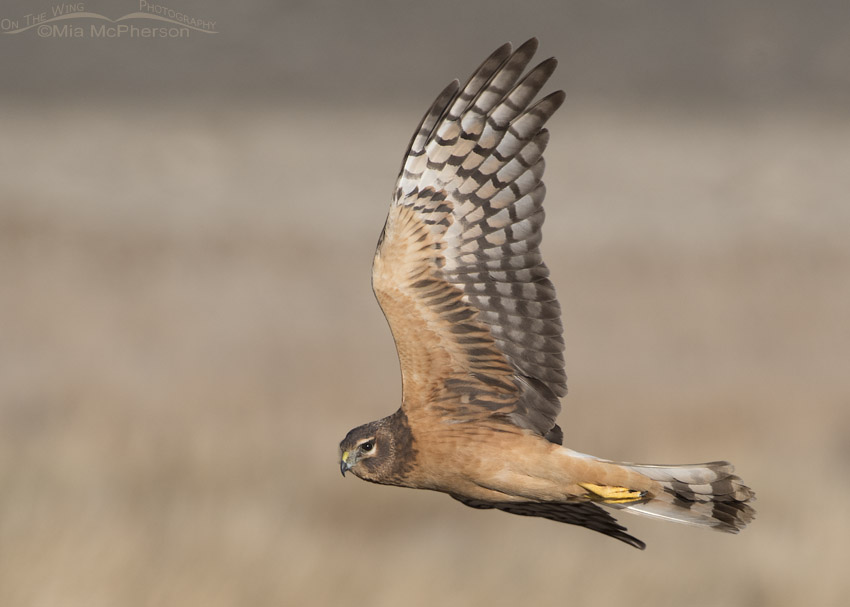
The female above was photographed as she coursed along the Antelope Island causeway as she searched for prey last February.

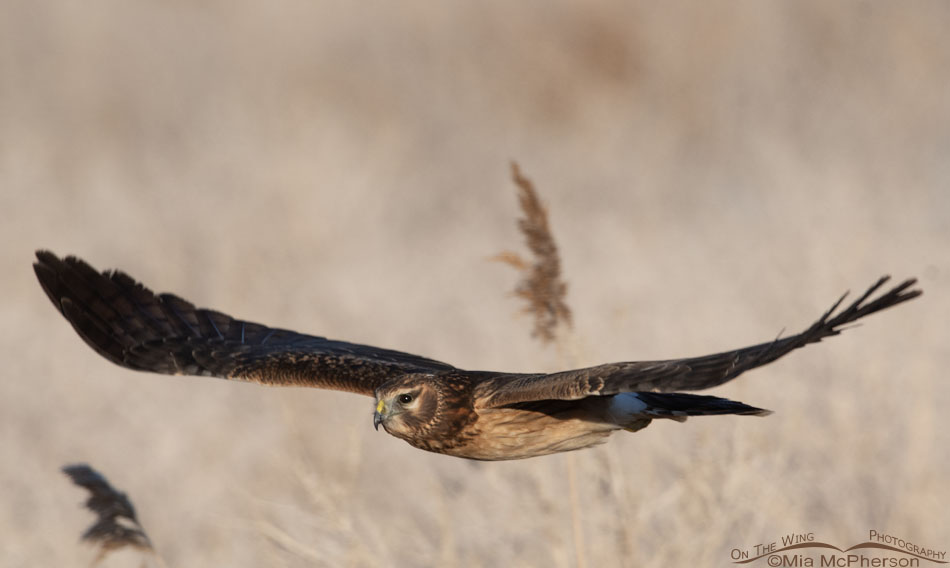
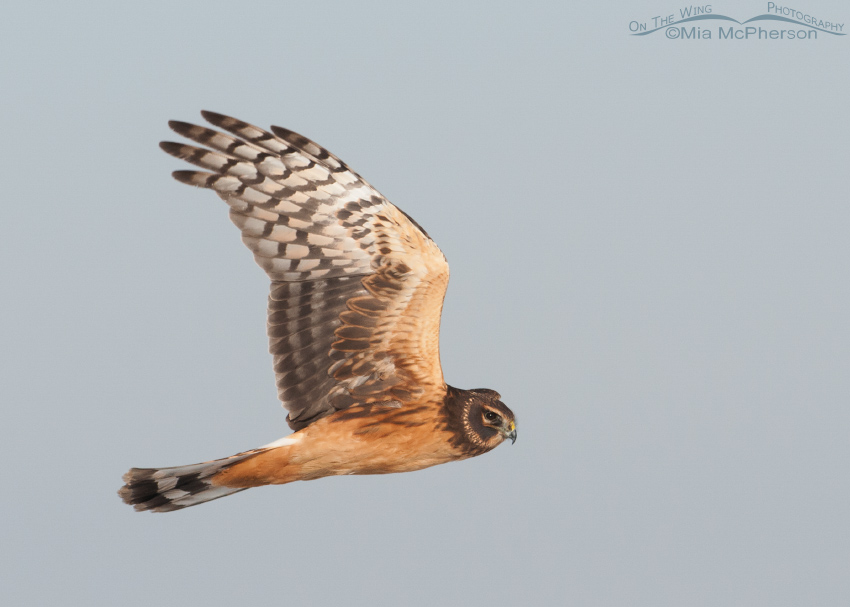
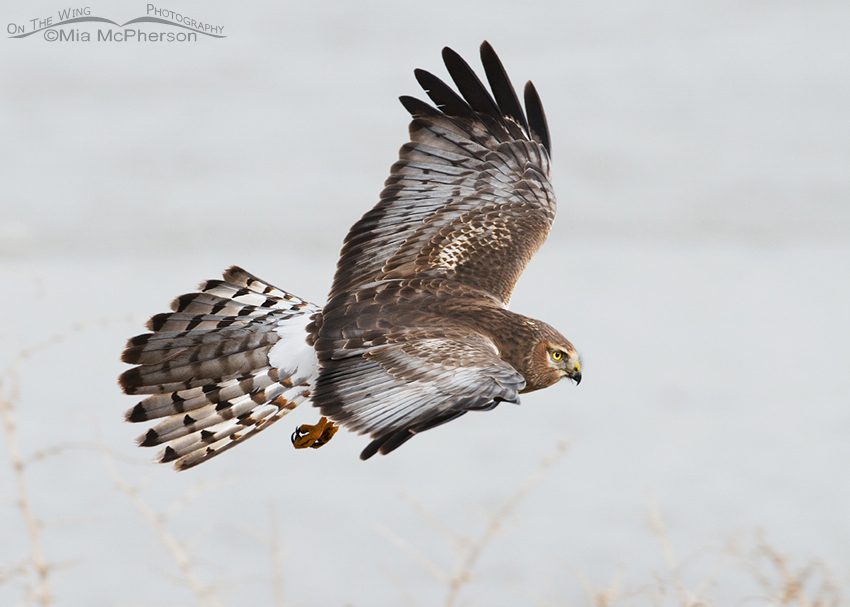
Female Northern Harrier with the Wasatch Range in the background

Female Northern Harrier with the Wasatch Range in the background – Nikon D300, f6.3, 1/3200, ISO 640, +0.7 EV, Nikkor 200-400mm VR with 1.4x TC at 400mm, natural light, not baited

This is the same female taken as she flew east with the snow-covered Wasatch Mountain Range in the background. The white rumps of Northern Harriers help to make the ID easier along with the owl-like facial disc.  Females are much browner than the males who are also known as the “Gray Ghost“.

I am always delighted to have opportunities to photograph Northern Harriers, especially when they are in flight and I am able to get some eye contact.

Mia

More Northern Harrier images

Facebook Twitter

Northern Harrier in Low Light

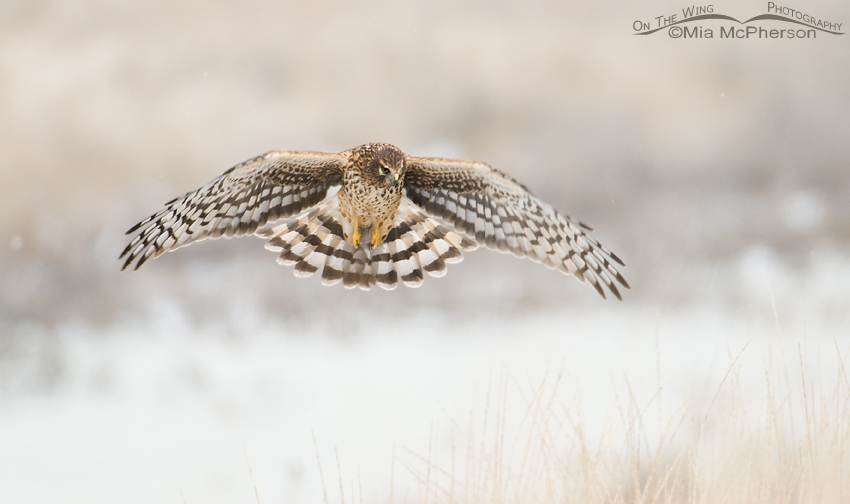
Hovering Northern Harrier (Circus cyaneus)

Hovering Northern Harrier (Circus cyaneus), 1st frame
Farmington Bay Waterfowl Management Area, Davis County, Utah
Nikon D200, f6.3, 1/640, ISO 400, +0.7 EV, Nikkor 200-400mm with 1.4x TC at 400mm, natural light, not baited

I was digging through my archives to place my 2011 photos into a new external harddrive when I came across these two images of a Northern Harrier hovering that I had taken in January of this year and decided to post them because of the low light conditions I photographed the harrier in.

Utah weather can be unpredictable anytime of the year but during the winter it can look bright and sunny where I live and then when I get to my location to photograph it can be quite a different story. The Salt Lake Valley has mountains to the east and the west and mountains do make their own weather. Plus given the fact that Northern Harriers prefer areas with marshes or shorelines and the fog found there can create even more challenges.

These two images were taken when there was snow falling, the light was low and there was some fog. I had to increase my exposure compensation so that the images would not be under exposed which decreased my shutter speed giving the images some motion blur. Newer cameras than mine do handle higher ISO settings than 400 quite well which would give the users of those cameras higher shutter speeds than I was able to get with my trusty, but old, Nikon D200.

Hovering Northern Harrier (Circus cyaneus)

Hovering Northern Harrier (Circus cyaneus),  2nd frame
Farmington Bay Waterfowl Management Area, Davis County, Utah
Nikon D200, f6.3, 1/640, ISO 400, +0.7 EV, Nikkor 200-400mm with 1.4x TC at 400mm, natural light, not baited

I don’t mind the motion blur in these images and because northern harriers hunt by looking down at the ground for their prey I was very happy to get eye contact in both frames. The habitat with dried vegetation, snow on the ground and bits of falling snow make the photos appealing to me as do the poses that the harrier gave me.
I could have used some fill flash but at least 99% or more of my images are taken in natural light. I prefer photographing birds without flash partly because I don’t care for the “flashed” look and because I also do not want to startle or scare the birds. I’ve seen people get close to birds and when the flash goes off…so does the bird in many cases.

Appealing and compelling images can be produced even when the conditions are not the best. I enjoy the challenges that low light creates, it test my skills as a photographer and I like that. Low light images are also a challenge to post process and keep the photo looking like what it is, an image taken in low light.

Mia

More Northern Harrier images

Facebook Twitter

Nesting Northern Harrier

Northern Harrier with snow covered Wastach mountains in the background

Northern Harrier (Circus cyaneus) with snow covered Wasatch Mountains in the background
Farmington Bay Waterfowl Management Area, Davis County, Utah
Nikon D200, f6.3, 1/2500, ISO 400, Nikkor 200-400mm VR with 1.4x TC at 400mm, natural light, not baited

During the summers where I live in Utah I don’t see as many Northern Harriers as I do in the winter, primarily because large numbers of  Northern Harriers winter in the valleys of Utah. I do see them flying over the marshes where there are stands of phragmites and cattails during the spring and summer and range maps do show them as year round residents.

Since my move to Utah I have wondered if Northern Harriers nested here in the marshes and I finally have my answer. They do. I had even asked a friend about it but he wasn’t sure that harriers nested here but I am always an optimist, I expect to see the unexpected concerning birds because it has happened many times to me. I hoped that one day I might find a harrier nest.

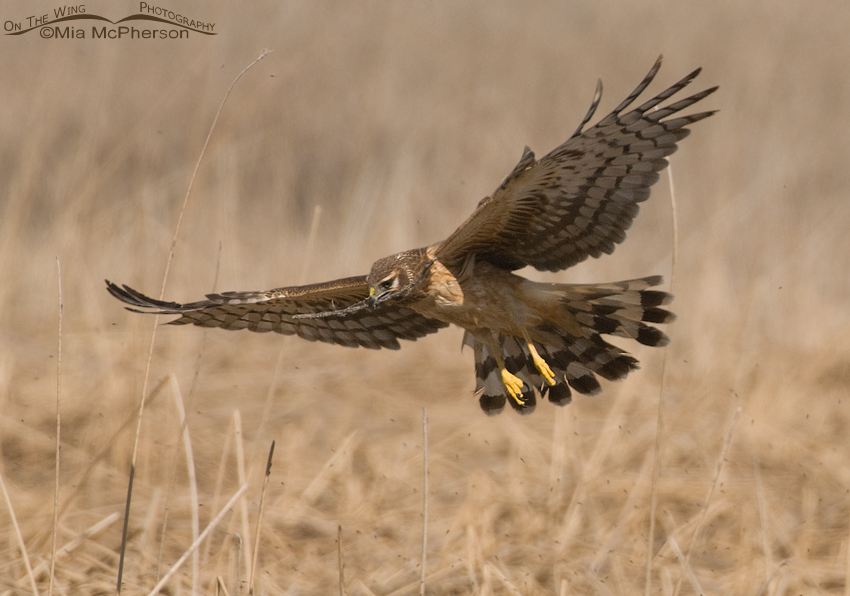
Female Northern Harrier in flight with nesting material

Female Northern Harrier (Circus cyaneus) in flight with nesting material
Bear River Migratory Bird Refuge, Box Elder County, Utah
Nikon D200, f6.3, 1/2000, ISO 400, Nikkor 200-400mm VR with 1.4x TC at 400mm, natural light, not baited

During the last week of April while out looking for birds to photograph in a marshy location I spotted a Northern Harrier circling in the sky, I hoped that it would come closer so I got my settings ready on my camera and aimed my lens towards the bird. When I focused on the harrier through the viewfinder I was excited to see that the female harrier had a twig in her bill, a very good sign that she might be nesting.

Northern Harrier female circling with nesting material

Northern Harrier (Circus cyaneus) female circling with nesting material
Bear River Migratory Bird Refuge, Box Elder County, Utah
Nikon D200, f6.3, 1/2000, ISO 400, Nikkor 200-400mm VR with 1.4x TC at 400mm, natural light, not baited

The female harrier was flying in wide circling loops in the air moving closer with each circle. At times the mountains and sky showed as a backdrop in my viewfinder. Her flight seemed unhurried and her grip on the twig was good.

Female Northern Harrier making approach to the nest

Female Northern Harrier (Circus cyaneus) making approach to the nest
Bear River Migratory Bird Refuge, Box Elder County, Utah
Nikon D200, f6.3, 1/2000, ISO 400, Nikkor 200-400mm VR with 1.4x Tc at 400mm, natural light, not baited

The harrier turned towards the vehicle (used as a mobile blind) and started to descend, at that point I began to wonder if the nest was nearby, I hoped that it was. I was not disappointed.

Female Northern Harrier slowing down above the nest

Female Northern Harrier (Circus cyaneus) slowing down above the nest
Bear River Migratory Bird Refuge, Box Elder County, Utah
Nikon D200, f6.3, ISO 400, Nikkor 200-400mm VR with 1.4x TC at 400mm, natural light, not baited

I remember holding my breath as the harrier flew closer and closer and quickly recognized that her wing position indicated that she was about to land. I pressed my shutter button slowly because I didn’t want to have my buffer fill and cause me to miss the shots I wanted of the harrier landing. (I’ve missed some great shots that way and I’m trying very hard not to do it again!)

Female Northern Harrier hovering

Female Northern Harrier (Circus cyaneus) hovering
Bear River Migratory Bird Refuge, Box Elder County, Utah
Nikon D200, f6.3, 1/2000, ISO 400, Nikkor 200-400mm VR with 1.4x TC at 400mm, natural light, not baited

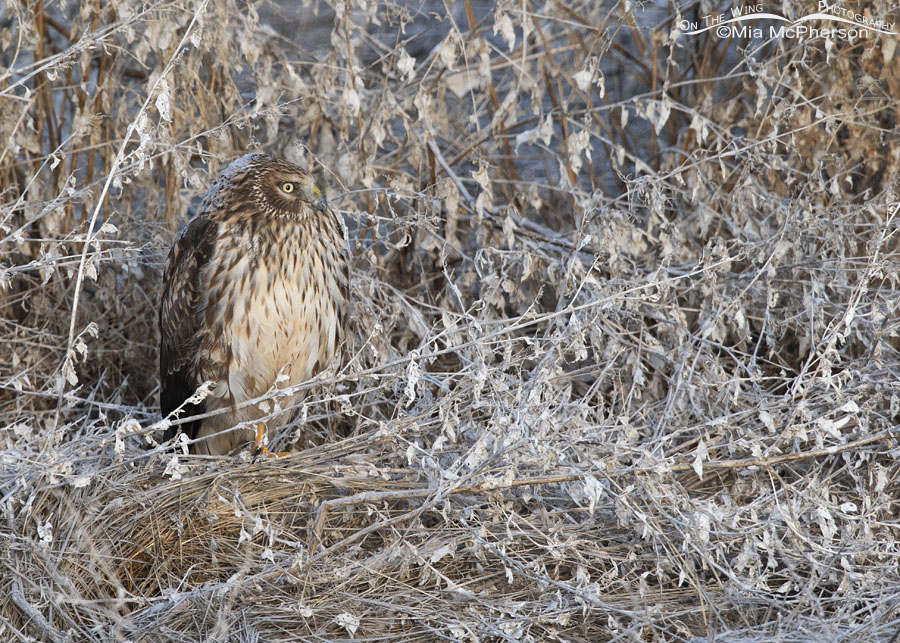
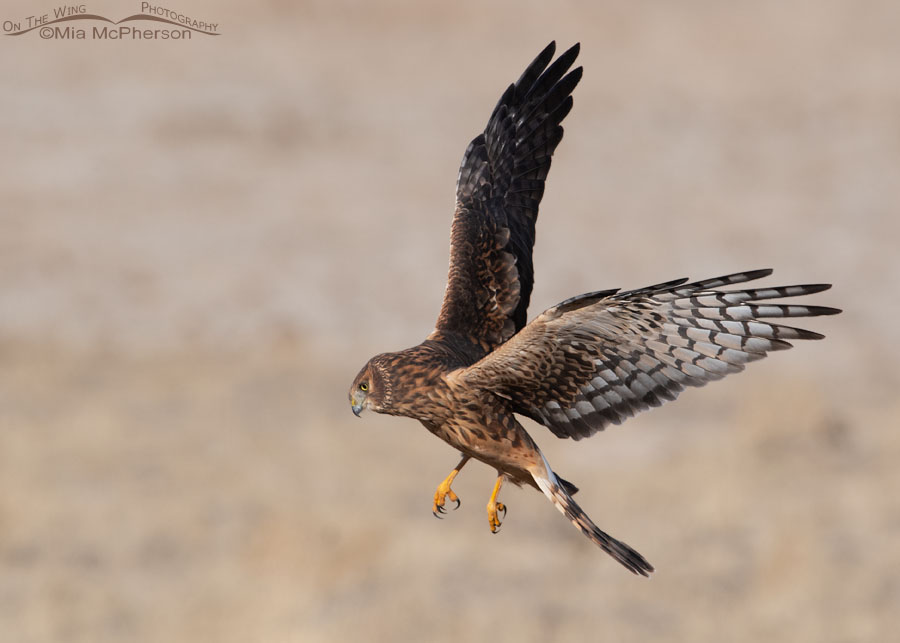
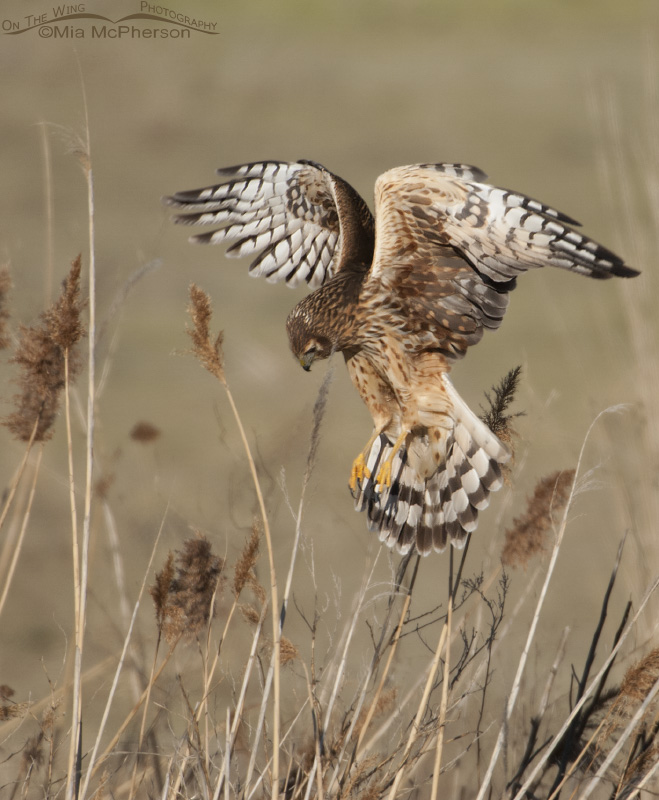
The female harrier hovered briefly, her legs moved slightly forward, her tail fanned out and she seemed focused on a particular spot in the dried vegetation that had been bent over by the heavy snow from this past winter. Looking at the similar hues of tans and browns of both the bird and the vegetation makes me realize how easily the female harriers must blend into the habitat.

Female Northern Harrier touching down

Female Northern Harrier (Circus cyaneus) touching down
Bear River Migratory Bird Refuge, Box Elder County, Utah
Nikon D200, f6.3, 1/2000, ISO 400, Nikkor 200-400mm VR with 1.4x TC at 400mm, natural light, not baited

Having spotted the exact location she wanted to land the hen harrier extended her feet and appeared to grasp the dried vegetation with her talons, never taking her eyes off of where she wanted to land. By the way; the little black specks you see in the images with the dried vegetation are midges. There are often swarms of thousands of them near marshes here. I’m sure a lot of people mistake them for mosquitoes but thankfully they don’t bite like mosquitoes do. They don’t buzz like mosquitoes either. Soon enough though the mosquitoes will appear, yuck!

Female Northern Harrier in the nest

Female Northern Harrier (Circus cyaneus) in the nest
Bear River Migratory Bird Refuge, Box Elder County, Utah 
Nikon D200, f6.3, 1/2000, ISO 400, Nikkor 200-400mm VR with 1.4x TC at 400mm, natural light, not baited

Very soon after the image above was taken the hen harrier disappeared from sight, even after waiting about 20 minutes she didn’t reappear. I can only imagine that she was adjusting the nesting material she brought in or perhaps taking a break from locating more nesting materials.

I was more than excited to have witnessed and photographed the female harrier bringing in that twig, it was the first time that I have ever seen a harrier building a nest. It more than made my day! Who knows… in a couple of weeks I may be able to photograph Northern Harrier chicks too.

Mia

More Northern Harrier images

Facebook Twitter