Oh…Poop!

Yes, poop happens. If there are birds there is poop. That is the straight poop… I mean scoop!

Royal Tern, Florida

Royal Tern, Florida

Some birds poop in mid-air which it is always wise to have your mouth closed when photographing birds directly over your head. A wide-brimmed hat is kind of handy too. I’m glad this Royal Tern banked when it did or I might have gotten bombed.

Killdeer, Utah

Killdeer, Utah

Some shorebirds will leave the water to poop, I’ve noticed that American Avocets always exit the water when they need to pooh. Some shorebirds poop so fast you don’t even notice it. Even with a shutter speed of 1/1600 I could not freeze the motion of this Killdeer’s poop, they must be the “fast as lightning” poopers.

Roseate Spoonbill, Florida

Roseate Spoonbill, Florida

I think that Roseate Spoonbills are Super Dooper Poopers, this bird looks like it grew an extra leg the stream of poop is so long!

Okay, enough talk about poop! (At least until the next Oh… Poop post)

Mia

Facebook Twitter Stumbleupon Digg Delicious Reddit Posterous Pinterest Email

Share

Funny Birds

I’m always looking for great action or interesting poses when I am out photographing birds and usually I am not disappointed and once in a while I get some very funny images. Mondays just seem like a great day for some humor.

Roseate SpoonbillRoseate Spoonbill (Platalea ajaja)
Nikon D200, handheld, f6.3, 1/1250, ISO 200, Nikkor 80-400mm VR at 400mm

I was laying in the mud of a tidal pool photographing this Roseate Spoonbill when it stretched out its bill, fluffed its feathers and it looked kind of goofy in this frame right before it shook its head.

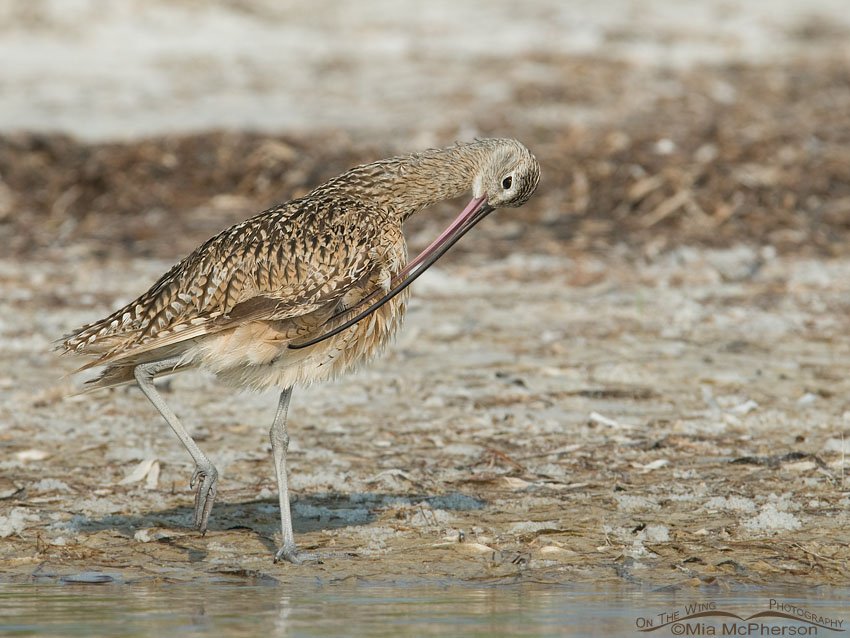
Long-billed Curlew 
Long-billed Curlew (Numenius americanus)

Nikon D200, handheld, f6.3, 1/180, ISO 320, +0.3 EV, Nikkor 80-400mm VR at 280mm, low light

I was photographing this Long-billed Curlew as it preened on a foggy morning when it gave me this great pose.

American Oystercatcher
American Oystercatcher (Haematopus palliatus)
Nikon D200, handheld, f6.3, 1/640, ISO 250, Nikkor 80-400mm VR at 4oomm

Each time I see this image I have to laugh because the pose is so funny, at least I got a catchlight in the eye!

Mia

*Click the image to view a larger version
All of these images were taken in Florida


Facebook Twitter Stumbleupon Digg Delicious Reddit Posterous Pinterest Email

Share

Low light images

Happy Thanksgiving!

Because I live far from my family and have no children at home my yearly Thanksgiving tradition includes spending a part of my day out photographing birds, mostly early morning outings. This morning I did get out to photograph but I came home “skunked”. There are low heavy clouds here today but even worse, there were no birds close enough to even do low light bird photography. Well my tradition was not broken, I did go regardless of being skunked.

Low light Sanderling in breeding plumage

Low light Sanderling in breeding plumage ~ Fort De Soto County Park, Florida
D200, handheld, laying on the sand, f6.3, 1/500, ISO 400, Nikkor 70-300mm VR at 300mm, natural light

I firmly believe that fine quality, compelling images can be taken in low light. Yes, most of the time bird photographers desire that “sweet light” so often spoke of, but there are situations where no matter how closely you look at the weather on TV or online radar images that the light will not be what you thought (or hoped) it might be.

 The morning I took the Sanderling (Calidris alba) image above the forecast was for partly cloudy skies. The radar looked good so I gathered my gear and drove to Fort De Soto in the very early pre-dawn light. On the way there I could clearly see the sky beginning to turn colors and I was excited about spending the morning sand crawling or immersed in the water to get photograph of the birds I would see. Excited until I looked to my west while at the first bridge just after the toll booth.

Argh, those radar images didn’t pick up the sea fog that was swirling over the north beach.  “Too late” I told myself, “you’ve driven 45 minutes to get here, make the best of that fog!”.

There was enough ambient light coming through the fog to produce fine images of the birds that morning, for the image above I didn’t even feel the need to use exposure compensation which does need to be used on occasion in foggy conditions. When I am processing images taken in low light I try to retain that feeling by not overdoing contrast, saturation or sharpening. The image above “whispers”, it doesn’t “shout” and I like it that way.

Preening juvenile Roseate Spoonbill in low light
Preening juvenile Roseate Spoonbill in low light ~ Fort De Soto County Park, Florida
Nikon D200, handheld, laying on the edge of a lagoon, f7.1, 1/200, ISO 400, Nikkor 80-400mm VR at 250mm, natural light

I found this juvenile Roseate Spoonbill (Platalea ajaja); with some adult, preening in a sea fog one morning that I went to Fort De Soto. The weather forecast for the day was clear, the radar looked good on line but the fog came rolling in not long after I got to the beach. It happens.

When I post processed this image I did apply a minimal amount of Noise Reduction to the background to help with the noise I saw evident while hoping to retain the foggy feeling and only slightly increased the saturation globally.

Today; I could have created similar images like this Sanderling and Roseate Spoonbill… if ONLY there had been birds nearby.

The forecast for today? Partly cloudy. Man, the weather forecasters were wrong.

Again, Happy Thanksgiving!

Mia

Facebook Twitter Stumbleupon Digg Delicious Reddit Posterous Pinterest Email

Share

Roseate Spoonbills in a sea fog

Roseate Spoonbills in a sea fog

Roseate Spoonbills in a sea fog
Fort De Soto County Park, Pinellas County, Florida
D200, handheld, f7.1, 1/180, ISO 400, 80-400mm VR at 250mm, natural light

One early morning I walked across the footbridge at Fort De Soto’s north beach not expecting much because a sea fog had rolled in overnight and that can cause exposures to be difficult. As soon as I crossed the footbridge I spotted several Roseate Spoonbills (Platalea ajaja) in the tidal lagoon on my right. There were adults and a few juveniles, some were resting while others preened.

I had the whole beach to myself that morning, I guess the other bird photographers decided to skip the beach because of the sea fog. I stepped into the water of the lagoon, sank to my knees and very slowly moved closer to the spoonbills. I knew I wouldn’t have very long to photograph the birds because I could hear the machine that groomed the beach and removed trash left in the sand by beach-goers the day before. The birds weren’t going to stick around with the noisy machine so close. I wouldn’t have time for the sun to rise higher to illuminate the roseate spoonbills any better. In the low light I knew I had to push my ISO up to at least 400 and even then I was still only getting 1/180 for my shutter speed and I was shooting handheld.

Despite the low light, the sea fog and the noisy machinery I walked away with some images of these spoonbills that I really like in the 5 minutes I had with them.

Mia

P.S. In a previous post about Roseate Spoonbills I mentioned that I would discuss the appearance of the juveniles at a later date, in the image above the bird on the left is a juvenile and the out of focus bird on the right is an adult.  Juveniles typically have a lighter, softer pink coloration than mature birds and their heads are covered with light colored feathers where the adults have bald heads. The juveniles also lack the carmine red patch that the adults have on their wings.

Facebook Twitter Stumbleupon Digg Delicious Reddit Posterous Pinterest Email

Share

Roseate Spoonbills

Roseate Spoonbill feeding

Roseate Spoonbill feeding
Pinellas County, FL
D200, HH, laying in the tidal mud, ISO 200, f/6.3, 1/1250, 80-400mm at 400mm, natural light

Cotton candy pink… are the descriptive words I thought of when I saw my first Roseate Spoonbill (Platalea ajaja). Of the world’s six species of Spoonbills the only ones that are pink are are the roseate spoonbills and it also the only spoonbill native to North America.

Spoonbills were named for their bills which at the tip are spoon-shaped. I’ll post some immature roseate spoonbills another time and just focus on the adults now.  The bird above is in breeding plumage, the head turns a pale greenish color and just below that there will be an almost black  area on the neck, the bill will show some dark speckling and the yellows near the tail will be more pronounced, it also seems to me that the carmine red on the wings becomes redder.

Roseate Spoonbill in the light of the setting sun

Roseate Spoonbill in the light of the setting sun
Pinellas County, FL
D200, sitting in the water of the lagoon, f6.3, 1/400, ISO 250, 80-400mm VR at 400mm, natural light

Roseate Spoonbills can be found in saltwater tidal lagoons and in freshwater areas such as marshes, swamps and lakes. They feed on small fish, shrimp and crabs in the water by swinging their bills side to side in a sweeping motion to locate their prey. They fly slowly which can help when taking images in flight.

Some nicknames for the roseate spoonbill are Flame Bird, Banjo-bill, Pink Curlew, Pink and Pinkie but the one I would hear most often is Spoonie.

Roseate Spoonbill on the edge of a lagoon

Roseate Spoonbill on the edge of a lagoon
Pinellas County, FL
D200, sitting in the water of the lagoon, f6.3, 1/750, ISO 200, 80-400mm VR at 400mm, natural light

Because of their unique coloration and bill shape spoonbills stand out from the other wading birds and are easily recognizable. The spoonbill above is an adult in nonbreeding plumage. I find that photographing them is best in early morning or late afternoon light as the whites of the neck and belly are easily blown out.

On photo critiques sites spoonbills are often presented with too much saturation applied in postprocessing.  I much prefer to keep the saturation of spoonbills or any other species on a more natural and realistic level.  Spoonies are colorful enough naturally. None of my spoonbill images posted here have had any increase of saturation applied in post processing.

Adult Roseate Spoonbill

Adult Roseate Spoonbill in afternoon light
Pinellas County, FL
D200, laying on the sandy shoreline, full frame, f6.3, 1/750, ISO 250, 80-400mm at 400mm, natural light

I always think of “Cotton Candy Pink” when I photograph this species or look at my images of them. They may be odd looking birds to some because of the bald head and strange shaped bill but I find all species of birds to have their own beauty and will photograph any bird that I see through my viewfinder.

Mia

Facebook Twitter Stumbleupon Digg Delicious Reddit Posterous Pinterest Email

Share